
Tetraponera polita
- Sci. Name
- Tetraponera polita
- Tribe
- Pseudomyrmecini
- Subfamily
- Pseudomyrmecinae
- Author
- Ward, 2001
- Distribution
- Found in 1 countries
Introduction
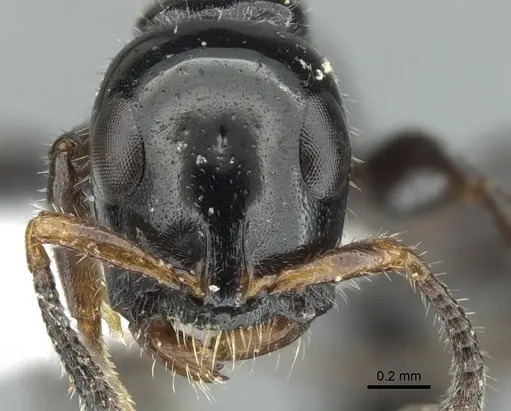
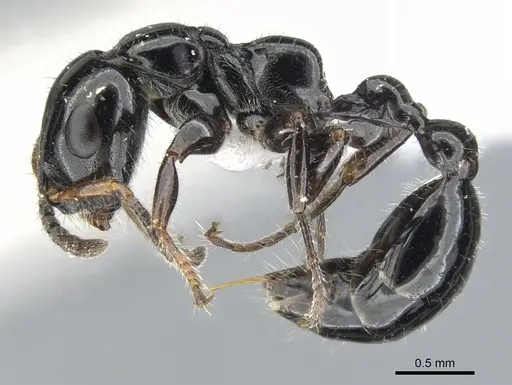
Tetraponera polita is a medium-sized ant native to Borneo, Indonesia, and Malaysia . Workers have a black, shiny appearance and are covered in short, standing hairs . Total body length hasn't been published, but head width measures 0.82-0.89 mm . You can identify them by their small eyes, long scapes (first antenna segment), broad petiole and postpetiole, and very little pressed-down hair on the gaster (abdomen) . They live in secondary forests, rainforest edges, and secondary vegetation, nesting inside plant stems - specimens have been found in Uncaria vines . As a member of the Pseudomyrmecinae subfamily, these ants have a well-developed sting and use it to aggressively defend their host plants against browsing herbivores.
Quick Summary
- Difficulty: Medium
- Origin & Habitat: Borneo, Indonesia, and Malaysia, found in secondary forests, rainforest edges, and secondary vegetation. Workers typically on vegetation and in plant stems, especially Uncaria vines [1].
- Colony Type: Unconfirmed, likely single-queen colonies based on typical Tetraponera patterns. No reports of polygyny (multiple queens) in this genus.
- Size & Growth:
- Queen: Queen size unknown, no queen description has been published [1].
- Worker: Body length not published, head width 0.82-0.89 mm [1].
- Colony: Unconfirmed, related Tetraponera species may reach several hundred workers. No specific data for T. polita.
- Growth: Moderate, inferred from tropical Pseudomyrmecinae patterns
- Development: Estimated 6-8 weeks at 25-28°C based on typical Tetraponera development. (Timeline is estimated, no specific study for this species. Tropical species generally develop faster than temperate ones.)
- Antkeeping:
- Temperature: Keep at 24-28°C, these are tropical ants from Borneo that need consistent warmth. A gentle gradient is helpful.
- Humidity: High humidity, keep the nest substrate consistently moist but not waterlogged. Provide a water tube for drinking. They come from rainforest environments.
- Diapause: No, as a tropical species, they do not require hibernation. Maintain warm conditions year-round.
- Nesting: Arboreal, they prefer tight, dark chambers. Y-tong (AAC) or plaster nests work well. Provide vertical climbing surfaces and materials like cork or bamboo that mimic plant stems.
- Behavior: Active foragers on vegetation. They are not particularly aggressive but will use their sting to defend the nest if threatened. Small size means escape prevention is important, use fine mesh and secure lids. Sting is mild for humans.
- Common Issues: tropical species requires consistent warmth, cold below 20°C slows or stops brood development, high humidity needs can lead to mold if ventilation is poor, balance moisture with adequate airflow, small worker size means they can escape through standard barriers, use fine mesh and tight-fitting lids, colony growth may be slow, avoid overfeeding which attracts pests, wild-caught colonies may carry parasites or pathogens
Housing and Nest Preferences
Tetraponera polita is an arboreal species that naturally nests in plant stems and vegetation [1]. In captivity, you can use Y-tong (AAC) or plaster nests with narrow chambers that mimic these tight spaces. Provide vertical climbing materials like cork or bamboo. Since they come from tropical rainforests, maintain high humidity inside the nest, damp but not waterlogged. Always offer a water tube, as Pseudomyrmecinae ants frequently drink free water. Avoid oversized chambers, they feel more secure in compact spaces scaled to the colony size.
Feeding and Diet
Based on typical Tetraponera feeding habits, these ants are likely omnivorous with a preference for small insects and sugary liquids. Offer small live prey like fruit flies, pinhead crickets, or pre-killed mealworm pieces. Provide sugar water, honey water, or diluted honey regularly, Pseudomyrmecinae readily accept sweet liquids. Feed protein 2-3 times per week and keep sugar water available at all times. Remove uneaten prey after 24 hours to prevent mold. Because workers are tiny, size prey appropriately.
Temperature and Seasonal Care
Tetraponera polita comes from tropical Borneo, so it needs warm temperatures year-round. Keep the nest area between 24-28°C. Temperatures below 20°C can slow or stop brood development and may kill the colony if prolonged. Use a heating cable or mat on one side of the nest (on top, not underneath) to create a gentle gradient. No hibernation or diapause is required, maintain consistent warmth throughout the year.
Behavior and Colony Dynamics
Workers are active foragers that explore vegetation in search of food. They are not especially aggressive but will use their sting to defend the nest. As Pseudomyrmecinae, they are slender, fast-moving, and have relatively large eyes. Tetraponera polita hosts specialized bacteria (Bartonella-like bacteria) in their gut that may help with nitrogen recycling, and Wolbachia infection has also been detected [2]. Colony growth is gradual, the queen produces eggs that develop through complete metamorphosis (egg, larva, pupa, worker). First workers (nanitics) are smaller and help with colony maintenance and foraging.
Frequently Asked Questions
How long does it take for Tetraponera polita to raise their first workers?
Estimated 6-8 weeks at 25-28°C, based on typical Tetraponera development. Actual timing depends on temperature and colony health.
What do Tetraponera polita ants eat?
Likely small live insects (fruit flies, pinhead crickets) and sugar sources (honey water, sugar water). Offer prey sized for their tiny workers.
Do Tetraponera polita ants sting?
Yes, Pseudomyrmecinae ants have functional stingers. They are not particularly aggressive but will sting if threatened. The sting is mild for humans.
What temperature do Tetraponera polita ants need?
Keep them at 24-28°C. These are tropical ants from Borneo that require warm conditions year-round. Temperatures below 20°C are harmful.
Are Tetraponera polita ants good for beginners?
They are medium difficulty. They need high humidity, stable warmth, and small prey. Beginners should research Pseudomyrmecinae care first.
Do Tetraponera polita ants need hibernation?
No. As a tropical species from Borneo, they do not require hibernation, maintain warm temperatures year-round.
How big do Tetraponera polita colonies get?
Colony size is unconfirmed for this species. Related Tetraponera species reach several hundred workers, but no specific data exists.
Can I keep Tetraponera polita in a test tube?
A test tube can work for a founding queen, but established colonies need more space. Y-tong or plaster nests are better for long-term housing. Test tubes dry out quickly, which is risky for this humidity-dependent species.
Where does Tetraponera polita naturally nest?
In nature they nest in plant stems and vegetation, specimens have been found in Uncaria vines and on vegetation in secondary forests and rainforest edges [1].
Why are my Tetraponera polita ants dying?
Common causes: temperatures below 20°C (they need warmth), low humidity causing desiccation, mold from too much moisture without ventilation, or inappropriate prey. Check that your setup maintains 24-28°C and high humidity with good airflow.
Report an Issue
The current care sheet is based fully on literature. See inconsistencies, or something that's incorrect? Please , it will be resolved after review from an admin. Contributing to the blogs tab also helps providing information, to make us be able to further improve the caresheets. Thank you for your support!
References

This caresheet is licensed under CC BY-SA 4.0 .
Community Blogs
CASENT0902835
View on AntWeb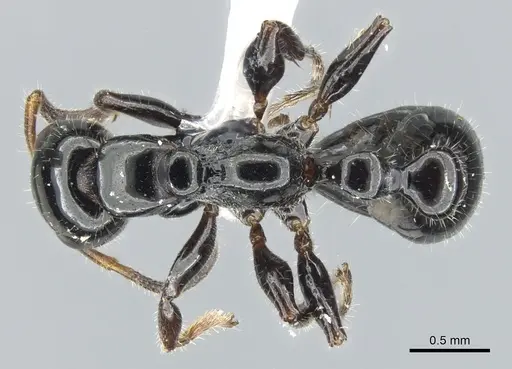
Literature
Loading distribution map...Loading products...