
Tetraponera microcarpa
- Sci. Name
- Tetraponera microcarpa
- Tribe
- Pseudomyrmecini
- Subfamily
- Pseudomyrmecinae
- Author
- Wu & Wang, 1990
- Distribution
- Found in 2 countries
Introduction
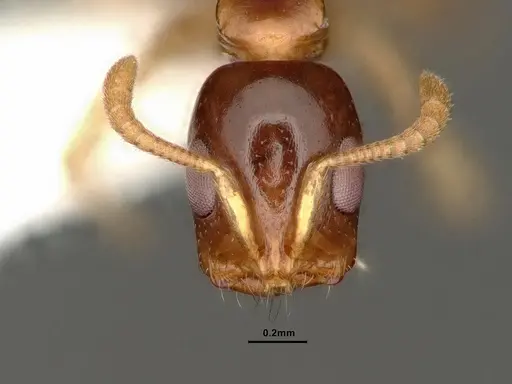
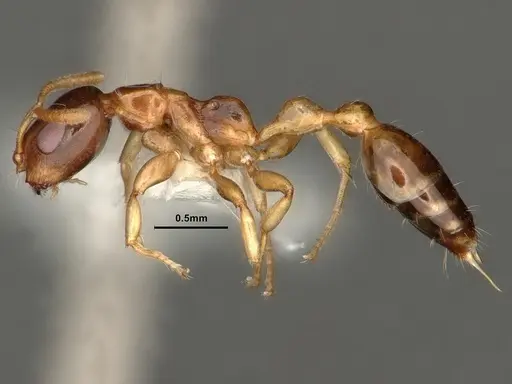
Tetraponera microcarpa is a small ant from the Tetraponera allaborans species group. Workers measure 3.3-4.0 mm in total body length . They are black or brownish-black, with lighter brown petiole, postpetiole, and appendages . Their body is smooth and shiny, with scattered punctures. They have short scapes, a flattened pronotum with straight sides, and a short, high petiole. This species lives only in primary forest - it has never been found in secondary forest or rubber plantations . In Hong Kong, workers forage on bamboo stalks in wooded hillsides, and nests are found in dead twigs, such as those of Daphniphyllum calycinum in disturbed secondary rainforest . Like other Pseudomyrmecinae ants, they are predators that nest in hollow twigs and rotting wood.
Quick Summary
- Difficulty: Expert
- Origin & Habitat: Southern China (Guangdong, Jiangxi, Hainan) and Vietnam [1][5][6]. A primary forest specialist restricted to intact forest habitats [3]. Found in wooded hillsides, forest edges, and disturbed secondary rainforest, nesting in dead twigs [4].
- Colony Type: Unconfirmed. The genus Tetraponera typically has single-queen (monogyne) colonies, but no data exist for this species.
- Size & Growth:
- Queen: Unconfirmed, no documented measurements for queens.
- Worker: 3.3-4.0 mm total length [1].
- Colony: Unconfirmed, no data available.
- Growth: Moderate, inferred from general Tetraponera biology.
- Development: Unknown, no data available for this species. (Based on related species, development likely takes 6-10 weeks at warm temperatures, but this is an estimate.)
- Antkeeping:
- Temperature: Unknown, no specific data. Based on subtropical origin, a range around 22-26°C is often used for similar species, but no confirmed optimal.
- Humidity: Unknown, no specific data. Given its natural habitat of damp forest twigs, high humidity (70-85%) is likely, but this is an assumption.
- Diapause: Unknown, no data. Subtropical origin suggests a mild winter slowdown may help, but not proven.
- Nesting: Mimic natural twig nests. Use small cork bark sections, hollow twigs, or Y-tong/plaster nests with narrow chambers. Test tubes can work for founding. Keep nest material moderately moist, but not waterlogged [4].
- Behavior: Predatory ants that hunt small insects. They have functional stingers (like other Pseudomyrmecinae) but are not aggressive toward humans, they will defend if threatened. Because workers are only 3.3-4.0 mm, they can squeeze through tiny gaps, use fine mesh and tight barriers. They are not aggressive toward keepers, but handle with care due to sting.
- Common Issues: dry conditions kill colonies, this species comes from damp forests, so humidity must be high., small size makes escape easy, use fine mesh or Fluon barriers., growth can be slow if temperatures or humidity are off., parasites may be introduced from wild-caught colonies.
Housing and Nest Setup
Provide nests that mimic the dead twigs they use in nature. Small cork bark, hollow twigs, or Y-tong nests with narrow chambers work well. Test tubes can work for founding as long as the water reservoir is kept moist, these ants prefer tight spaces. Do not give them a large formicarium, scaled-down chambers are better. Connect to a small outworld for foraging. [4]
Feeding and Diet
These ants are predators. Offer small live prey like fruit flies, pinhead crickets, or small mealworms 2-3 times per week. They may also accept sugar sources (a drop of honey or sugar water) but this is not confirmed. Remove uneaten food after a day to prevent mold. For young colonies with few workers, provide tiny prey like flightless fruit flies or springtails.
Temperature and Seasonal Care
No specific temperature data exists. Based on their subtropical home, keep them warm (around 22-26°C may work) and avoid sudden swings. A gentle temperature gradient helps ants self-regulate. A winter cooling period (around 18-20°C with reduced feeding) may be beneficial but is not proven, observe your colony. Do not let temperatures drop below 15°C or exceed 30°C.
Humidity Requirements
Humidity needs are unknown, but because they nest in damp forest twigs, high humidity (70-85%) is likely. Keep the nest substrate consistently moist, not wet. A water reservoir or periodic misting can help, but ensure some ventilation to prevent mold. If the nest gets too dry, the colony may fail quickly.
Behavior and Temperament
Workers are active foragers, hunting small arthropods. They have a functional sting, like all Pseudomyrmecinae, and may use it if handled roughly, but they are not aggressive. Their small size (3.3-4.0 mm) makes escape prevention critical. Use fine mesh, tight lids, or Fluon on barriers. They do not tend to be aggressive toward the keeper. [2]
Frequently Asked Questions
How long does it take for Tetraponera microcarpa to produce first workers?
No data exists for this species. Based on other Tetraponera, it may take 6-10 weeks at warm temperatures, but this is an estimate.
What do Tetraponera microcarpa ants eat?
They are predators that hunt small live insects. Offer fruit flies, pinhead crickets, or small mealworms. They may also take sugar sources like diluted honey.
Can I keep Tetraponera microcarpa in a test tube?
Yes, a test tube works for a founding colony. Keep the cotton moist and the chamber small. As the colony grows, move them to a more natural setup with cork bark or narrow Y-tong chambers.
Do Tetraponera microcarpa ants sting?
Yes, as Pseudomyrmecinae ants, they have a functional sting. It is not aggressive toward humans but can be painful if you are stung.
What temperature is best for Tetraponera microcarpa?
No optimal data exists. Based on subtropical origin, aim for 22-26°C and avoid extremes. Watch your colony, if they are active and brood develops, the temperature is likely fine.
Are Tetraponera microcarpa good for beginners?
No, this species is rated Expert. Their unknown requirements, high humidity needs, small size, and escape risk make them challenging for novice keepers. Only experienced keepers should attempt.
Do Tetraponera microcarpa need hibernation?
No data. Their subtropical origin suggests a mild winter slowdown could be natural, but many keepers see no issues keeping them warm year-round. If you choose to cool them, reduce temperature to 18-20°C for 2-3 months and reduce feeding.
Why are my Tetraponera microcarpa dying?
Most often from insufficient humidity. These ants need consistently moist nests. Other causes include temperature stress, escape (they are tiny), or parasites from wild colonies. Check humidity first.
How big do Tetraponera microcarpa colonies get?
No data available. Related Tetraponera species can reach several hundred workers, but this is only a guess.
When should I move Tetraponera microcarpa to a formicarium?
Move to a proper nest when the colony has about 20-30 workers or has outgrown the test tube. Choose a small, snug nest that mimics twig cavities.
Report an Issue
The current care sheet is based fully on literature. See inconsistencies, or something that's incorrect? Please , it will be resolved after review from an admin. Contributing to the blogs tab also helps providing information, to make us be able to further improve the caresheets. Thank you for your support!
References

This caresheet is licensed under CC BY-SA 4.0 .
Community Blogs
CASENT0884317
View on AntWeb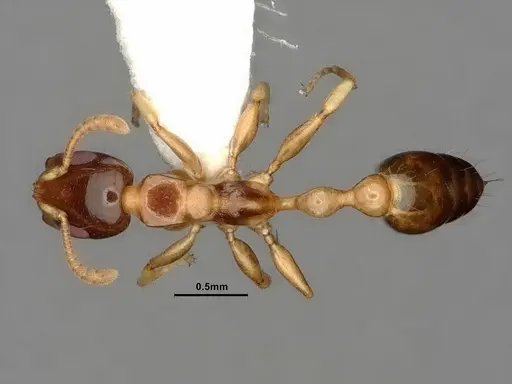
Literature
Loading distribution map...Loading products...