
Tetraponera merita
- Sci. Name
- Tetraponera merita
- Tribe
- Pseudomyrmecini
- Subfamily
- Pseudomyrmecinae
- Author
- Ward, 2009
- Distribution
- Found in 1 countries
Introduction
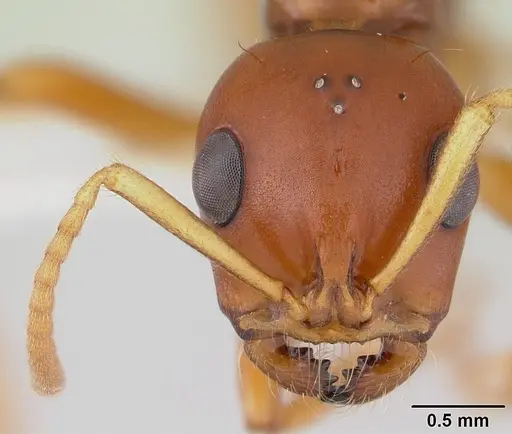
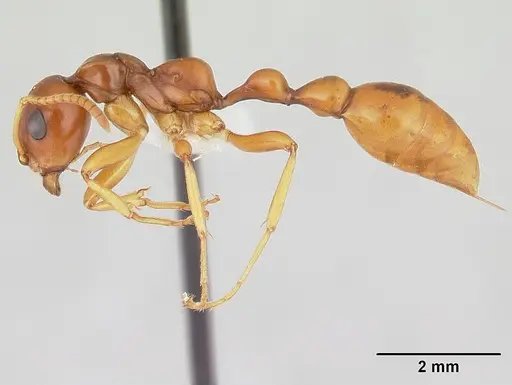
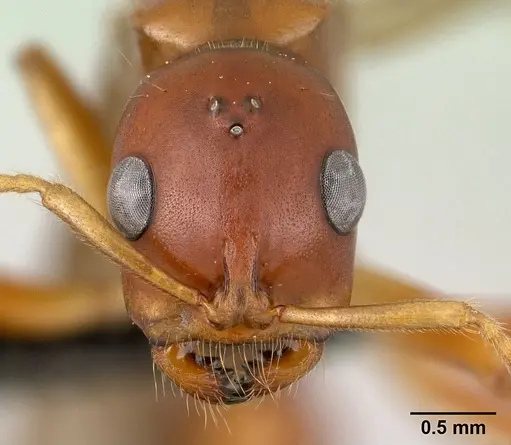
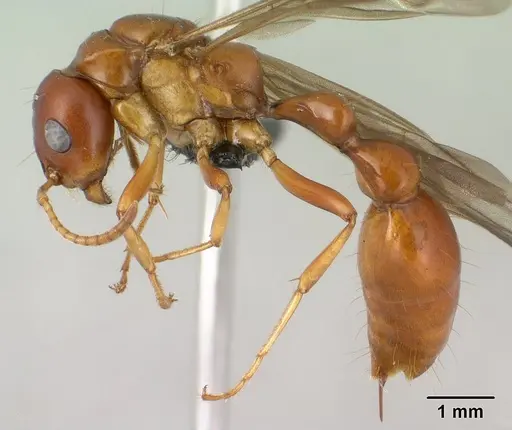
Tetraponera merita is a medium-sized ant native to the rainforests of eastern and northern Madagascar . Workers are a distinctive orange to reddish-brown color, which acts as a warning (aposematic) signal to predators that they pack a painful sting . They have a conspicuous tooth on the inner edge of the mandible and a uniquely undercut middle portion of the face, making them easy to identify . These ants nest in rotten logs, sticks, and tree stumps on the forest floor . Belonging to the Pseudomyrmecinae subfamily, T. merita has a well-developed sting. One researcher reported a sting that was “rather painful” and left a pustule lasting over a week . Their bright coloring isn't just for show - it honestly warns you to be careful. These ants are active predators and will defend their nest vigorously.
Quick Summary
- Difficulty: Medium
- Origin & Habitat: Rainforests of eastern and northern Madagascar. This species lives in humid, shaded forest floor habitats, nesting in decaying wood like rotten logs, sticks, and tree stumps [1]. The habitat is characterized as humid and dark [2].
- Colony Type: Likely monogyne (single queen) based on typical Tetraponera social structure, but confirmed colony type data is unavailable.
- Size & Growth:
- Queen: Size data unavailable
- Worker: Size data unavailable
- Colony: Not documented
- Growth: Moderate, inferred from related species
- Development: Estimated 6-10 weeks at optimal temperature based on genus-level data for related species (Development time inferred from typical Tetraponera patterns, specific data for T. merita is not available)
- Antkeeping:
- Temperature: Temperature requirements are not documented. Based on tropical rainforest habitat, maintain warm conditions (approximately 22-28°C). Avoid temperatures below 20°C or above 30°C. Provide a thermal gradient so ants can choose their preferred spot.
- Humidity: High humidity is essential, they come from humid rainforest habitats [2]. Keep the nest substrate consistently moist but not waterlogged. Provide a water tube.
- Diapause: Likely minimal or no true diapause, Madagascar has a mild climate year-round. You can slightly reduce feeding and temperatures (by 2-3°C) during winter months to simulate a seasonal slowdown, but this is not a strict requirement.
- Nesting: Provide a naturalistic setup with decaying wood substrate (rotten logs, sticks) or a plaster nest with high humidity chambers. They prefer dark, humid nesting sites similar to their natural rotten log habitat [1].
- Behavior: T. merita workers are active foragers that hunt small prey. They possess a functional sting and use it defensively, the sting is notably painful and can cause lasting pustules [1]. Workers are moderately aggressive when disturbed and will defend the nest. Escape prevention should be good, though they are not large ants. They are primarily predatory but will also tend aphids for honeydew.
- Common Issues: painful stings require careful handling, risk of colony escape during maintenance, high humidity needs can lead to mold if ventilation is poor, wild-caught colonies may contain parasites that can devastate captive populations, ground-nesting species needs a humidity-stable substrate that mimics rotten wood
Housing and Nest Setup
T. merita needs a humid, naturalistic setup that copies their forest floor home. They naturally nest in rotten logs and stumps [1]. A terrarium with a soil substrate mixed with decaying wood pieces works well. You can also use a plaster nest with high humidity chambers, the key is a dark, consistently moist nesting area.
Place the nest in a shaded spot away from direct light. Use a substrate that holds moisture well (a mix of soil, coco fiber, and rotting wood). Always offer a water tube so workers can drink without drowning. Good ventilation prevents mold, but avoid strong airflow that dries out the nest.
Feeding and Diet
Like other Pseudomyrmecinae, T. merita is mainly predatory. Offer small live prey such as fruit flies, small crickets, and mealworms. They will also take sugar sources like honey water or sugar water.
Feed protein 2-3 times per week and remove uneaten prey within 24 hours. Keep a sugar source available continuously, changing it every few days. If the colony is small, freshly killed prey may be accepted more readily than live. Watch what your workers take and adjust accordingly.
Temperature and Seasonal Care
Keep the temperature warm and stable, aim for about 22-28°C. As a Madagascar rainforest species, they don't like big temperature swings. A small heating mat on one side of the enclosure can create a warm zone while leaving a cooler area.
They don't need a true hibernation period. You can lower the temperature by 2-3°C in winter and feed less often to mimic their natural seasonal cycle, but this isn't required. Avoid temperatures below 20°C for long periods. [1]
Handling and Safety
T. merita workers can deliver a painful sting, one researcher described it as “rather painful” and said it left a pustule that lasted over a week [1]. This is not an ant you want to handle casually.
Always use gloves when cleaning the enclosure or moving the colony. Never touch them with bare hands, even if the colony is small. Their bright orange-red coloring is a genuine warning: respect it and plan your care accordingly.
Frequently Asked Questions
Does Tetraponera merita have a painful sting?
Yes, T. merita has a notably painful sting. One researcher described it as rather painful, leaving a pustule that lasted over a week [1]. Their bright orange-red color is a warning (aposematic) signal. Always handle with caution and wear gloves.
What do Tetraponera merita ants eat?
T. merita is mainly predatory. Offer small live prey such as fruit flies, small crickets, and mealworms. They will also accept sugar sources like honey water or sugar water. Feed protein 2-3 times per week and keep sugar available continuously.
What temperature do Tetraponera merita ants need?
Keep them at about 22-28°C. As a Madagascar rainforest species, they prefer warm, stable conditions. Avoid temperatures below 20°C or above 30°C. A heating mat on one side can create a temperature gradient.
How long does it take for Tetraponera merita to raise first workers?
Based on typical Tetraponera development, expect 6-10 weeks from egg to first worker at optimal temperature. Specific data for T. merita is not available, so this is an estimate.
Can I keep Tetraponera merita in a test tube?
Test tubes can work for a founding colony, but you'll need to transfer them to a more natural setup as the colony grows. T. merita nests in decaying wood, so a setup with soil and rotten wood is ideal for established colonies. Keep the test tube humid and dark during founding.
Do Tetraponera merita ants need hibernation?
No, T. merita does not require a true hibernation. Madagascar has a mild climate year-round. You can slightly reduce temperatures (by 2-3°C) in winter and feed less, but full diapause is not needed or recommended.
Are Tetraponera merita ants good for beginners?
T. merita is best for intermediate to experienced antkeepers. Their painful sting requires careful handling, and they need high humidity. They are not recommended as a first ant species.
How big do Tetraponera merita colonies get?
Colony size for T. merita is not documented. Related Tetraponera species often form colonies of several hundred workers, but this is speculative.
What humidity level do Tetraponera merita ants need?
High humidity is essential. T. merita comes from humid rainforest habitats in Madagascar [2]. Keep the nest substrate consistently moist but not waterlogged. Aim for a moist nest area, and always provide a water tube.
Where is Tetraponera merita native to?
T. merita is native to Madagascar, specifically the rainforests of eastern and northern Madagascar. They nest on the forest floor in rotten logs, sticks, and tree stumps [1].
Report an Issue
The current care sheet is based fully on literature. See inconsistencies, or something that's incorrect? Please , it will be resolved after review from an admin. Contributing to the blogs tab also helps providing information, to make us be able to further improve the caresheets. Thank you for your support!
References

This caresheet is licensed under CC BY-SA 4.0 .
Community Blogs
CASENT0012863
View on AntWeb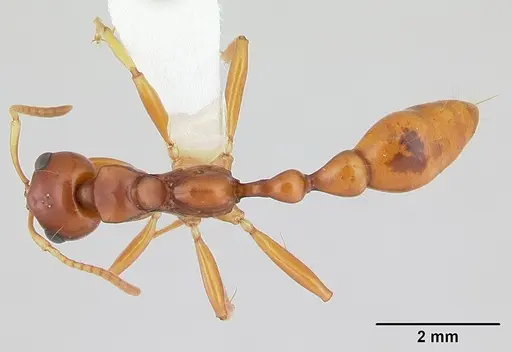
CASENT0145162
View on AntWeb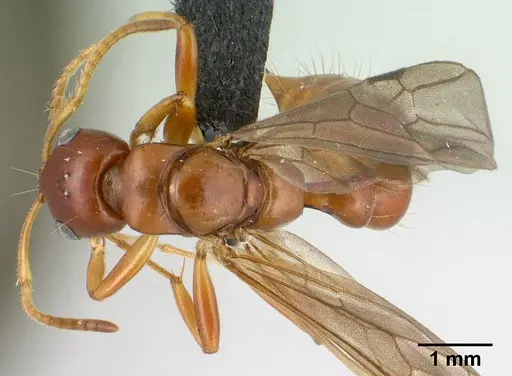
Literature
Loading distribution map...Loading products...