
Tetraponera mandibularis
- Sci. Name
- Tetraponera mandibularis
- Tribe
- Pseudomyrmecini
- Subfamily
- Pseudomyrmecinae
- Author
- Emery, 1895
- Distribution
- Found in 1 countries
Introduction
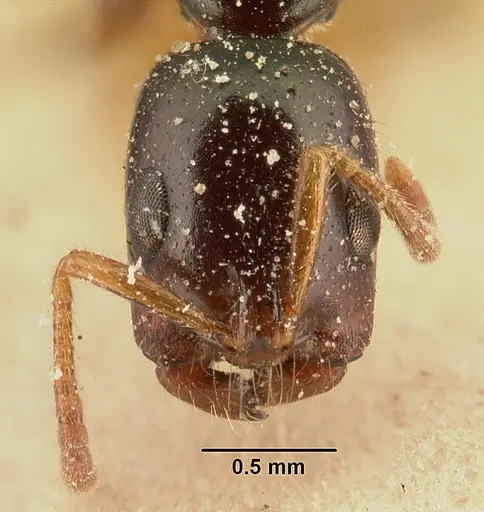
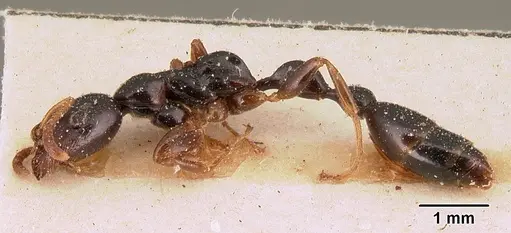
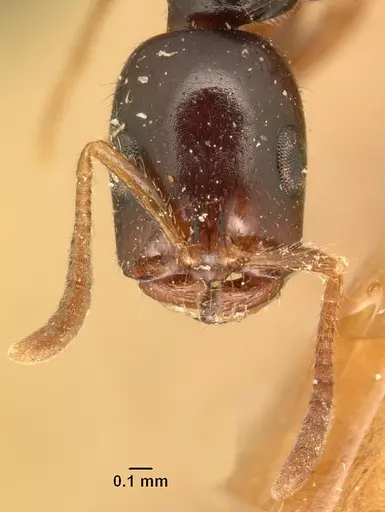
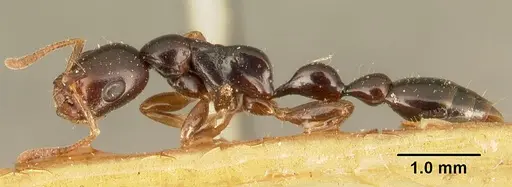
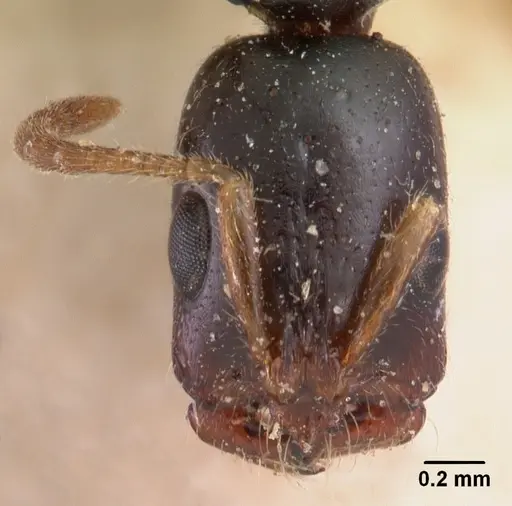
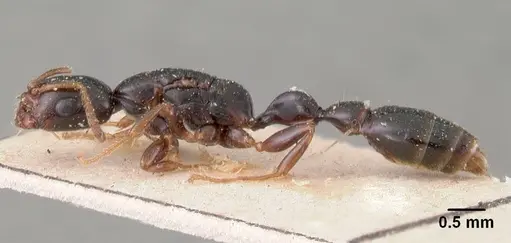
Tetraponera mandibularis is a slender, wasp-like ant species endemic to Madagascar. Workers are about 4-6 mm long with large eyes and a distinct petiole, giving them a wasp-like appearance . It belongs to the Tetraponera allaborans species group . The species was originally described as Sima mandibularis in 1895,with Sima flexuosa (1911) later recognized as a junior synonym . These ants are known from elevations of 400-1240 m in the Réserve Spéciale de Manongarivo, suggesting they prefer mid-altitude forest habitats . Like other members of the subfamily Pseudomyrmecinae, they are arboreal and likely nest in hollow plant stems or pre-formed cavities in trees .
Quick Summary
- Difficulty: Unknown, limited keeper data available
- Origin & Habitat: Madagascar, specifically the Réserve Spéciale de Manongarivo at elevations of 400-1240 m [4]. The species is endemic to the Malagasy region.
- Colony Type: Unconfirmed, colony structure (single-queen vs multi-queen) has not been documented for this species. Most Tetraponera species form single-queen colonies, but this has not been confirmed for T. mandibularis.
- Size & Growth:
- Queen: ~6-8 mm, inferred from the genus Tetraponera [1]
- Worker: ~4-6 mm, inferred from the genus Tetraponera [1]
- Colony: Unknown, no colony size data available for this species
- Growth: Unknown, development timeline has not been studied
- Development: Estimated 6-8 weeks based on typical Tetraponera development at tropical temperatures [1] (Development time is estimated from genus-level data since species-specific research is unavailable. Tropical temperatures (24-28°C) likely support faster development.)
- Antkeeping:
- Temperature: Likely 24-28°C based on Madagascar's tropical climate and elevation range, provide a gentle gradient and adjust based on colony activity [4]
- Humidity: Moderate to high, forest-dwelling ants that likely prefer humid conditions with good ventilation. Keep the nest substrate dry but provide a humid outworld [1].
- Diapause: Unlikely, being a tropical species from Madagascar, they probably do not require a true diapause period. A slight reduction in temperature during winter months may be beneficial, but do not go below 18°C.
- Nesting: Likely prefers arboreal-style setups, hollow twigs, plant stems, or Y-tong/naturalistic setups with narrow chambers. Avoid wet substrates, keep nest chambers relatively dry [1].
- Behavior: Behavior is not well-documented for this species. Based on genus-level information, workers are active, visually-guided predators of small arthropods. They have a sting and may defend their nest vigorously [1]. Escape prevention is critical, their slender bodies can squeeze through gaps under 1 mm, so use fine mesh and barriers.
- Common Issues: limited species-specific care information makes proper husbandry challenging, escape risk is significant due to their slender body shape and arboreal climbing abilities, humidity control is critical, too wet causes fungal issues, too dry causes desiccation, wild-caught colonies may carry parasites or diseases not well understood, lack of established husbandry protocols means keepers must experiment with conditions
Temperature and Care
Tetraponera mandibularis comes from Madagascar at elevations of 400-1240 m, so aim for temperatures of 24-28°C [4]. The moderate elevation suggests they can tolerate slightly cooler conditions than true lowland tropical species, but they still need warmth. Use a heating cable on one side of the nest to create a gradient, allowing the colony to self-regulate. Monitor activity, if workers cluster consistently in warmer areas, increase heat slightly, if they avoid the heated zone, reduce temperature. Room temperature (22-24°C) may be acceptable if your home falls within this range. Avoid temperatures below 20°C for extended periods [1].
Nesting Preferences
Tetraponera mandibularis is a member of the subfamily Pseudomyrmecinae, which are typically arboreal. In the wild, they likely nest in hollow plant stems, rotting twigs, or pre-formed cavities in trees [1]. For captive care, use arboreal-style setups, Y-tong nests with narrow chambers, naturalistic setups with hollow twigs or cork bark, or other nests designed for slender ants. Avoid large, open spaces in the nest, these ants prefer tight, enclosed chambers. Keep the nest material relatively dry, unlike many ants, Tetraponera prefer drier conditions inside the nest chamber while having access to humidity in the outworld. Ensure excellent escape prevention as their slender bodies can squeeze through small gaps [1].
Feeding and Diet
Based on genus-typical behavior, Tetraponera mandibularis is likely predatory on small arthropods and also accepts honeydew and sugar sources [1]. Offer a varied diet including small live prey such as fruit flies, pinhead crickets, and small mealworms. Sugar water, honey, or diluted nectar should be available at all times. Since these are slender, wasp-like ants with good vision, they are probably active hunters rather than scavengers. Feed protein prey 2-3 times per week, and keep sugar sources constantly available. Remove uneaten prey after 24-48 hours to prevent mold. Be prepared to experiment, as exact prey preferences are undocumented [1].
Behavior and Temperament
Tetraponera ants are known for their excellent vision and active foraging behavior [1]. Workers are slender and agile, capable of rapid movement when hunting or defending the nest. While specific behavior for T. mandibularis is unstudied, the subfamily Pseudomyrmecinae possesses a functional sting used to defend against threats. They are generally not overly aggressive but will defend the nest vigorously if provoked. Escape prevention is critical, their slender body shape allows them to squeeze through gaps under 1 mm. Use fine mesh on all ventilation holes, apply fluon or barrier gel around the outworld, and check for any gaps. These ants are likely diurnal or crepuscular, matching their visual hunting strategy [1].
Colony Establishment
Colony founding behavior for Tetraponera mandibularis has not been documented. However, most Tetraponera species are semi-claustral, the queen leaves the nest periodically to forage for food [1]. If you obtain a founding queen, provide her with a small hunting area and offer small prey items. The queen will need to hunt to survive until her first workers emerge, making founding slightly more challenging than claustral species. Expect first workers (nanitics) to be smaller than normal workers. Development from egg to worker likely takes 6-8 weeks at tropical temperatures (24-28°C), but this is estimated from genus-level data [1]. Monitor the founding chamber for mold and maintain proper humidity without over-wetting.
Frequently Asked Questions
How long does it take for Tetraponera mandibularis to produce first workers?
The egg-to-worker timeline is not documented for this species. Based on typical Tetraponera development at 24-28°C, expect approximately 6-8 weeks from egg to first worker [1]. Nanitics will be smaller than fully-grown workers.
What do Tetraponera mandibularis ants eat?
Based on genus-typical behavior, they likely accept small live prey (fruit flies, small crickets, mealworms) and sugar sources (honey water, sugar water, nectar) [1]. They are probably active predators. Offer protein prey 2-3 times weekly and keep sugar water available. Remove uneaten prey after 24-48 hours.
Can I keep Tetraponera mandibularis in a test tube?
A test tube setup can work for founding colonies, but you may need to modify it [1]. These arboreal ants prefer tight chambers, so a standard test tube with a cotton barrier is acceptable for the founding stage. As the colony grows, transition to an arboreal-style nest (Y-tong or naturalistic with hollow twigs). Keep the nest chamber relatively dry but provide a humid outworld.
Do Tetraponera mandibularis ants sting?
Yes, Tetraponera mandibularis belongs to the subfamily Pseudomyrmecinae, which has a functional sting. They use it to defend themselves and their nest, similar to other members of this subfamily. The sting is not considered dangerous to humans but can be painful if provoked.
What temperature do Tetraponera mandibularis ants need?
Based on their Madagascar origin and elevation range (400-1240 m), aim for 24-28°C [4]. They can likely tolerate slightly cooler conditions but avoid temperatures below 20°C. Use a heating cable on one side of the nest to create a gradient [1].
Are Tetraponera mandibularis good for beginners?
This species is not recommended for beginners due to very limited species-specific care information [1]. Unlike well-established species in the hobby, T. mandibularis lacks documented husbandry protocols. You will likely need to experiment with conditions. If you are experienced with arboreal ants or related Pseudomyrmecinae species, this could be an interesting challenge.
Do Tetraponera mandibularis need hibernation?
Being a tropical species from Madagascar, they likely do not require a true diapause period [1]. A slight reduction in temperature during winter months (a few degrees below summer temperatures) may be beneficial. Do not subject them to temperatures below 18°C, as that could cause stress or mortality.
How big do Tetraponera mandibularis colonies get?
Colony size for this species is unknown, no scientific data documents maximum colony sizes [1]. Based on genus-level information, Tetraponera colonies are typically smaller than many common ant species, often reaching a few hundred workers at most. Expect moderate colony growth.
Why are my Tetraponera mandibularis dying?
Common causes include: incorrect humidity (too wet causes fungal issues, too dry causes desiccation), temperatures outside their preferred range, stress from excessive disturbance, or parasites from wild-caught colonies [1]. Since species-specific care information is limited, careful observation is key. Ensure proper ventilation, appropriate nest dryness, and avoid overhandling.
Can I keep multiple Tetraponera mandibularis queens together?
This has not been documented for this species. Most Tetraponera species form single-queen colonies, but colony structure for T. mandibularis is unconfirmed [1]. Combining unrelated foundress queens is not recommended. If you obtain multiple queens, house them separately until you confirm colony structure.
When should I move Tetraponera mandibularis to a formicarium?
Move them when the colony reaches around 20-30 workers and the test tube or founding setup becomes cramped [1]. For arboreal species like Tetraponera, transition to a Y-tong or naturalistic setup with narrow chambers. Ensure the new nest has appropriate humidity zones and escape prevention before moving.
Is Tetraponera mandibularis aggressive?
The species-specific temperament is unstudied, but Tetraponera ants are generally not considered highly aggressive [1]. They will defend their nest if threatened but are not known for unprovoked attacks. Their primary defense is retreat or stinging when provoked. They are active foragers but typically avoid conflict with larger organisms.
Report an Issue
The current care sheet is based fully on literature. See inconsistencies, or something that's incorrect? Please , it will be resolved after review from an admin. Contributing to the blogs tab also helps providing information, to make us be able to further improve the caresheets. Thank you for your support!
References

This caresheet is licensed under CC BY-SA 4.0 .
Community Blogs
CASENT0012845
View on AntWeb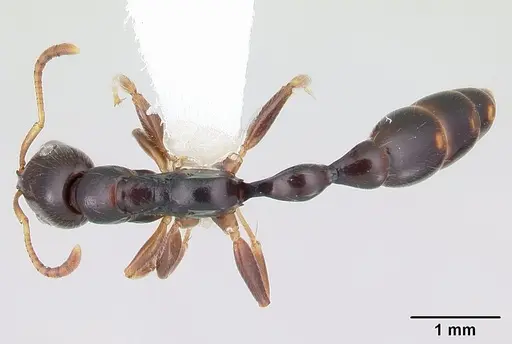
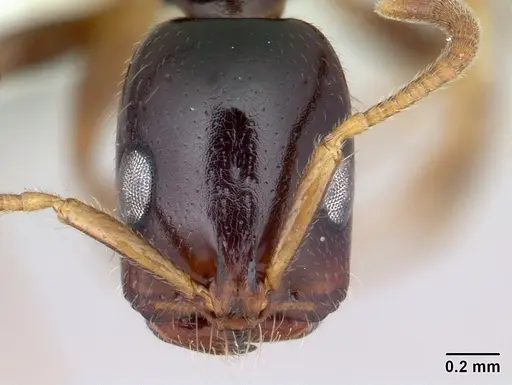
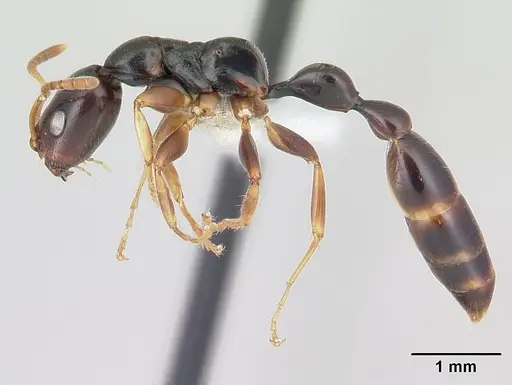
CASENT0101154
View on AntWeb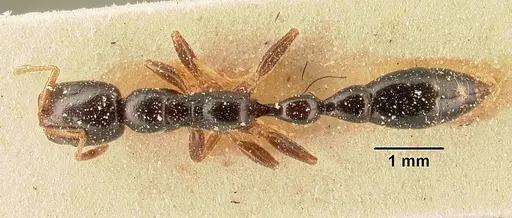
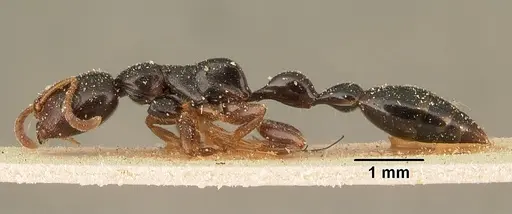
CASENT0101155
View on AntWeb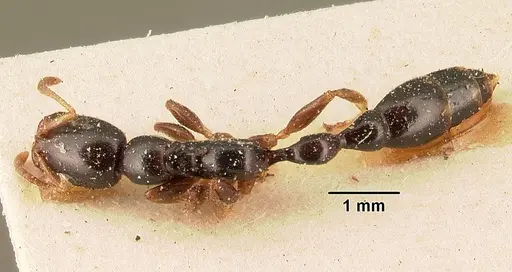
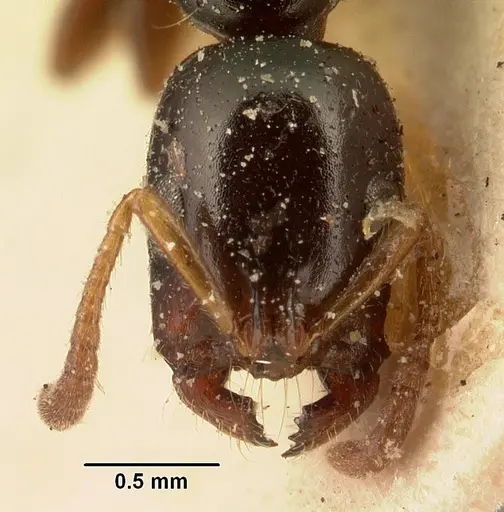
CASENT0101979
View on AntWeb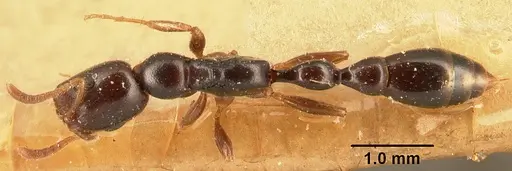
CASENT0102030
View on AntWeb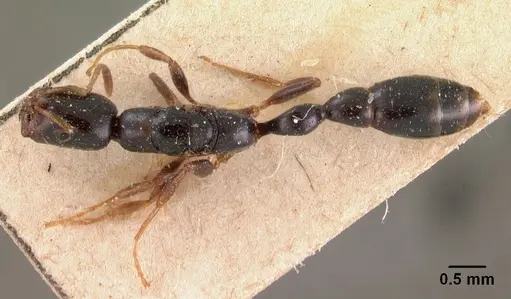
Literature
Loading distribution map...Loading products...