
Tetraponera inversinodis
- Sci. Name
- Tetraponera inversinodis
- Tribe
- Pseudomyrmecini
- Subfamily
- Pseudomyrmecinae
- Author
- Ward, 2001
- Distribution
- Found in 3 countries
Introduction
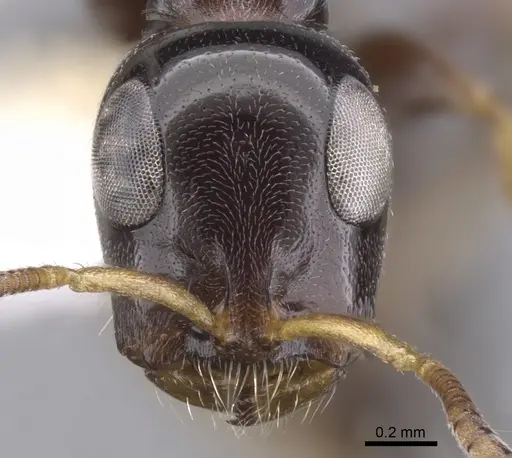
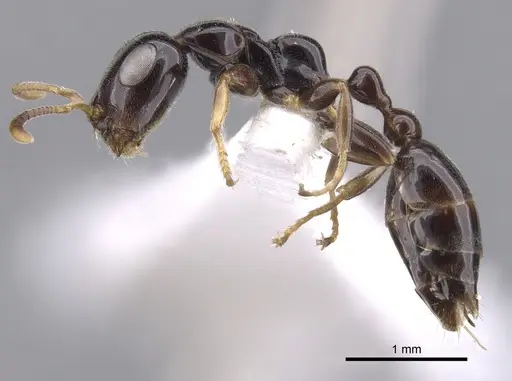
Tetraponera inversinodis is a small, slender arboreal ant native to Southeast Asia. It is found across Borneo, Indonesia, Malaysia, the Philippines, and Singapore . Workers have a distinctive "reversed-node" petiole shape: the front face of the node is short and steep, while the back face is longer and slopes more gently. Their eyes are large and elongated compared to close relatives like Tetraponera difficilis . These ants live in lowland rainforest, mangrove areas, gardens, and relict rainforest patches . Like other Pseudomyrmecinae ants, they are predatory and likely help control small arthropod populations in their ecosystem.
Quick Summary
- Difficulty: Medium
- Origin & Habitat: Southeast Asia – Borneo, Indonesia, Malaysia, Philippines, Singapore. Found in lowland rainforest, mangrove twigs, gardens, and relict rainforest patches [1][2].
- Colony Type: Unconfirmed. Based on typical Tetraponera genus patterns, it is likely monogyne (single-queen colonies), but this has not been confirmed in published research.
- Size & Growth:
- Queen: Size data unavailable. Inferred from genus Tetraponera – queens are typically ~6–8 mm total length.
- Worker: Size data unavailable. Inferred from genus Tetraponera – workers are typically ~4–6 mm total length.
- Colony: Up to several hundred workers (estimated from genus patterns, no specific data).
- Growth: Moderate (estimated)
- Development: 6–10 weeks (estimated from related Tetraponera species) (Timing is an estimate, keepers should monitor brood development and adjust care as needed.)
- Antkeeping:
- Temperature: Keep at 24–28 °C. A gentle gradient is helpful but not critical.
- Humidity: High humidity – aim for 70–80% relative humidity. Keep the nest substrate consistently moist but not waterlogged.
- Diapause: No diapause required – tropical species from Southeast Asian rainforests need year-round warmth [1].
- Nesting: Arboreal specialists that prefer narrow chambers mimicking hollow twigs. Use Y-tong (AAC) nests, test tubes, or plaster nests with small water reservoirs. Provide vertical climbing surfaces in the outworld.
- Behavior: Tetraponera inversinodis are agile, active foragers that hunt small arthropods. They have well-developed stingers used for defense. Workers are not aggressive but will defend their nest if threatened [1]. Escape prevention is critical due to their tiny size – they can squeeze through gaps smaller than 1 mm.
- Common Issues: escape prevention is critical due to tiny worker size – use fine mesh (≤0.5 mm) and seal all gaps, high humidity requirements can lead to mold if ventilation is poor – balance moisture with airflow, predatory diet requires live prey – colonies may struggle if not fed appropriate live insects regularly
Housing and Nest Setup
Tetraponera inversinodis naturally nests in hollow twigs, stems, and tree cavities [1]. Provide a nest with narrow chambers to mimic these tight spaces. Y-tong (AAC) nests, plaster nests, or test tubes work well. The nest should have small water reservoirs to keep humidity high without flooding. Use an outworld with vertical climbing surfaces like twigs, branches, or coarse mesh. Escape prevention is critical: workers are very small and can squeeze through gaps as small as 0.5 mm. Use fine mesh (≤0.5 mm) on all ventilation holes and seal tubing connections tightly.
Feeding and Diet
Like other Pseudomyrmecinae, Tetraponera inversinodis is predatory. Offer small live prey such as fruit flies, springtails, and small crickets. They actively hunt moving insects. Also provide sugar sources like honey water, sugar water, or maple syrup. Feed every 2–3 days and remove uneaten prey after 24 hours to prevent mold. During colony founding, the queen does not need food – she relies on stored fat reserves [1].
Temperature and Humidity
These are tropical ants from lowland rainforest habitats, so they need warm and humid conditions. Keep the nest area at 24–28 °C. Use a heating cable or mat under the nest if room temperature is lower. Place heating on top to create gentle warmth without drying out the substrate. Humidity should be high – aim for 70–80% relative humidity. Use a water reservoir in the nest and mist the outworld occasionally. Ensure good ventilation to prevent mold while avoiding excessive airflow that dries the nest. [1]
Colony Founding
The founding method for Tetraponera inversinodis has not been documented. Based on related Tetraponera species, queens likely seal themselves in a chamber and raise the first brood without foraging (claustral founding) [1]. However, this is unconfirmed. Minimize disturbance during the founding period – keep the setup in darkness and avoid vibrations. Use a small, snug chamber that mimics a hollow twig. Do not check the colony for at least 4–6 weeks after setup.
Growth and Development
No species-specific timeline is published. From genus-level data, egg-to-worker development likely takes 6–10 weeks at optimal temperatures (24–28 °C). The first workers (nanitics) are smaller than mature workers. Once they emerge, the colony enters a growth phase. A healthy colony should grow steadily over several months to a year. Growth depends on feeding frequency and temperature. If brood development stalls, check temperature, humidity, and protein availability. [1]
Frequently Asked Questions
How long does it take for Tetraponera inversinodis to raise first workers?
Estimated at 6–10 weeks from egg to first worker at 24–28 °C, based on related Tetraponera species. No species-specific data is available [1].
Can I keep Tetraponera inversinodis in a test tube?
Yes, test tubes work well for founding colonies. Use a small test tube with a water reservoir and keep it dark and quiet. Once the colony grows to around 20–30 workers, move them to a Y-tong or plaster nest with an outworld [1].
What do Tetraponera inversinodis eat?
They need live protein prey like fruit flies, springtails, and small crickets. Also offer sugar water, honey water, or maple syrup. Feed every 2–3 days and remove uneaten prey after 24 hours [1].
Do Tetraponera inversinodis sting?
Yes – like other Pseudomyrmecinae ants, they have functional stingers. However, they are not aggressive and typically flee rather than attack. Stings are mild and not a major concern for keepers.
Are Tetraponera inversinodis good for beginners?
They are intermediate-level ants. Their high humidity and dietary requirements can be challenging for complete beginners. However, with good escape prevention and consistent care, they are rewarding.
Do Tetraponera inversinodis need hibernation?
No. As a tropical species from Southeast Asian rainforests, they require year-round warm temperatures (24–28 °C) and do not need a winter rest period [1].
How big do Tetraponera inversinodis colonies get?
Exact colony size is unknown. Based on typical Tetraponera patterns, colonies likely reach several hundred workers at most. Related species usually stay under 500 workers.
Why are my Tetraponera inversinodis escaping?
Their tiny size allows them to squeeze through extremely small gaps. Check all openings carefully – even gaps around tubing connections. Use fine mesh (0.5 mm or smaller) on all ventilation holes. Ensure lids have rubber gaskets or tight seals [1].
When should I move Tetraponera inversinodis to a formicarium?
Move them once the colony reaches 20–30 workers and the test tube is becoming cramped. A Y-tong nest with small chambers is ideal. Make sure the new nest matches their need for tight spaces [1].
Can I keep multiple Tetraponera inversinodis queens together?
Not recommended – the social structure is unconfirmed, but most Tetraponera are monogyne. Combining unrelated queens typically results in fighting. Keep only one queen per colony.
What temperature is best for Tetraponera inversinodis?
Keep them at 24–28 °C. Room temperature in this range is usually fine, but in cooler climates you may need a heating cable or mat. Ensure a gentle gradient.
Why is my colony not growing?
Common causes: insufficient protein feeding, low humidity, or temperatures outside the optimal range. Check that the queen is still laying eggs and that workers actively hunt. Also ensure the nest is not too large – overly large chambers can stress small colonies [1].
Report an Issue
The current care sheet is based fully on literature. See inconsistencies, or something that's incorrect? Please , it will be resolved after review from an admin. Contributing to the blogs tab also helps providing information, to make us be able to further improve the caresheets. Thank you for your support!
References

This caresheet is licensed under CC BY-SA 4.0 .
Community Blogs
CASENT0902832
View on AntWeb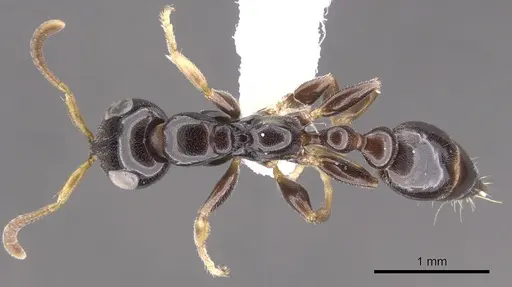
Literature
Loading distribution map...Loading products...