
Tetraponera grandidieri
- Sci. Name
- Tetraponera grandidieri
- Tribe
- Pseudomyrmecini
- Subfamily
- Pseudomyrmecinae
- Author
- Forel, 1891
- Distribution
- Found in 1 countries
Introduction
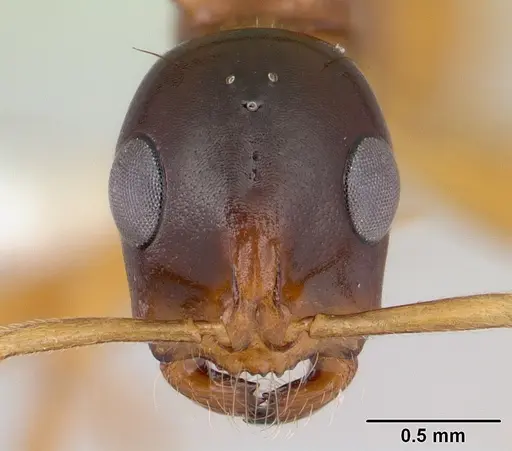
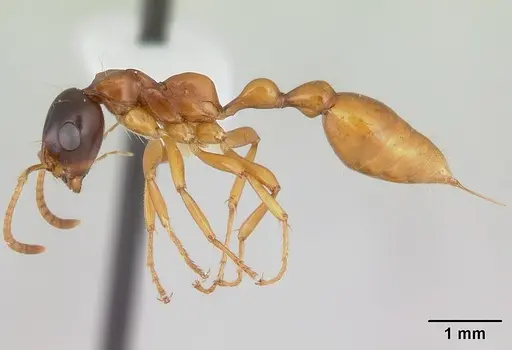
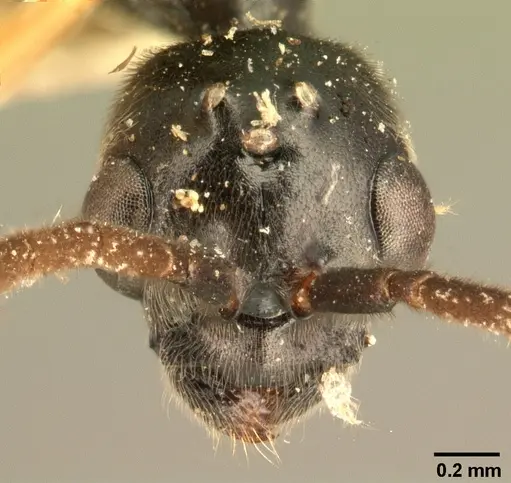
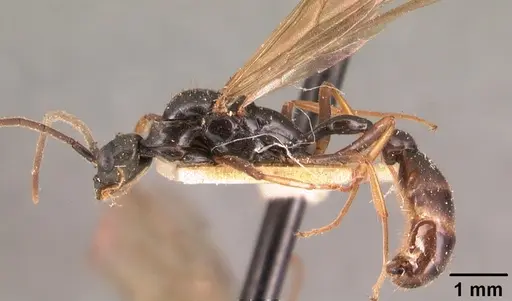
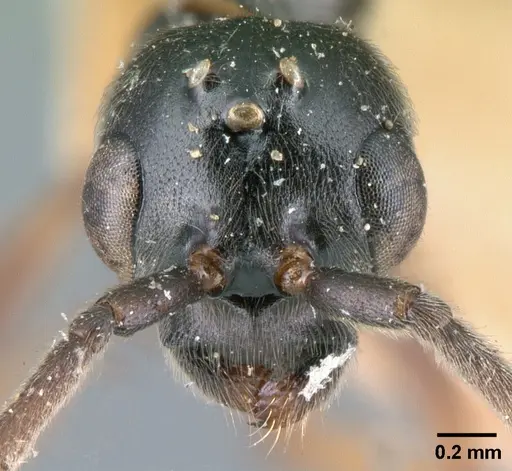
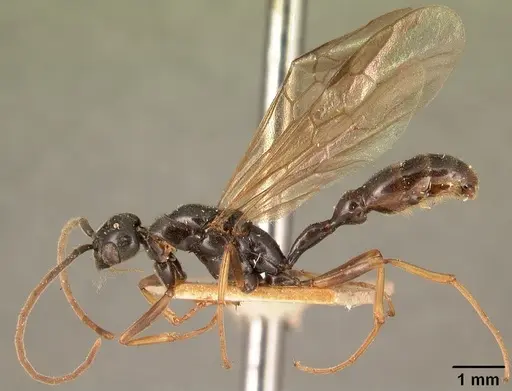
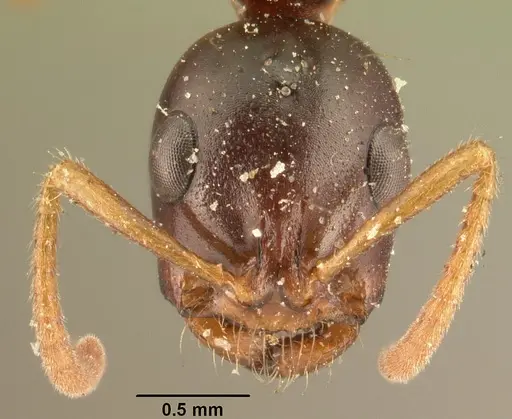
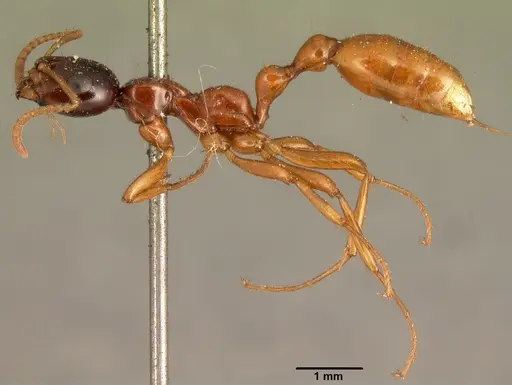
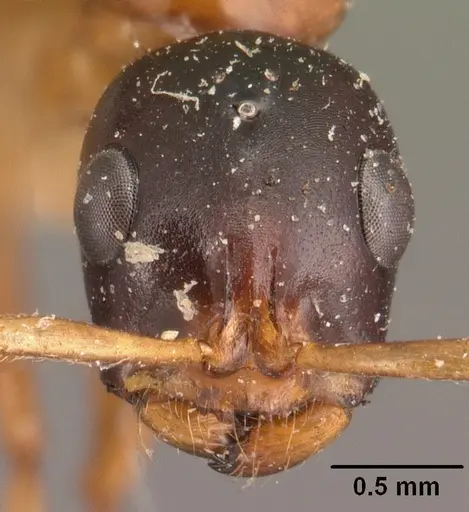
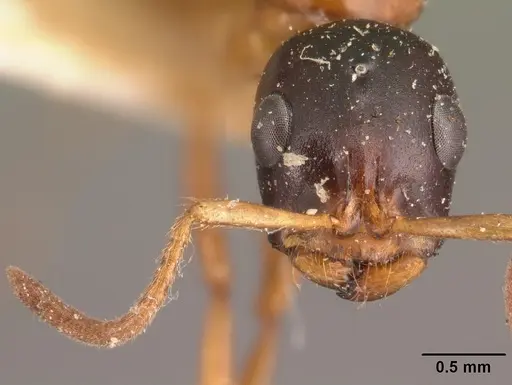
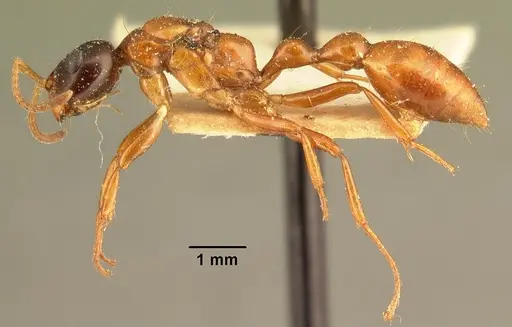
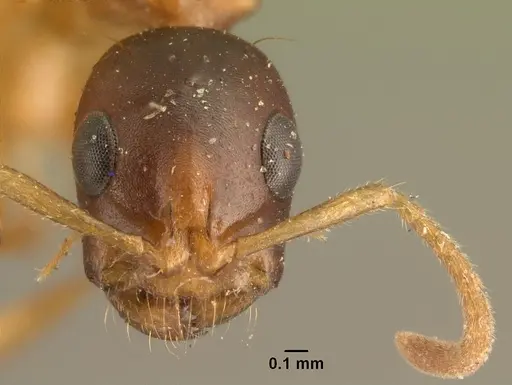
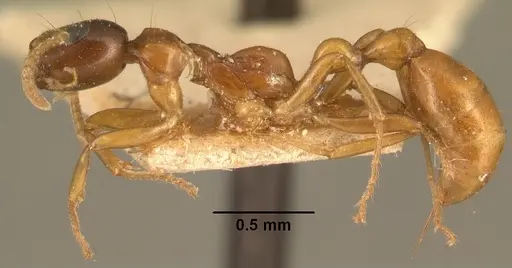
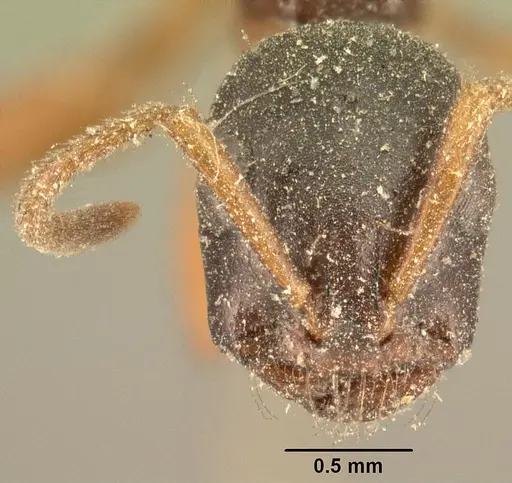
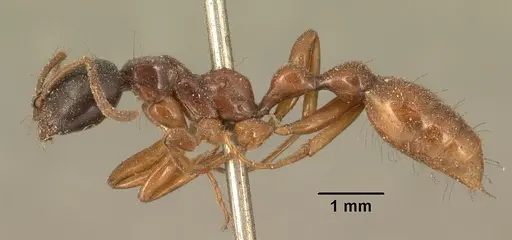
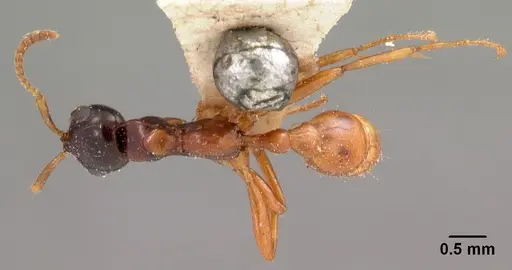
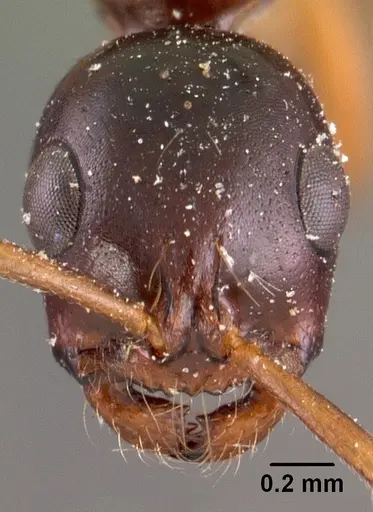
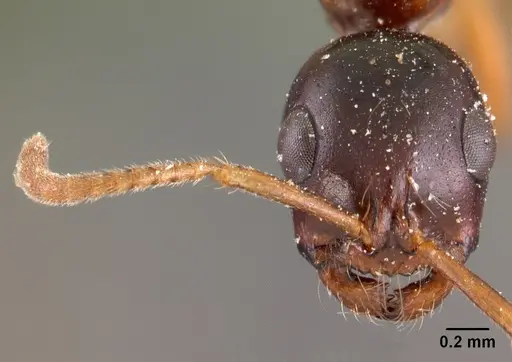
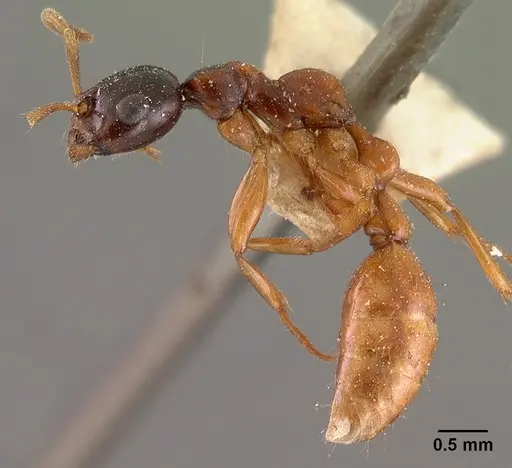
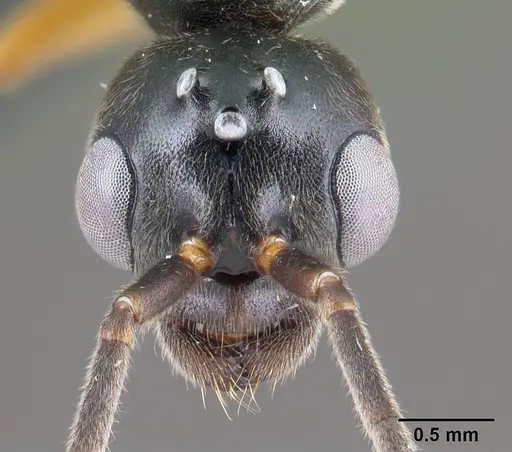
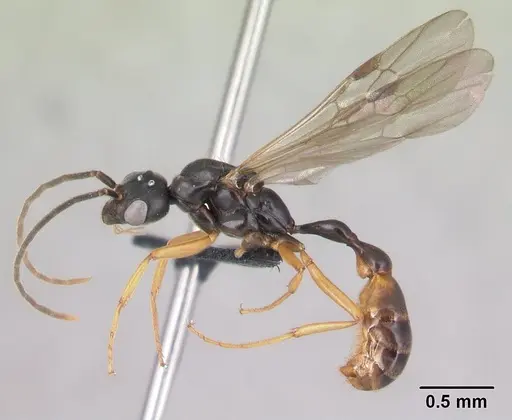
Tetraponera grandidieri is a medium-sized ant endemic to the rainforests of Madagascar. Workers have a distinctive bicolored pattern: a dark brown to black head contrasting with an orange-brown body, though some northern populations are uniformly orange-brown . This species nests in dead twigs and branches on the forest floor, and sometimes in cavities in live plant stems like Ixora, Leea, and Rhus . Colonies are small, usually with a single queen and up to 40 workers . Workers forage on low vegetation and are mimicked by Camponotus putatus complex ants that share the same habitat . They are absent from disturbed rainforest edges and high-light areas .
Quick Summary
- Difficulty: Medium
- Origin & Habitat: Endemic to eastern Madagascar's rainforests, from sea level to 1375 m elevation. Found only in undisturbed forest, not at edges or in disturbed areas [1].
- Colony Type: Monogyne – each colony has a single dealate queen. Colony size stays small, up to 40 workers [1].
- Size & Growth:
- Queen: Size data unavailable.
- Worker: Size data unavailable.
- Colony: Up to 40 workers [1].
- Growth: Slow – small colony size suggests gradual development.
- Development: Roughly 8–12 weeks (estimated from related Pseudomyrmecinae, species‑specific data not available). (Growth is slow because colonies stay tiny. Patience is key.)
- Antkeeping:
- Temperature: Keep at 22–26 °C – this tropical rainforest species needs stable warmth. Avoid drafts and sudden drops below 20 °C. A gentle gradient lets workers self‑regulate [1].
- Humidity: High humidity is essential. Keep the nest substrate consistently moist but not waterlogged – think damp forest floor. A water reservoir in the nest helps maintain humidity [1].
- Diapause: No – this is a tropical species from Madagascar. Maintain warmth year‑round, hibernation attempts can kill the colony.
- Nesting: Twig‑nesters in the wild. In captivity, use test tubes, Y‑tong (AAC) blocks, or plaster nests with narrow chambers that mimic their natural tight cavities. Avoid large, open spaces. A small water reservoir helps keep humidity high.
- Behavior: Workers are active foragers on low vegetation. They are not particularly aggressive but will defend their nest if threatened. Their tiny size makes them excellent escape artists – use fine mesh barriers (at least 0.5 mm openings) and tight seals. They are generalist feeders: in the wild they hunt small arthropods and collect honeydew. In captivity they accept fruit flies, springtails, mini crickets, and sugar water or honey. Feed small amounts 2–3 times per week and remove leftovers quickly to prevent mold.
- Common Issues: tiny workers can squeeze through standard insect mesh – use very fine barriers (0.5 mm or smaller) and fluon on outworld walls., sensitive to dry conditions – the nest must stay consistently humid, drying out kills brood and can stress the colony., slow growth may frustrate impatient keepers – resist the urge to overfeed or disturb the nest., small colonies are easily stressed by frequent inspections – limit disturbance to once every week or two., with only up to 40 workers, losing a few workers from a fall or escape is a big setback – handle gently.
Housing and Nest Setup
Tetraponera grandidieri naturally nests in dead twigs and branches on the forest floor, and occasionally in cavities in live plant stems [2][1]. In captivity, a test tube with a water reservoir and cotton stop works well for a founding colony. As the colony grows, move them to a Y‑tong (AAC) block or plaster nest with small chambers – size matters more than material. Because colonies stay tiny (up to 40 workers), a compact nest of just a few chambers is enough. The nest must stay humid: use a water reservoir that slowly evaporates into the nest chamber. Avoid large, open spaces, which the ants find stressful. Always use fine mesh (0.5 mm or smaller) on ventilation holes to prevent escapes.
Feeding and Diet
Like other Pseudomyrmecinae, this species is a generalist forager. In the wild, workers hunt small arthropods and collect honeydew from scale insects or aphids. In captivity, offer tiny live prey such as fruit flies, springtails, and pinhead crickets. They also accept sugar water, honey, or diluted honeydew. Feed small amounts 2–3 times per week and remove uneaten prey after 24 hours to prevent mold. Because the colony is small, portion sizes should be minimal – a few fruit flies or a single drop of sugar water. Mold grows fast and can kill small colonies. [1]
Temperature and Seasonal Care
Tetraponera grandidieri comes from Madagascar's rainforests where temperatures stay warm and stable year‑round. Keep the nest area at 22–26 °C. A small heating cable on one side of the nest can create a temperature gradient, but place it on top of the nest (not underneath) to avoid drying the substrate. Unlike temperate ants, this species does not need hibernation – maintain consistent warmth all year. Sudden drops below 20 °C can cause stress or kill the colony. In most homes, room temperature (20–24 °C) is acceptable, but watch for cold spots near windows or air conditioning vents. [1]
Colony Development and Growth
Colonies stay small, typically 5–40 workers at maturity [1]. This is one of the smallest commonly kept ant species. Growth is slow: expect 2–6 workers in the first year, with gradual increases over subsequent years. A single queen founds the colony alone (likely claustral, though founding behavior is unconfirmed in the literature) and uses her own stored reserves to raise the first workers. Do not expect rapid expansion – this species is naturally limited in size. Be patient, and avoid overfeeding or frequent disturbance, both of which can stress a small colony. The queen is noticeably larger than the workers, but detailed size measurements are not available.
Behavior and Temperament
Workers are active foragers that search for food on low vegetation. They are not especially aggressive toward keepers, but they will defend the nest if threatened. One interesting feature: workers of this species are mimicked by Camponotus putatus complex ants that live in the same microhabitat [1]. In captivity, the ants are generally calm and fun to watch. However, their tiny size makes them excellent escape artists. Use fine mesh (0.5 mm or smaller) on any ventilation openings, and apply a fluon or PTFE barrier to the upper edges of the outworld. Check all connections between nest and outworld – even the tiniest gap is an escape route. A sting is present, but it's mild and rarely used on keepers.
Frequently Asked Questions
Can I keep Tetraponera grandidieri in a test tube?
Yes, a test tube with a water reservoir and cotton stop works great for founding colonies. The narrow space mimics their natural twig cavities. Once the colony reaches 20–30 workers, move them to a small Y‑tong or plaster nest with similar narrow chambers.
How long does it take for Tetraponera grandidieri to produce first workers?
Exact timing hasn't been studied, but based on related Pseudomyrmecinae species, expect first workers (nanitics) to emerge 8–12 weeks after egg‑laying if kept around 24–26 °C. The first workers will be smaller than mature workers and take a few weeks to harden.
Are Tetraponera grandidieri good for beginners?
They are rated medium difficulty. They are calm and adapt to captivity, but their small colony size, high humidity needs, and tiny workers (escape risk) make them better suited for keepers who have successfully kept at least one other ant species. Beginners may find the slow growth frustrating.
Do Tetraponera grandidieri ants sting?
Yes, they have a functional sting, like all Pseudomyrmecinae. But they are not aggressive and will only sting if roughly handled or directly threatened. The sting is mild – comparable to a tiny pinprick.
How big do Tetraponera grandidieri colonies get?
Colonies remain small, typically 5–40 workers at maturity [1]. This is one of the smallest ant species available in the hobby. Their appeal is in their interesting behavior and the challenge of maintaining a delicate, tiny colony.
What temperature do Tetraponera grandidieri need?
Keep them at 22–26 °C year‑round. As a tropical rainforest species from Madagascar, they need stable warmth. Room temperature is fine, but avoid cold drafts. A small heating cable can help if your room runs cool. Never let the nest drop below 20 °C.
Do Tetraponera grandidieri need hibernation?
No. This is a tropical species – it does not hibernate. Maintain consistent warmth all year. Attempting to cool them for hibernation can be fatal. Keep temperatures between 22–26 °C throughout the year.
Why are my Tetraponera grandidieri escaping?
Their tiny body size lets them squeeze through the smallest gaps. Use fine mesh with openings 0.5 mm or smaller on all ventilation and access points. Apply fluon or a similar barrier to the upper edges of the outworld. Check all tube connections and lid seals. Escape prevention is critical with this species.
Can I keep multiple Tetraponera grandidieri queens together?
No – this species is monogyne. Colonies contain only one queen. Multiple unrelated queens will fight. Pleometrosis (co‑founding) has not been documented for this species. In established colonies you should only ever see one queen.
What do Tetraponera grandidieri eat?
They are generalist foragers. Offer small live prey like fruit flies, springtails, and very small crickets. They also take sugar water, honey, or diluted honeydew. Feed tiny amounts 2–3 times per week and remove uneaten food within 24 hours to avoid mold. Because the colony is small, portions must be minimal.
Where is Tetraponera grandidieri native to?
This species is endemic to Madagascar's eastern rainforests, from sea level up to 1375 m elevation. It is restricted to undisturbed forest and is absent from disturbed areas and forest edges [1].
When do Tetraponera grandidieri alates appear?
Alate queens and males have been collected between February and May in the wild [1]. This suggests nuptial flights happen during the warmer, wetter months in Madagascar. In captivity, alates may appear in spring or summer if the colony is mature and conditions are good.
Report an Issue
The current care sheet is based fully on literature. See inconsistencies, or something that's incorrect? Please , it will be resolved after review from an admin. Contributing to the blogs tab also helps providing information, to make us be able to further improve the caresheets. Thank you for your support!
References

This caresheet is licensed under CC BY-SA 4.0 .
Community Blogs
CASENT0012861
View on AntWeb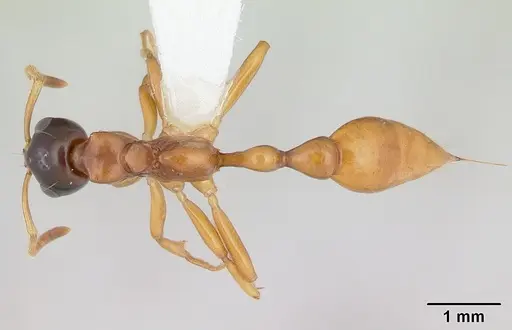
CASENT0101043
View on AntWeb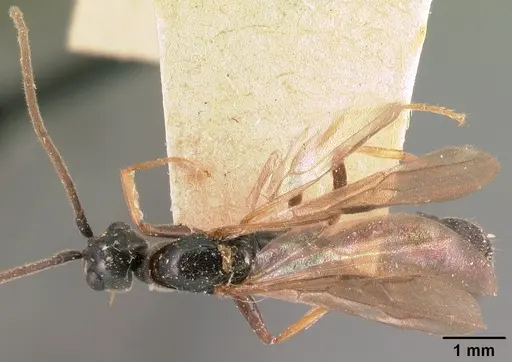
CASENT0101044
View on AntWeb
CASENT0101652
View on AntWeb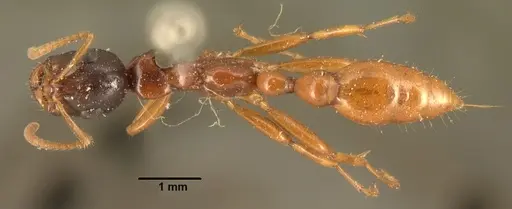
CASENT0101680
View on AntWeb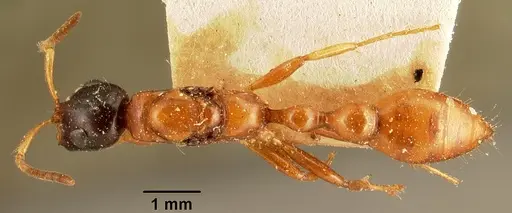
CASENT0101740
View on AntWeb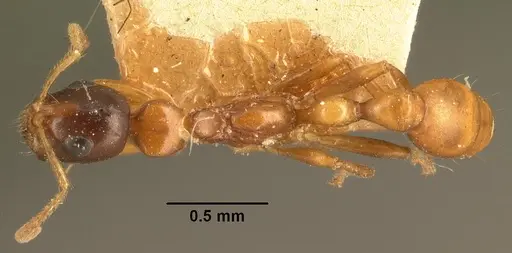
CASENT0101883
View on AntWeb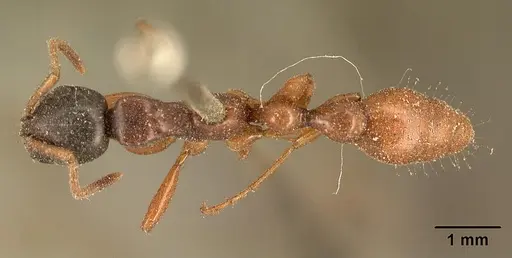
CASENT0102029
View on AntWeb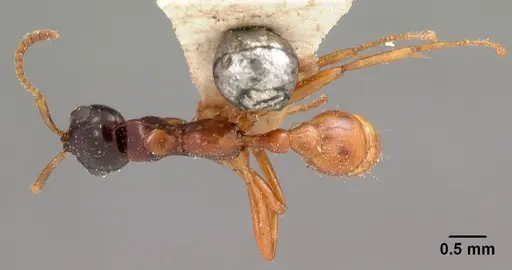
CASENT0138657
View on AntWeb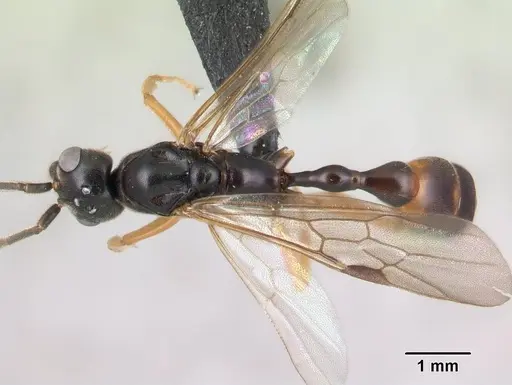
Literature
Loading distribution map...Loading products...