
Tetraponera crassiuscula
- Sci. Name
- Tetraponera crassiuscula
- Tribe
- Pseudomyrmecini
- Subfamily
- Pseudomyrmecinae
- Author
- Emery, 1900
- Distribution
- Found in 2 countries
Introduction
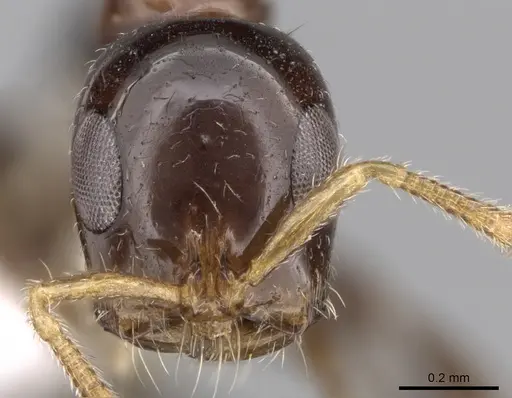
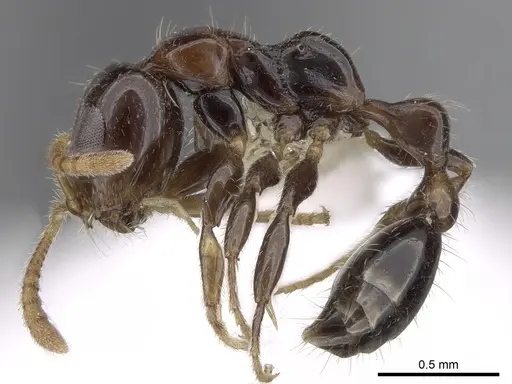
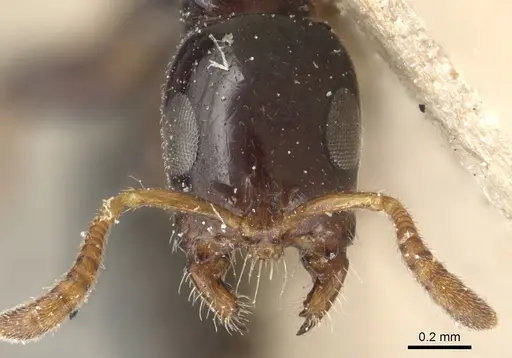
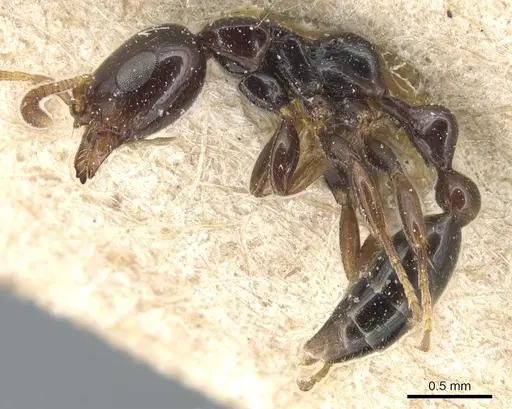
Tetraponera crassiuscula is a small, slender ant belonging to the Pseudomyrmecinae subfamily. These ants are dark brown, with the pronotum, petiole, postpetiole, and legs often being lighter brown . They belong to the Tetraponera allaborans species group and are part of the T. modesta-complex, which includes several similar-looking species that can be found living together in the same forests. They are native to Southeast Asia, recorded from Thailand, peninsular Malaysia, Sumatra, and Borneo . They are arboreal ants that nest in small twigs and cavities in tree trunks in rainforest environments. What makes T. crassiuscula interesting is how little we know about its colony life. Most of the information comes from related species and habitat records. They are part of a group of ants where the exact boundaries between species are still being worked out by scientists. In the field, they have been collected from twigs of Rhizophoraceae trees and from freshly felled tree trunks in rainforest . As a member of the Pseudomyrmecinae subfamily, they possess a well-developed sting used to defend their host plants.
Quick Summary
- Difficulty: Medium
- Origin & Habitat: Native to Southeast Asia: Thailand, peninsular Malaysia, Sumatra, and Borneo. Found in tropical rainforest environments, typically nesting in small twigs and cavities in tree trunks [2][3].
- Colony Type: Colony structure is not documented for this species. Based on related Tetraponera species, they likely form monogyne (single queen) colonies, but this is unconfirmed. Workers are small and slender.
- Size & Growth:
- Queen: Size data unavailable.
- Worker: Size data unavailable. Head width measurements range from 0.49-0.79 mm [1].
- Colony: Unknown. Based on related Tetraponera species, colonies are likely small, probably under a few hundred workers.
- Growth: Unknown, estimated moderate based on related tropical arboreal ant patterns.
- Development: Development time is unknown. Estimate is not possible without direct data. (Development is unstudied for this species. Based on related Pseudomyrmecinae, tropical temperatures may speed development.)
- Antkeeping:
- Temperature: Keep at 24-28°C. As a tropical species, avoid temperatures below 22°C. A gentle heat gradient allows thermoregulation [3].
- Humidity: Moderate to high. Keep the nest substrate consistently moist but not waterlogged. Provide good ventilation to prevent mold. A small water tube connected to the nest works well for this tiny species.
- Diapause: No. As a tropical species, they do not require hibernation. Keep them at stable warm temperatures year-round [3].
- Nesting: Arboreal specialists. Provide small, enclosed spaces that mimic their natural twig nests. Small test tubes, bamboo sections, or small Y-tong nests with narrow chambers work well. Avoid large, open spaces [3].
- Behavior: Alert and fast-moving. Workers are extremely small and can squeeze through tiny gaps. They are not aggressive but will flee when disturbed. They possess a well-developed sting, typical of Pseudomyrmecinae ants. Escape prevention is critical, use fine mesh on all openings. They are generalist foragers, likely hunting small arthropods and collecting honeydew in nature.
- Common Issues: escape prevention is critical due to tiny worker size, they can squeeze through standard barrier gaps., maintaining stable tropical temperatures year-round is essential, they cannot tolerate cool conditions., wild-caught colonies may have parasites or fail to adapt to captive conditions., arboreal nesting means they need small, enclosed spaces, large formicaria may stress them., slow colony growth can frustrate keepers expecting fast development.
Housing and Nest Setup
Tetraponera crassiuscula is an arboreal species that naturally nests in small twigs and tree cavities. In captivity, provide small, enclosed spaces that mimic these sites. Small test tubes with a cotton-plugged water reservoir work well for founding colonies. For established colonies, use small Y-tong nests or plaster nests with narrow chambers. Avoid large, open formicaria, these tiny ants feel exposed and stressed in spacious enclosures. The nest chambers should be tight-fitting, roughly matching the size of their natural twig nests. Include a small outworld area for foraging that connects to the nest via short tubing. Use fine mesh on all openings, these ants can escape through gaps that seem too small for larger species. Their small size makes escape prevention critically important [3].
Temperature and Humidity
As a tropical species from Southeast Asian rainforests, Tetraponera crassiuscula requires warm, stable temperatures. Keep the nest area at 24-28°C. A heating cable on one side of the nest creates a gentle gradient allowing the ants to thermoregulate. Avoid temperatures below 22°C or sudden temperature fluctuations. For humidity, aim for consistently moist but not waterlogged conditions. Provide a small water tube or moist substrate area. Good ventilation is important to prevent mold while maintaining humidity. These ants come from humid rainforest environments, so they need moisture but not stagnant dampness [3].
Feeding and Diet
Based on related Tetraponera species, T. crassiuscula is likely a generalist forager that hunts small arthropods and collects honeydew. In captivity, offer small live prey such as fruit flies, pinhead crickets, and very small mealworms. They will also accept sugar sources, offer a drop of honey water or sugar water occasionally. Feed small amounts every 2-3 days, removing uneaten prey after 24 hours to prevent mold. For founding colonies, a small drop of honey can help sustain the queen until workers emerge. Their small size means even tiny prey items are appropriate, avoid large insects that could overwhelm or injure the workers [3].
Colony Development
Colony growth and development are unstudied for this species. No data exists on development times, growth rates, or maximum colony sizes. Patience is essential. Do not disturb the queen during the founding phase, she needs peace to raise her first brood. Based on related tropical Pseudomyrmecinae species, development is likely faster at warmer temperatures (24-28°C) and slower if temperatures drop [3].
Behavior and Temperament
T. crassiuscula workers are alert, fast-moving, and somewhat shy. They are not aggressive and will typically flee when disturbed. As members of the Pseudomyrmecinae subfamily, they possess a well-developed sting which they use to defend their host plants against herbivores. Workers are slender and extremely small, which makes them excellent at escaping through tiny gaps. This species is arboreal by nature, so they are comfortable climbing on various surfaces. When keeping this species, minimize disturbances to the nest and provide dark, enclosed spaces where they feel secure. Their small size and escape ability make them best suited for keepers who pay close attention to detail in their setup [3].
Frequently Asked Questions
Can I keep Tetraponera crassiuscula in a test tube?
Yes, test tubes work well for founding colonies. Use a small test tube with a cotton-plugged water reservoir. The narrow chamber mimics their natural twig-nesting habitat. Ensure the cotton is packed firmly to prevent escapes, these tiny ants can squeeze through surprisingly small gaps.
How long does it take for Tetraponera crassiuscula to produce first workers?
Development time is unknown for this species. No direct data exists on how long it takes from egg to worker. Patience is important.
Do Tetraponera crassiuscula ants sting?
Yes. As members of the Pseudomyrmecinae subfamily, they possess a well-developed sting. They use it to defend their host plants against herbivores. They are not aggressive toward humans but can sting if handled.
What temperature do Tetraponera crassiuscula need?
Keep them at 24-28°C. This is a tropical species that cannot tolerate cool conditions. Avoid temperatures below 22°C. A gentle heat gradient allows the ants to regulate their temperature as needed.
Are Tetraponera crassiuscula good for beginners?
This species is rated as Medium difficulty. While not the most challenging, their small size, escape prevention needs, and specific temperature requirements make them better suited for keepers with some experience. Their unknown growth rate also requires patience.
Do Tetraponera crassiuscula need hibernation?
No, they do not require hibernation. As a tropical species from Southeast Asia, they need stable warm temperatures year-round. Do not expose them to cool temperatures or attempt to cool them down in winter.
How big do Tetraponera crassiuscula colonies get?
Colony size is unknown for this species. Based on related species, colonies likely remain small, probably under a few hundred workers. They are not large colony producers.
Why are my Tetraponera crassiuscula escaping?
Their tiny size allows them to escape through gaps that seem impossible. Use fine mesh on all openings, ensure lids fit tightly, and apply barrier coatings like fluon or PTFE to all rim edges. Check connections between nest and outworld regularly.
What do Tetraponera crassiuscula eat?
They are generalist foragers. Offer small live prey (fruit flies, tiny crickets, small mealworms) and occasional sugar sources (honey water, sugar water). Remove uneaten prey after 24 hours to prevent mold.
When should I move Tetraponera crassiuscula to a formicarium?
Wait until the colony has at least 20-30 workers and the test tube is becoming crowded. Moving too early can stress the colony. When moving, connect the test tube to the new nest and allow the ants to move themselves over several days.
Can I keep multiple Tetraponera crassiuscula queens together?
Colony structure is not documented for this species. Based on related Tetraponera patterns, they likely form single-queen colonies. Combining unrelated queens is not recommended as it has not been studied and could result in aggression.
Is Tetraponera crassiuscula invasive anywhere?
No, this species is not known to be invasive. It is native to Southeast Asia (Thailand, Malaysia, Sumatra, Borneo) and has not been introduced to other regions.
Report an Issue
The current care sheet is based fully on literature. See inconsistencies, or something that's incorrect? Please , it will be resolved after review from an admin. Contributing to the blogs tab also helps providing information, to make us be able to further improve the caresheets. Thank you for your support!
References

This caresheet is licensed under CC BY-SA 4.0 .
Community Blogs
CASENT0281871
View on AntWeb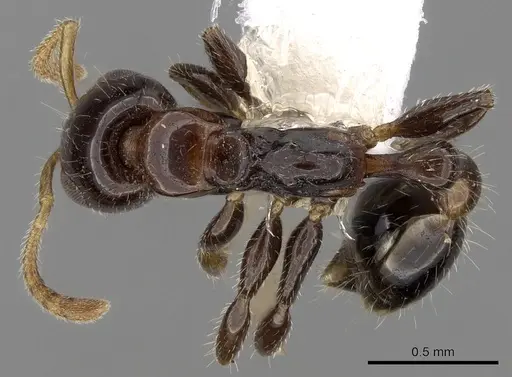
CASENT0904038
View on AntWeb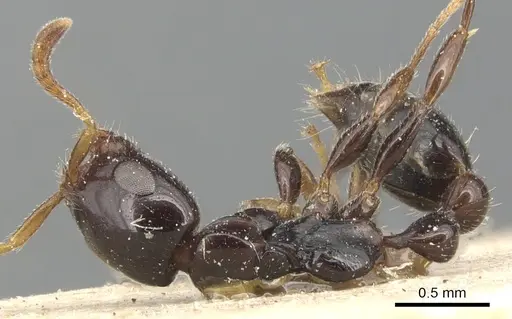
Literature
Loading distribution map...Loading products...