
Black Slender ant
Tetraponera clypeata
- Sci. Name
- Tetraponera clypeata
- Tribe
- Pseudomyrmecini
- Subfamily
- Pseudomyrmecinae
- Author
- Emery, 1886
- Common Name
- Black Slender ant
- Distribution
- Found in 1 countries
Introduction
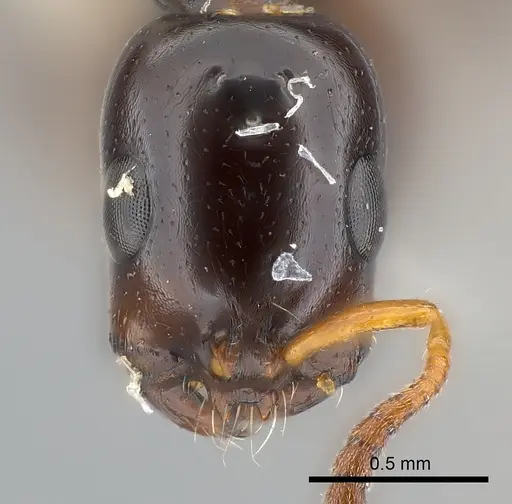
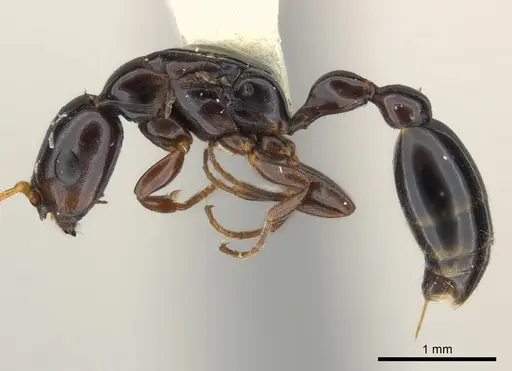
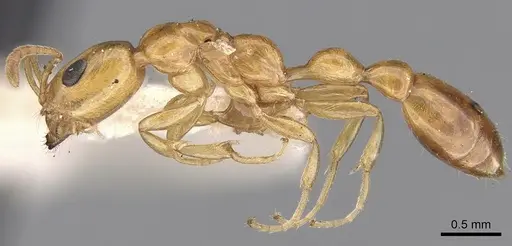
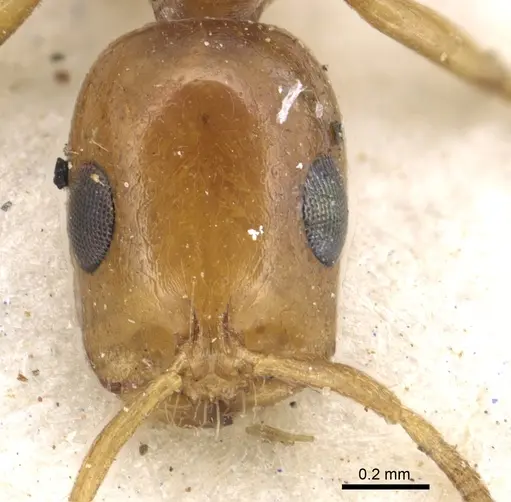
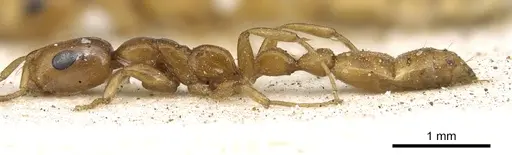
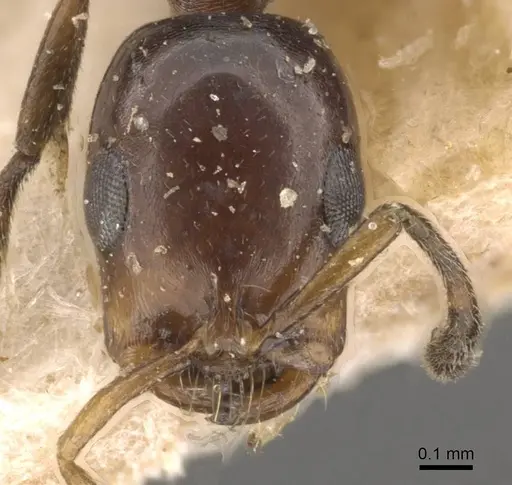
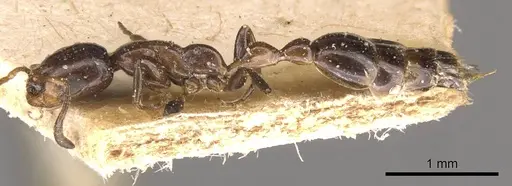
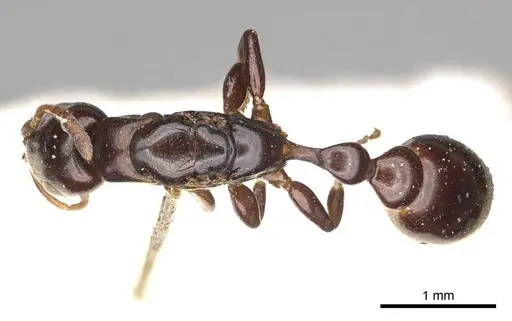
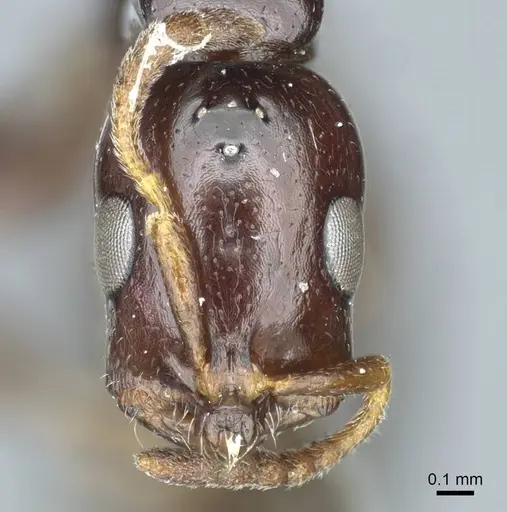
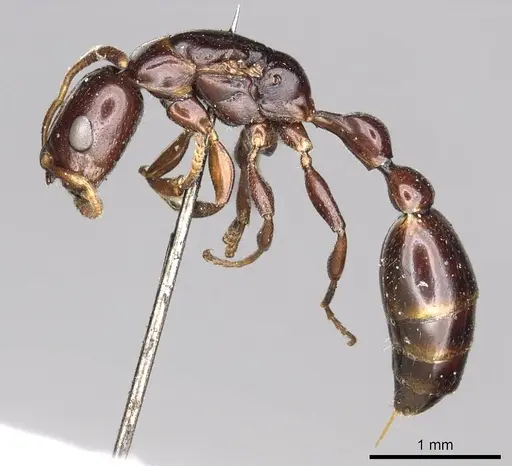
Tetraponera clypeata is a slender, big-eyed arboreal ant found only in South Africa . It belongs to the Tetraponera allaborans species group . Workers are small and slender with the large eyes typical of the Pseudomyrmecinae subfamily. These ants nest in hollow dead stems of plants like Watsonia and Aristea, mainly in the fynbos biome of the Western Cape . The species was first described as Sima clypeata by Emery in 1886,with Sima braunsi later recognized as a synonym . Very little captive care information is available for this species.
Quick Summary
- Difficulty: Unknown
- Origin & Habitat: Endemic to the Western Cape in South Africa (Afrotropical region) [5]. Found in mesic (moderately damp) fynbos, recorded from the Kleinmond Nature Reserve [3]. Nests in hollow dead stems of Watsonia, Aristea, and other plants [3].
- Colony Type: Colony structure is unconfirmed. Based on related Pseudomyrmecinae, likely single-queen colonies, but this needs verification.
- Size & Growth:
- Queen: size data unavailable
- Worker: size data unavailable
- Colony: Unknown, likely a few hundred workers at most based on typical genus patterns
- Growth: Unknown
- Development: Unconfirmed, estimated 6-10 weeks based on related Pseudomyrmecinae species (No direct data, estimates from related species.)
- Antkeeping:
- Temperature: No specific requirements documented. The fynbos climate has mild, wet winters and warm, dry summers. Keep at room temperature (20-24°C) and avoid extremes.
- Humidity: Moderate humidity. In nature they nest in plant stems in mesic fynbos, so keep the nest substrate damp but not waterlogged.
- Diapause: Unknown. The Western Cape has mild winters, but specific needs are not studied. If the colony slows down in winter, reduce temperature slightly (to 15-18°C) for a few weeks, but avoid prolonged cold.
- Nesting: In the wild, they nest in hollow dead stems [3]. In captivity, use test tubes placed at an angle, bamboo sections, or cork bark setups. These ants are arboreal and need vertical climbing space.
- Behavior: As Pseudomyrmecinae, they have a functional sting and are moderately defensive if threatened, but not aggressive. Their large eyes suggest good vision and active visual hunting. Escape risk is moderate given their small size, use tight-fitting lids and seal small gaps.
- Common Issues: very limited species-specific care information makes proper husbandry a challenge, wild-caught colonies may have parasites or fail to adapt to captivity, nesting requirements are not well known, leading to potential setup mistakes, growth rate is unknown, so colony progress is hard to gauge, the species is rarely kept, so acquiring colonies is difficult
Natural History and Distribution
Tetraponera clypeata is only found in the Western Cape of South Africa [5]. It has been collected in Kleinmond Nature Reserve and other mesic fynbos areas [3]. Fynbos has mild, wet winters and warm, dry summers, which probably shapes the ant's yearly cycle. Unlike ground-nesting ants, T. clypeata lives only in hollow dead stems of plants. Researchers have found nests in Watsonia, Aristea, and other unidentified stems [3]. This stem-nesting habit is common in the Pseudomyrmecinae subfamily.
Housing and Nesting Setup
Since T. clypeata nests in plant stems, your setup should copy that arboreal environment. Test tubes placed at an angle or upright work well for founding queens, she will block the entrance just like in a real stem. For bigger colonies, use bamboo sections, cork bark, or 3D-printed nests designed for arboreal species. Avoid acrylic nests, stick to natural materials. The ants climb well on rough surfaces like cork or wood, but poorly on smooth surfaces. Give them some vertical space, like small branches or fake plants. Keep temperatures in the low-to-mid 20s°C. [3]
Feeding and Diet
There are no studies on what T. clypeata eats in the wild. Most Pseudomyrmecinae are omnivorous, eating nectar, honeydew, and small insects. Offer sugar water or honey for carbohydrates, and small live prey like fruit flies or pinhead crickets for protein. Start with small amounts and see what the colony takes. They may prefer liquid sugar over solid sugar. Feed protein 2-3 times a week and keep sugar water always available. Remove uneaten prey after 24-48 hours to prevent mold.
Colony Development and Growth
No development data exists for T. clypeata. Based on related species, first workers may appear 6-10 weeks after the queen lays eggs, at around 22-25°C. The first workers are often smaller than later ones, that's normal during claustral founding (if claustral). Colony growth rate is unknown but probably slow to moderate. Colonies likely stay under a few hundred workers. Be patient with founding queens, stress from disturbance or poor setup can kill them.
Seasonal Care and Overwintering
The Western Cape has mild winters, rarely below freezing. No studies on diapause for this species. If your colony slows down in winter (November to February in the Northern Hemisphere), that's normal. You can lower the temperature slightly (to 15-18°C) for a few weeks. Do not keep them very cold for long periods. If they stay active all year, no cooling is needed. [3]
Frequently Asked Questions
How long does it take for Tetraponera clypeata to produce first workers?
Unknown for this species. Based on related Pseudomyrmecinae, expect about 6-10 weeks from egg to worker at 22-25°C. Be patient with founding colonies.
What is the best nest type for Tetraponera clypeata?
They naturally live in hollow plant stems. Use test tubes, bamboo sections, or cork bark setups. Give them vertical climbing space.
Do Tetraponera clypeata ants sting?
Like all Pseudomyrmecinae, they have a functional sting but are not aggressive. They may sting if handled roughly, but it's not medically significant for humans.
How big do Tetraponera clypeata colonies get?
Colony size is not documented. Based on genus patterns, probably a few hundred workers at most.
Can I keep multiple Tetraponera clypeata queens together?
Colony structure is unconfirmed, so it's safest to keep single queens. Combining unrelated queens is not recommended.
What do Tetraponera clypeata eat?
Diet is unconfirmed, but Pseudomyrmecinae are omnivorous. Offer sugar water and small live prey like fruit flies. Remove leftovers after 24-48 hours.
Do Tetraponera clypeata need hibernation?
Diapause needs are unknown. Their homeland has mild winters, so a short, mild cooling period may be fine, but prolonged cold could harm them. Watch your colony's behavior.
Are Tetraponera clypeata good for beginners?
No. There is almost no species-specific care information, and their nesting requirements might be tricky. Start with better-documented species like Lasius or Camponotus.
Where is Tetraponera clypeata found in the wild?
Only in the Western Cape of South Africa, in mesic fynbos habitats like the Kleinmond Nature Reserve. They nest in hollow stems of Watsonia and Aristea [3].
Why is my Tetraponera clypeata colony not growing?
Without species-specific data, it's hard to say. Check that you have vertical nesting options, moderate humidity, temperatures around 20-24°C, and enough food. Avoid disturbing the colony too much, stress can kill founding queens.
Report an Issue
The current care sheet is based fully on literature. See inconsistencies, or something that's incorrect? Please , it will be resolved after review from an admin. Contributing to the blogs tab also helps providing information, to make us be able to further improve the caresheets. Thank you for your support!
References

This caresheet is licensed under CC BY-SA 4.0 .
Community Blogs
CASENT0217588
View on AntWeb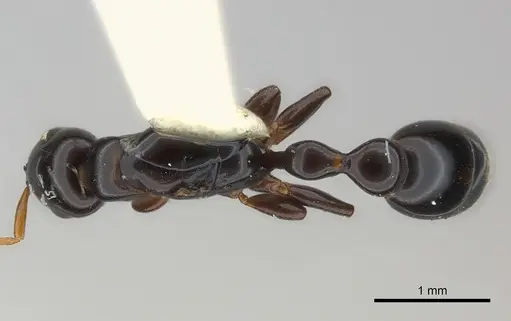
CASENT0220741
View on AntWeb
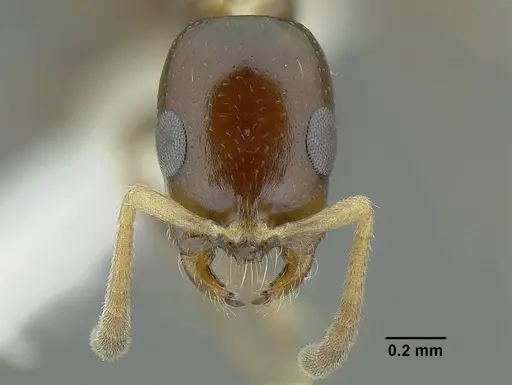
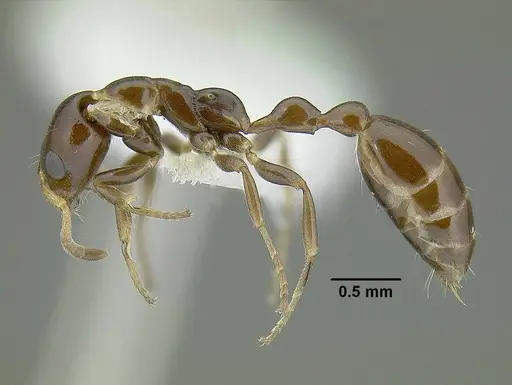
CASENT0281881
View on AntWeb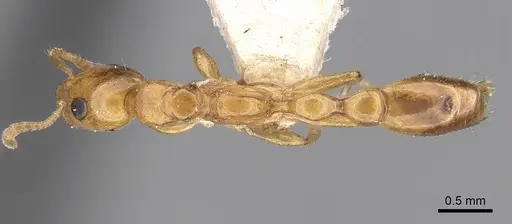
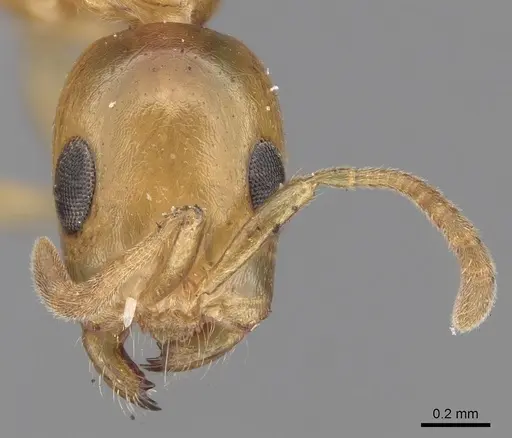
CASENT0902815
View on AntWeb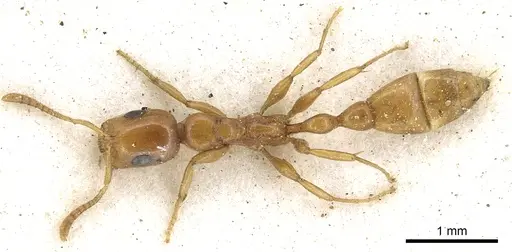
CASENT0902816
View on AntWeb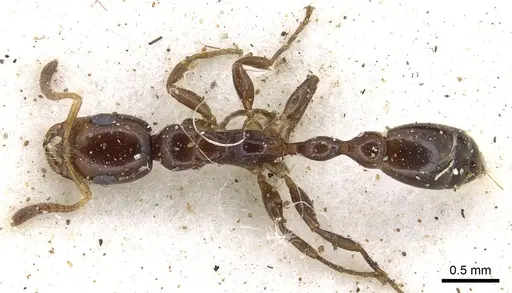
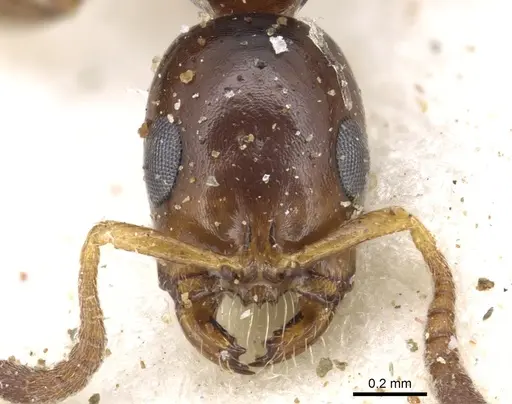
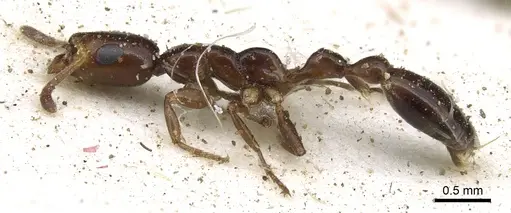
CASENT0907470
View on AntWeb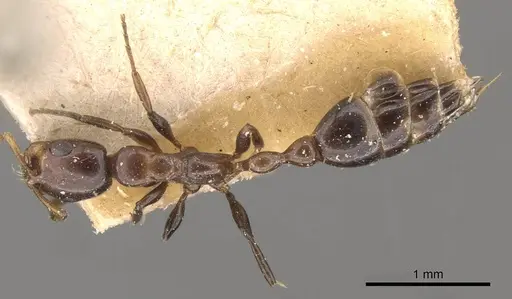
CASENT0915850
View on AntWeb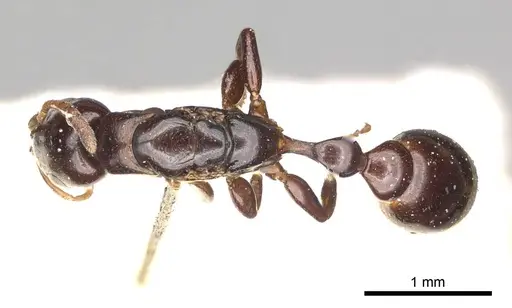
Literature
Loading distribution map...Loading products...