
Tetraponera binghami
- Sci. Name
- Tetraponera binghami
- Tribe
- Pseudomyrmecini
- Subfamily
- Pseudomyrmecinae
- Author
- Forel, 1902
- Distribution
- Found in 5 countries
Introduction
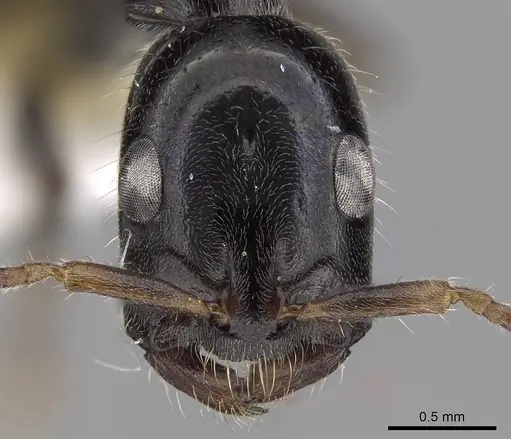
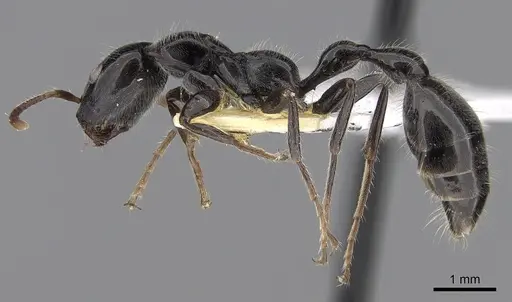
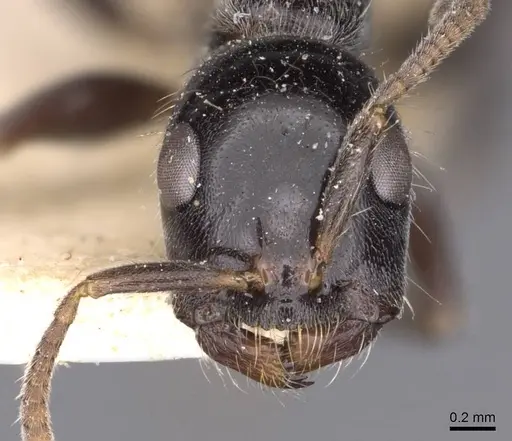
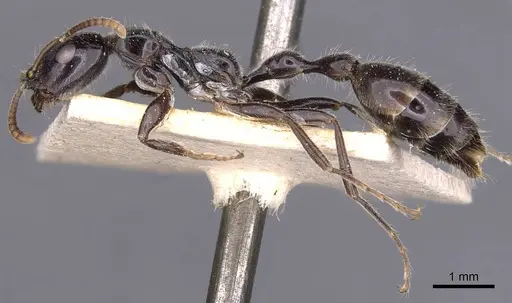
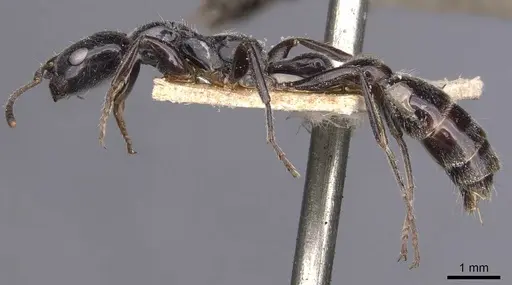
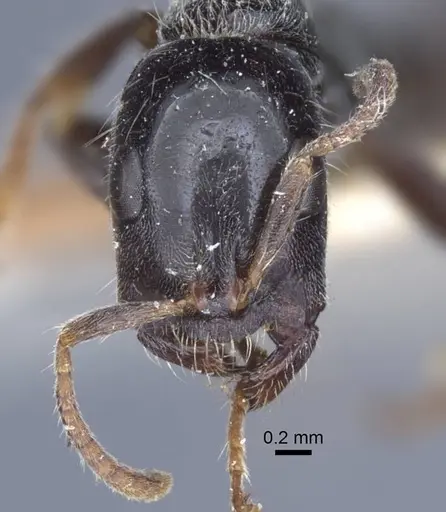
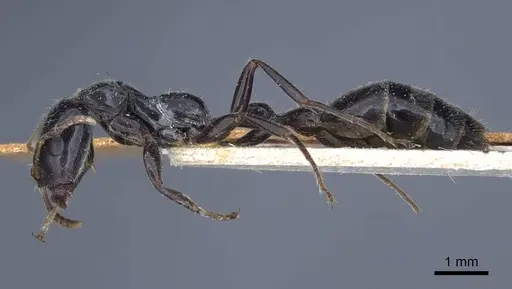
Tetraponera binghami is a large, slender ant from wet forests across South and Southeast Asia, from Nepal to southern China and the Malay Peninsula . Workers have an elongated head, a prominent clypeal lobe, small eyes, and dense erect hairs on a dark brownish-black body . This ant is exclusive to live bamboo: it nests only inside hollow internodes, where it farms mealybugs (Kermicus wroughtoni) for honeydew . Unlike many plant‑dwelling ants, it does not aggressively defend its host tree, relying instead on the tiny 2–3 mm entrance holes of bamboo internodes for protection .
Quick Summary
- Difficulty: Expert
- Origin & Habitat: Wet forests across South and Southeast Asia: Nepal, India, Myanmar, Thailand, Laos, southern China, and the Malay Peninsula [1]. Always nests in live bamboo culms, especially Gigantochloa in West Malaysia [2].
- Colony Type: Monogynous (single queen) and highly polydomous – one colony can occupy up to 36 internodes across 9 bamboo stems. The queen has 10 ovarioles per ovary, an adaptation for large colony size [1].
- Size & Growth:
- Queen: Total length not recorded, inferred from Tetraponera genus patterns, likely ~10–14 mm.
- Worker: Total length not recorded, inferred from Tetraponera genus patterns, likely ~7–10 mm.
- Colony: Up to 7,000+ workers [1]
- Growth: Moderate
- Development: Unconfirmed, likely 6–10 weeks based on related Pseudomyrmecinae patterns. (Development occurs at tropical temperatures (24–28°C), no specific data available.)
- Antkeeping:
- Temperature: 24–28°C year‑round [1].
- Humidity: Keep nest substrate consistently moist but not waterlogged, mimicking humid bamboo internodes [2].
- Diapause: No [1].
- Nesting: Use bamboo sections with a single small entrance hole (2–3 mm) or custom Y‑tong/plaster/3D‑printed nests that copy the dark, narrow internode shape. Standard test tubes and formicaria are unsuitable [1].
- Behavior: Workers are not aggressive and rarely forage outside the nest [1]. They possess a functional sting [3] but are not defensive toward keepers if handled gently. Escape risk is moderate – ensure entrance holes are tiny.
- Common Issues: maintaining a live colony of the symbiotic mealybug Kermicus wroughtoni – the ants depend almost entirely on their honeydew., replicating bamboo internode conditions – standard housing usually fails., keeping stable tropical warmth and high humidity year‑round., stress from captivity – this highly specialized species does not adapt well to generic setups., large eventual colony size (thousands of workers) requires expanding the bamboo‑style nest.
Housing and Nest Setup
This is the hardest part of keeping Tetraponera binghami. In the wild they live only inside the hollow internodes of live bamboo [2]. The entrance hole is just 2–3 mm wide, which keeps out most intruders. In captivity you have two good options: use natural bamboo sections (drill a single small hole, seal the ends) or build a custom nest from Y‑tong (AAC), plaster, or 3D‑printed parts that mimics the dark, narrow, humid space inside bamboo. The nest must be kept dark and damp. You will also need to establish a colony of the mealybug Kermicus wroughtoni inside the nest – these ants cannot survive without them [2]. Standard test tubes, acrylic nests, or soil setups are completely unsuitable.
Feeding and Diet
T. binghami has an extremely specialized diet: it relies almost entirely on the honeydew produced by its farmed mealybugs (Kermicus wroughtoni) [2]. Workers rarely leave the nest to forage. The honeydew is poor in amino acids, but the ants have evolved a pouch‑like organ at the junction of their midgut and hindgut that houses five kinds of nitrogen‑fixing bacteria: Rhizobium‑like, Methylobacterium‑like, Burkholderia‑like, Pseudomonas‑like, and Flavobacterium‑like symbionts [2][6][7]. These bacteria help the ants survive on the nitrogen‑poor diet. In captivity you must keep a thriving mealybug colony inside the nest. You can offer small amounts of sugar water or honeydew as a supplement, but the mealybugs are essential.
Temperature and Care
As a tropical wet‑forest species, T. binghami needs warm, stable temperatures year‑round (24–28°C) [1]. It does not require hibernation [1]. High humidity is equally important: the bamboo internodes they naturally occupy are always damp. You can provide humidity by keeping the nest substrate moist and by offering a small water source in the outworld. Use a heating mat or cable to maintain the right temperature, but avoid letting the nest dry out. This combination of warmth and humidity, plus the essential mealybug symbionts, makes this species a challenge even for experienced keepers.
Unique Behaviors
T. binghami shows several remarkable habits. Most notably, founding queens carry mealybug crawlers (the mobile stage of scale insects) on their mating flight – either in their mandibles or on their back – to start a honeydew‑producing herd in the new nest [4][5]. This ensures a lifelong food supply and partner fidelity across generations. Workers have also been seen bailing out excess water from their nests by drinking it and then regurgitating it outside [1]. Unlike many ant‑plant partners, they do not protect their bamboo host, relying on the physical barrier of the internode wall instead [1].
Colony Structure and Growth
Colonies are monogynous (one queen) but highly polydomous – they occupy many bamboo internodes at once. One studied colony used 36 internodes across 9 stems [1]. The queen has 10 ovarioles per ovary (most related pseudomyrmecines have only 2), which allows for very large colonies. A fully censused colony contained 6,953 adult workers and 2,079 alates [1]. Brood is distributed throughout all occupied internodes, not just the queen's chamber. The large colony size is possible because the ants have a reliable honeydew supply and the sturdy bamboo walls protect them from most enemies [1].
Frequently Asked Questions
Can I keep Tetraponera binghami in a test tube?
No – test tubes are completely unsuitable. This ant lives only in bamboo internodes and needs a dark, narrow space that mimics that habitat. You must provide bamboo sections or a custom Y‑tong/plaster nest, along with live mealybugs [1].
What do Tetraponera binghami eat?
They depend almost entirely on honeydew from their farmed mealybugs (Kermicus wroughtoni). Workers rarely forage outside the nest. You must keep a mealybug colony alive inside the nest at all times. Their gut bacteria help them survive on this nitrogen‑poor diet [2][6].
How long does it take for Tetraponera binghami to develop from egg to worker?
The exact time is unknown. Based on related pseudomyrmecine ants, it likely takes 6–10 weeks at 24–28°C. No specific studies have measured it.
Do Tetraponera binghami ants sting?
Yes – they have a functional stinger (not a dabbing mechanism) [3]. They are not aggressive, but they can sting if handled roughly or threatened.
Are Tetraponera binghami good for beginners?
No – this is an expert‑level species. They need specialised bamboo‑style housing, live mealybug symbionts, tropical temperatures, and high humidity. They do not adapt well to standard antkeeping setups [2][1].
How big do Tetraponera binghami colonies get?
Very large – one studied colony had nearly 7,000 workers plus over 2,000 alates. This is one of the biggest colony sizes known among Pseudomyrmecinae [1].
Do Tetraponera binghami need hibernation?
No – they are tropical and must be kept warm (24–28°C) all year round. They have no winter diapause [1].
Why are my Tetraponera binghami dying?
Most often because: 1) the mealybug symbionts are dying and the colony starves,2) temperature is too cool,3) humidity is too low, or 4) stress from unsuitable housing [2][6].
Can I keep multiple queens together?
No – T. binghami is strictly monogynous. Only one queen per colony. They are polydomous, meaning they spread across many internodes, but still with a single queen [1].
When should I move Tetraponera binghami to a formicarium?
You should never use a standard formicarium. From the start, provide bamboo sections or a custom bamboo‑mimic nest with mealybugs already established [2][1].
Report an Issue
The current care sheet is based fully on literature. See inconsistencies, or something that's incorrect? Please , it will be resolved after review from an admin. Contributing to the blogs tab also helps providing information, to make us be able to further improve the caresheets. Thank you for your support!
References

This caresheet is licensed under CC BY-SA 4.0 .
Community Blogs
CASENT0281873
View on AntWeb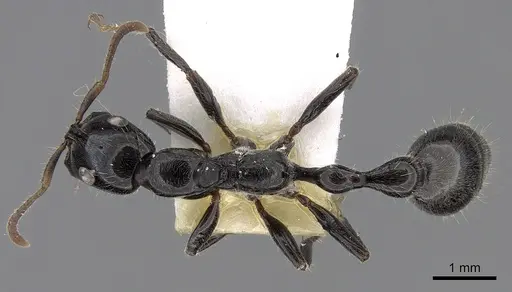
CASENT0907457
View on AntWeb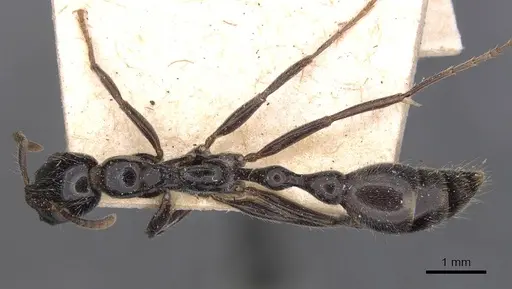
CASENT0907458
View on AntWeb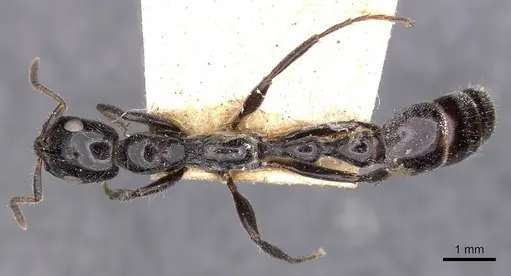
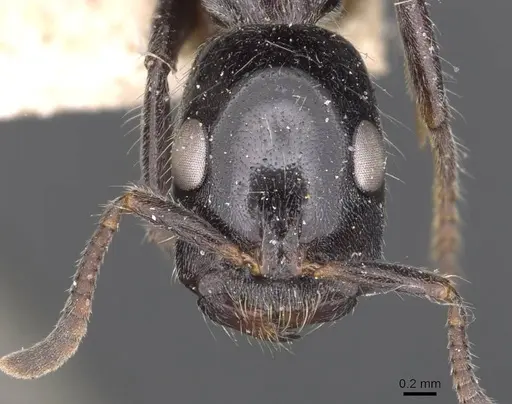
CASENT0916869
View on AntWeb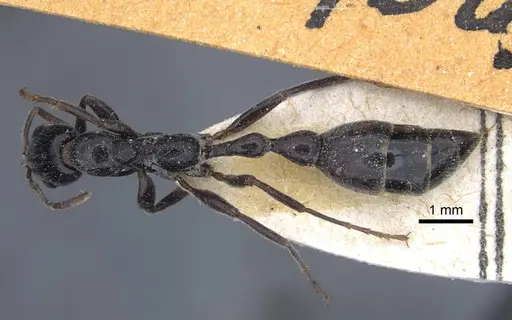
Literature
Loading distribution map...Loading products...