
Tetraponera aitkenii
- Sci. Name
- Tetraponera aitkenii
- Tribe
- Pseudomyrmecini
- Subfamily
- Pseudomyrmecinae
- Author
- Forel, 1902
- Distribution
- Found in 3 countries
Introduction
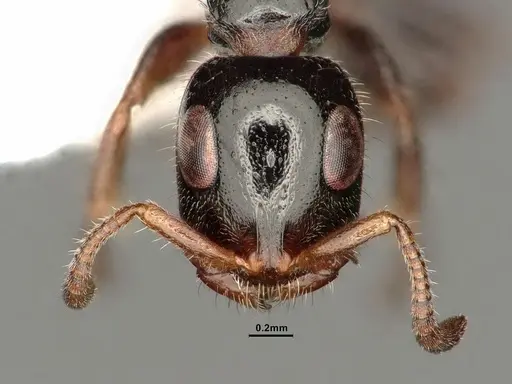
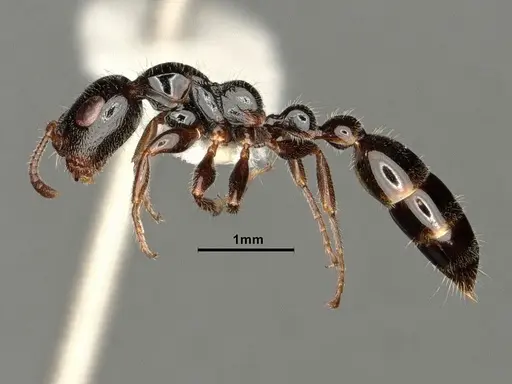
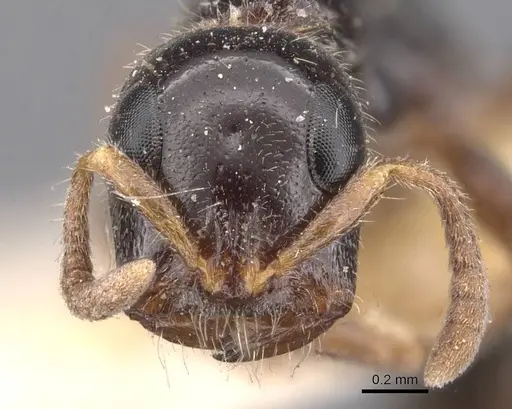
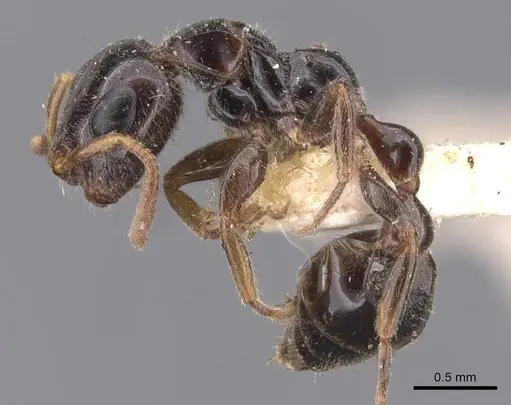
Tetraponera aitkenii is a small, slender ant from the Pseudomyrmecinae subfamily. Workers are black to brownish-black with lighter legs and antennae, and have large eyes and a thin waist (petiole) . Their head width is about 0.75-0.85 mm . Long, standing hairs are scattered over the head and middle body, giving them a slightly fuzzy look . This species lives across southern Asia, including India, Bangladesh, Malaysia, Thailand, Nepal, and China . They are strongly associated with trees - workers have been seen visiting extrafloral nectaries on cashew trees in India and are commonly found on mango trees in Bangladesh and India .
Quick Summary
- Difficulty: Medium
- Origin & Habitat: Found across southern Asia (India, Bangladesh, Malaysia, Thailand, Nepal, China) in tropical and subtropical regions. They live on trees, often mango and cashew, where they forage on bark and leaves for nectar and small prey [2][1][3][4][5].
- Colony Type: Unconfirmed, likely monogyne (single queen) based on genus patterns, but no direct evidence.
- Size & Growth:
- Queen: Size data unavailable
- Worker: Size data unavailable (head width about 0.75-0.85 mm [1])
- Colony: Unknown
- Growth: Unknown
- Development: Unknown (No published data for this species.)
- Antkeeping:
- Temperature: Keep warm (roughly 24-28 °C), these are tropical ants that need stable heat. Use a small heat mat on one side of the nest to create a gradient.
- Humidity: Moderate to high. Keep the nest substrate slightly moist but not wet. Provide a water tube or a small water source in the outworld.
- Diapause: Unknown, likely not required due to tropical origin, but no studies confirm this.
- Nesting: Arboreal. Provide hollow twigs, cork bark, or a Y‑tong nest with narrow chambers. They naturally nest in dead branches or under bark.
- Behavior: Active, fast-moving foragers. They have a functional sting but rarely use it on keepers, they prefer to flee. Their small size makes them excellent climbers, so escape prevention is critical. They are not aggressive but will defend the nest if disturbed.
- Common Issues: small size makes escape likely without very fine mesh (≤0.5 mm) and a fluon barrier, tropical humidity requirements can lead to mold in poorly ventilated setups, ensure good airflow, wild‑caught colonies may carry parasites or mites that are hard to treat, rarely available in the hobby, so colonies are hard to obtain, arboreal nature requires vertical climbing space and a setup with branches or bark
Housing and Nest Setup
Because Tetraponera aitkenii lives in trees, you should give them a nest that mimics a hollow twig or dead branch. A Y‑tong (AAC) block with narrow chambers works, or you can use a naturalistic setup with cork bark and some fake plants for climbing. The nest passages should be small, too much open space can stress these tiny ants. Attach a water tube to keep the nest humid, and mist the outworld occasionally. Provide vertical climbing surfaces like branches or bark pieces so they can carry out their natural arboreal behavior.
Feeding and Diet
In the wild, these ants often visit extrafloral nectaries on cashew and mango trees, so they need a steady source of sugar [3][4][5]. Offer sugar water (1:4 sugar to water) or diluted honey on a piece of foil. For protein, they probably hunt small insects, offer fruit flies, pinhead crickets, or very small mealworms. Because they are tiny, prey must be no bigger than a worker’s head. Feed protein 2-3 times a week and remove leftovers after 24 hours to prevent mould. Always keep sugar available.
Temperature and Humidity
As a tropical species, Tetraponera aitkenii needs warmth. Aim for a steady 24-28 °C, use a small heat cable under one side of the nest so the ants can choose their preferred spot. Avoid letting the temperature drop below 22 °C for long, as brood development may stall. Humidity is important: keep the nest substrate slightly damp (not soaking) and provide a water source. In a dry room, mist the outworld daily. If you see condensation in the nest, reduce moisture to prevent mould.
Behavior and Colony Dynamics
Workers are alert and fast. They spend most of their time searching for food on branches and leaves. Like other Pseudomyrmecinae, they have a stinger but are not aggressive toward keepers, they will only sting if the nest is badly disturbed. Their small size means they can squeeze through gaps larger than about 0.5 mm, so you must seal the nest completely. Apply fluon or a similar barrier to the rims of the outworld, and cover all ventilation holes with fine mesh (0.5 mm or smaller). Colony structure is poorly known, they probably have a single queen and a few hundred workers at most, but this has not been studied [1].
Frequently Asked Questions
Is Tetraponera aitkenii a good beginner ant?
This species is best for intermediate keepers. It needs warm, humid conditions and tight escape prevention because of its tiny size. It’s also rarely available in the hobby. Beginners should start with a hardier species like Lasius niger or a Camponotus species before trying this one.
What do Tetraponera aitkenii ants eat?
They feed on sugary liquids from extrafloral nectaries (on cashew and mango trees) and probably hunt small insects. In captivity, offer sugar water or honey water constantly, plus small protein prey like fruit flies or pinhead crickets 2-3 times per week. Remove uneaten prey after a day [3][4][5].
How long does it take for Tetraponera aitkenii to raise first workers?
The exact time is unknown, no studies exist. Based on related Pseudomyrmecinae, you can expect 6-10 weeks from egg to worker at around 26 °C, but this is a guess. First workers (nanitics) will be especially small.
Do Tetraponera aitkenii ants need hibernation?
No, true hibernation (diapause) is not needed. They come from a tropical region without cold winters. They may slow down in cool periods but you should keep them warm all year. Extended periods below 20 °C could harm them.
Can I keep Tetraponera aitkenii in a test tube?
Yes, a test tube setup works for founding and small colonies. Use a standard tube with a water reservoir (cotton ball) and wrap it in dark paper. As the colony grows, they will need a more spacious nest with climbing branches or cork bark because they are arboreal. Transfer them when they outgrow the tube.
How big do Tetraponera aitkenii colonies get?
Colony size is not documented. Related Tetraponera species usually have a few hundred workers, so this one is probably similar, not huge colonies like some Formica or Camponotus.
Do Tetraponera aitkenii ants sting?
Yes, they have a stinger like other Pseudomyrmecinae, but they are not aggressive and rarely use it on keepers. If they do sting, it is very mild due to their small size. They are safe to handle with care.
Why are my Tetraponera aitkenii escaping?
These ants are tiny and excellent climbers. They can get through gaps as small as 0.5 mm and also climb over smooth plastic if not treated. Use fluon on all container rims, ensure lids fit tightly, and cover ventilation holes with fine mesh (0.5 mm or smaller). Check your setup daily for any new gaps.
What temperature is best for Tetraponera aitkenii?
Keep them at 24-28 °C, ideally around 26 °C. Use a small heat mat on part of the nest so they can thermoregulate. Avoid sudden temperature swings and keep them away from cold drafts.
Where does Tetraponera aitkenii live in the wild?
It is native to southern Asia: India, Bangladesh, Malaysia, Thailand, Nepal, and China. It is arboreal, found on trees like mango and cashew, where it forages for nectar and small insects. Its habitat is tropical forest [2][1][3].
Report an Issue
The current care sheet is based fully on literature. See inconsistencies, or something that's incorrect? Please , it will be resolved after review from an admin. Contributing to the blogs tab also helps providing information, to make us be able to further improve the caresheets. Thank you for your support!
References

This caresheet is licensed under CC BY-SA 4.0 .
Community Blogs
CASENT0884284
View on AntWeb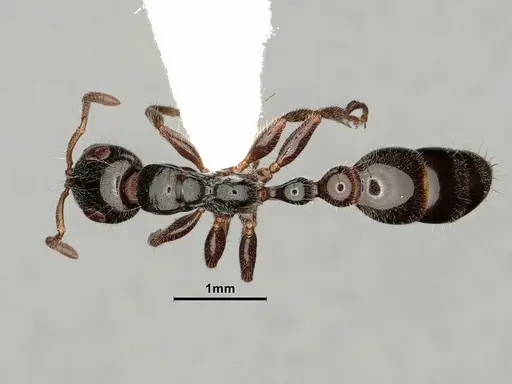
CASENT0907455
View on AntWeb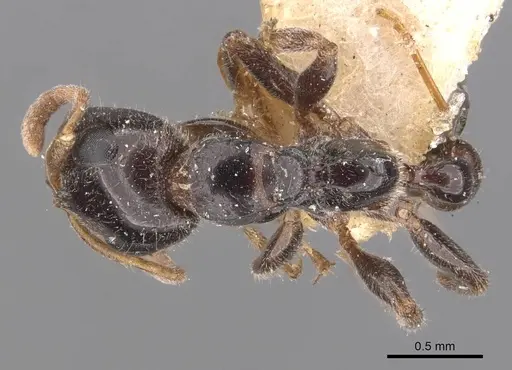
Literature
Loading distribution map...Loading products...