
Tetraponera aethiops
- Sci. Name
- Tetraponera aethiops
- Tribe
- Pseudomyrmecini
- Subfamily
- Pseudomyrmecinae
- Author
- Smith, 1877
- Distribution
- Found in 7 countries
Introduction
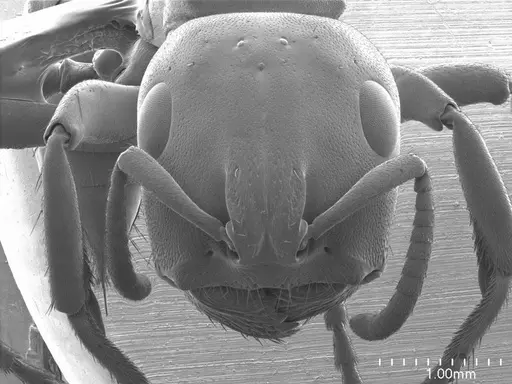
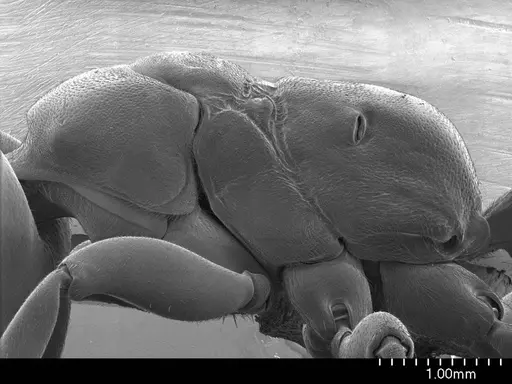
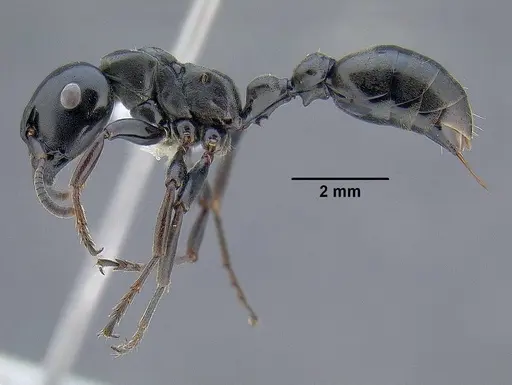
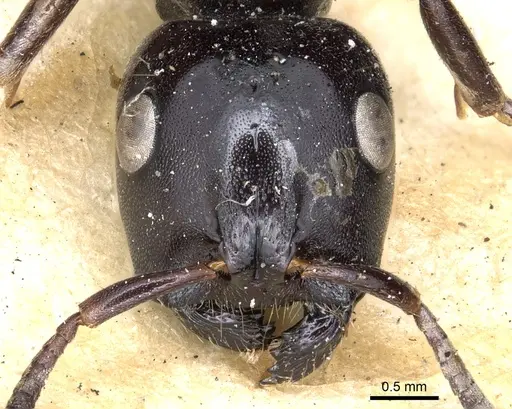
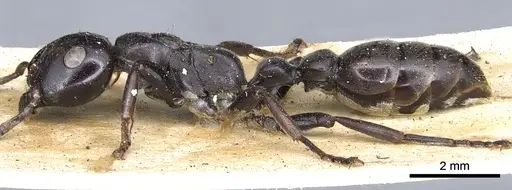
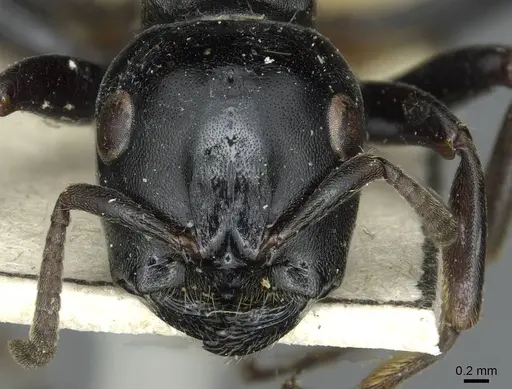
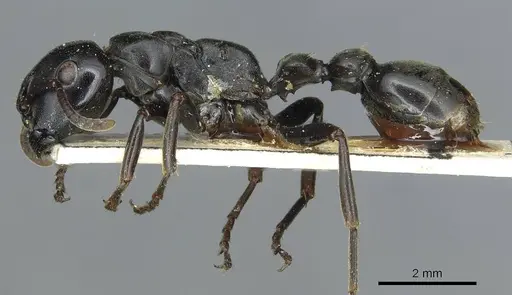
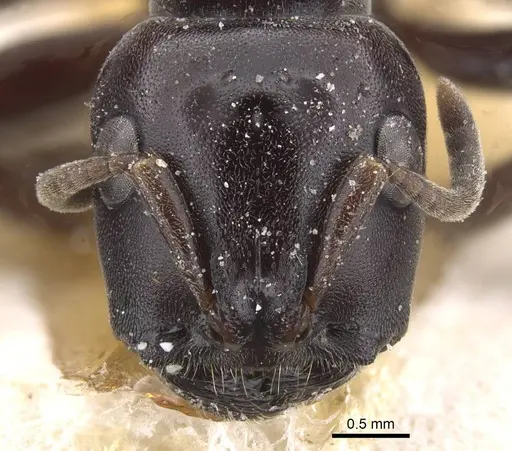
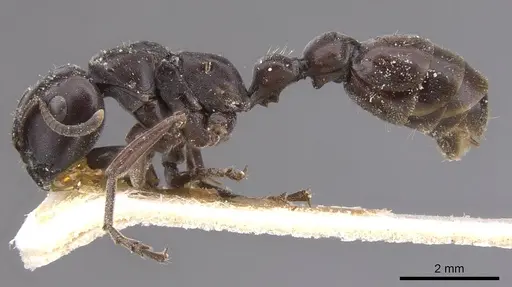
Tetraponera aethiops is a large African plant-ant, with workers around 1 cm in body length . It belongs to the rufonigra group within the subfamily Pseudomyrmecinae and is found across the Afrotropical region: Cameroon, Central African Republic, Democratic Republic of Congo, Equatorial Guinea, Gabon, Nigeria, South Africa, and Uganda . Workers are big-eyed, arboreal ants with a reddish-brown body and a potent sting. What sets this species apart is its exclusive, obligate relationship with the ant-plant Barteria fistulosa . The colony lives inside hollow stems (domatia) of the plant, and the workers fiercely defend the host against herbivores and competing vines. This is a true mutualism: the plant provides shelter, and the ants provide protection. Unusually, both workers and larvae also consume fungi (Chaetothyriales) that grow inside the domatia . This species is a classic example of a highly specialized ant-plant symbiosis.
Quick Summary
- Difficulty: Expert
- Origin & Habitat: Lowland forests throughout the Lower Guinea-Congo basin in equatorial West Africa. Obligate inhabitant of Barteria fistulosa (Passifloraceae) and occasionally Heinsia myrmoecia (Rubiaceae) [4][1].
- Colony Type: Monogyne, single-queen colonies. Multiple queens may attempt to colonize the same tree, but only one survives to found the colony [6]. Founding is semi-claustral (non-claustral): the queen must leave the nest to hunt during the founding stage [7].
- Size & Growth:
- Queen: ~10-12 mm (no direct measurement, inferred from worker size [1])
- Worker: ~10 mm (about 1 cm) body length [1]
- Colony: Unknown. Mature colonies consist of one queen, workers, and brood within plant domatia [6]. No maximum worker count has been published.
- Growth: Moderate, semi-claustral founding slows initial colony development.
- Development: Not documented. Based on typical pseudomyrmecine patterns, likely 8-12 weeks, but this is an estimate. (The queen must hunt live prey during founding, which adds risk and may lengthen the first generation [7].)
- Antkeeping:
- Temperature: 24-28 °C (inferred from tropical lowland habitat [1])
- Humidity: High (70-85% relative humidity). Keep the nest environment consistently moist but not waterlogged, as in rainforest understory.
- Diapause: No, as a tropical species this ant does not require a winter cooling period. Maintain warm conditions year-round.
- Nesting: Obligate domatia dweller, requires living stems of Barteria fistulosa (or Heinsia myrmoecia) for colony establishment. Standard formicaria (Y-tong, plaster,3D-printed) are unsuitable. No artificial nesting method has been successfully developed for this species.
- Behavior: Extremely aggressive and territorial. Workers stay inside the plant domatia and respond to vibrations from insects landing on the leaves, rushing out to attack [8][9]. Known as the 'fierce stinging ant' [10], it delivers a potent sting with peptide venom [11]. Escape risk is moderate because the ants are large (~1 cm) and tend to remain on their host plant, but standard escape-proofing is still needed.
- Common Issues: obligate symbiosis with living Barteria fistulosa, cannot survive in any artificial nest., semi-claustral founding, queen must hunt during founding, leading to high failure rates., potent sting, dangerous to handle without protection, and venom can cause pain and inflammation., fungal diet, specific Chaetothyriales fungi are essential for nutrition and cannot be easily replaced [1][5]., competition from parasitic insects, in nature, Tinthia lambornella caterpillars may kill queens or workers inside domatia [6].
The Plant-Ant Relationship
Tetraponera aethiops is an obligate mutualist that cannot survive without its host plant Barteria fistulosa [4][1]. The plant provides hollow stems called domatia where the colony lives, and in return the ants fiercely protect the plant against herbivores and prune competing vegetation [1].
Colony founding begins when a fertilized queen lands on a young Barteria tree, inspects it, and burrows into an unoccupied domatia chamber. She seals herself inside and begins raising the first brood [6]. Interestingly, multiple queens may attempt to colonize the same tree, but only one survives, the others are eliminated through competition [6].
This exclusive relationship makes T. aethiops nearly impossible to keep in captivity. They are not simply using the plant for shelter, they have co-evolved with Barteria to the point where artificial nests cannot replicate the necessary environment.
Fungal Diet and Unique Nutrition
One of the most unusual aspects of T. aethiops biology is its reliance on fungi. The domatia chambers contain black fungal patches composed of Chaetothyriales [1][12]. Both adult workers and larvae consume these fungi as a primary food source [1][5]. Workers gather fungal spores and hyphae from the mycelium lining the domatia and feed them to larvae in the form of pellets from their infrabuccal pocket [5].
Experiments using nitrogen-15 labeling confirmed that workers and larvae truly ingest the fungi, and fungal material appears in larval guts [1]. Two main fungal strains, Y1 and Y9,often co-occur in the same colony, with Y1 being the dominant symbiont at some sites [1][12].
This fungal diet is essential and cannot be replicated in captivity. Without access to the specific Chaetothyriales fungi, colonies cannot survive long-term. This is a major obstacle to any attempt at captive husbandry.
Defense and Sting
T. aethiops is known as the 'fierce stinging ant' for good reason [10]. Workers are extremely aggressive and maintain a constant guard at the domatia entrances. When an intruder, insect, animal, or even a vertebrate, lands on the host plant, workers detect the vibrations transmitted through the stems and emerge to attack [8][9]. They also respond to the volatile compound hexanal, which may be released by damaged plant tissue [1].
The venom contains potent peptides, including phospholipases and venom allergens similar to those in aggressive stinging ants like Myrmecia (jack jumper ants) [11]. The sting is medically significant and can cause intense pain and inflammation.
For antkeepers, this means T. aethiops is not a species to handle casually. Protective equipment is essential when working with them. The combination of venom potency, aggression, and specialized lifestyle makes this an expert-only species.
Colony Founding
T. aethiops has semi-claustral (non-claustral) colony founding: the newly mated queen must periodically leave the nest to hunt for prey during the founding stage [7]. Unlike claustral species that rely on stored fat reserves, the queen of T. aethiops must forage to feed herself and her developing brood.
For this species, founding also requires locating a suitable Barteria fistulosa plant and burrowing into a domatia chamber [6]. The queen then faces the risk of predation and competition from other queens when foraging outside. Only one queen per tree ultimately survives [6].
In captivity, replicating this founding process is extremely difficult. The queen needs access to live prey and a live host plant simultaneously. Combined with the obligate fungal diet, this makes successful captive founding highly unlikely.
Why This Species Is Not Recommended for Captivity
Tetraponera aethiops should not be kept by hobbyist antkeepers. This is not simply a matter of difficulty, it is biologically impractical with current methods. The species has three absolute requirements that cannot be met in standard captivity:
- Living host plant, they require Barteria fistulosa (or at least Heinsia myrmoecia) with domatia. They cannot survive in any artificial nest [4][1].
- Specialized fungi, they depend on Chaetothyriales fungi growing inside the domatia as their main food source [1][5].
- Semi-claustral founding, the queen must hunt during founding, which is difficult to manage alongside the plant requirement [7].
Even with naturalistic setups that include potted Barteria, no reliable method has been developed to sustain these colonies long-term. The mutualism between ant, plant, and fungus has evolved over millions of years and cannot be replicated in a home environment.
If you are interested in plant-ants, consider more manageable species such as certain Pseudomyrmex (New World) or Acacia-ants. For now, T. aethiops is best appreciated in the wild or studied through scientific literature.
Frequently Asked Questions
Can I keep Tetraponera aethiops in a test tube or formicarium?
No. T. aethiops is an obligate plant-ant that requires living Barteria fistulosa domatia. Standard ant nests will not work. This species cannot be kept in captivity with current technology.
Do Tetraponera aethiops ants sting?
Yes, they have a potent sting and are called the 'fierce stinging ant' [10]. They are extremely aggressive and will attack any intruder on their host plant. Handle with extreme caution, protective equipment is essential.
What do Tetraponera aethiops eat?
They primarily consume fungi (Chaetothyriales) that grow inside their host plant's domatia [1][5]. Workers and larvae ingest fungal material. They also hunt insects that land on the plant, but the fungal diet is essential and cannot be replaced in captivity.
How long does it take for Tetraponera aethiops to raise first workers?
The exact development time has not been documented. Based on typical pseudomyrmecine patterns, it may take around 8-12 weeks, but this is an estimate. The semi-claustral founding method (queen must hunt during founding) probably makes the first generation slower than in claustral species [7].
Are Tetraponera aethiops good for beginners?
No. This is an expert-only species, actually beyond the reach of most hobbyists. They require a living host plant and cannot be kept in any standard ant housing. They are not suitable for captivity at all.
Do Tetraponera aethiops need hibernation?
No. As a tropical African species, they do not require diapause. Keep them warm year-round at 24-28 °C with high humidity.
How big do Tetraponera aethiops colonies get?
The maximum colony size is not documented in published literature. Mature colonies contain one queen, workers, and brood within the host plant domatia [6]. The number of workers is likely limited by domatia volume but exact counts are unknown.
Can I keep multiple queens together?
No. While multiple queens may attempt to colonize the same tree, only one survives per tree [6]. In captivity, combining unrelated queens would result in fighting and only one survivor.
Where does Tetraponera aethiops live in the wild?
Equatorial West Africa, Cameroon, Central African Republic, Democratic Republic of Congo, Equatorial Guinea, Gabon, Nigeria, South Africa, and Uganda. They live exclusively inside Barteria fistulosa plants in lowland forests [4][1][3].
Why can't Tetraponera aethiops be kept in captivity?
They are obligate mutualists with three requirements that cannot be met: (1) a living Barteria fistulosa host plant with domatia, (2) specific Chaetothyriales fungi as a primary food source, and (3) semi-claustral founding requiring live prey [4][1][7]. No alternative method exists.
Report an Issue
The current care sheet is based fully on literature. See inconsistencies, or something that's incorrect? Please , it will be resolved after review from an admin. Contributing to the blogs tab also helps providing information, to make us be able to further improve the caresheets. Thank you for your support!
References

This caresheet is licensed under CC BY-SA 4.0 .
Community Blogs
ANTWEB1008595
View on AntWeb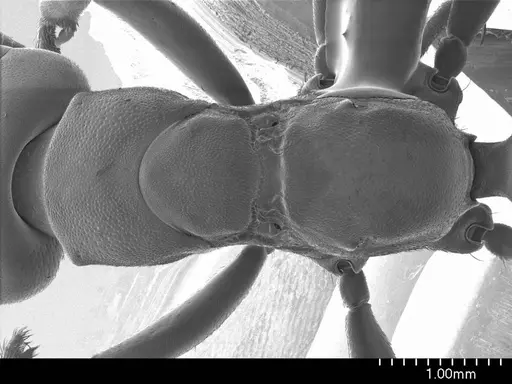
CASENT0217585
View on AntWeb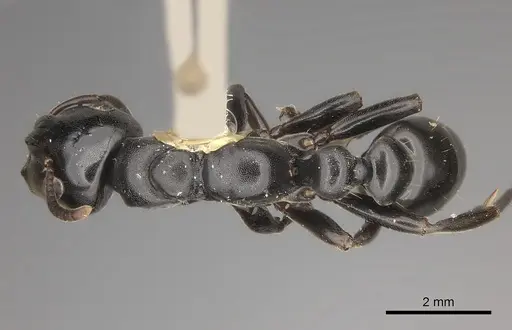
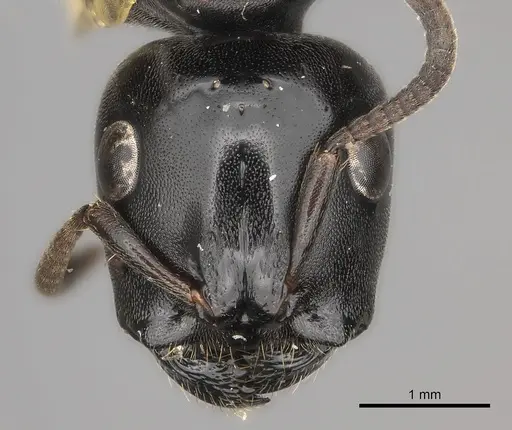
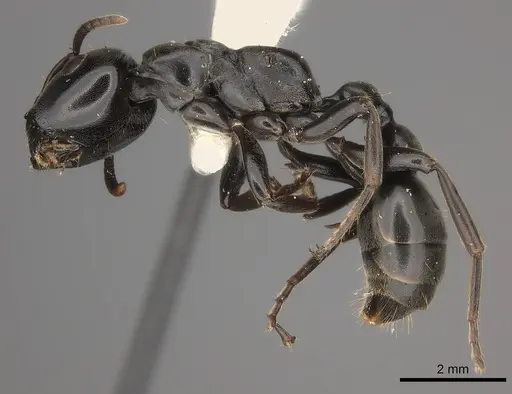
CASENT0794322
View on AntWeb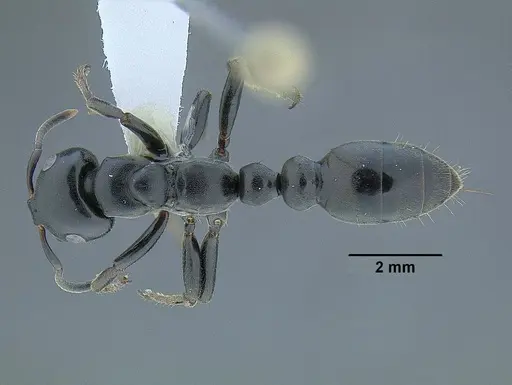
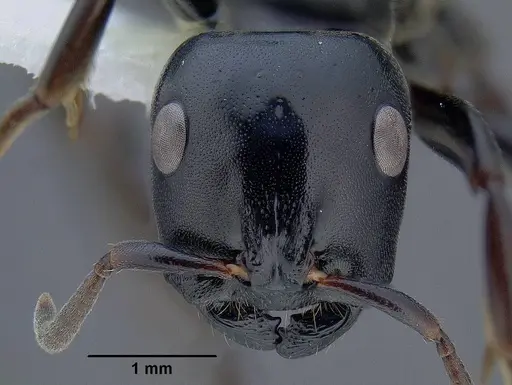
CASENT0902813
View on AntWeb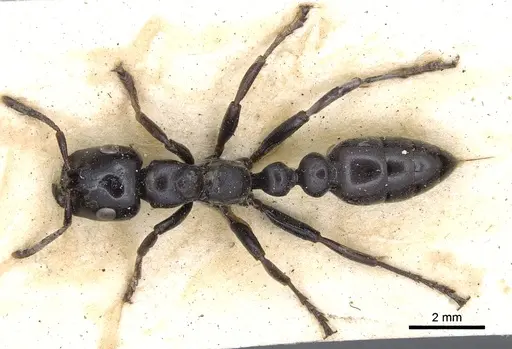
CASENT0913718
View on AntWeb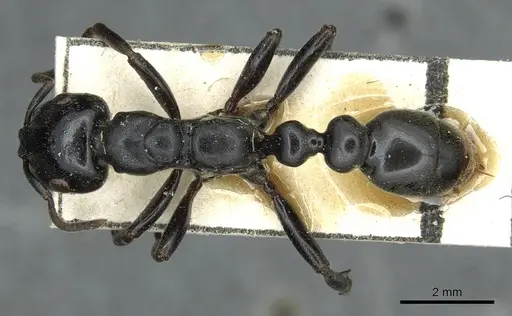
CASENT0915523
View on AntWeb
Literature
Loading distribution map...Loading products...