
Tetramorium zonacaciae
- Sci. Name
- Tetramorium zonacaciae
- Tribe
- Crematogastrini
- Subfamily
- Myrmicinae
- Author
- Weber, 1943
- Distribution
- Found in 3 countries
Introduction
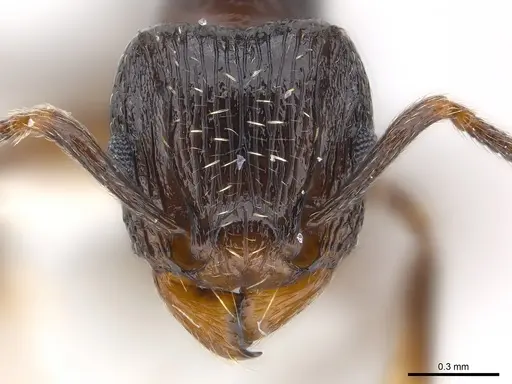
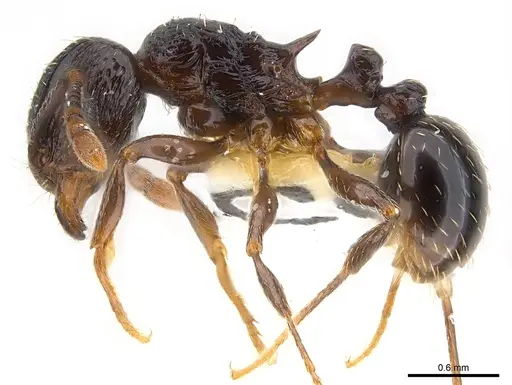
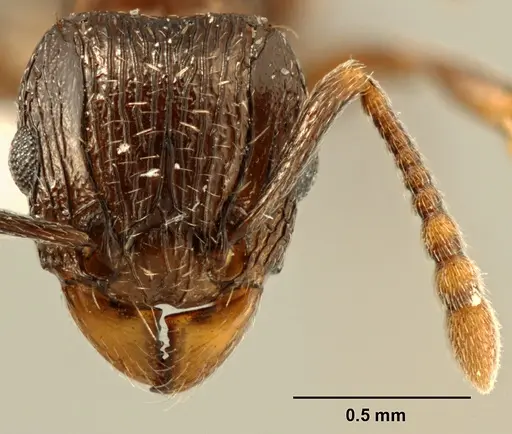
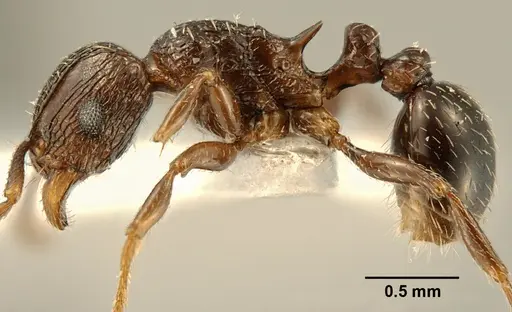
Tetramorium zonacaciae is a small ant found in East Africa: Kenya, Rwanda, Sudan, Tanzania, and Uganda, with a single record from Cameroon . Workers measure 3.4-3.8 mm in total length . The species is instantly recognizable by its unique hairs, thick, blunt, dorso‑ventrally flattened hairs that lie flat against the body, all pointing toward the midline . This bizarre pilosity sets it apart from every other species in the Tetramorium weitzeckeri group . Despite its wide distribution, the ant appears relatively rare in the wild, few specimens are known from each locality . It belongs to the edouardi complex within the weitzeckeri group and is morphologically closest to Tetramorium edouardi, though the hair structure makes identification straightforward . In nature it lives in tropical montane forests and surrounding agricultural areas, showing a preference for native tree habitats over coffee plantations or exotic tree stands .
Quick Summary
- Difficulty: Medium
- Origin & Habitat: East Africa (Kenya, Rwanda, Sudan, Tanzania, Uganda) and Cameroon. Found in tropical montane forests at elevations from 800 m to over 1700 m, including Nyungwe tropical rainforest and Gishwati forest [1][7][8].
- Colony Type: Colony structure is not documented. Based on genus patterns, most Tetramorium are monogyne, but this is unconfirmed for this species.
- Size & Growth:
- Queen: ~5.5-7 mm (inferred from Tetramorium genus, no direct data)
- Worker: 3.4-3.8 mm total length [3]
- Colony: Probably up to several hundred workers, exact maximum unknown, but wild specimens are rare [1]
- Growth: Moderate (based on typical Tetramorium development)
- Development: 6-10 weeks at 22-26°C (estimated from genus patterns, no species‑specific data) (Specific timing for this species has not been documented.)
- Antkeeping:
- Temperature: Keep the colony at 22-26 °C. As a tropical montane species, it does not tolerate cool conditions [1].
- Humidity: Moderate to high, the ants come from rainforest environments. Keep the nest substrate consistently moist but not waterlogged, with some drier areas for choice [7][8].
- Diapause: No, being a tropical African species, it does not require hibernation. Maintain stable warm conditions year‑round [1].
- Nesting: Y‑tong (AAC), plaster, or soil nests work well. These are soil‑litter dwellers, so provide a substrate that holds moisture. A test tube setup is ideal for founding.
- Behavior: Workers are active foragers that search the outworld for food. They are generally docile toward keepers. Their defense mechanism involves a modified spatulate stinger used to smear venom onto enemies, rather than piercing (typical of the Crematogastrini tribe). Escape risk is high because workers are small (under 4 mm), use tight barriers and careful lid closures. The distinctive flattened hairs are not part of any defense, just a unique morphological trait [1].
- Common Issues: humidity balance is critical, too dry kills brood, too wet promotes mold, cold below 20 °C can stop brood development or kill the colony, small workers can slip through tiny gaps, escape‑proofing is essential, wild‑caught colonies may harbour parasites that affect survival
Housing and Nest Setup
Tetramorium zonacaciae does well in Y‑tong (AAC) or plaster nests that retain moisture. These ants are small (worker TL 3.4-3.8 mm [3]), so chambers should be tight and not too spacious. Because they come from tropical montane forests, the nest should stay consistently moist. A water reservoir or a wicking system helps maintain damp conditions. Use a test tube setup for founding colonies, move them to a proper nest once the colony outgrows the tube (20-30 workers is a natural transition point). Avoid acrylic nests, which cannot hold humidity properly.
Feeding and Diet
Omnivorous, like most Tetramorium. Offer sugar sources (honey water, sugar water) and small insect protein, fruit flies, pinhead crickets, or small mealworms. Feed protein 2-3 times a week and keep a sugar source always available. Remove uneaten food promptly to prevent mold in the humid nest. No species‑specific dietary data exists, so follow standard Tetramorium husbandry. [1]
Temperature and Seasonal Care
Keep the colony at 22-26 °C for steady activity and brood development. As a tropical East African species, they do not need hibernation, maintain warm conditions all year [1]. Avoid temperatures below 20 °C, which can slow growth and increase mortality. A small heating cable on one side of the nest creates a gradient. Room temperature within the 22-26 °C range works without extra heating, but avoid sudden drops.
Humidity Management
These ants inhabit rainforest environments (Nyungwe, Gishwati, etc.) [7][8], so humidity is essential. Keep the nest substrate damp to the touch but not waterlogged, aim for a moisture gradient with one wetter side and one drier side. Excellent ventilation prevents stagnant air and mold. If condensation builds up constantly, reduce watering, if the substrate dries out in less than a day, increase it.
Behavior and Colony Dynamics
Workers are active foragers that explore the outworld for food. They are not aggressive toward the keeper. Their defense mechanism is a spatulate stinger that smears venom onto attackers (typical of Crematogastrini). The bizarre flattened hairs on the head and body are purely morphological, they help separate this species from relatives, but have no known defensive function [1]. Colonies grow at a moderate pace, the queen lays eggs continuously under good conditions. Because the species is rarely encountered in the wild, captive breeding data is limited.
Frequently Asked Questions
What is the natural habitat of Tetramorium zonacaciae?
It lives in East African montane forests, from about 800 m to over 1700 m elevation, in countries like Kenya, Rwanda, Sudan, Tanzania, and Uganda [1][2].
How can I identify Tetramorium zonacaciae?
Look for thick, blunt, flattened hairs on the body, especially on the first gastral tergite. These hairs lie flat and point toward the midline. No other Tetramorium species has this pilosity [1][3].
Does this species need hibernation?
No. It comes from tropical East Africa and does not undergo diapause. Keep the colony warm all year round [1].
What temperature range is best for Tetramorium zonacaciae?
Keep them at 22-26 °C. Being from tropical montane habitats, they cannot handle cold, avoid dropping below 20 °C [1].
Report an Issue
The current care sheet is based fully on literature. See inconsistencies, or something that's incorrect? Please , it will be resolved after review from an admin. Contributing to the blogs tab also helps providing information, to make us be able to further improve the caresheets. Thank you for your support!
References

This caresheet is licensed under CC BY-SA 4.0 .
Community Blogs
CASENT0217065
View on AntWeb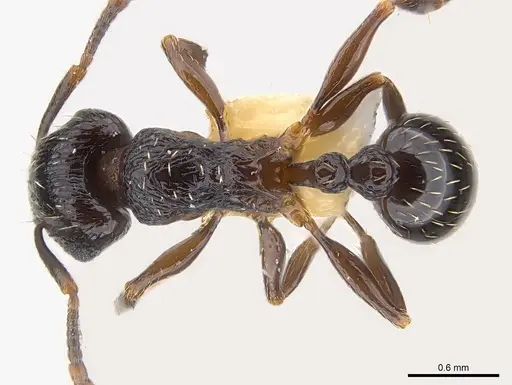
ZFMKHYM20096085
View on AntWeb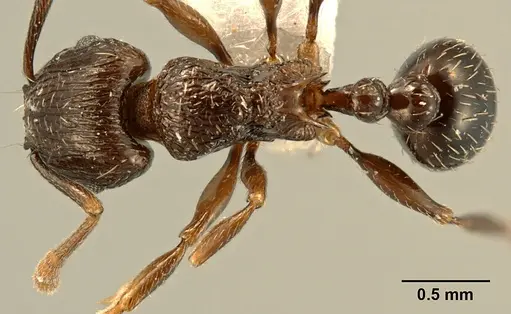
Literature
Loading distribution map...Loading products...