
Tetramorium wardi
- Sci. Name
- Tetramorium wardi
- Tribe
- Crematogastrini
- Subfamily
- Myrmicinae
- Author
- Hita Garcia & Fisher, 2012
- Distribution
- Found in 1 countries
Introduction
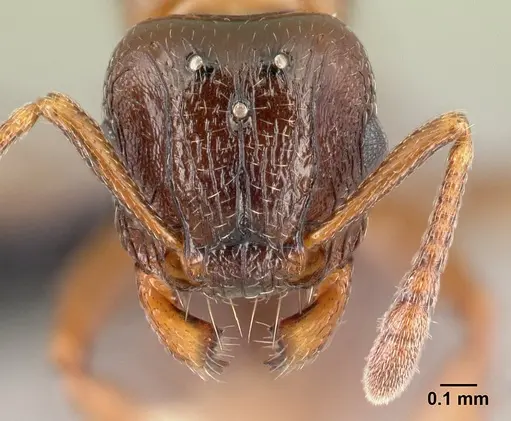
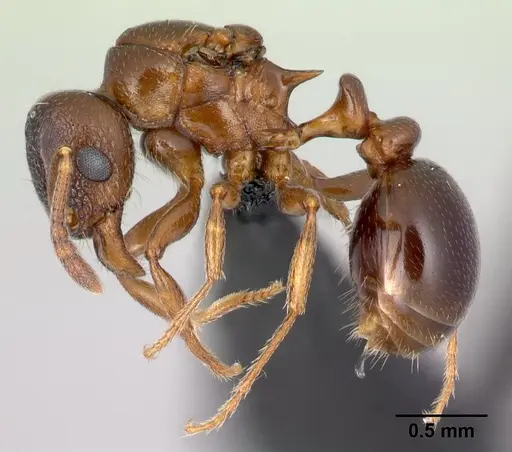
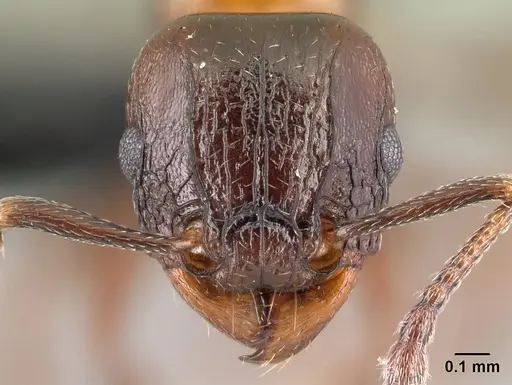
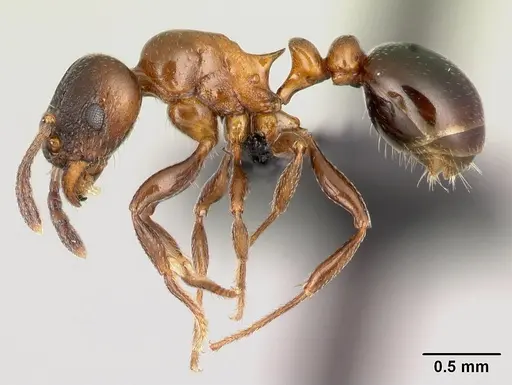
Tetramorium wardi is a tiny ant endemic to Madagascar, with workers having a head length of 0.69 to 0.85 mm . Total body size is not documented, but they are clearly one of the smaller Tetramorium species. They're easy to recognize by their scale-like petiole (squamiform node) and a single strong ridge running down the middle of the head, with weaker ridges on each side . The body is mostly a uniform brown, but the head, legs, and gaster are often darker than the middle section . This species is only found in the southwest and southeast of Madagascar, living in spiny forest, thicket, and tropical dry forest . It was only formally described in 2012 and named after ant taxonomist Phil S. Ward, so it's a relatively recent addition to the hobby .
Quick Summary
- Difficulty: Medium
- Origin & Habitat: Restricted to southwest and southeast Madagascar, living in spiny forest, thicket, and tropical dry forest [1][2]. These habitats are warm with distinct wet and dry seasons.
- Colony Type: Colony structure is unconfirmed. Most Tetramorium species are single-queen, but no direct data exists for T. wardi.
- Size & Growth:
- Queen: Undocumented. Based on related Tetramorium, queens likely reach around 4-6 mm, but this is unconfirmed.
- Worker: Head length 0.69-0.85 mm [1]. Total body length is not documented.
- Colony: Unknown, but likely up to several hundred workers based on typical Tetramorium patterns.
- Growth: Moderate, inferred from genus.
- Development: Estimated 6-8 weeks at 24-28°C based on related Tetramorium. Specific data lacking. (Keep the colony undisturbed during founding. Development time depends heavily on temperature.)
- Antkeeping:
- Temperature: Keep at 24-28°C. A gentle gradient with a cooler zone around 22°C is helpful. Avoid drops below 20°C.
- Humidity: Moderate, think dry forest floor conditions. Provide a moisture gradient with a damp section and a dry section [1]. Avoid constant saturation.
- Diapause: Unlikely, as a tropical species from Madagascar, no true hibernation is needed. Activity may slow slightly in cooler months.
- Nesting: Y‑tong (AAC), plaster, or soil nests with fine chambers work well. They naturally nest in soil and under stones. Plaster nests with moisture gradients are suitable.
- Behavior: Small, active ants that are generalist foragers. They are not aggressive, they prefer to flee. They possess a modified stinger for smearing venom (a trait of Crematogastrini), but this is not used to pierce. Escape prevention is critical due to their tiny size.
- Common Issues: escape prevention is critical, their tiny size lets them slip through tiny gaps, use fine mesh and Fluon barriers, feeding is tricky, prey must be appropriately sized (fruit flies, springtails, tiny mealworms), humidity balance is delicate, too wet causes mold, too dry can stress the colony, limited species‑specific data means care is based on genus patterns, increasing risk of husbandry errors, wild‑caught colonies may carry mites or parasites that can decimate a captive colony
Housing and Nest Setup
Because of their very small size, T. wardi needs careful housing. Y‑tong (aerated concrete) nests with narrow chambers work well, tight spaces match their natural crevices under stones. Plaster nests with a moisture gradient are also suitable. The outworld should be simple and escape‑proof. Start a new colony in a test tube setup, move them to a formicarium only when the colony outgrows the test tube (usually when the tube starts to degrade or gets too crowded). Use fine mesh (≤0.5 mm) on all ventilation holes, these ants can squeeze through tiny gaps. Fluon barriers on outworld rims are essential. [1][2]
Temperature and Heating
As a tropical species from Madagascar, T. wardi needs warmth. Aim for 24-28°C in the nest. Use a heating cable on one side to create a gradient. Place the cable on top of the nest to avoid drying out the substrate too fast. Room temperature in the low‑to‑mid 20s°C might be enough if your home is warm. Don’t let it drop below 20°C for long. Watch the ants: if they cluster near the heat, raise the temperature, if they avoid it entirely, you might be overheating. [1]
Feeding and Diet
No specific dietary studies exist for T. wardi. Like most Tetramorium, they are probably generalist foragers. Offer small protein sources: fruit flies, springtails, tiny mealworms, or other very small insects. Prey must be smaller than the worker’s head or they’ll ignore it. Provide diluted honey or sugar water occasionally. Remove uneaten food after 24-48 hours to prevent mold. Feed every 2-3 days. A well‑fed colony will have workers with full (distended) gasters.
Humidity and Water
These ants come from dry forest habitats in Madagascar, so they prefer a drier nest than many tropical species [1]. Provide a moisture gradient: keep one section damp (e.g., moist cotton in the test tube) and let the rest stay drier. Mist the outworld occasionally but avoid constant wetness. The substrate should feel dry to the touch in most areas. Over‑humid conditions cause mold and can kill small colonies. Always have a water tube or small dish for drinking.
Colony Development
Founding behavior hasn’t been documented for this species. Based on typical Tetramorium patterns, the queen likely founds claustrally, she seals herself in the founding chamber and raises the first brood using her stored fat and wing muscles. Keep the chamber dark and undisturbed. First workers (nanitics) may emerge in 6-8 weeks at optimal temperature. Growth is moderate, the colony should reach 50+ workers within a few months under good conditions. Colony size at maturity is unknown but likely up to several hundred. Don’t check too often during founding, stress can cause queen failure or brood cannibalism.
Handling and Temperament
T. wardi is peaceful and non‑aggressive. Workers prefer to flee or hide when disturbed. Like all Crematogastrini, they have a modified stinger used to smear venom onto enemies, but they are far too small to cause any pain to humans. They are not known to bite. Always handle colonies gently, use a soft brush rather than forceps. Their tiny size means they are easily crushed and can escape through impossibly small gaps. These ants are strictly for observation, you won’t be handling them directly.
Frequently Asked Questions
How long does it take for Tetramorium wardi to produce first workers?
Expect first workers (nanitics) to emerge in about 6-8 weeks at 24-28°C. This is an estimate based on related Tetramorium, no specific data exists for T. wardi. The queen founds claustrally and raises the first brood alone.
Can I keep Tetramorium wardi in a test tube?
Yes. Test tubes are great for founding. Use a small tube with a water reservoir sealed with cotton. Cover the tube to keep it dark. You can keep them in the test tube until it starts to get too small or shows mold, then move them to a small formicarium.
Do Tetramorium wardi ants sting?
They have a stinger, but it’s modified for smearing venom (typical of Crematogastrini) rather than piercing. They are not aggressive and won’t sting humans. They are completely harmless.
What do Tetramorium wardi eat?
In the wild they probably eat small insects, nectar, and seeds. In captivity, offer small live prey like fruit flies, springtails, and tiny mealworms. A little diluted honey or sugar water now and then is fine. Protein is the main need.
Are Tetramorium wardi good for beginners?
They are rated medium difficulty. Their small size and peaceful nature are manageable, but escape prevention and tiny food requirements are challenging. The lack of species‑specific care info adds risk. Not recommended as a first ant.
Do Tetramorium wardi need hibernation?
No, they are tropical ants from Madagascar and don’t need hibernation. Keep them warm year‑round (24-28°C). Activity may slow a bit in cooler months, but they don’t need a cold period.
How big do Tetramorium wardi colonies get?
Not documented. Based on related Tetramorium, colonies likely reach several hundred workers at most. Not a huge colony species.
Why are my Tetramorium wardi escaping?
Their tiny size lets them slip through gaps you might not see. Check all connections, use fine mesh (≤0.5 mm), apply Fluon barriers, and seal any crack. Even a hair‑thin gap is enough. Escape prevention must be excellent.
When should I move Tetramorium wardi to a formicarium?
Move them when the test tube gets too small, develops mold, or the colony reaches 30-50 workers. Use a small Y‑tong or plaster nest with appropriately sized chambers. Make sure all entrances are tiny enough to prevent escapes.
Can I keep multiple Tetramorium wardi queens together?
This hasn’t been studied for this species. Most Tetramorium are single‑queen (monogyne). Combining unrelated queens is not recommended, it usually leads to fighting. If you have a colony, assume single‑queen unless you see multiple queens co‑existing peacefully.
Report an Issue
The current care sheet is based fully on literature. See inconsistencies, or something that's incorrect? Please , it will be resolved after review from an admin. Contributing to the blogs tab also helps providing information, to make us be able to further improve the caresheets. Thank you for your support!
References

This caresheet is licensed under CC BY-SA 4.0 .
Community Blogs
CASENT0015672
View on AntWeb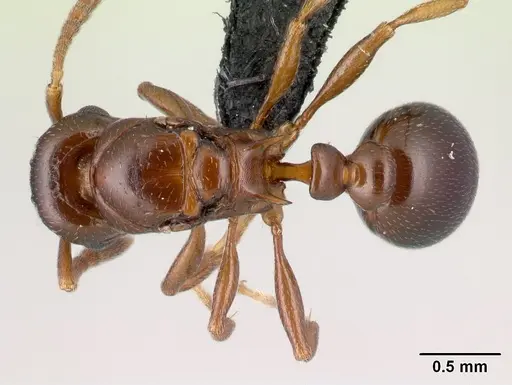
CASENT0475483
View on AntWeb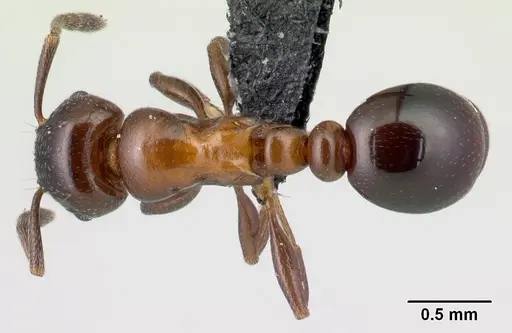
Literature
Loading distribution map...Loading products...