
Tetramorium versiculum
- Sci. Name
- Tetramorium versiculum
- Tribe
- Crematogastrini
- Subfamily
- Myrmicinae
- Author
- Bolton, 1980
- Distribution
- Found in 1 countries
Introduction
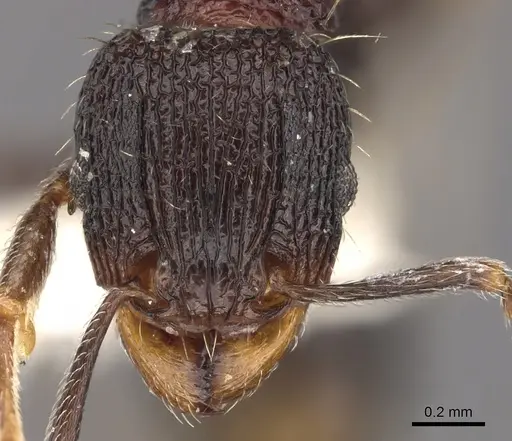
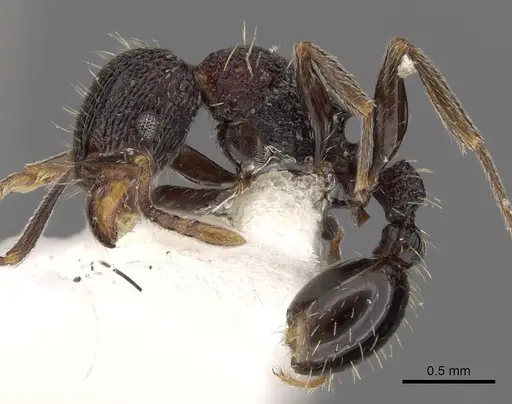
Tetramorium versiculum is a small ant with workers measuring 3.1–3.4 mm, blackish brown to black in color . It belongs to the *Tetramorium lucayanum* species complex within the *Tetramorium camerunense* group. Workers have coarse longitudinal rugulae on the head and dense sculpturing on the body, with a rough petiole and a regularly costulate postpetiole . This species is native to West Africa – Ghana, Ivory Coast, and Benin – where it lives in forest leaf litter, rotten logs, and soil . It has been collected at elevations around 800–1000 m in Cameroon and in green spaces of Abidjan .
Quick Summary
- Difficulty: Medium
- Origin & Habitat: West Africa – Ghana, Ivory Coast, and Benin. Found in forest leaf litter, rotten logs, and soil [1] at elevations of 800–1000 m in Cameroon [2] and in urban green spaces of Abidjan [3].
- Colony Type: Unconfirmed – no colony structure data available.
- Size & Growth:
- Antkeeping:
- Temperature: Keep at 24–28°C – a tropical species from West Africa that needs warm conditions year-round [2]. A gentle heat gradient is helpful.
- Humidity: High humidity required – they naturally live in damp forest litter and rotting wood [1]. Keep the nest substrate consistently moist but not waterlogged.
- Diapause: Not required – being a tropical species, they do not need a winter dormancy period. Maintain warm temperatures year-round.
- Nesting: Provide a humid nest setup – Y-tong, plaster, or naturalistic setups with moisture-retentive substrate work well. They naturally nest in rotting wood and soil, so include damp substrate areas.
- Behavior: These ants are generalist foragers typical of *Tetramorium*. They are active on the ground and can be aggressive toward small prey. Their small size (3.1–3.4 mm) means escape prevention is critical – they can squeeze through tiny gaps. They are not aggressive toward humans but will defend their nest. Defense mechanism: this species belongs to the Crematogastrini tribe, which uses a smear defense – they wipe venom onto enemies with a flattened stinger (general taxonomic knowledge).
- Common Issues: escape prevention is critical due to their tiny 3 mm size – use fine mesh and tight-fitting barriers, limited species-specific data means care is based on genus patterns and habitat inference, humidity must be maintained – drying out can kill the colony, tropical species may struggle if temperatures drop below 22°C, founding and colony size are unknown, so patience is needed and adjustments may be required
Housing and Nest Setup
For Tetramorium versiculum, provide a nest that maintains high humidity – these ants naturally live in rotting wood and forest soil where conditions stay damp [1]. Y-tong (AAC) nests work well because they hold moisture, or you can use a plaster nest with a water reservoir. A naturalistic setup with a layer of damp soil and some rotting wood pieces also mimics their habitat.
Because workers are only 3.1–3.4 mm, escape prevention must be excellent [1]. Use tight-fitting lids, apply Fluon to the inner walls of the outworld container, and use fine mesh on ventilation holes. These tiny ants can squeeze through gaps that seem impossible.
The outworld should be simple – a shallow foraging area where you can offer food. Keep it basic to make cleaning easier and reduce escape opportunities.
Feeding and Diet
Tetramorium versiculum is a generalist forager, like most species in this genus. Offer a balanced diet of protein and carbohydrates. Protein sources such as small mealworms, fruit flies, small crickets, or other tiny insects work well – chop prey into appropriately small pieces given their 3 mm worker size.
For carbohydrates, provide sugar water, honey, or diluted maple syrup. Change these sugar sources every few days to prevent mold. In the wild, they likely forage for honeydew from aphids and other small insects, so sugar sources are important for energy.
Feed protein 2–3 times per week, and keep sugar water available constantly. Remove any uneaten prey after 24–48 hours to prevent mold issues. Adjust feeding based on colony size – smaller colonies need less food.
Temperature and Seasonal Care
Being a tropical West African species, Tetramorium versiculum needs warm temperatures year-round [2]. Keep the nest area at 24–28°C for optimal brood development. Use a heating cable on one side of the nest to create a gentle temperature gradient, but avoid hot spots that could dry out the nest.
These ants do not require hibernation or diapause – maintain consistent tropical temperatures [2]. Room temperature may be sufficient if your home stays around 24–26°C, but monitor with a thermometer. If temperatures drop below 22°C for extended periods, colony activity and growth may slow.
Avoid temperature fluctuations and keep the nest away from air conditioning vents, windows with direct sunlight, or cold walls. Stable, warm conditions mimic their native tropical forest floor habitat.
Humidity Management
High humidity is essential for this species – they naturally inhabit damp forest litter and rotting wood in West Africa [1]. Keep the nest substrate consistently moist but never waterlogged. The substrate should feel damp to the touch with no standing water.
Monitor humidity by observing condensation on the nest walls and the moisture level of the substrate. If the nest starts drying out, add water carefully to one area and allow it to spread. A water reservoir or drip feeder connected to the nest helps maintain consistent humidity over time.
Balance humidity with adequate ventilation to prevent mold. Stagnant, overly wet conditions cause mold problems, while dry conditions will kill the colony. Aim for damp but airy – think forest floor after rain, not a swamp.
Colony Development
Founding behavior is unconfirmed – there is no data on how queens establish colonies or whether they are claustral. Do not disturb a potential founding queen, and assume she may need peace. The first workers, if any, will be nanitics (smaller than workers). Growth rate is unknown, as no development studies exist for this species.
Be patient with any founding colony – they may be slow to start and vulnerable. Avoid checking too frequently. Once workers appear, they will begin foraging and caring for brood.
Frequently Asked Questions
How long does it take for Tetramorium versiculum to get their first workers?
Unknown – no development data exists for this species. If you have a founding queen, be patient and avoid disturbance.
What size colony does Tetramorium versiculum reach?
Unknown – no colony size data is available for this species. Estimates are not possible without studies.
Do Tetramorium versiculum ants sting?
They have a functional stinger, but like other members of the Crematogastrini tribe, they primarily use a smear defense – wiping venom onto enemies with a flattened stinger (general taxonomic knowledge). Their sting is not dangerous to humans. They are more likely to flee than attack, but will defend their nest if provoked.
Can I keep Tetramorium versiculum in a test tube?
Yes, test tubes work well for founding colonies. Keep the water reservoir filled to maintain humidity, and ensure the cotton is properly secured. For established colonies, transfer to a proper nest setup like Y-tong or plaster that holds moisture better.
What temperature do Tetramorium versiculum need?
Keep them at 24–28°C – they are tropical ants from West Africa and need warm conditions year-round [2]. Do not let temperatures drop below 22°C for extended periods. A heating cable on one side of the nest can create a beneficial gradient.
Do Tetramorium versiculum need hibernation?
No, they do not require hibernation or diapause. Being a tropical species from Ghana, Ivory Coast, and Benin, they need consistent warm temperatures year-round. Maintain 24–28°C throughout the year [2].
Are Tetramorium versiculum good for beginners?
They are rated as medium difficulty. While Tetramorium are generally hardy, this specific species has very limited documented care information. Their small size requires excellent escape prevention, and they need stable warm, humid conditions. Some experience with antkeeping is helpful.
Why are my Tetramorium versiculum escaping?
Their tiny 3 mm size makes escape likely without proper barriers [1]. Use fine mesh on all openings, apply Fluon to container walls, and ensure lids fit tightly. Check for any gaps as small as 1 mm – these ants can squeeze through remarkably small spaces.
What do Tetramorium versiculum eat?
They are generalist foragers – offer small insects (mealworms, fruit flies, small crickets) for protein 2–3 times weekly, and keep sugar water, honey, or maple syrup available constantly. Remove uneaten prey after 24–48 hours to prevent mold.
Where is Tetramorium versiculum native to?
They are native to West Africa – specifically Ghana, Ivory Coast, and Benin [1]. They live in forest environments, nesting in leaf litter, rotting logs, and forest soil, and have been found at elevations around 800–1000 m in Cameroon [2].
Report an Issue
The current care sheet is based fully on literature. See inconsistencies, or something that's incorrect? Please , it will be resolved after review from an admin. Contributing to the blogs tab also helps providing information, to make us be able to further improve the caresheets. Thank you for your support!
References

This caresheet is licensed under CC BY-SA 4.0 .
Community Blogs
CASENT0901207
View on AntWeb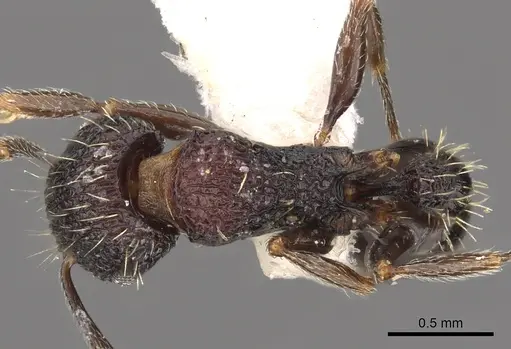
Literature
Loading distribution map...Loading products...