
Tetramorium venator
- Sci. Name
- Tetramorium venator
- Tribe
- Crematogastrini
- Subfamily
- Myrmicinae
- Author
- Hita Garcia & Fisher, 2014
- Distribution
- Found in 10 countries
Introduction
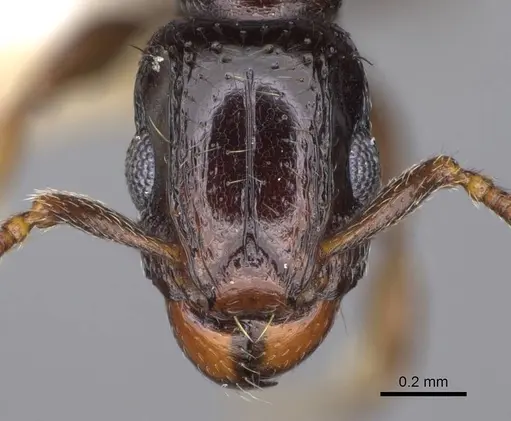
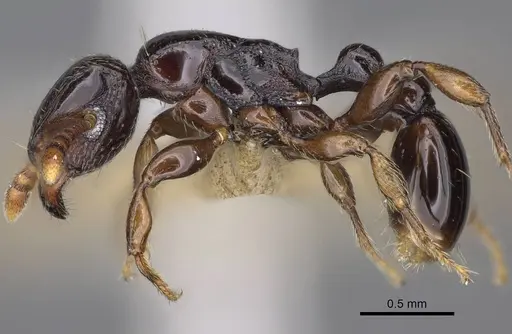
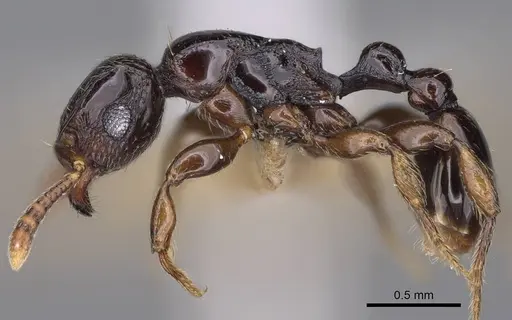
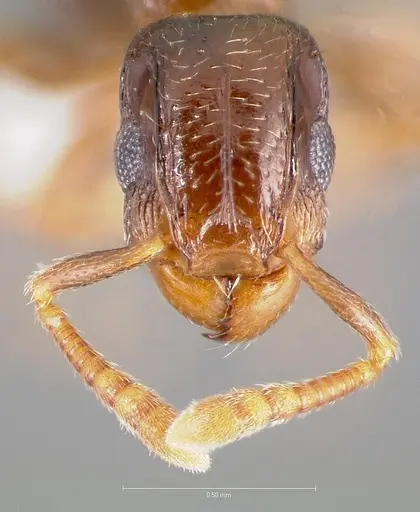
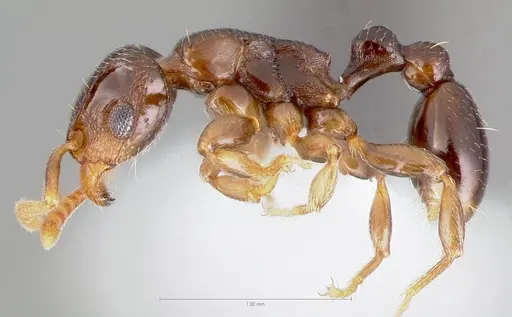
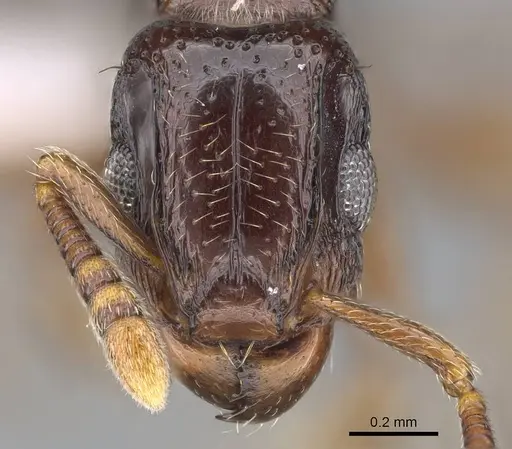
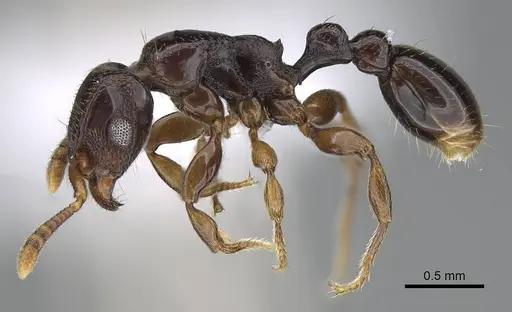
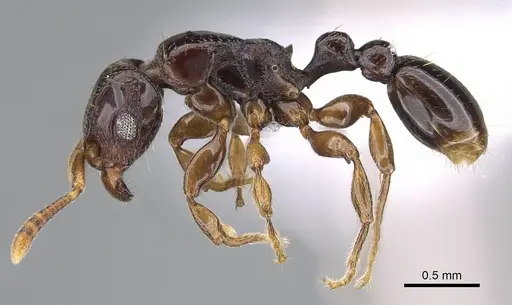
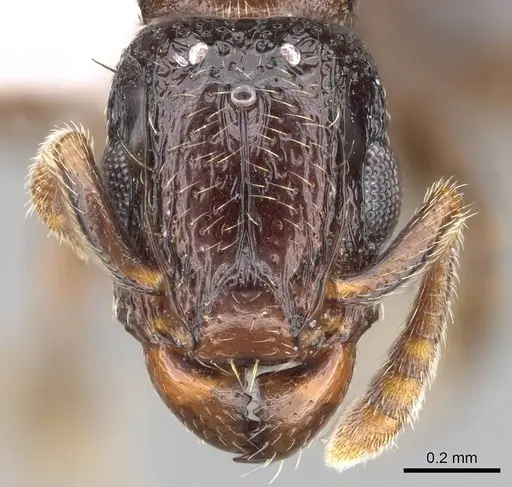
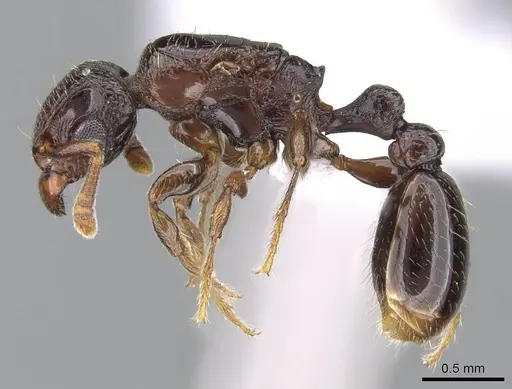
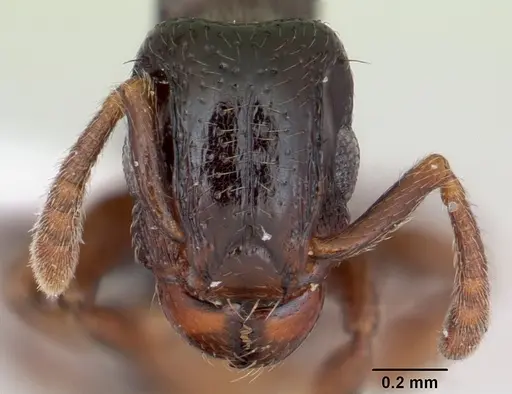
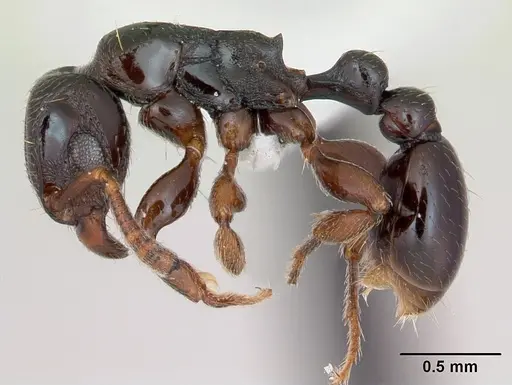
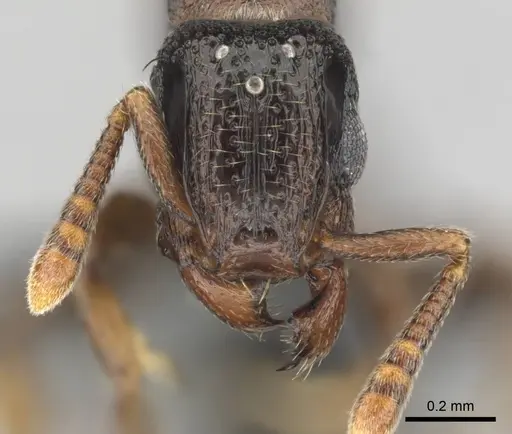
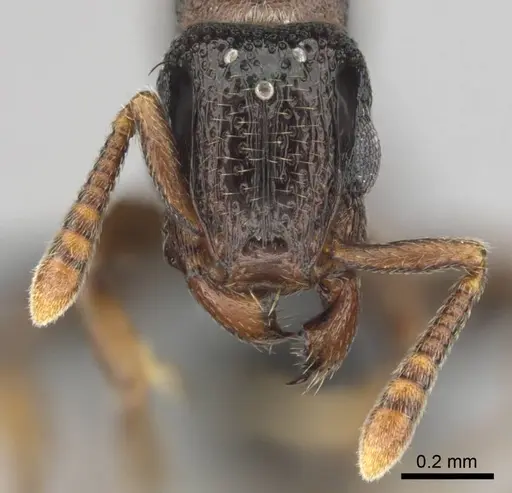
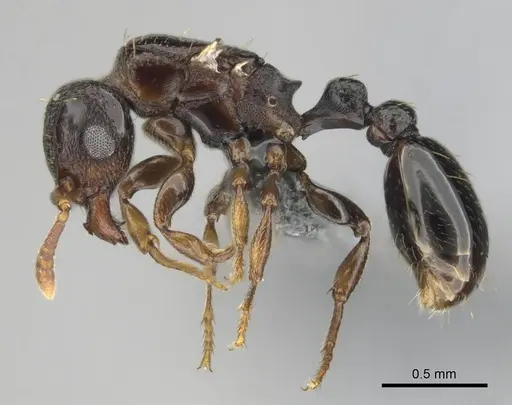
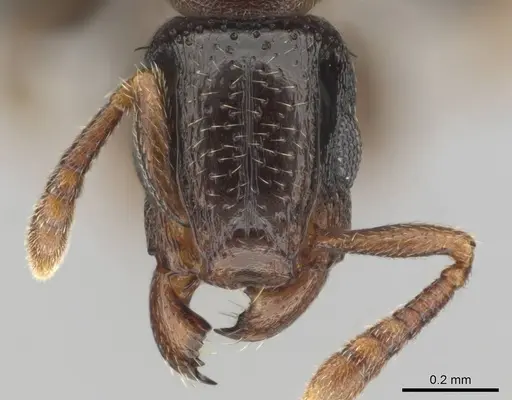
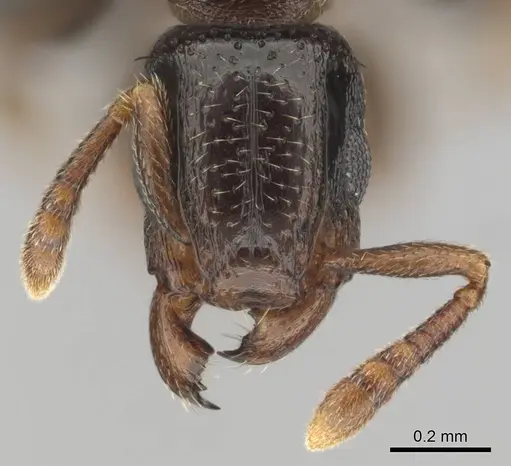
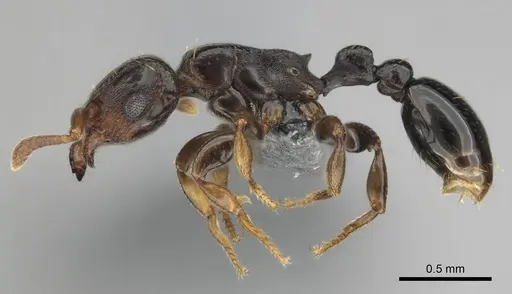
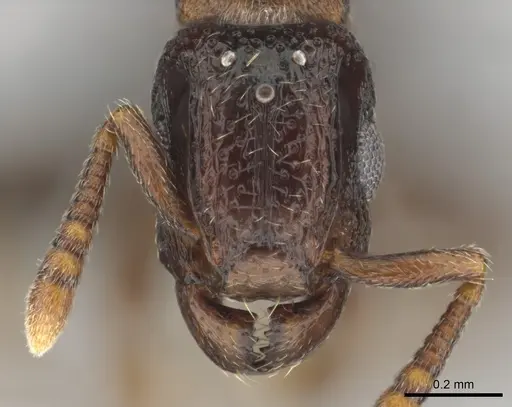
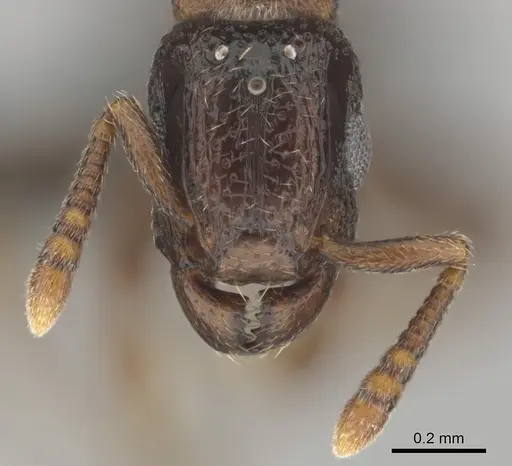
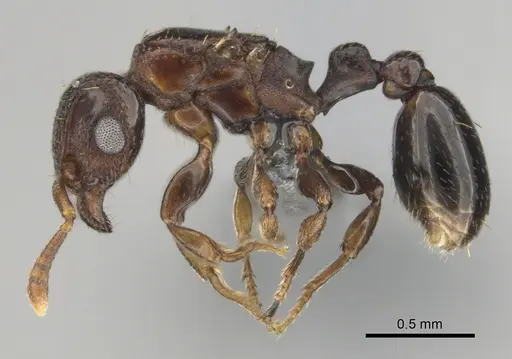
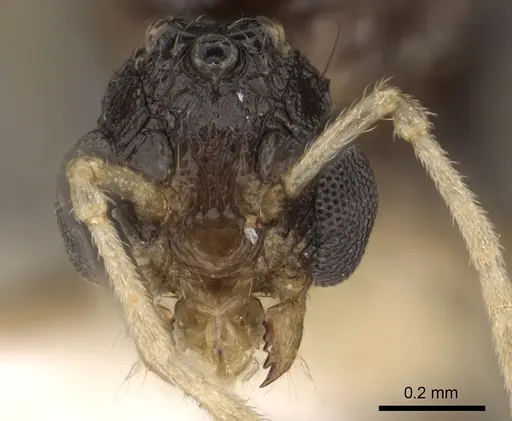
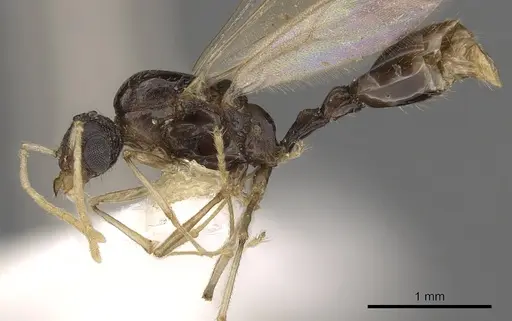
Tetramorium venator is a small predatory ant from the rainforests of West and Central Africa. It has a uniformly dark brown to black body with lighter brown legs and antennae, and its most striking feature is its exceptionally large eyes - the largest in the Tetramorium decem species group . The species name 'venator' is Latin for 'hunter', a nod to its hunting lifestyle . These ants live in the leaf litter layer of rainforests, from primary forest to disturbed areas, across the equatorial belt from Liberia east to Kenya . They reach their highest confirmed elevation at around 1448 m in Kenya's Kakamega Forest . What makes T. venator unusual is its specialized diet: stable isotope analysis confirms it is a predator that feeds primarily on termites, and some collections have found workers foraging inside Cubitermes termite nests . This species is the most abundant and widespread member of its group, and was frequently misidentified as Tetramorium decem until recent taxonomic revision .
Quick Summary
- Difficulty: Medium
- Origin & Habitat: Rainforests of West and Central Africa, from Liberia to Kenya. Inhabits the leaf litter layer of primary, secondary, or disturbed rainforests. Found at low elevations in West/Central Africa and at mid elevations (up to 1448 m) in eastern DRC, Tanzania, and Kenya [1].
- Colony Type: Unconfirmed, social structure not documented. Based on typical Tetramorium patterns, likely single-queen (monogyne) colonies.
- Size & Growth:
- Queen: Size data unavailable, no queen measurements published [1]
- Worker: Total body length not reported, estimated 2-3 mm based on related Tetramorium species [1]
- Colony: Unknown, not documented in literature
- Growth: Moderate, inferred from typical Tetramorium patterns
- Development: Not documented for this species (Development timeline unstudied. Based on related Tetramorium,6-10 weeks estimated at optimal temperature, but this is speculative.)
- Antkeeping:
- Temperature: 24-28 °C, tropical rainforest species that needs warm, stable conditions [1]
- Humidity: High, keep substrate consistently moist but not waterlogged. Rainforest leaf-litter habitat suggests 70-85% RH [1]
- Diapause: No, tropical species, do not require hibernation. Keep temperatures stable year-round.
- Nesting: Y-tong (AAC) or plaster nests with small, tight chambers. Naturalistic soil setups also work. Ensure good drainage.
- Behavior: This species is a specialized termite hunter. Workers are active foragers with excellent vision, but they are timid and will flee rather than attack. As a member of the tribe Crematogastrini, they use a smear defense: a modified flattened stinger that wipes venom onto enemies rather than piercing. For humans, this is very mild. Because workers are tiny, escape prevention is critical, use fine mesh or fluon barriers.
- Common Issues: tiny size makes escapes likely unless outworld has fine mesh or liquid barriers, specialized diet (live termites) can be hard to maintain, inadequate protein leads to colony decline, high humidity requirements may cause mold if ventilation is poor, unknown founding behavior and slow initial growth can be challenging for inexperienced keepers
Housing and Nest Setup
Because T. venator workers are very small, they need a nest with chambers scaled to their size. Y-tong (AAC) or plaster nests work well because they hold moisture and chambers can be cut small. Avoid oversized spaces, the ants will feel exposed. A test tube with water can be used for founding, but once the colony outgrows the tube, move them to a formicarium. The outworld should be kept simple: a foraging area with a water source and feeding dish. Use a thin layer of fluon or a ring of baby powder mixed with alcohol around the edges to prevent escapes, these ants can squeeze through nearly any gap [1].
Feeding and Diet
This is the most critical aspect of keeping T. venator. Research shows they are specialized termite predators, stable isotope data and field observations of them foraging in Cubitermes nests confirm this [1]. In captivity, you must provide small live prey. The best options are termites (if you can source them), springtails, booklice (psocids), or micro fruit flies. Frozen termites may be accepted if small enough. Offer prey every 2-3 days, and remove leftovers after 24 hours to prevent mold. Do not expect them to take honey or sugar water, their diet is almost entirely protein-based. Always provide fresh water in a test tube or water feeder [1].
Temperature and Humidity
T. venator comes from tropical African rainforests, so they need warmth and high humidity. Keep the nest at 24-28 °C, a small heating cable placed on top of the nest can create a gentle gradient. Never put heat underneath, as it will dry out the substrate. Humidity should be high: keep the substrate damp (like squeezed-out sponge) but avoid standing water. Mist the nest occasionally if it dries out, but ensure good ventilation, small holes or mesh on one side of the nest help prevent mold while maintaining humidity. These conditions are based on the species' natural habitat in the rainforest leaf litter [1].
Colony Founding and Growth
How T. venator queens found new colonies is not documented in any scientific literature. It is unknown whether they are claustral, semi-claustral, or require help. Until more is known, provide a standard test tube setup with water and a cotton plug, and disturb the queen as little as possible. Do not attempt to feed her until the first workers appear. Growth is expected to be slow, development rates are not recorded for this species. Be patient, a colony of 50-100 workers may take many months. Colony size in the wild is unknown, but given its specialized predatory lifestyle, it likely stays in the hundreds rather than thousands [1].
Behavior and Temperament
T. venator is a shy hunter. Workers spend most of their time searching leaf litter for termites. Their large eyes give them excellent vision, and they are quick to flee from disturbances. As a member of the tribe Crematogastrini, they have a modified stinger used for smearing venom rather than piercing, they wipe venom onto enemies during defense. For humans, this feels like a very mild irritation at worst, no more than a mosquito bite. Their small size means they are not aggressive toward humans, but they are determined hunters. In the nest, they are organized and efficient, with no soldier caste. Expect them to avoid bright light and heavy vibrations [1].
Frequently Asked Questions
Can I keep Tetramorium venator in a test tube?
Yes, test tubes work for founding or small colonies. But as the colony grows, they will need more space and humidity control. Move them to a Y-tong or plaster nest when the tube becomes crowded. No specific worker count has been documented for when to move, use your judgment based on space.
What do Tetramorium venator ants eat?
They are specialized termite predators in the wild [1]. In captivity, offer small live prey like termites, springtails, booklice, or micro fruit flies. They are not interested in sugar sources, focus on high-protein food. Frozen termites may work if available.
How long does it take for Tetramorium venator to produce first workers?
This has not been documented for T. venator. Based on related Tetramorium species, it might take 6-10 weeks under optimal conditions, but this is purely an estimate. Development time is not confirmed.
Do Tetramorium venator ants sting?
Yes, they have a stinger, but it is modified for smearing venom rather than piercing. As a tribe Crematogastrini species, they use a smear defense, they wipe venom onto attackers. For humans, the effect is very mild.
Are Tetramorium venator ants good for beginners?
No, this is a medium-difficulty species. Their specialized diet (live termites) and high humidity needs make them challenging. They are best suited for keepers who can provide consistent live prey and have experience controlling humidity.
How big do Tetramorium venator colonies get?
Colony size is unknown, not documented in the literature. Based on their specialized predatory lifestyle, colonies likely stay in the hundreds, but this is speculative.
Do Tetramorium venator need hibernation?
No, as a tropical rainforest species, they do not require a diapause. Keep temperatures stable at 24-28 °C year-round. A slight seasonal temperature drop is unnecessary.
Why are my Tetramorium venator dying?
Common causes include: humidity too high or too low (leading to mold or desiccation), lack of appropriate live prey (starvation), temperature stress, or inadequate ventilation. Check these parameters first. Keep in mind that their biology is not well-studied, so trial and error may be necessary.
When should I move Tetramorium venator to a formicarium?
Move them when the test tube or founding container becomes crowded, there is no set worker number. Ensure the new nest has small, tight chambers. A gradual move using a connecting tube is recommended.
Can I keep multiple Tetramorium venator queens together?
This has not been documented. Based on typical Tetramorium behavior, single-queen colonies are most likely. Do not attempt to combine unrelated queens without evidence they can coexist.
Report an Issue
The current care sheet is based fully on literature. See inconsistencies, or something that's incorrect? Please , it will be resolved after review from an admin. Contributing to the blogs tab also helps providing information, to make us be able to further improve the caresheets. Thank you for your support!
References

This caresheet is licensed under CC BY-SA 4.0 .
Community Blogs
CASENT0195574
View on AntWeb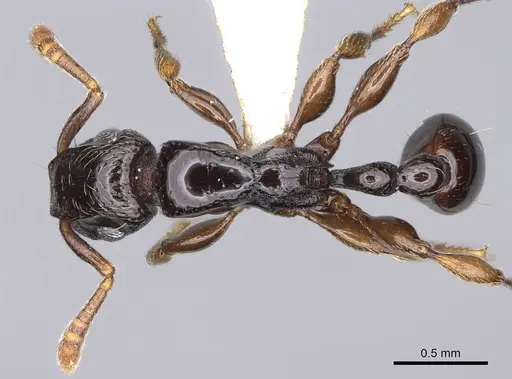
CASENT0217165
View on AntWeb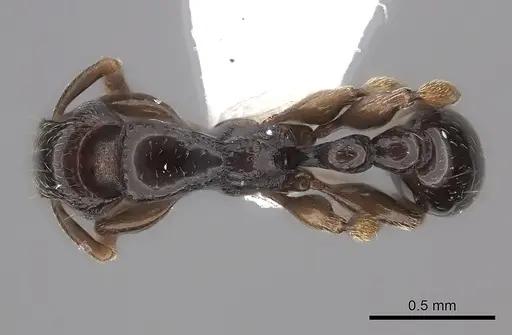
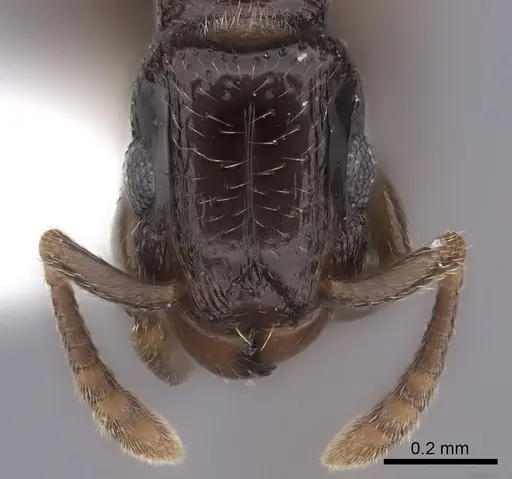
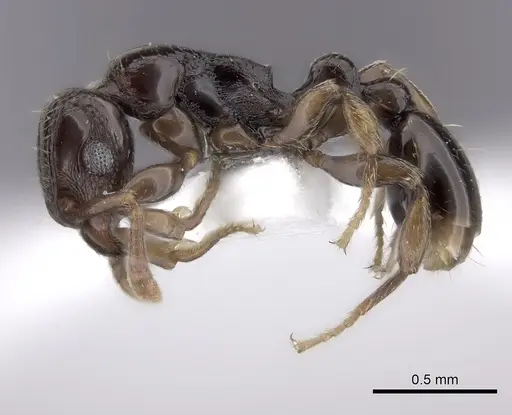
CASENT0401682
View on AntWeb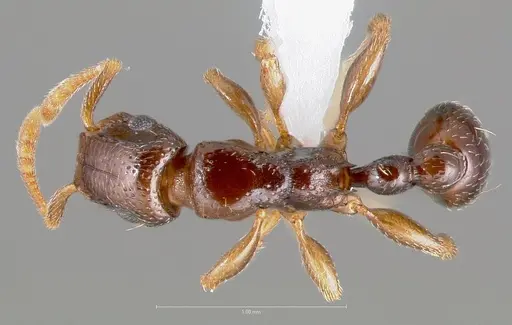
CASENT0401714
View on AntWeb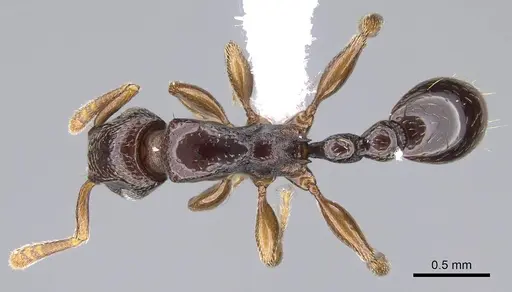
CASENT0411863
View on AntWeb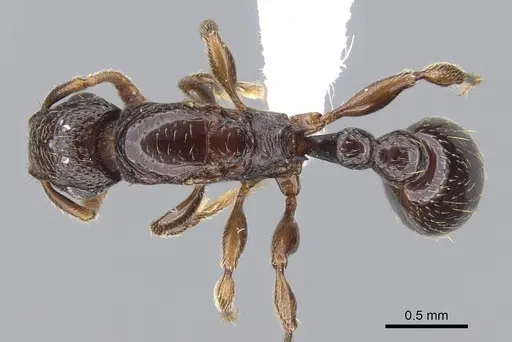
CASENT0415619
View on AntWeb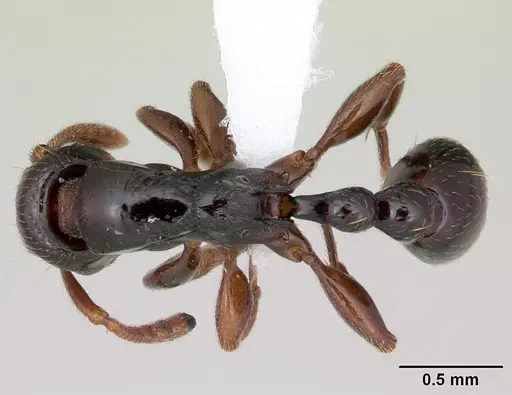
CASENT0815579
View on AntWeb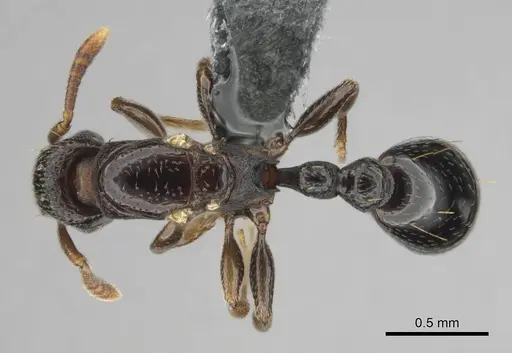
CASENT0815582
View on AntWeb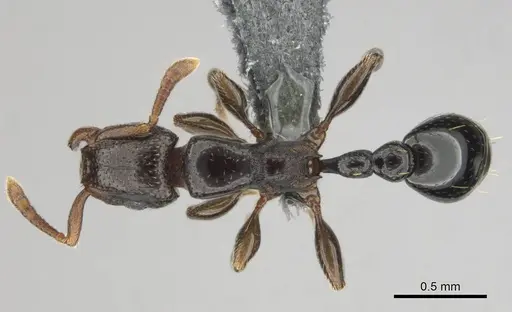
CASENT0815750
View on AntWeb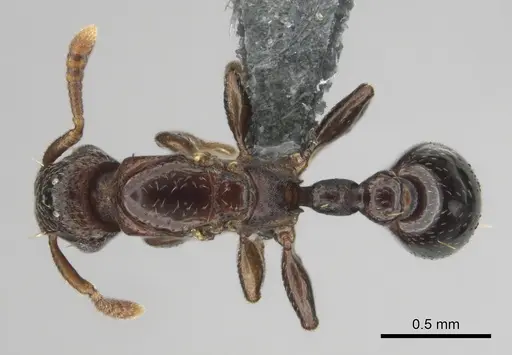
CASENT0901037
View on AntWeb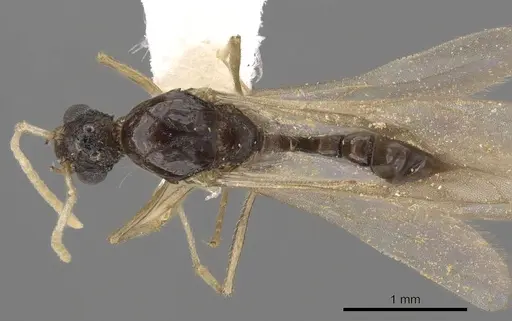
Literature
Loading distribution map...Loading products...