
Tetramorium termitobium
- Sci. Name
- Tetramorium termitobium
- Tribe
- Crematogastrini
- Subfamily
- Myrmicinae
- Author
- Emery, 1908
- Distribution
- Found in 2 countries
Introduction
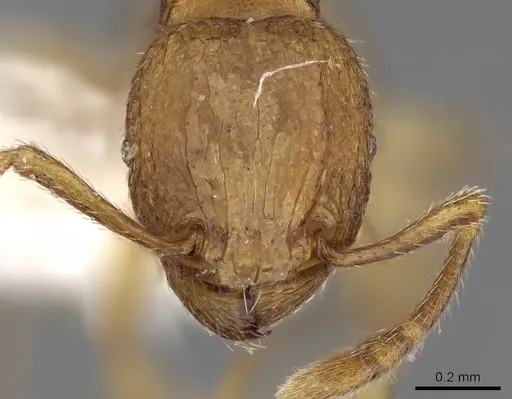
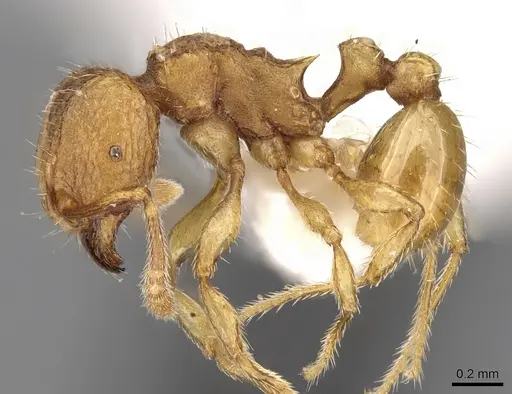
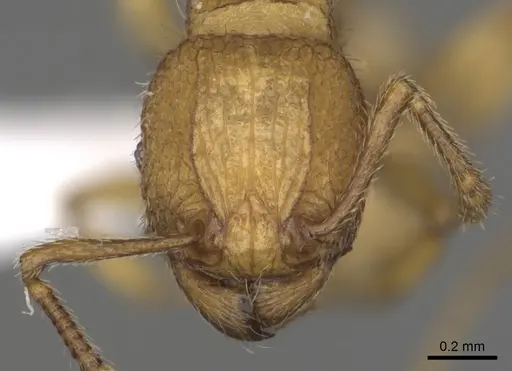
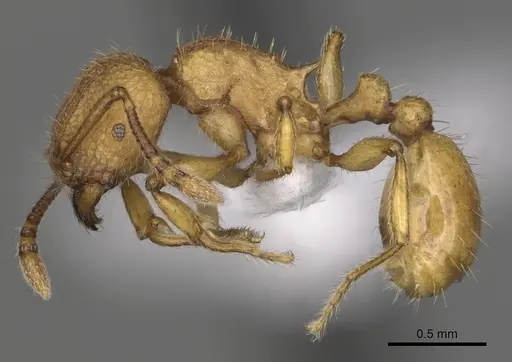
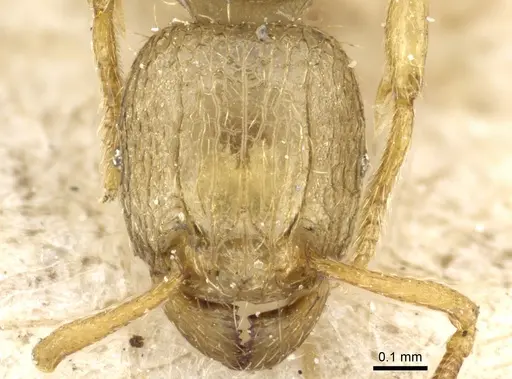
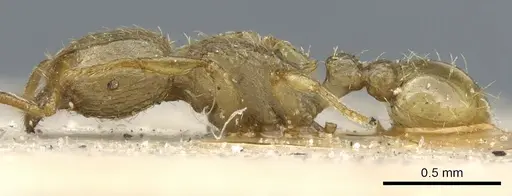
Tetramorium termitobium is a small yellow ant species native to the rainforests of Central and West Africa. Workers measure about 2.8mm in total length, with a broad head and tiny eyes (only 3-4 ommatidia across) . The body has short, sparse hairs and irregular sculpture on the upper back, which helps tell it apart from similar species. This ant is a specialized termite predator (termitolestic). It produces special mandibular gland secretions, mostly 2-undecanol, that let it sneak up on termites without triggering an alarm . While other Tetramorium species make repellent chemicals that warn termites, T. termitobium's chemical camouflage is a neat evolutionary trick.
Quick Summary
- Difficulty: Medium
- Origin & Habitat: Rainforests of Democratic Republic of Congo, Gabon, Ivory Coast, and Uganda [1]. They forage on the ground, in leaf litter, under stones, and inside rotten logs [1].
- Colony Type: Unconfirmed. No data on whether colonies are single-queen (monogyne) or multi-queen (polygyne).
- Size & Growth:
- Queen: Unconfirmed – no measurements documented.
- Worker: 2.8mm total length [1].
- Colony: Unknown – no colony size data available.
- Growth: Unknown
- Development: Unconfirmed for this species. Based on typical Tetramorium patterns, estimate 6–10 weeks at 24–28°C. (Estimated from related Tetramorium species – no direct data.)
- Antkeeping:
- Temperature: Keep at 24–28°C. As a rainforest species they need warm, stable conditions. Avoid prolonged drops below 22°C.
- Humidity: High. The nest substrate should be consistently damp but not waterlogged – aim for a moisture level that feels moist to the touch.
- Diapause: Unknown. Tropical species likely don't require a formal diapause, but may slow down during cooler periods. Maintain warm conditions year-round.
- Nesting: Standard Myrmicinae nest setups work. Y-tong (AAC), plaster, or naturalistic soil/rotting‑wood setups are good. Provide moist substrate since they live in leaf litter and rotten wood.
- Behavior: A specialized termite hunter. Workers likely forage individually or in small groups rather than forming big columns. Their primary defense is smearing venom using a modified flat stinger (typical of tribe Crematogastrini). They are not aggressive toward humans and any sting is negligible. Because workers are only 2.8mm, escape prevention is critical – use fine mesh and seal all gaps.
- Common Issues: tiny size makes escape easy – block any gap bigger than 1mm., no published care guidelines – starting points are educated guesses., humidity too low causes colony decline – keep substrate damp., specialized diet may be hard to provide – they may require live termites or similar small prey., tropical species is sensitive to cold – avoid temperatures below 22°C.
Natural History and Ecology
Tetramorium termitobium is a termite specialist from African rainforests. First described by Emery in 1908 from the Democratic Republic of Congo, it has since been found in Gabon, Ivory Coast, and Uganda [1]. Foraging occurs on the ground, in leaf litter, under stones, and in rotten logs [1].
Its termitolestic lifestyle is the standout trait. Workers produce mandibular gland secretions that avoid triggering termite alarm responses. The major component,2-undecanol, makes up about 80% of the secretion [4]. Unlike related Tetramorium species that produce repellent ketones and aldehydes, T. termitobium's chemical blend acts as a disguise [2][3][5].
Identification and Morphology
Workers are about 2.8mm long (total length). The head is broad, eyes are tiny (only 3–4 ommatidia across) [1]. The frontal carinae (ridges on the head) are moderately developed but weak, and reach back past the eyes. Propodeal spines are stout and triangular. The petiole node has a sharp right‑angle at the front top corner. The ant is yellow overall, with short, sparse body hairs [1].
Housing and Nest Setup
Since this ant lives in rainforest leaf litter and rotting wood, your setup should keep high humidity. Good choices are Y‑tong (AAC), plaster, or naturalistic soil/rotting‑wood nests. The substrate should be damp but not waterlogged. Because workers are only 2.8mm, make sure all passages are narrow enough to prevent escape, and seal any gaps in the outworld.
A test tube works for starting a colony. Use a cotton plug that's packed firmly – these tiny ants can squeeze through loose cotton. Once the colony grows, move them to a formicarium with a gradient of moisture (one moist area, one drier area) so they can choose.
Feeding and Diet
As a termite specialist, Tetramorium termitobium needs protein from small live prey. Offer termites (if you can get them), small crickets, fruit flies, or other tiny arthropods. They'll also take pieces of mealworm or waxworm. Keep sugar water (1:4 sugar‑to‑water) available at all times.
Feed small amounts every 2–3 days, removing uneaten prey after 24 hours. Their reliance on live prey makes them a bit more demanding than generalist Tetramorium species. [2][3][5]
Temperature and Seasonal Care
Keep the nest at 24–28°C. Use a heat mat on one side to create a gradient – the ants will move to their preferred spot. Avoid extended periods below 22°C. No hibernation data exists, but as a tropical species they likely don't need a winter rest. Just maintain stable warmth all year.
Behavior and Temperament
This ant is a focused termite hunter. Workers probably forage alone or in small groups, using their chemical camouflage to get close to termite prey. Their primary defense is smearing venom via a flat, spatulate stinger (a characteristic of tribe Crematogastrini). They aren't aggressive toward humans and any sting is too small to feel.
Because of their tiny size, they can slip through very small gaps. Always use fine mesh (0.5mm openings or less) on the outworld and seal any cracks. [2][3][5]
Frequently Asked Questions
What do Tetramorium termitobium ants eat?
They are specialized termite predators. In captivity, offer live small prey like termites (if available), small crickets, fruit flies, and other tiny arthropods. They also accept protein‑rich foods such as mealworms or waxworms. Provide sugar water (1:4 dilution) constantly.
How long does it take for Tetramorium termitobium to develop from egg to worker?
The development time hasn't been studied for this species. Based on typical Tetramorium patterns, expect about 6–10 weeks from egg to worker at 24–28°C.
Are Tetramorium termitobium ants good for beginners?
Rated Medium difficulty. There are no published care guidelines, and their specialized termite diet may be harder to supply than typical ant foods. They also need steady warmth and high humidity. Not the easiest starter species.
Do Tetramorium termitobium ants sting?
Myrmicinae ants have stingers, but at 2.8mm the sting is negligible to humans. They are not dangerous.
What temperature do Tetramorium termitobium ants need?
Keep them at 24–28°C. As a rainforest species they need warm, stable conditions. Avoid dropping below 22°C for more than a few hours.
Can I keep Tetramorium termitobium in a test tube?
Yes, a test tube works well for a small colony. Make sure the cotton plug is tight – these tiny ants can squeeze through loose fibers. Move them to a formicarium once the colony outgrows the tube.
Do Tetramorium termitobium ants need hibernation?
Unknown. As a tropical rainforest species, they likely don't need formal hibernation. Maintain warm conditions year‑round.
How big do Tetramorium termitobium colonies get?
Colony size hasn't been documented. Based on related Tetramorium species of similar worker size, colonies may reach a few hundred workers, but this is speculative.
Why are my Tetramorium termitobium ants dying?
Start by checking the most likely problems: humidity too low (substrate should be damp), temperature below 22°C, inadequate protein (they need live small prey), or escape through tiny gaps. Also make sure the nest isn't waterlogged.
Is Tetramorium termitobium a monogyne or polygyne species?
The colony structure is unconfirmed. No published data indicates whether they are single‑queen (monogyne) or multi‑queen (polygyne).
Report an Issue
The current care sheet is based fully on literature. See inconsistencies, or something that's incorrect? Please , it will be resolved after review from an admin. Contributing to the blogs tab also helps providing information, to make us be able to further improve the caresheets. Thank you for your support!
References

This caresheet is licensed under CC BY-SA 4.0 .
Community Blogs
CASENT0280902
View on AntWeb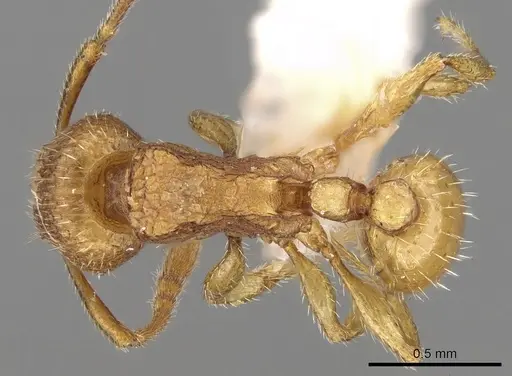
CASENT0316975
View on AntWeb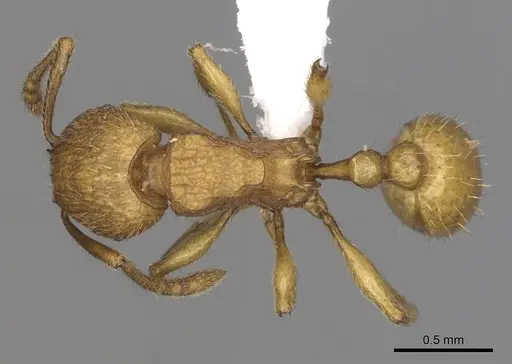
CASENT0365837
View on AntWeb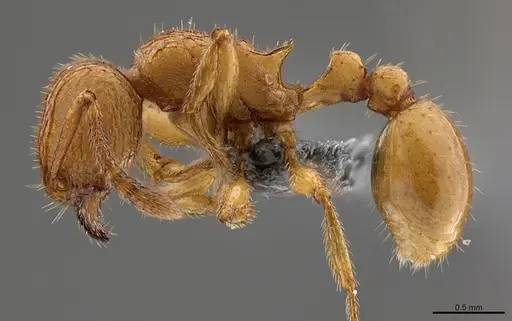
CASENT0904845
View on AntWeb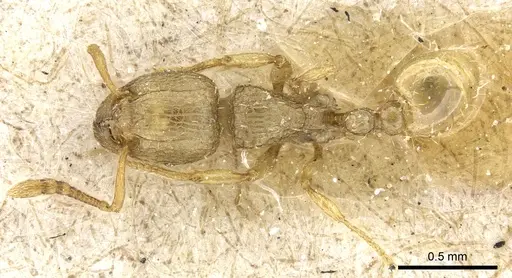
Literature
Loading distribution map...Loading products...