
Tetramorium tabarum
- Sci. Name
- Tetramorium tabarum
- Tribe
- Crematogastrini
- Subfamily
- Myrmicinae
- Author
- Bolton, 1980
- Distribution
- Found in 4 countries
Introduction
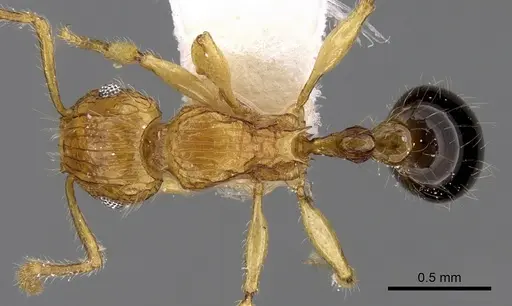
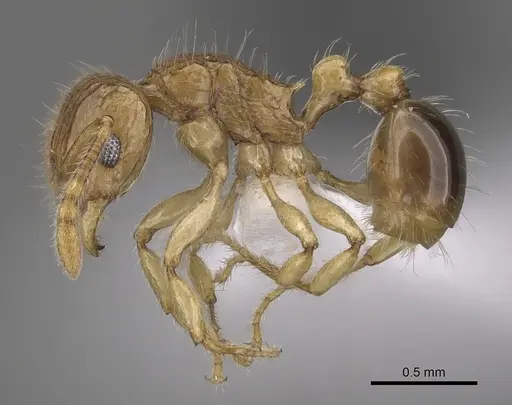
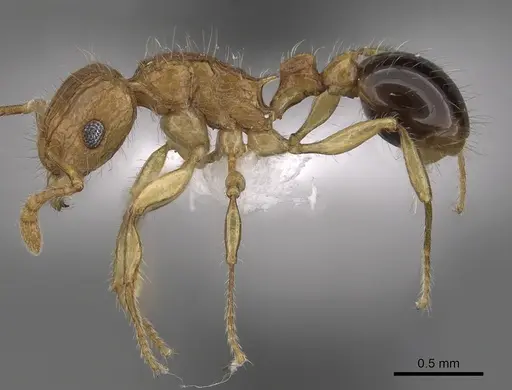
Tetramorium tabarum is a tiny bicolored ant from Central Africa. Workers measure 2.8mm in total length, with a bright yellowish-orange head, mesosoma, and waist segments contrasting sharply with a very dark brown to black gaster . It belongs to the Tetramorium tortuosum species group and the T. capillosum species complex, closely related to other small Tetramorium species . The species has a very limited, scattered distribution across northern Gabon, western Cameroon, the Central African Republic, and northeastern Democratic Republic of Congo . Most specimens have been collected from vegetation, suggesting it forages in low vegetation or the canopy rather than on the ground .
Quick Summary
- Difficulty: Unknown, limited availability and data
- Origin & Habitat: Northern Gabon, western Cameroon, southwestern Central African Republic, and northeastern Democratic Republic of Congo in the Afrotropical region. Most specimens collected from vegetation, suggesting preference for low vegetation or canopy-level foraging [2].
- Colony Type: Unknown, colony structure has not been documented in scientific literature
- Size & Growth:
- Queen: Not documented, queen measurements unavailable
- Worker: 2.8mm total length [1]
- Colony: Unknown, no colony size data available
- Growth: Unknown, development has not been studied
- Development: Unknown, no specific data exists. Estimated 4-6 weeks based on typical small tropical Tetramorium patterns. (Estimated based on genus-level data, no direct measurements available for this species)
- Antkeeping:
- Temperature: Estimated 22-28°C based on tropical Central African habitat
- Humidity: Estimated 60-80%, prefer humid conditions consistent with tropical rainforest environment
- Diapause: Unlikely, species is from tropical Africa with no documented winter dormancy
- Nesting: Unknown, no natural nesting observations documented. Likely accepts test tubes or small formicaria with climbing surfaces, given collection from vegetation.
- Behavior: Not well-documented due to rarity. Defense mechanism: Smear venom (typical of Crematogastrini tribe), uses a modified stinger to wipe venom onto enemies rather than piercing. Likely generalist foragers accepting sugars and small protein sources. Escape risk is moderate due to small worker size, standard barrier precautions recommended.
- Common Issues: very limited availability in the antkeeping hobby, rarely collected or traded, no established care guidelines exist, keepers will be pioneering captive breeding, small worker size means escape prevention must be adequate, wild-caught colonies may have high stress mortality due to collection rarity, virtually no information on colony founding behavior in captivity
Appearance and Identification
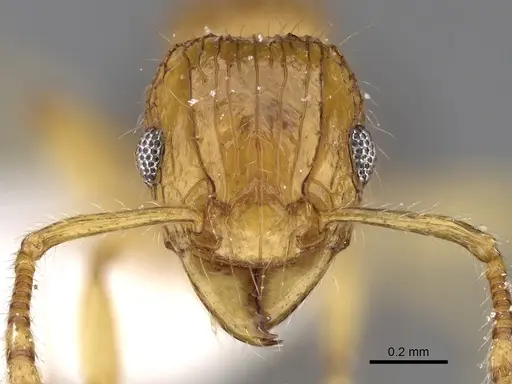
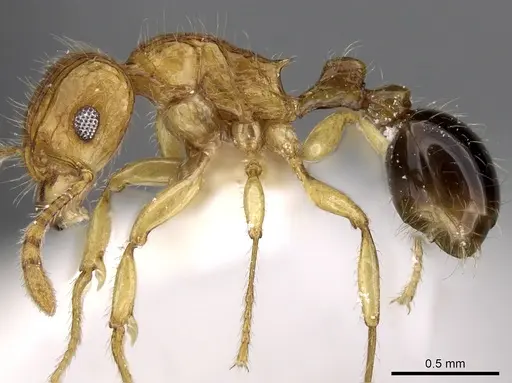
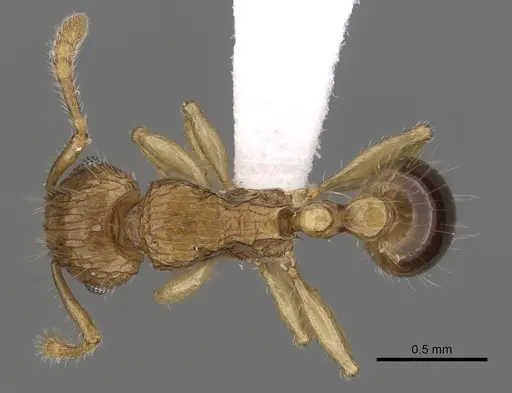
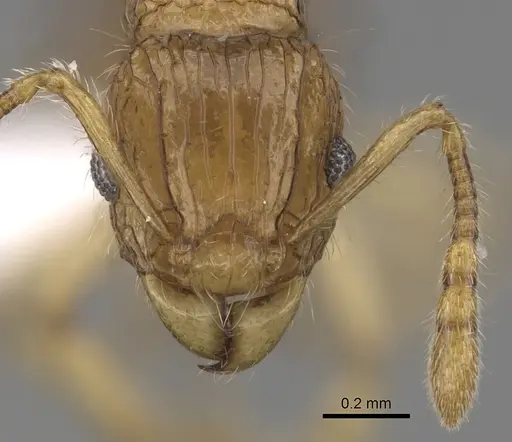
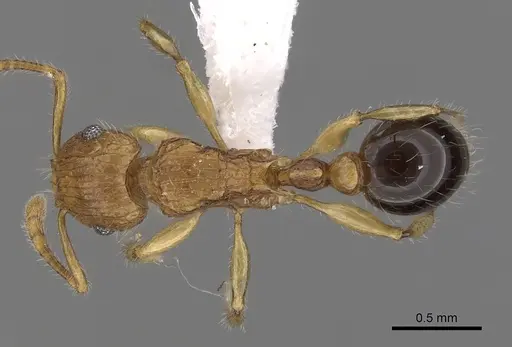
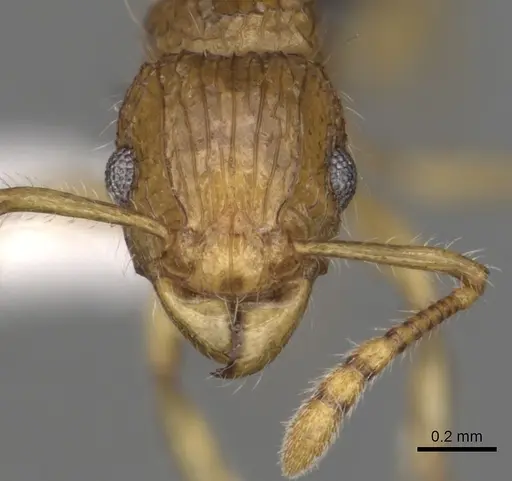
Tetramorium tabarum workers are very small, about 2.8mm in total length [1]. Their most striking feature is the bicolored body: the head, mesosoma, and waist segments are yellowish to bright orange, while the gaster is very dark brown to black [2]. They have large eyes and moderately long antennal scapes, along with relatively short, thorn-like propodeal spines. The petiolar node is nodiform with rounded anterodorsal and posterodorsal margins. This species is part of the T. capillosum species complex within the Tetramorium tortuosum group and can be distinguished from relatives like T. capillosum by its smaller size, bicolored body, larger eyes, and unsculptured mandibles and postpetiole [2].
Distribution and Habitat
This species has an extremely limited and scattered distribution in Central Africa. It has been recorded from northern Gabon, western Cameroon near the Gulf of Guinea, the southwestern Central African Republic, and the northeastern Democratic Republic of Congo near Epulu [2][3]. The patchy distribution is likely due to under-sampling rather than true rarity [2]. Most specimens were collected from vegetation, suggesting the species forages or nests in low vegetation or the canopy layer of tropical forests [2].
Estimated Care Requirements
Since Tetramorium tabarum has never been kept in captivity, care requirements are estimated based on natural history and genus patterns. Maintain temperatures of 22-28°C and humidity of 60-80% to mimic its tropical African habitat. Founding behavior is unconfirmed. Feed sugar water or honey as an energy source, and small protein items like fruit flies or pinhead crickets. Provide vertical space or climbing surfaces, as the species is associated with vegetation. Escape prevention should account for the small worker size (2.8mm) – standard barriers such as fluon are recommended.
Challenges and Considerations
Prospective keepers should understand that Tetramorium tabarum is essentially unknown in captivity with no established care precedent. The primary challenge is obtaining a colony – the species has rarely been collected even by professional ant researchers, with most known specimens coming from a handful of scientific collections [2]. Any wild-caught colonies will likely experience significant stress from collection and transport, and survival rates are uncertain. There is no data on colony development, optimal temperatures, or accepted foods specific to this species. Keepers who successfully establish and breed this species would be contributing genuinely new knowledge to both the antkeeping hobby and scientific understanding. This species is best suited for experienced keepers who enjoy experimenting and documenting their observations, rather than those seeking a well-established species with known requirements.
Frequently Asked Questions
How big do Tetramorium tabarum workers get?
Workers are very small, about 2.8mm total length [1].
What do Tetramorium tabarum ants look like?
They have a distinctive bicolored appearance with a yellowish-orange head, mesosoma, and waist segments contrasting with a very dark brown to black gaster. Workers have large eyes and short propodeal spines [2].
Where is Tetramorium tabarum found in the wild?
This species is known from a limited area in Central Africa: northern Gabon, western Cameroon, southwestern Central African Republic, and northeastern Democratic Republic of Congo [2]. Most specimens have been collected from vegetation rather than ground nests.
Is Tetramorium tabarum available in the antkeeping hobby?
No – this species is extremely rare in the antkeeping hobby and has rarely been collected even by professional researchers. The few known specimens exist in scientific collections. Obtaining a colony would be exceptionally difficult [2].
What temperature do Tetramorium tabarum ants need?
Estimated at 22-28°C based on their tropical Central African origin. No specific captive data exists, so aim for warm, stable tropical conditions.
Do Tetramorium tabarum ants need hibernation?
Unlikely – this species originates from tropical Africa with no seasonal temperature drops. There is no documented diapause requirement, though more research is needed.
How long does it take for Tetramorium tabarum to develop from egg to worker?
Unknown – no specific development data exists. Estimated at 4-6 weeks based on typical small tropical Tetramorium patterns, but this is a rough guess.
Can I keep multiple Tetramorium tabarum queens together?
Unknown – colony structure has not been documented for this species. The typical Tetramorium pattern is single-queen colonies, but polygyny cannot be ruled out without research.
What do Tetramorium tabarum ants eat?
Not specifically documented, but based on genus patterns they likely accept sugar sources (honey, sugar water) and small protein (fruit flies, small insects). Their small size requires appropriately-sized prey items.
Is Tetramorium tabarum good for beginners?
No – this species is not recommended for beginners. It has never been kept in captivity, has no established care guidelines, and is extremely rare even in the wild. Experienced keepers interested in pioneering new species would be better suited.
Report an Issue
The current care sheet is based fully on literature. See inconsistencies, or something that's incorrect? Please , it will be resolved after review from an admin. Contributing to the blogs tab also helps providing information, to make us be able to further improve the caresheets. Thank you for your support!
References

This caresheet is licensed under CC BY-SA 4.0 .
Community Blogs
Literature
Loading distribution map...Loading products...