
Tetramorium spininode
- Sci. Name
- Tetramorium spininode
- Tribe
- Crematogastrini
- Subfamily
- Myrmicinae
- Author
- Bolton, 1977
- Distribution
- Found in 1 countries
Introduction
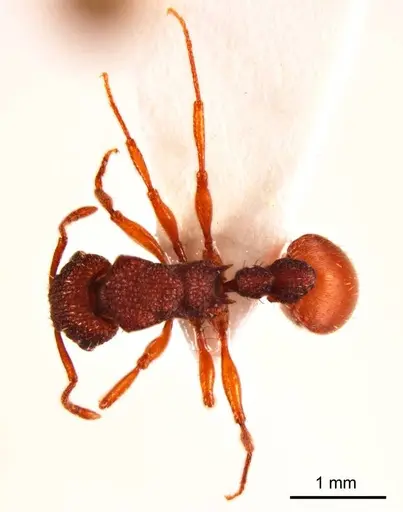
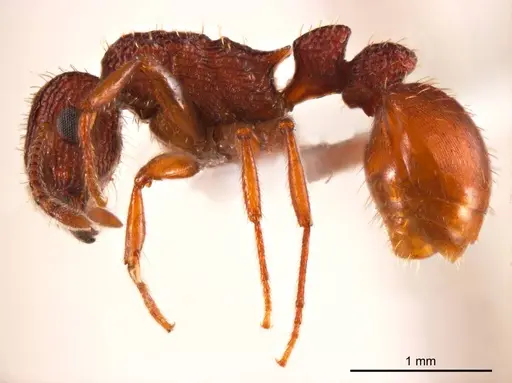
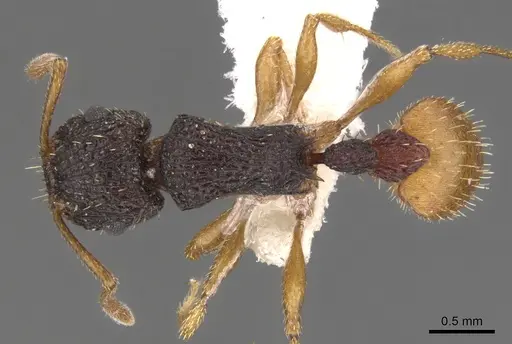
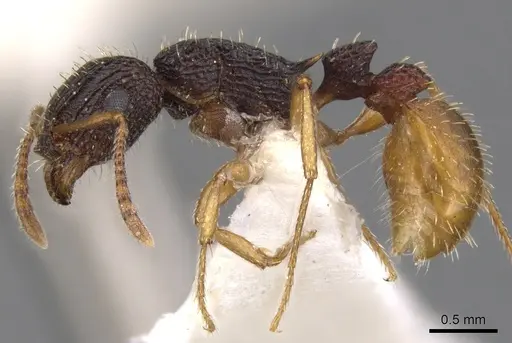
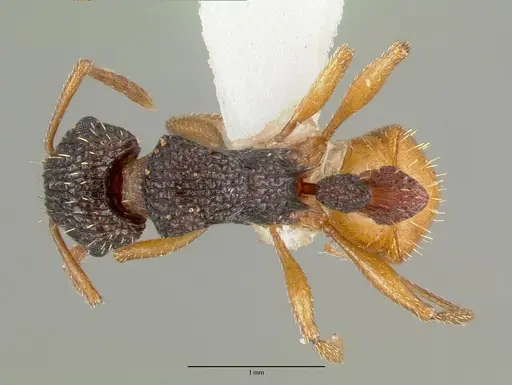
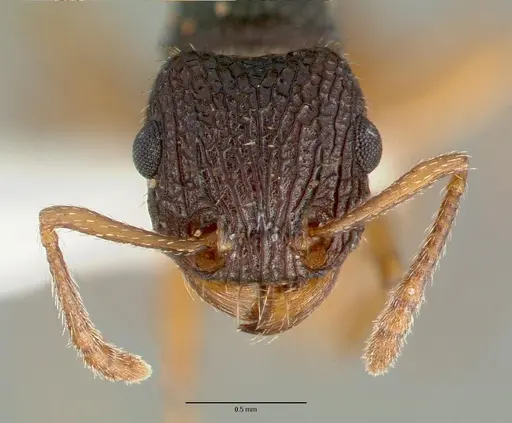
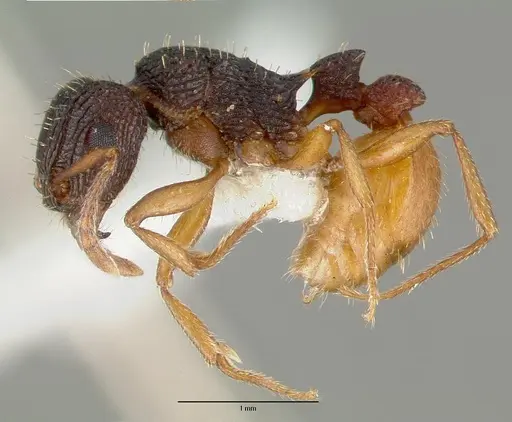
Tetramorium spininode is one of the most distinctive Tetramorium species globally . Workers are 4.2-4.5mm long . Their petiole (the waist segment between thorax and abdomen) has a unique blunt spine-like projection pointing backward, and the gaster (abdomen) has narrow flanges along each side, giving a crown-like appearance . The color pattern is blackish-brown head and body, reddish postpetiole, and bright yellow gaster and legs. They belong to the subfamily Myrmicinae and are known only from Australia. Nothing is known about their natural history - no observations on founding, colony structure, or diet have been documented .
Quick Summary
- Difficulty: Unknown, likely Medium
- Origin & Habitat: Endemic to the monsoonal regions of Western Australia and the Northern Territory. Type locality: Winjana Gorge, Western Australia. Also recorded from Newcastle Waters (Northern Territory), Barrow Island, and the Pilbara region [2][4]. They appear in surveys of endangered Monsoon Vine Thickets on the Dampier Peninsula.
- Colony Type: Unknown, colony structure has not been documented. Based on typical Tetramorium patterns, likely single-queen (monogyne) colonies.
- Size & Growth:
- Antkeeping:
- Temperature: No specific data. Based on monsoonal habitat: aim for a warm gradient (likely 24-28°C). Provide a heating cable on one side so ants can self-regulate. Monitor activity and adjust.
- Humidity: No specific data. Provide a moisture gradient with one damp area (not waterlogged) and drier sections. Likely moderate to high, matching tropical conditions.
- Diapause: Unknown, but as a tropical Australian species, likely no true winter diapause. May slow down during dry season.
- Nesting: No documented preferences. Likely ground-nesting in soil or under stones. A Y-tong (AAC) nest or naturalistic soil setup would be appropriate starting points. Use fine mesh to prevent escapes due to small size.
- Behavior: No direct observations published. They belong to the Crematogastrini tribe, so they likely use a smear defense: a modified stinger that wipes venom onto attackers instead of piercing. They are probably not aggressive toward keepers but will sting if handled. Their small size (under 5mm) makes escape prevention critical, use tight lids and fine mesh on all openings.
- Common Issues: no biological data exists for this species, all care advice is estimated from genus patterns and must be adjusted based on colony observations, escape prevention is critical due to small worker size, use fine mesh and tight seals, founding behavior is unconfirmed, queen may need feeding if she leaves the founding chamber, no colony size data makes it hard to predict long-term setup needs, no documented diet preferences, start with standard ant foods and observe acceptance
Appearance and Identification
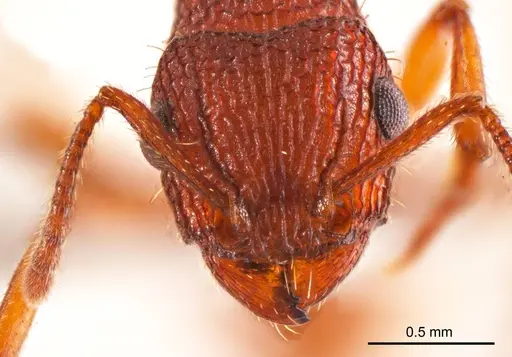
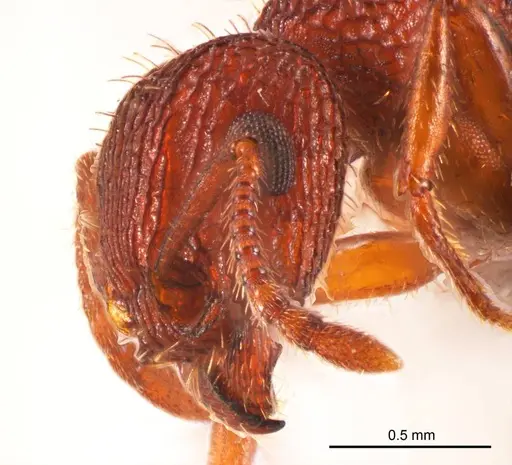
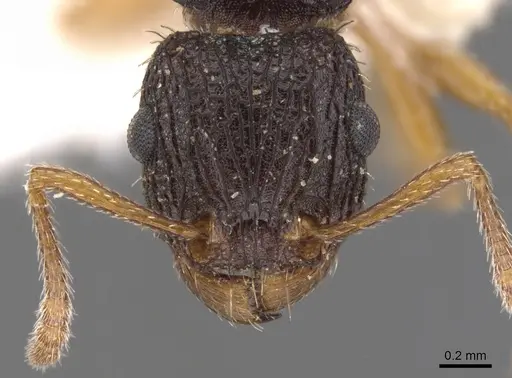
Tetramorium spininode is instantly recognizable by its unique petiole node: in profile, the node is drawn into a broad, blunt spine that overhangs the posterior face [2][3]. The first gastral tergite has narrow flanges along each side, creating a crown-like appearance [1]. Workers are 4.2-4.5mm total length [2]. Color: head and alitrunk blackish-brown, postpetiole reddish, gaster and legs yellow. Queens are similar but larger and have wings for dispersal. They have 11-segmented antennae, which is uncommon in the genus.
Distribution and Habitat
This species is known only from Australia's monsoonal tropics: Western Australia (Winjana Gorge, Pilbara, Barrow Island) and the Northern Territory (Newcastle Waters) [2][4][3]. They have been collected in surveys of Monsoon Vine Thickets, an endangered ecosystem on the Dampier Peninsula. Elevation: type specimen at 100m. The climate is tropical with distinct wet and dry seasons.
Temperature and Care
Because nothing is known about their biology, all care advice is inferred. Their habitat suggests warm conditions: aim for 24-28°C with a gradient from a heated side to a cooler side. If workers are sluggish, increase temperature, if they avoid the heated zone, reduce it. Humidity: provide a moist area in the nest (damp substrate, not waterlogged) and allow drying out elsewhere. A test tube setup for founding colonies works well.
Feeding and Diet
No dietary data exists. Based on typical Tetramorium, they likely accept small insects (fruit flies, small mealworms, crickets) and sugary liquids (honey water, sugar water). Start with these standard foods and observe what they prefer. Feed small amounts to avoid mold and remove uneaten prey after 24-48 hours. Be prepared to experiment.
Nesting Requirements
No documented nesting preferences. Likely nest in soil or under stones based on related species. For captivity, a Y-tong (AAC) nest or naturalistic setup with soil substrate is appropriate. Chambers should match worker size (4-5mm). Test tube works for founding. Ensure humidity control and a water source.
Colony Founding
Founding behavior is unconfirmed. Most Tetramorium are claustral (queen seals herself in and raises first workers on stored reserves). If your queen seals herself off, leave her undisturbed until first workers appear. If she leaves the chamber and seems to forage, she may need small prey offered near the entrance. Observe carefully but minimize disturbance.
Behavior and Temperament
No published behavioral observations. As a member of the Crematogastrini tribe, they likely use a smear defense mechanism: they have a modified flattened stinger to wipe venom onto enemies rather than sting deeply. They are probably not aggressive to keepers but will defend the nest. Their small size demands escape-proof housing: use fine mesh (0.5mm or smaller) on all ventilation. Foraging likely occurs individually or in small groups.
Frequently Asked Questions
How long does it take for Tetramorium spininode to raise first workers?
Unknown, no data exists for this species. If you succeed in founding a colony, document the timeline to help the community.
What do Tetramorium spininode ants eat?
No specific data. Based on related Tetramorium, offer small insects (fruit flies, small mealworms) and sugary liquids. Observe acceptance and adjust.
Do Tetramorium spininode ants sting?
Yes, they have a stinger, but as a Crematogastrini they likely use a smearing action rather than piercing. The sting is mild at their small size. They will only use it if threatened.
Are Tetramorium spininode ants good for beginners?
No, not recommended for beginners because absolutely nothing is known about their biology. Every aspect of care is guesswork. Best suited for experienced keepers who enjoy experimentation.
What temperature should I keep Tetramorium spininode at?
No data from the wild, based on their monsoonal Australian habitat, aim for 24-28°C with a gradient. Monitor activity to find the preferred range.
How big do Tetramorium spininode colonies get?
Unknown, no data available. Expect several hundred workers based on typical Tetramorium patterns, but that is a guess.
Can I keep multiple Tetramorium spininode queens together?
Unknown, colony structure is unconfirmed. House queens separately until you observe whether they tolerate each other.
Do Tetramorium spininode ants need hibernation?
Unknown, as a tropical Australian species, they likely do not need cold diapause. They may slow down during the dry season. Provide stable conditions year-round.
What type of nest is best for Tetramorium spininode?
No specific data. A Y-tong (AAC) nest or naturalistic soil setup sized for small ants is a good start. Test tube for founding.
Why is Tetramorium spininode called the spiny node ant?
The name refers to the unique spine-like projection on the petiole node. It is a broad, blunt, subconical process that overhangs the rear of the body, making this species unmistakable among Tetramorium worldwide [1][2].
Is Tetramorium spininode invasive anywhere?
No, this species is endemic to Australia and has not been documented outside its native range [2].
Where can I get Tetramorium spininode ants?
This is an Australian endemic species unlikely to be available internationally. Check with local Australian antkeeping communities. Always respect wildlife regulations.
Report an Issue
The current care sheet is based fully on literature. See inconsistencies, or something that's incorrect? Please , it will be resolved after review from an admin. Contributing to the blogs tab also helps providing information, to make us be able to further improve the caresheets. Thank you for your support!
References

This caresheet is licensed under CC BY-SA 4.0 .
Community Blogs
Literature
Loading distribution map...Loading products...