
Big-headed Fierce Ant
Tetramorium solidum
- Sci. Name
- Tetramorium solidum
- Tribe
- Crematogastrini
- Subfamily
- Myrmicinae
- Author
- Emery, 1886
- Common Name
- Big-headed Fierce Ant
- Distribution
- Found in 3 countries
Introduction
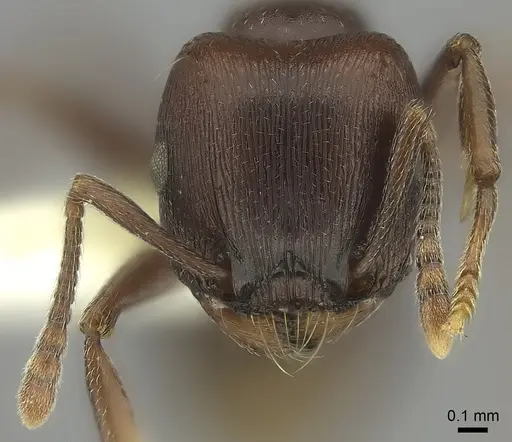
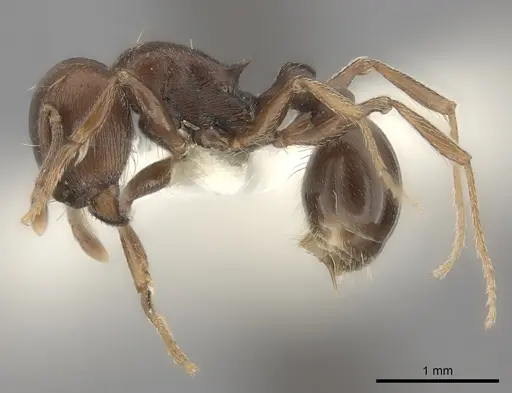
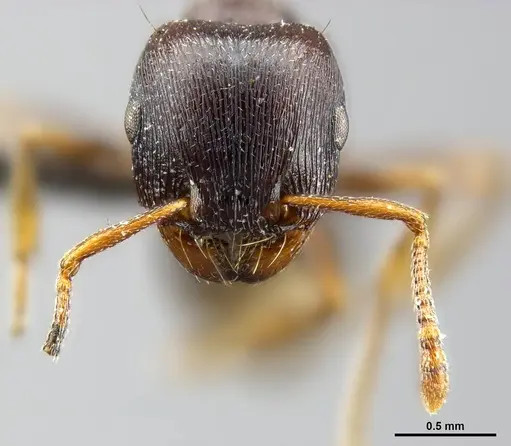
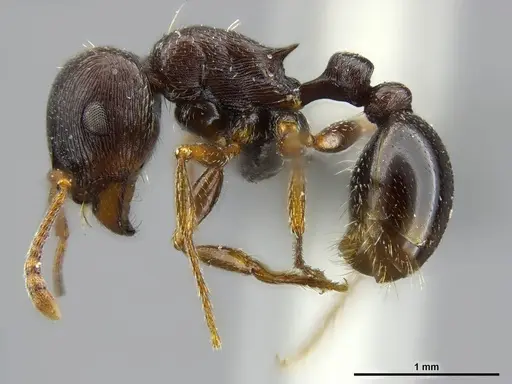
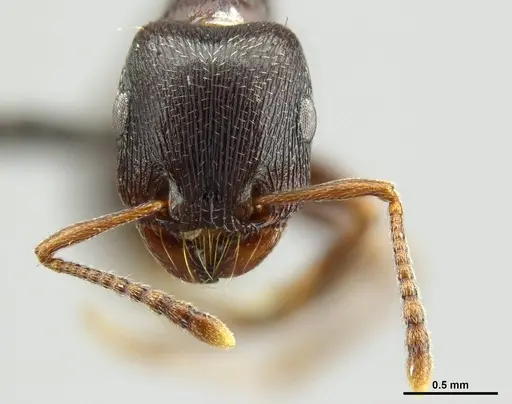
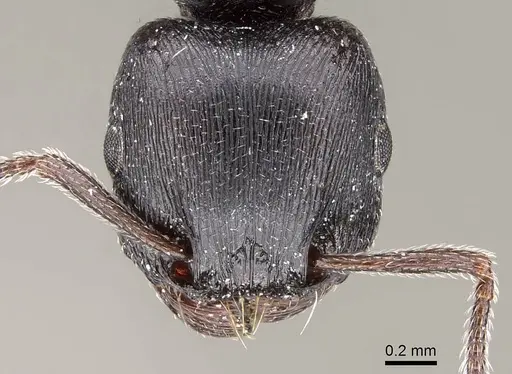
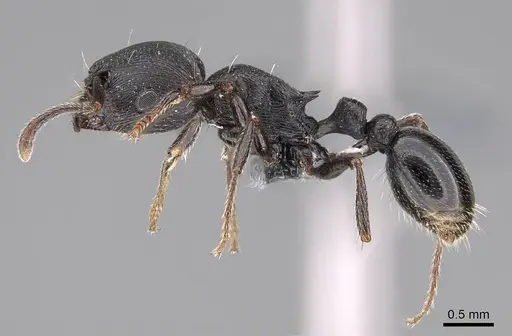
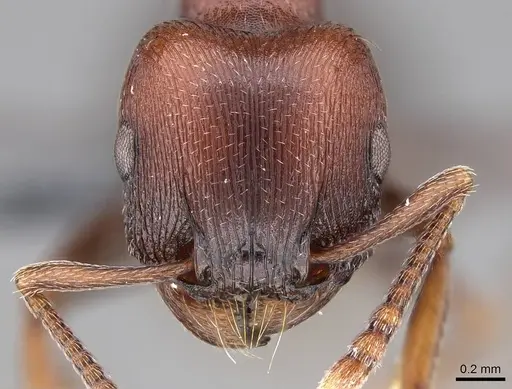
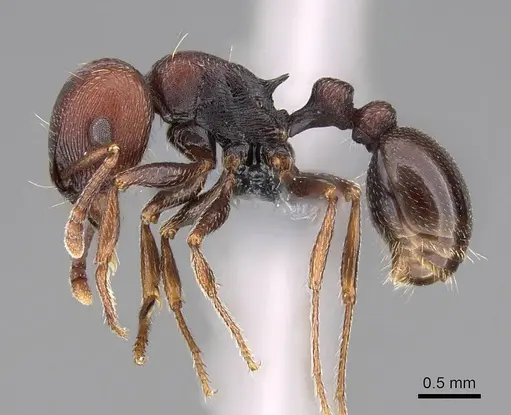
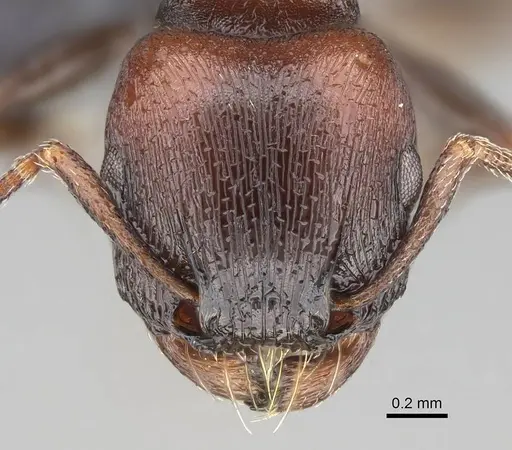
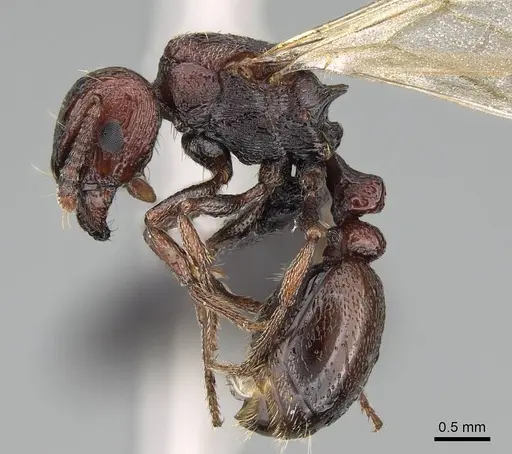
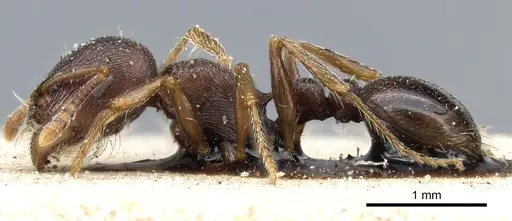
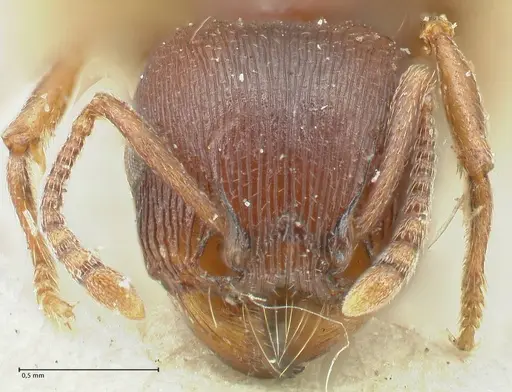
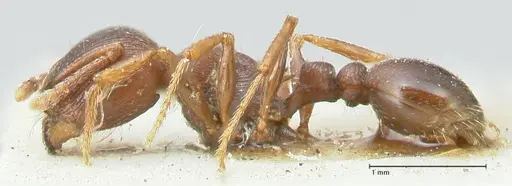
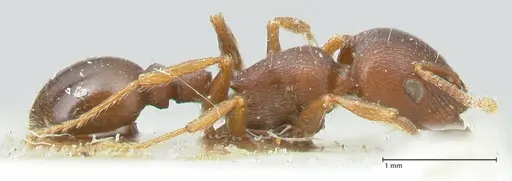
Tetramorium solidum is a small seed-harvesting ant native to South Africa. Workers measure 4.1-5.1 mm and have a distinctive uniformly black or dark brown coloration with very long, sharp propodeal spines . Unlike many ants covered in dense hairs, this species has sparse hairs restricted to the mesosoma and petiole, making it relatively easy to identify within its species group . They are specialist granivores - they collect and store seeds in their nests . In the wild they nest in clay soils, building characteristic craters around the nest entrances . Like other members of the Crematogastrini tribe, they defend themselves by smearing venom onto enemies using a flattened, spatulate stinger rather than piercing the skin.
Quick Summary
- Difficulty: Medium
- Origin & Habitat: South Africa (Western Cape and Northern Cape) in Montane Fynbos, Renosterveld, Nama Karoo and Succulent Karoo habitats [2]. Found in semi‑arid to arid regions receiving less than 700 mm annual rainfall [3].
- Colony Type: Unconfirmed, no specific data on queen number or social structure in the available literature.
- Size & Growth:
- Queen: Unknown, no measurements are available from the research context.
- Worker: 4.1-5.1 mm total length (TL) [1].
- Colony: Unknown, no colony size data for this species.
- Growth: Moderate (inferred from seed‑harvesting ecology)
- Development: Unknown, no specific data on development time for this species. (Development time is inferred from typical Tetramorium patterns, no direct data are available.)
- Antkeeping:
- Temperature: Keep at 22-26 °C, based on the warm South African climate they inhabit [2][3]. A heating cable on one side of the nest creates a suitable gradient.
- Humidity: Low to moderate. They come from semi‑arid Karoo regions, keep the nesting substrate relatively dry with just slight moisture, and allow parts of the nest to dry out between waterings.
- Diapause: Unknown, likely required given the temperate South African winter, but no specific data exist. If needed, a cool period around 10-15 °C for several months is a reasonable starting point.
- Nesting: Clay soil nesting in the wild, a naturalistic setup with compact sandy‑clay mix works well. Y‑tong or 3D‑printed nests with soil chambers can also be used. Provide space for the typical crater‑building behavior around entrances.
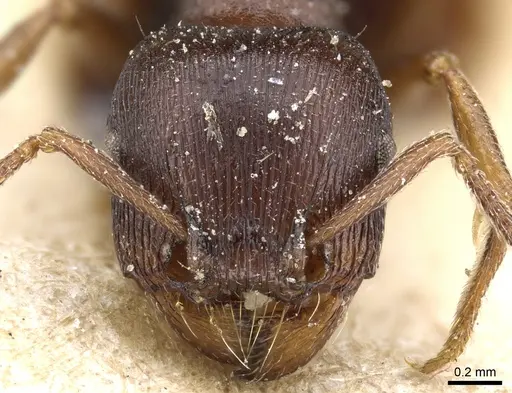
- Behavior: Generally peaceful and non‑aggressive. Workers are moderate foragers that search for seeds and store them in the nest [2]. They have a psammophore, a brush of hairs under the head, used for carrying sand and soil during nest building [1]. Their primary defense is a smear mechanism: a flattened, spatulate stinger wipes venom onto attackers rather than piercing the skin. Escape risk is moderate due to their small worker size, standard barrier methods are recommended.
- Common Issues: seed storage can lead to mold if the nest stays too wet, keep nesting area dry., unknown founding behavior means the queen may or may not accept claustral conditions, patience and observation are required., small colonies are vulnerable to disturbance during early growth., offering a variety of small seeds is important, some colonies may be selective., workers are small enough to escape through tiny gaps, use tight sealing and oil or fluon barriers.
Housing and Nest Setup
In the wild, Tetramorium solidum nests in clay soils and builds distinctive craters around its nest entrances [2]. For captivity, a naturalistic setup with compact sandy‑clay substrate mimics this habitat and allows the ants to tunnel and create chambers. Y‑tong (AAC) blocks or 3D‑printed nests with soil‑filled chambers also work well. Because they are seed harvesters, provide an open area in the outworld where they can sort and pile seeds. A water test tube connected to the nest supplies drinking water without flooding the nesting chambers.
Feeding and Diet
These ants are specialist seed harvesters, they collect and store seeds [2][1]. Offer a variety of small seeds: grass seeds, millet, poppy seeds, and similar grains work well. Occasionally provide small insects (like fruit flies or pinhead crickets) for protein, but seeds should form the bulk of the diet. Because they store seeds in the nest, remove any moldy seeds promptly. The psammophore helps them handle soil particles, though it is not used directly in feeding.
Temperature and Seasonal Care
Tetramorium solidum comes from warm, semi‑arid parts of South Africa [2][3]. Keep the nest area at 22-26 °C with a slight temperature gradient, a heating cable on one side of the nest works well. The species has a seasonal cycle, queens have been collected in April and males in September [2]. If you observe reduced activity in winter, a cool rest period (around 10-15 °C for several months) may be beneficial, but this is not confirmed by research.
Humidity Requirements
Because Tetramorium solidum inhabits Nama Karoo and Succulent Karoo, dry, semi‑arid regions, the nesting substrate should be kept relatively dry [2][3]. Aim for a gradient from slightly moist to dry so the ants can self‑regulate. Overly wet conditions promote mold and can kill the colony. A small water source for drinking is sufficient, most moisture comes from seeds and food.
Behavior and Colony Dynamics
This species is relatively peaceful and does not exhibit aggressive swarming. Workers are moderate foragers that search for seeds and store them in the nest [2]. The psammophore, a brush of hairs under the head, helps them move sand and soil during nest excavation [1]. When threatened, they use a smear defense: a flattened, spatulate stinger wipes venom onto the attacker rather than piercing. Colonies show typical crater‑building behavior around nest entrances, especially when establishing new chambers.
Frequently Asked Questions
Can I keep Tetramorium solidum in a test tube?
A test tube works for the founding period, but these ants do better in a naturalistic setup with soil because they naturally nest in clay. Once workers appear, transfer them to a formicarium with a sandy‑clay mix.
What do Tetramorium solidum ants eat?
They are seed harvesters, offer various small seeds like grass seeds, millet, and poppy seeds. They also accept occasional small insects for protein. Seeds should make up the majority of their diet.
How long until first workers in Tetramorium solidum?
Unknown, no specific data are available on development time for this species. Expect several weeks to months based on general Tetramorium patterns, but this is only an estimate.
Do Tetramorium solidum ants sting?
They have a modified stinger used for a smear defense, they wipe venom onto enemies rather than piercing the skin. This is not a typical sting, but they can defend themselves if directly threatened.
Are Tetramorium solidum good for beginners?
They are reasonably easy to keep because they are peaceful and accept seeds as a primary food source. The main challenges are providing semi‑arid conditions and the unknown founding behavior, which may require extra patience.
Do Tetramorium solidum need hibernation?
Unknown, likely yes, given the temperate South African winter, but no specific data exist. A cool rest period (10-15 °C for several months) may be helpful if the colony shows reduced activity in winter.
How big do Tetramorium solidum colonies get?
Unknown, no colony size data are available for this species in the research literature.
When should I move Tetramorium solidum to a formicarium?
Once the queen has raised the first workers and the colony starts storing seeds, consider moving them to a larger setup. There is no set worker count, monitor their space use and move them if the test tube becomes crowded or dirty.
Report an Issue
The current care sheet is based fully on literature. See inconsistencies, or something that's incorrect? Please , it will be resolved after review from an admin. Contributing to the blogs tab also helps providing information, to make us be able to further improve the caresheets. Thank you for your support!
References

This caresheet is licensed under CC BY-SA 4.0 .
Community Blogs
CASENT0217978
View on AntWeb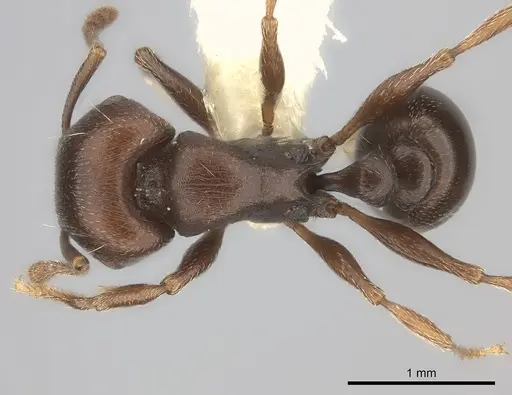
CASENT0250960
View on AntWeb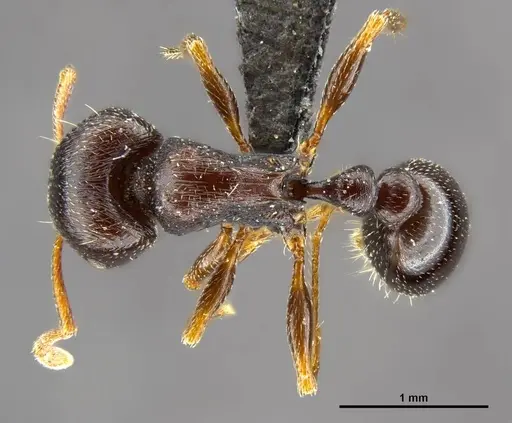
CASENT0250969
View on AntWeb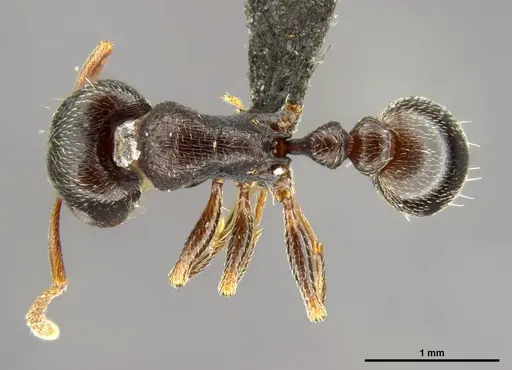
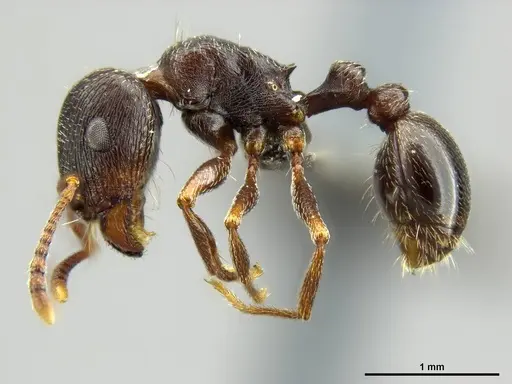
CASENT0264030
View on AntWeb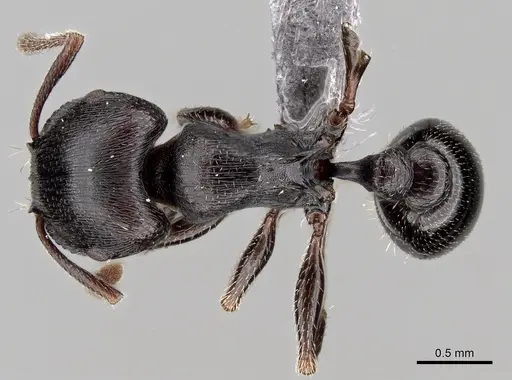
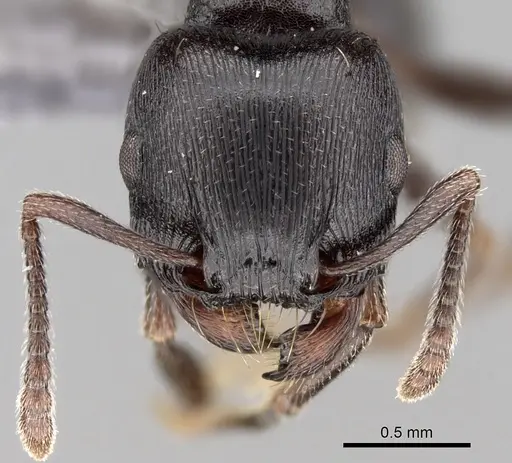
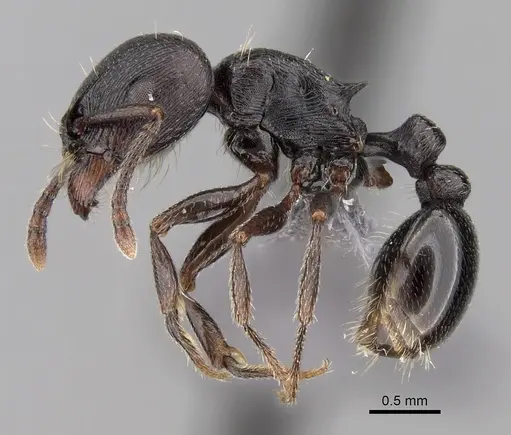
CASENT0785905
View on AntWeb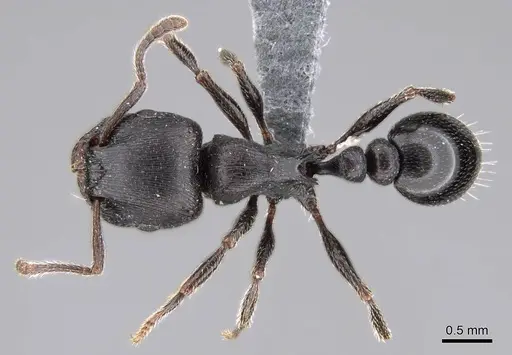
CASENT0785975
View on AntWeb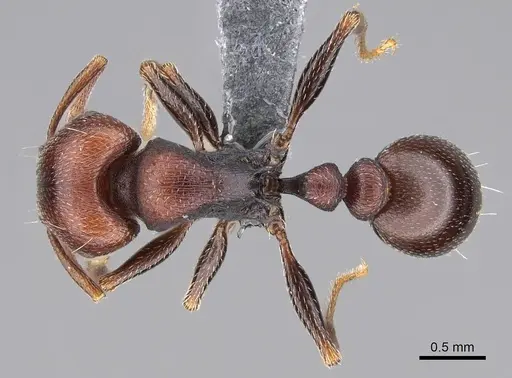
CASENT0822213
View on AntWeb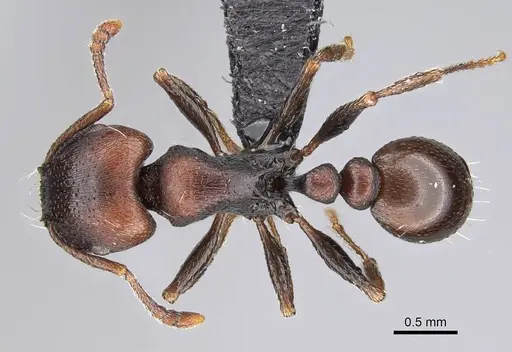
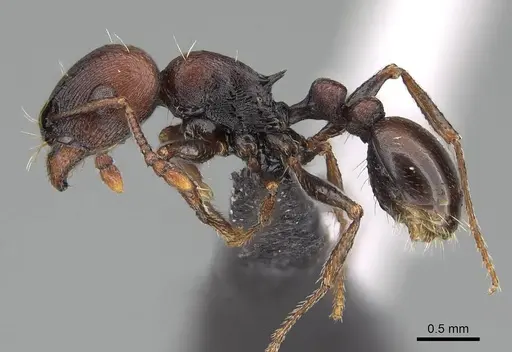
CASENT0822214
View on AntWeb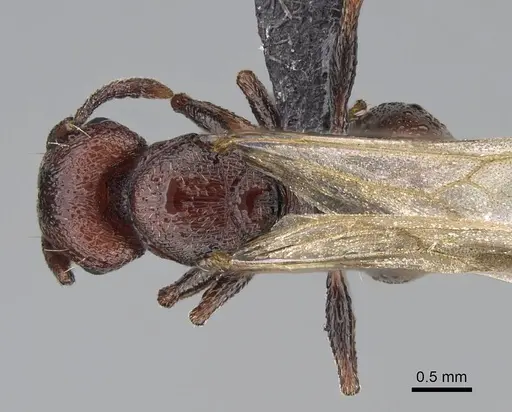
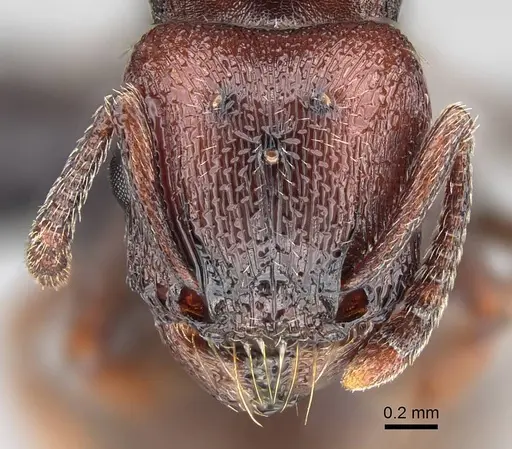
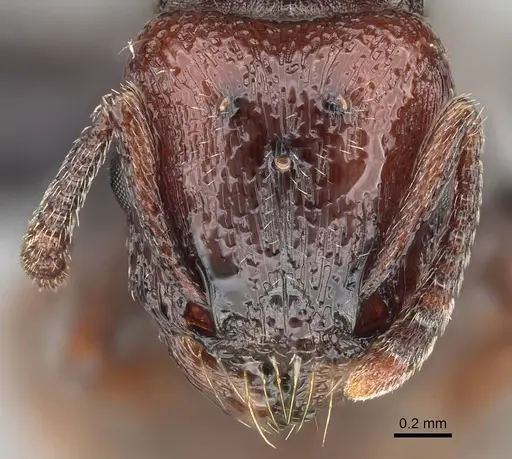
CASENT0904840
View on AntWeb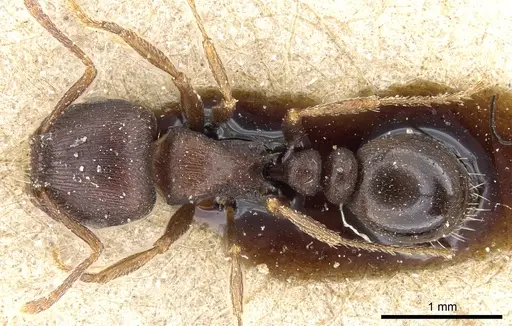
FOCOL2081
View on AntWeb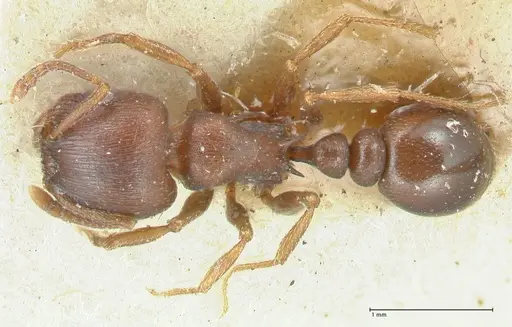
Literature
Loading distribution map...Loading products...