
Tetramorium smaug
- Sci. Name
- Tetramorium smaug
- Tribe
- Crematogastrini
- Subfamily
- Myrmicinae
- Author
- Hita Garcia & Fisher, 2012
- Distribution
- Found in 1 countries
Introduction
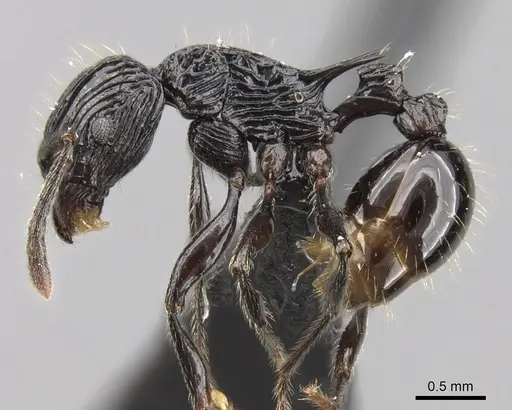
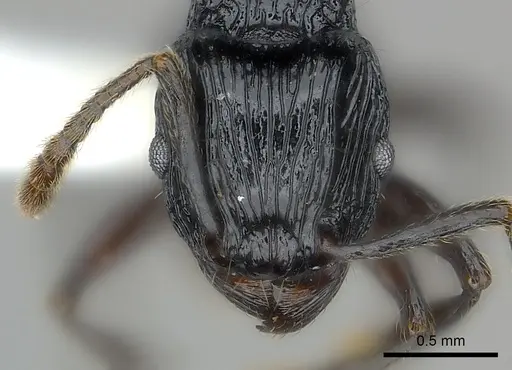
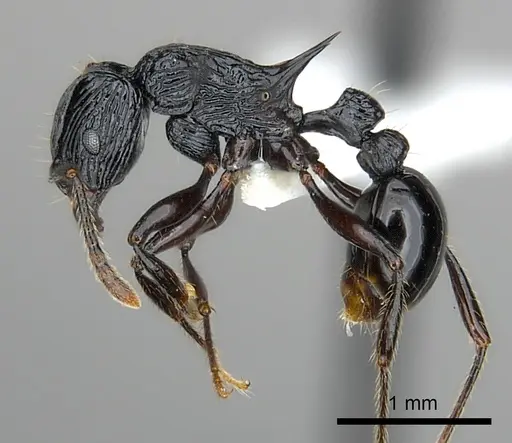
Tetramorium smaug is a striking ant species native to Madagascar, named after the dragon Smaug from Tolkien's 'The Hobbit' due to its impressive propodeal spines . The species is easily recognized by its extremely long and massively constructed propodeal spines, dark brown to black coloration, and the 7-14 pairs of standing hairs on its mesosoma . This species belongs to the Tetramorium tortuosum species group and is only known from three widely separated montane rainforest locations in Madagascar: Ambatovy, Montagne d'Ambre, and Ivohibe, at elevations of 900-1300 m . What makes T. smaug particularly interesting is its extreme rarity - the species is known from only six specimens collected, suggesting it may live primarily in the vegetation rather than on the ground . This potential arboreal lifestyle, combined with its limited distribution in montane rainforests, makes it a highly challenging species for experienced antkeepers interested in rare Malagasy ants.
Quick Summary
- Difficulty: Expert
- Origin & Habitat: Montane rainforests of Madagascar at elevations of 900-1300 m. Known from three geographically separated locations: Ambatovy (eastern), Montagne d'Ambre (northern), and Ivohibe (southeastern) [1].
- Colony Type: Colony structure is unconfirmed. Based on typical Tetramorium patterns, likely single-queen colonies, though this has not been directly documented.
- Size & Growth:
- Queen: Size data unavailable, no queen specimens have been described in the literature [1]
- Worker: Size data unavailable, only head and mesosoma lengths have been published, not total body length [1]
- Colony: Unknown, only six specimens ever collected [1]
- Growth: Unknown
- Development: Unknown, no development data exists for this species. Based on typical Tetramorium patterns, expect 6-10 weeks at optimal temperature (Development timeline is unconfirmed. Related Tetramorium species typically complete development in 6-10 weeks at room temperature.)
- Antkeeping:
- Temperature: Keep at 20-24°C. This species comes from montane rainforests in Madagascar, so it likely prefers cooler, stable conditions compared to lowland tropical ants. Provide a temperature gradient so workers can self-regulate [1].
- Humidity: Keep the nest substrate consistently moist but not waterlogged. Montane rainforest environments experience consistent moisture. Provide a water tube and ensure good air circulation [1].
- Diapause: Unknown, no specific data on overwintering requirements. Madagascar experiences mild temperatures year-round at higher elevations, so a true hibernation is unlikely but not impossible. Observe natural behavior.
- Nesting: Based on collection data (found in rotten logs), they likely nest in decaying wood or similar cavities in captivity. A Y-tong (AAC) nest or plaster nest with narrow chambers works well. Their potential arboreal lifestyle suggests they may benefit from vertical space or climbing structures [1].
- Behavior: Behavior is not well documented due to the species' rarity. Based on typical Tetramorium behavior, workers are likely active foragers. Their small size means escape prevention must be excellent, use fine mesh and tight-fitting barriers. Temperament is likely similar to other Tetramorium species: generally non-aggressive but will defend the nest if threatened. Belongs to the Crematogastrini tribe, which uses a 'smear' defense, they have a modified stinger that wipes venom onto enemies rather than stinging them.
- Common Issues: virtually impossible to obtain, only six wild specimens ever collected, so you will not find this species for sale, potential arboreal lifestyle is poorly understood, making proper housing challenging, no data exists on exact dietary needs, feeding may require experimentation, their tiny size makes escape prevention critical even with secure setups, lack of published care information means you are essentially pioneering husbandry for this species
Origin and Distribution
Tetramorium smaug is endemic to Madagascar, an island nation off the southeast coast of Africa. This species has an unusual disjunctive distribution, meaning its known populations are geographically separated. It has been found at three locations: Ambatovy in eastern Madagascar (type locality,12.4 km northeast of Moramanga at 1080 m elevation), Montagne d'Ambre in the northern tip of the island, and Ivohibe in the southeast [1]. All three sites are montane rainforests at elevations between 900 and 1300 m above sea level [1].
The species is exceptionally rare, only six specimens have ever been collected, all through pitfall traps, hand collecting, or from within rotten logs [1]. This scarcity, combined with the fact that most specimens were collected from ground-level traps but the species is rarely seen walking on the ground, suggests T. smaug may primarily live in the vegetation rather than on the forest floor [1]. This potential arboreal lifestyle is a key consideration for captive care.
Identification and Morphology
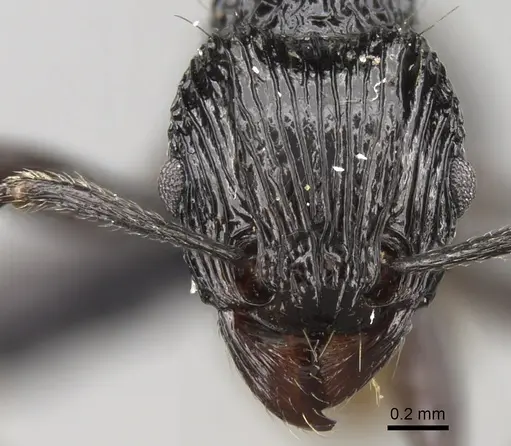
Tetramorium smaug workers are distinctive and can be identified by several key features. Their most striking characteristic is their extremely long and massively constructed propodeal spines (the spines pointing backward from the back of the mesosoma) [1]. Exact total body length is unknown because only head and mesosoma measurements have been published. The body is a uniform very dark brown to black color, making them appear almost black [1]. They have 7-14 pairs of standing hairs on the mesosoma (the middle body section), which is a diagnostic feature [1]. The antennal scapes (the basal segments of the antennae) are relatively short, not reaching the posterior margin of the head [1]. The petiolar node (the stalk connecting the mesosoma to the abdomen) is rectangular and approximately 1.1-1.3 times higher than it is long [1].
Housing and Nesting
Based on the collection data showing specimens found in rotten logs, T. smaug likely nests in decaying wood or similar cavities in nature [1]. For captivity, a Y-tong (AAC) nest or plaster nest with appropriately scaled chambers works well. Given their very small worker size, chambers and passages should be relatively narrow.
The potential arboreal lifestyle suggests these ants may benefit from some vertical space or climbing structures within their enclosure. Provide materials they can climb on and explore. Ensure excellent escape prevention, their small size means they can squeeze through remarkably small gaps. Use fine mesh (at least 0.5 mm) on any ventilation and ensure all connections are sealed.
Keep the nest substrate consistently moist but never waterlogged. Montane rainforests have consistent moisture but good air circulation, so avoid completely sealed setups [1].
Feeding and Diet
The exact dietary requirements of T. smaug are unknown, as the species has never been studied in captivity. Based on typical Tetramorium behavior, they are likely generalist foragers that collect both protein sources (small insects, arthropods) and carbohydrate sources (honeydew, nectar).
Start by offering small live prey items appropriate to their size, such as fruit flies, pinhead crickets, or small mealworms. You can also offer a sugar water or honey solution, though acceptance may vary. Given their potential vegetation-dwelling lifestyle, they may also accept honeydew substitutes. Monitor food acceptance carefully and adjust offerings based on colony behavior. Since this species is so rarely kept, some experimentation may be necessary to determine optimal feeding schedules.
Temperature and Seasonal Care
T. smaug originates from montane rainforests at 900-1300 m elevation, where temperatures are cooler than in lowland areas [1]. Aim for temperatures in the range of 20-24°C, which is cooler than many tropical ant species prefer. Avoid high temperatures (above 28°C) which could stress the colony.
Provide a temperature gradient within the enclosure so workers can self-regulate by moving between warmer and cooler areas. A heating cable on one side of the nest (placed on top, not underneath to avoid drying) can help create this gradient.
Regarding overwintering, no specific data exists. Madagascar's highland areas experience cooler temperatures during the Southern Hemisphere winter (May-September), with average lows around 10-15°C. However, a true hibernation is unlikely. If you choose to provide a cooler period, observe colony activity and adjust accordingly [1].
Challenges and Considerations
Tetramorium smaug is one of the most challenging ant species to keep due to several factors. First, the species is extremely rare in the wild, only six specimens have ever been collected, meaning virtually no captive colonies exist [1]. You are unlikely to find this species available from commercial ant keepers.
Second, almost no published information exists about their captive care, colony structure, or behavior. Everything about keeping this species would be pioneering work based on inference from related species and careful observation.
Third, their potential arboreal lifestyle means their housing needs may differ significantly from typical ground-nesting Tetramorium species. They may require more vertical space, climbing structures, and different humidity considerations than initially assumed.
For these reasons, T. smaug is recommended only for expert antkeepers with significant experience who are prepared to document their observations and potentially develop new husbandry techniques for a species that has never been kept in captivity before.
Frequently Asked Questions
Is Tetramorium smaug available for purchase?
No. Tetramorium smaug is one of the rarest ant species in existence, known from only six specimens ever collected in the wild. There are virtually no captive breeding colonies, and you will not find this species available from commercial ant keepers. It remains a species known only from scientific collections [1].
How big do Tetramorium smaug workers get?
Worker size data is unavailable. The scientific literature only provides measurements of head and mesosoma length, but total body length has not been recorded [1]. This means we cannot give a reliable body length in millimeters. For size reference, the head is about 1 mm and the mesosoma about 1.3 mm.
What do Tetramorium smaug ants eat?
Their exact diet is unknown as the species has never been studied in captivity. Based on typical Tetramorium behavior, they likely accept small insects and arthropods as protein sources and sugar water or honey as carbohydrates. Start with small live prey items like fruit flies and offer sugar solutions to test acceptance.
What temperature do Tetramorium smaug ants need?
Keep them at 20-24°C. This species comes from montane rainforests in Madagascar at 900-1300 m elevation, where conditions are cooler than lowland tropics. Avoid temperatures above 28°C. A gentle temperature gradient allows workers to regulate their own temperature [1].
Do Tetramorium smaug ants need hibernation?
A true hibernation is unlikely based on the mild year-round climate of Madagascar's highlands. However, no specific data exists. If you choose to provide a cooler period (15-18°C) during the Southern Hemisphere winter, observe colony activity and adjust accordingly. Do not force a deep hibernation [1].
What makes Tetramorium smaug easy or difficult to keep?
Extremely difficult. This species is one of the most challenging to keep because: 1) it is virtually unavailable (only six wild specimens ever collected),2) no captive care information exists,3) their potential arboreal lifestyle is poorly understood, and 4) their small size requires excellent escape prevention. Only expert antkeepers should attempt this species [1].
Can I keep multiple Tetramorium smaug queens together?
Unknown. No data exists on colony structure or queen behavior for this species. Typical Tetramorium species are single-queen, but this has not been confirmed for T. smaug. Do not attempt combining unrelated queens without specific evidence that the species tolerates this.
What is the best nest type for Tetramorium smaug?
Based on collection data (specimens found in rotten logs), a Y-tong (AAC) nest or plaster nest with appropriately scaled chambers works well. Given their very small size, chambers should be relatively narrow. Their potential vegetation-dwelling lifestyle may also benefit from vertical climbing structures within the outworld [1].
How long does it take for Tetramorium smaug to develop from egg to worker?
Unknown, no development data exists for this species. Based on typical Tetramorium patterns, expect approximately 6-10 weeks from egg to first worker at optimal temperature (around 20-24°C). This is an estimate based on related species, not confirmed data for T. smaug specifically.
Where does Tetramorium smaug live in the wild?
This species is endemic to Madagascar and known only from three geographically separated montane rainforest locations: Ambatovy (eastern), Montagne d'Ambre (northern), and Ivohibe (southeastern) at elevations of 900-1300 m [1]. The species appears to live in vegetation rather than on the ground, which may explain why it has rarely been collected despite being present in these widely separated areas.
Report an Issue
The current care sheet is based fully on literature. See inconsistencies, or something that's incorrect? Please , it will be resolved after review from an admin. Contributing to the blogs tab also helps providing information, to make us be able to further improve the caresheets. Thank you for your support!
References

This caresheet is licensed under CC BY-SA 4.0 .
Community Blogs
CASENT0121244
View on AntWeb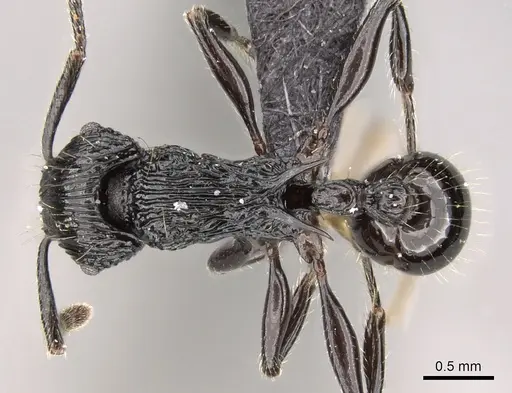
CASENT0404425
View on AntWeb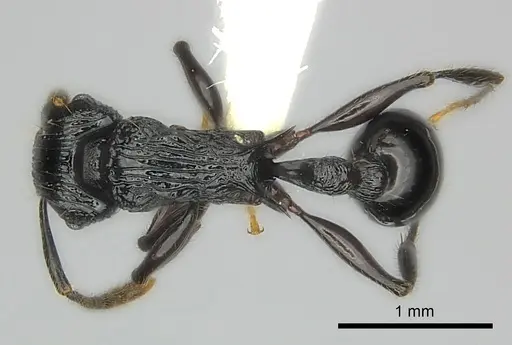
Literature
Loading distribution map...Loading products...