
Tetramorium shensiense
- Sci. Name
- Tetramorium shensiense
- Tribe
- Crematogastrini
- Subfamily
- Myrmicinae
- Author
- Bolton, 1977
- Distribution
- Found in 2 countries
Introduction
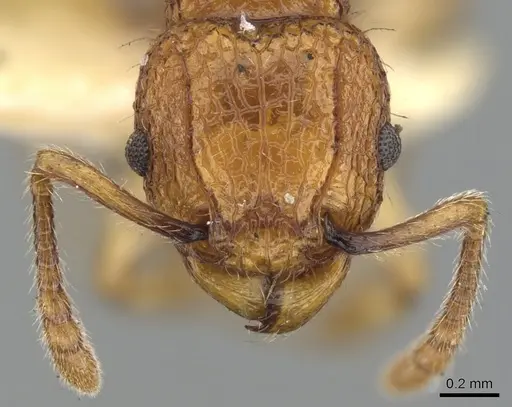
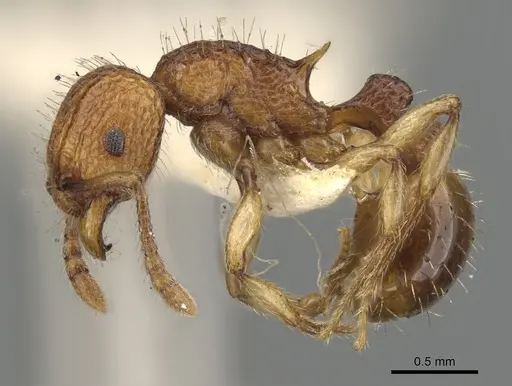
Tetramorium shensiense is a small, yellow-brown to orange-brown ant native to China, recorded from Shaanxi, Jiangxi, and Hainan Province . Workers measure 3.7-3.8mm in body length, with relatively short antennal scapes, long upcurved propodeal spines, and numerous standing hairs on the head and body . The clypeus has a shallow notch in the front center and three strong ridges; the frontal carinae extend nearly to the occipital margin and are topped by a low, semi-transparent lamella . The propodeal spines are long, narrow, and slightly upcurved, with broad blunt lateral lobes . The first petiolar node is slightly convex in profile, with nearly straight front and rear sections; the second node is round and noticeably lower than the first . This species was described by Bolton in 1977 from a worker collected in China and is close to Tetramorium pilosum (Sri Lanka) and Tetramorium urbanii (Bhutan) . Ecologically, Tetramorium shensiense is classified as an 'opportunist' in functional group studies, meaning it adapts readily to varying conditions and quickly exploits new resources . Field sampling shows strong seasonal activity: 124 individuals in spring,1029 in summer,1407 in autumn, but only 4 in winter – indicating a clear diapause period with very low winter activity .
Quick Summary
- Difficulty: Medium
- Origin & Habitat: China: Shaanxi, Jiangxi, and Hainan Province in the Palaearctic region [1][2]. Found in diverse habitats including urban areas and subtropical forests.
- Colony Type: Monogyne – single-queen colonies (inferred from typical Tetramorium colony structure, but no species-specific data available).
- Size & Growth:
- Queen: Approximately 6-7mm (inferred from Tetramorium genus patterns – direct measurement not available)
- Worker: 3.7-3.8mm [1]
- Colony: Up to several hundred workers (estimated based on genus patterns)
- Growth: Moderate – seasonal activity suggests summer and autumn growth [4]
- Development: Estimated 6-8 weeks at optimal temperature, typical for Tetramorium (Development likely occurs during warm summer months when colony activity is highest)
- Antkeeping:
- Temperature: Keep at 20-26°C during the active season. Optimal brood development likely around 24-26°C based on summer/autumn foraging peak [4]. Provide cooler winter conditions for diapause.
- Humidity: Moderate – keep nest substrate lightly moist but not waterlogged. No specific data, adjust based on typical Tetramorium needs.
- Diapause: Yes – required. Field data shows near-zero winter activity (4 vs 1407 in autumn), indicating a mandatory diapause [4]. Keep at 10-15°C for 2-3 months during winter.
- Nesting: In nature, likely nests in soil or under stones (inferred from Tetramorium nesting habits). In captivity, use test tubes, Y-tong, plaster, or soil nests with appropriately sized chambers for 3-4mm workers.
- Behavior: Docile and not aggressive toward keepers. As opportunists, they are adaptable and quick to colonize new areas. Their small size (under 4mm) makes escape prevention critical – use fine mesh barriers. They belong to the tribe Crematogastrini and possess a modified, flattened stinger used to smear venom rather than pierce (general subfamily trait). Workers are active foragers, likely searching for small prey and sugary substances. They show strong seasonal activity, becoming much less active in winter.
- Common Issues: escape prevention is critical due to their tiny 3.7-3.8mm size – they can squeeze through standard gaps easily, winter die-offs are common if proper diapause conditions are not provided – they require a cold period, colonies may appear dead in winter but are simply in hibernation – do not discard until spring, slow initial colony growth is normal – founding colonies take time to establish, test tube setups can dry out quickly in heated rooms – monitor moisture levels regularly
Appearance and Identification
Tetramorium shensiense workers are 3.7-3.8mm long and yellow-brown to orange-brown, with the base of the antennal scape stained blackish-brown or black [1]. The head and body have many standing hairs [1]. Mandibles have striae, the head has relatively weak longitudinal striae and inconspicuous reticulate lines, the mesosoma has weak reticulate striae, strongest on the pronotum, the first petiolar node has weak wrinkles on its dorsum and sides, the second node and gaster are smooth [1]. The clypeus has three strong carinae and a shallow notch in the front center, the frontal carinae are long and almost reach the occipital margin, with a vertical low semi-transparent lamella [1]. Antennae have 11 segments, with a short scape (SI less than 80) [1]. Propodeal spines are long, narrow, and slightly upcurved, and the lateral lobes are broad blunt triangles [1]. The first petiolar node has a slightly convex dorsum in profile, with nearly straight front and rear sections, the second node is round and clearly lower than the first [1].
Housing and Nest Setup
For a founding colony, a test tube with a water reservoir and cotton plug works well. Keep it dark and undisturbed until first workers appear. Once the colony has around 20 workers, you can move them to a small formicarium. Y-tong (AAC) or plaster nests are good choices because they hold humidity well and have appropriately sized chambers for 3-4mm ants. Since workers are only 3.7-3.8mm, seal all connections with fine mesh or tight lids to prevent escapes. A small outworld for foraging lets you feed and observe without disturbing the nest. [1]
Feeding and Diet
Tetramorium shensiense is an opportunist and accepts a varied diet [4]. Provide protein (small insects like fruit flies, pinhead crickets, or mealworms) 2-3 times per week, and keep a sugar source (honey water, sugar water, or ant nectar) available at all times. Because they are tiny, offer very small portions – a drop of honey water or a small insect piece is plenty. Remove uneaten food after 24-48 hours to prevent mold. They will exploit a wide range of food resources.
Temperature and Seasonal Care
This species has a clear seasonal pattern: peak foraging in summer and autumn, almost no activity in winter [4]. Maintain 20-26°C during the active season, with 24-26°C likely optimal for brood development. In autumn, gradually reduce temperature to trigger diapause. During winter (roughly November to February in the Northern Hemisphere), keep the colony at 10-15°C for 2-3 months. Stop feeding during hibernation but keep the nest slightly moist. In spring, slowly warm them back to room temperature and resume feeding. This seasonal cycle is essential for long-term health and reproduction.
Behavior and Colony Dynamics
Tetramorium shensiense workers are active foragers and relatively docile. They cannot sting (they belong to the tribe Crematogastrini and have a modified, flattened stinger used to smear venom) but may bite if threatened. As opportunists, they adapt quickly to changes in environment and food availability [4]. The queen will focus on egg-laying while workers tend brood and forage. Colony growth is moderate: expect the first nanitics within 6-8 weeks if kept warm (24-26°C), then steady growth through the warm months. Mature colonies may reach several hundred workers over a few years.
Frequently Asked Questions
How long does it take for Tetramorium shensiense to have first workers?
Expect first workers to emerge about 6-8 weeks after the queen lays eggs, assuming temperatures around 24-26°C. This is typical for Tetramorium species. The founding queen will raise the first brood alone using stored energy.
Do Tetramorium shensiense ants sting?
No, they cannot sting. As members of the subfamily Myrmicinae and tribe Crematogastrini, they have a modified, flattened stinger used to smear venom, not to pierce. If threatened, they may bite, but their small size (3.7-3.8mm) makes this harmless to humans.
What temperature do Tetramorium shensiense ants need?
Keep them at 20-26°C during the active season, with 24-26°C ideal for brood development. They require a winter diapause at 10-15°C for 2-3 months. This seasonal cycle is based on their natural activity patterns [4].
Can I keep multiple Tetramorium shensiense queens together?
No species-specific data is available, but most Tetramorium are monogyne (single-queen). It is not recommended to combine unrelated queens as they will likely fight. Keep one queen per colony.
How big do Tetramorium shensiense colonies get?
The exact maximum is unknown, but based on typical Tetramorium species, colonies likely reach several hundred workers over 2-3 years. Growth is moderate and seasonal.
Do Tetramorium shensiense need hibernation?
Yes, hibernation is required. Field data shows almost no activity in winter (only 4 individuals captured vs 1407 in autumn), confirming they enter diapause [4]. Keep them at 10-15°C for 2-3 months during winter.
What do Tetramorium shensiense eat?
They accept a varied diet including small insects (protein) and sugary liquids (honey water, sugar water). Feed protein 2-3 times per week and keep sugar water available at all times. Portions should be tiny due to their small 3.7-3.8mm size.
Are Tetramorium shensiense good for beginners?
They are relatively easy but not the hardiest. They adapt to a range of conditions as opportunists [4]. The main challenges are escape prevention (tiny size) and providing proper winter diapause. Both are manageable with basic antkeeping knowledge.
When should I move Tetramorium shensiense to a formicarium?
Once the colony has around 20 workers, you can move them to a small formicarium. Before that, a test tube setup is sufficient and less stressful. Ensure the formicarium has appropriately sized chambers for their small 3-4mm workers.
Why is my Tetramorium shensiense colony not moving in winter?
This is normal – they are in diapause (hibernation). Reduce temperature to 10-15°C and stop feeding. Do not disturb the colony. They will become active again in spring when warmed gradually.
Report an Issue
The current care sheet is based fully on literature. See inconsistencies, or something that's incorrect? Please , it will be resolved after review from an admin. Contributing to the blogs tab also helps providing information, to make us be able to further improve the caresheets. Thank you for your support!
References

This caresheet is licensed under CC BY-SA 4.0 .
Community Blogs
CASENT0901069
View on AntWeb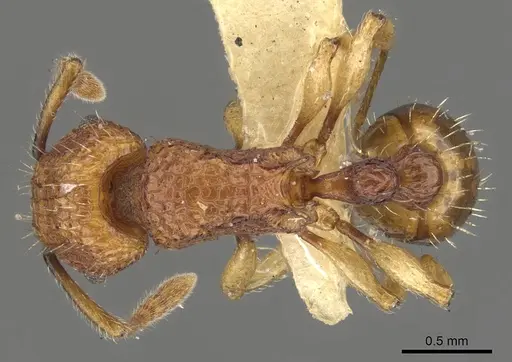
Literature
Loading distribution map...Loading products...