
Tetramorium shamshir
- Sci. Name
- Tetramorium shamshir
- Tribe
- Crematogastrini
- Subfamily
- Myrmicinae
- Author
- Hita Garcia & Fisher, 2012
- Distribution
- Found in 1 countries
Introduction
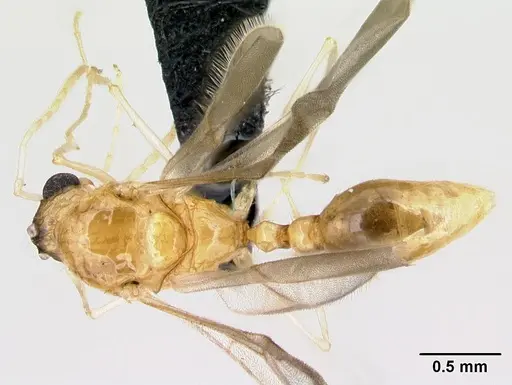
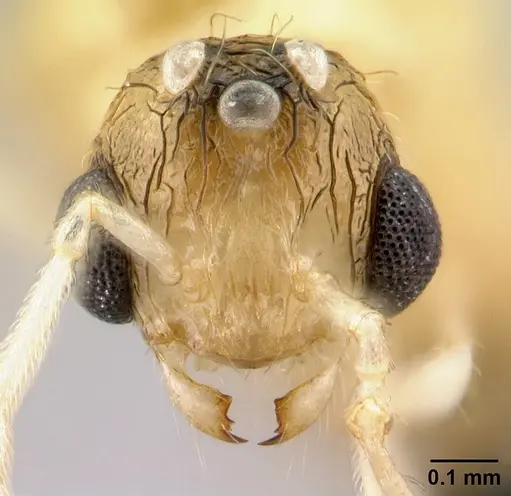
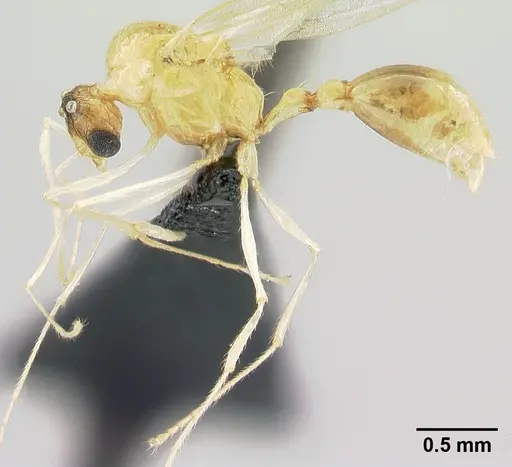
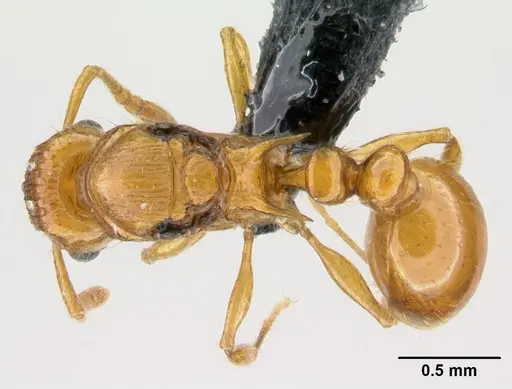
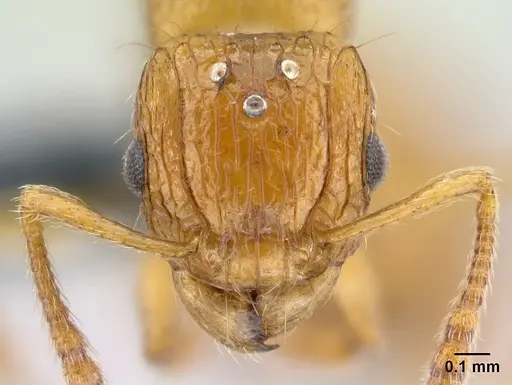
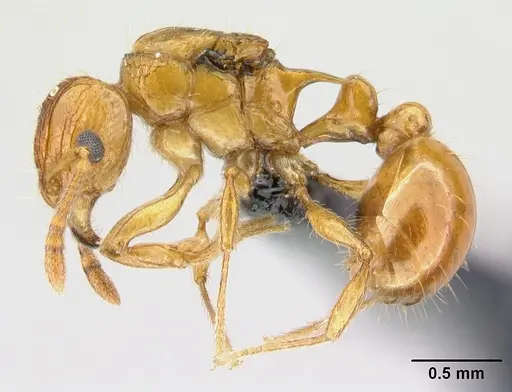
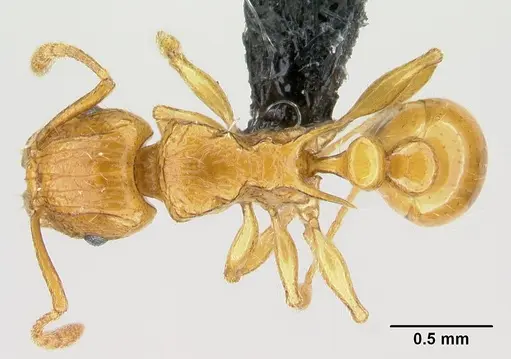
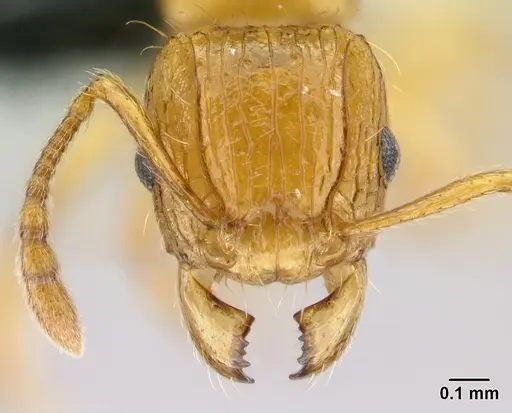
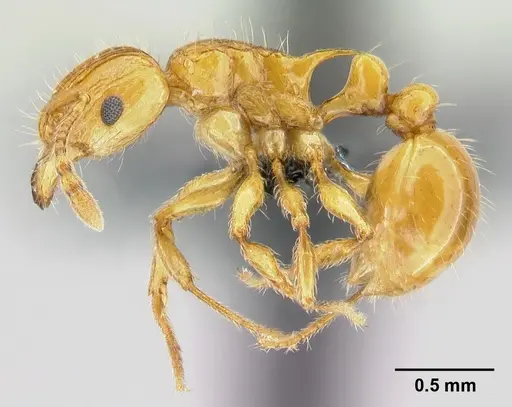
Tetramorium shamshir is a small yellow ant endemic to northern Madagascar. Workers have a head length of 0.61–0.75 mm ; total body length is not documented. They are easily recognized by their remarkably long, curved propodeal spines that give them a distinctive sabre‑like appearance – the species name means ‘sabre’ in Old Persian . Their body is uniformly yellow with distinct irregular to longitudinal rugulae on the mesosomal dorsum . These ants are primarily leaf litter dwellers, found in lowland and littoral rainforests up to 1175 m elevation . Tetramorium shamshir has a very restricted range – only the northern tip of Madagascar, from Tampolo and Nosy Mangabe north to Montagne d’Ambre, with isolated populations on Nosy Be . As a member of the subfamily Myrmicinae, they use a unique defense: instead of stinging, they smear venom onto attackers with a modified, flattened stinger. Their long propodeal spines probably provide additional physical protection.
Quick Summary
- Difficulty: Medium
- Origin & Habitat: Northern Madagascar, specifically lowland rainforests and littoral rainforests at elevations of 5–1175 m, average 250 m [2][1].
- Colony Type: Colony structure is unconfirmed – no published data on queen number or colony organization exists. Based on typical Tetramorium patterns, likely single‑queen colonies.
- Size & Growth:
- Queen: Undocumented – estimated 5–7 mm inferred from related Tetramorium species.
- Worker: Undocumented – only head length known (0.61–0.75 mm) [1], total body length data unavailable.
- Colony: Unknown – no colony size data available.
- Growth: Moderate – inferred from typical Tetramorium development.
- Development: 6–10 weeks estimated based on related Tetramorium species at optimal temperature. (Temperature‑dependent, tropical Malagasy species likely develop faster than temperate Tetramorium.)
- Antkeeping:
- Temperature: Keep around 22–26 °C – they come from tropical rainforest lowlands so warmth is important. A gentle gradient allowing workers to self‑regulate is ideal.
- Humidity: High humidity required – think damp rainforest floor. Keep substrate consistently moist but not waterlogged, with some drier areas available.
- Diapause: No diapause required – as a tropical species from lowland Madagascar, they do not need a winter rest period.
- Nesting: Y‑tong (AAC) nests or plaster nests work well. They are leaf litter species so appreciate tight chambers scaled to their tiny size. Avoid large open spaces.
- Behavior: Generally peaceful and non‑aggressive. Workers are small but active foragers. Their tiny size means excellent escape prevention is critical – they can squeeze through remarkably small gaps. Defensive behavior includes raising the gaster and using a smear‑type venom. No detailed behavioral studies exist for this species.
- Common Issues: escape prevention is critical due to their very small size – use fine mesh and tight‑fitting lids., high humidity needs can lead to mold if ventilation is poor., unknown colony size and growth make long‑term planning difficult – be prepared for a potentially small colony., wild‑caught colonies may carry parasites that can devastate captive populations., test tube setups require careful water management to avoid flooding.
Housing and Nest Setup
For such tiny ants, scale is everything. Y‑tong (AAC) nests with narrow chambers or custom plaster nests with tight passages work best. Their natural habitat is the rainforest floor where they navigate through leaf litter [2], so they prefer cramped quarters rather than spacious formicaria. A test tube setup works well for founding colonies – use a small diameter tube with a cotton‑plugged water reservoir. When the colony outgrows the test tube, move to a small formicarium with appropriately sized chambers. Escape prevention must be excellent – these ants can squeeze through gaps smaller than 0.5 mm. Apply fluon to all rim edges and use fine mesh (0.5 mm or smaller) on any ventilation holes.
Feeding and Diet
The natural diet of Tetramorium shamshir has not been studied. Based on typical Tetramorium feeding habits, they are likely omnivorous with a preference for protein. In captivity, you can try offering small live prey like fruit flies, pinhead crickets, or tiny insects 2–3 times per week. Remove any uneaten prey within 24 hours to prevent mold. Sugar water or honey diluted 1:4 with water may also be accepted – place a small drop on a piece of cotton or directly in the foraging area. Because their foraging behavior is undocumented, be prepared to adjust offerings based on colony acceptance.
Temperature and Humidity
As a lowland rainforest species from tropical Madagascar [2][1], Tetramorium shamshir needs warm, humid conditions. Maintain temperatures between 22–26 °C year‑round – they do not tolerate cool conditions well. A small heating cable on one side of the nest can create a temperature gradient, but ensure there is a cooler area where workers can retreat. Humidity should be high – keep the substrate consistently moist but never waterlogged. A layer of damp soil or coco fiber works well as a moisture reservoir. Mist the nest occasionally but avoid creating standing water.
Colony Development and Growth
This species likely grows at a moderate pace – do not expect the rapid development seen in some tropical ants. From egg to first worker (nanitic), expect approximately 6–10 weeks at optimal temperature (22–26 °C), though this is an estimate based on related Tetramorium species. The first workers will be smaller than mature workers. Colony growth is probably slow initially but may accelerate as the worker population increases. A mature colony may reach several hundred workers, but the exact maximum size is unknown. Be patient with founding colonies – skipping feedings or disturbing the nest too often can cause queens to consume their brood. Minimal disturbance is key.
Behavior and Temperament
Tetramorium shamshir appears peaceful and rarely shows aggression even when disturbed. Workers are active foragers, constantly patrolling the nest and searching for food. Their long curved spines are likely used for physical defense, and as a member of Myrmicinae (tribe Crematogastrini), they possess a modified stinger for smearing venom onto threats – they do not sting. When threatened, they may raise their gaster in a defensive posture. Despite their small size, they are surprisingly bold and will investigate new objects in their territory. They do not form supercolonies and each colony maintains its own territory. No detailed behavioral studies have been conducted on this species. [1]
Frequently Asked Questions
How long does it take for Tetramorium shamshir to produce first workers?
Expect 6–10 weeks from egg to first worker at optimal temperature (22–26 °C) – this is an estimate based on related Tetramorium species since no published data exists for T. shamshir. Founding colonies require patience, avoid disturbing the nest during this period.
Can I keep Tetramorium shamshir in a test tube?
Yes, test tubes work well for founding colonies. Use a small diameter tube (10–15 mm) with a cotton‑plugged water reservoir. Keep it horizontal or slightly elevated so the ants can choose their moisture level. Once the colony outgrows the test tube, consider moving to a small formicarium with appropriately scaled chambers.
Do Tetramorium shamshir ants need hibernation?
No, they do not need hibernation. As a tropical lowland rainforest species from Madagascar, they require warm conditions year‑round. Maintain temperatures between 22–26 °C consistently. Dropping below 20 °C for extended periods can stress or kill the colony.
What do Tetramorium shamshir eat?
The natural diet of T. shamshir is not documented. In captivity, you can try offering small live prey like fruit flies, tiny crickets, or small insects 2–3 times weekly, as well as sugar water or honey diluted 1:4 with water. Remove uneaten prey within 24 hours to prevent mold. Adjust based on what your colony accepts.
Are Tetramorium shamshir ants aggressive?
They are generally peaceful and non‑aggressive. Workers are small and docile, focusing on foraging rather than fighting. Their main defense is a smear‑type venom from a modified stinger (they do not sting) and their long spines. They rarely attack and handle well for observation.
Why are my Tetramorium shamshir dying?
Common causes include: temperature too low (below 20 °C), humidity too low or too high (mold is a major risk), escape through tiny gaps, stress from overhandling, or parasites from wild‑caught colonies. Check these parameters first. Also ensure food is appropriately sized – too‑large prey can overwhelm tiny workers. No specific disease studies exist for this species.
How big do Tetramorium shamshir colonies get?
The maximum colony size is unknown. Based on related Tetramorium species, a mature colony might reach several hundred workers, but this is not confirmed. Growth is likely slow initially but may accelerate as the worker population grows.
Can I keep multiple Tetramorium shamshir queens together?
This has not been documented. Most Tetramorium species are single‑queen (monogyne) colonies. Unless you have specific evidence that this species accepts multiple queens, keep only one queen per colony. Introducing additional queens typically results in fighting.
Do Tetramorium shamshir ants escape easily?
Yes, escape prevention is critical. Their tiny size allows them to squeeze through remarkably small gaps. Use fine mesh (0.5 mm or smaller), apply fluon to all rim edges, and ensure any connections between outworld and nest are secure. Check for escapes daily, especially in the first weeks of setup.
Are Tetramorium shamshir good for beginners?
They are rated as medium difficulty. While not the easiest species, their peaceful temperament and interesting appearance make them rewarding for keepers willing to provide proper humidity and escape prevention. Beginners should research their specific needs thoroughly before acquiring this species.
Report an Issue
The current care sheet is based fully on literature. See inconsistencies, or something that's incorrect? Please , it will be resolved after review from an admin. Contributing to the blogs tab also helps providing information, to make us be able to further improve the caresheets. Thank you for your support!
References

This caresheet is licensed under CC BY-SA 4.0 .
Community Blogs
Literature
Loading distribution map...Loading products...