
Tetramorium saudicum
- Sci. Name
- Tetramorium saudicum
- Tribe
- Crematogastrini
- Subfamily
- Myrmicinae
- Author
- Sharaf, 2013
- Distribution
- Found in 1 countries
Introduction
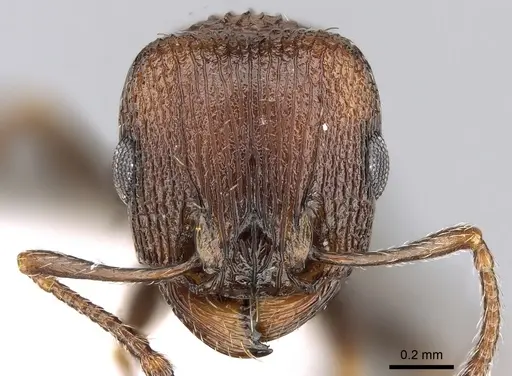
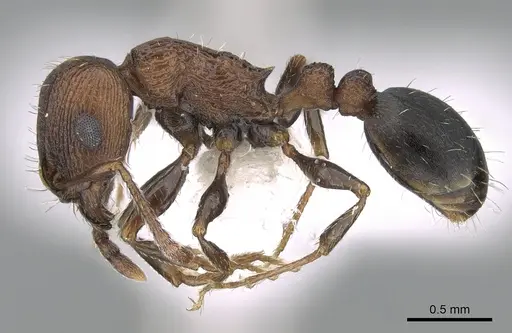
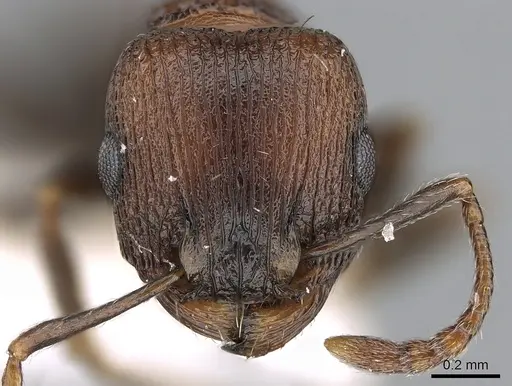
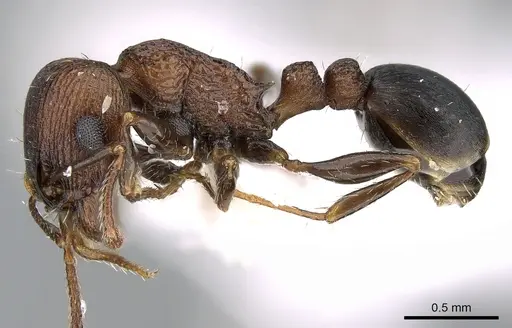
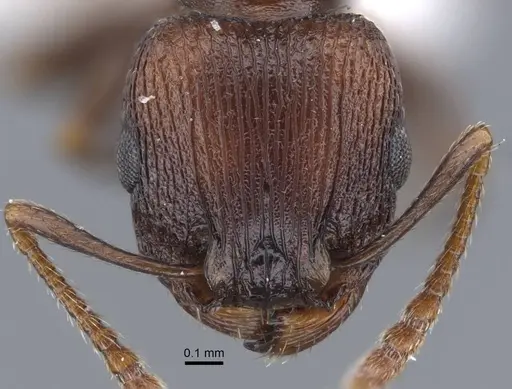
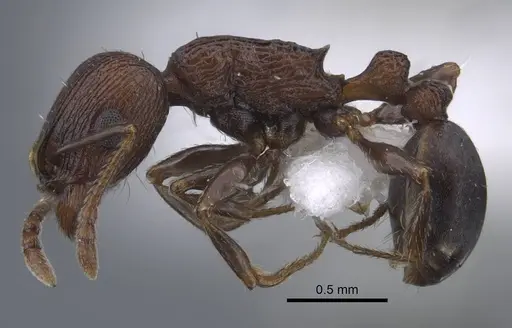
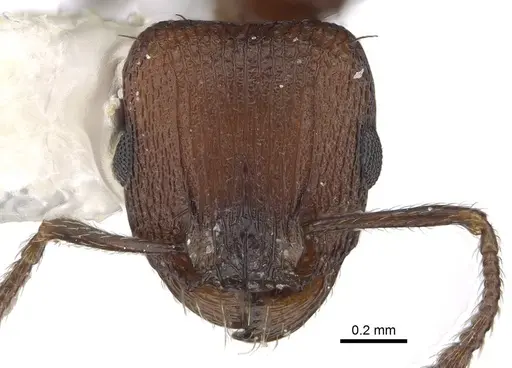
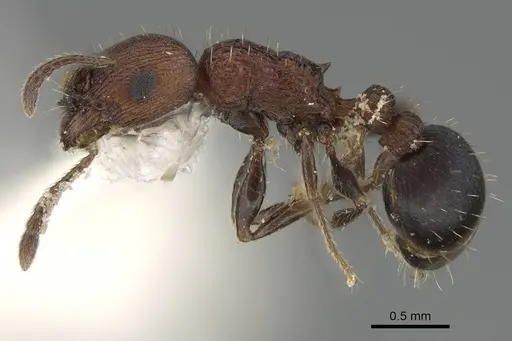
Tetramorium saudicum is a small ant (3.1-3.3mm total length) from Saudi Arabia, described in 2013. It has a two-tone body: head, thorax, waist and legs are reddish brown, the gaster is dark brown to blackish. Workers have 12-segmented antennae with short scapes, large eyes, and strong propodeal spines. The first gastral tergite is densely striated and dull. It nests directly in the ground and workers carry dry plant seeds, indicating seed-harvesting. The name saudicum refers to Saudi Arabia. As a member of the Crematogastrini tribe, it uses a modified stinger to smear venom on threats.
Quick Summary
- Difficulty: Easy
- Origin & Habitat: Native to Saudi Arabia in the Afrotropical Region. Found in the Rawdhat Khorim Nature Preserve at elevations around 559m, and also recorded from Jazan at 43m[1]. Natural habitat involves nesting directly in the ground in arid/semi-arid conditions.
- Colony Type: Colony structure is unconfirmed. Based on typical Tetramorium patterns, likely single-queen (monogyne) colonies. Queens and males have not been described[2].
- Size & Growth:
- Queen: Unknown, queens have not been described[2]
- Worker: 3.12-3.25mm total length[1][2]
- Colony: Unknown, no colony size data available
- Growth: Unknown, no development data available
- Development: Unknown, no direct development data. Based on typical Tetramorium patterns and small worker size, estimate 6-8 weeks at warm temperatures. (Estimated based on genus-level patterns for small Myrmicinae. No species-specific data available.)
- Antkeeping:
- Temperature: Keep at 22-28°C. Being from Saudi Arabia, they prefer warm conditions. A heating cable on one side of the nest can create a gradient
- Humidity: Moderate, they nest in ground so some moisture is needed, but being from arid Saudi Arabia, avoid overly damp conditions. Keep substrate lightly moist but not waterlogged.
- Diapause: Likely minimal or no true diapause. Being from a subtropical/tropical region, they may have reduced activity during cooler months rather than full hibernation. Consider a slight cooling period (15-18°C) for 4-6 weeks in winter if colony shows reduced activity.
- Nesting: Natural nesting is directly in the ground[1]. In captivity, a Y-tong (AAC) or plaster nest works well. Ensure the nest chamber has direct contact with a moist substrate layer to maintain appropriate humidity without over-wetting.
- Behavior: Workers are small at just over 3mm, so escape prevention is important, use fine mesh barriers. They are seed-harvesting ants based on observed seed-carrying behavior in the wild[1]. Likely peaceful temperament typical of Tetramorium. They probably forage on the ground surface and may tend aphids for honeydew. Activity level is moderate.
- Common Issues: small size means escapes are likely without fine mesh barriers, no published care information, keepers must adapt from related species, colony size potential unknown, may be smaller colonies, queen and male biology completely undescribed, founding behavior uncertain, seed-harvesting may require offering appropriate seed options or protein foods
Housing and Nest Setup
Tetramorium saudicum naturally nests directly in the ground[1]. For captivity, a Y-tong (AAC) nest or plaster nest works well since these provide good humidity control. Because workers are tiny (just over 3mm), ensure your nest chambers are appropriately scaled, small passages and chambers help them feel secure. The nest should have direct contact with a moist substrate layer (like a water reservoir or moisture chamber) to maintain appropriate humidity without creating standing water. A small outworld for foraging allows you to offer food and gives workers space to move around. Use a test tube setup for founding colonies. Escape prevention is critical due to their small size, use fine mesh on any openings and consider barrier methods like fluon on smooth surfaces.
Feeding and Diet
In the wild, workers have been observed carrying dry plant seeds, indicating this species is at least partially granivorous (seed-eating)[1]. This aligns with typical Tetramorium behavior. In captivity, offer a varied diet including: small seeds (millet, sesame, grass seeds), protein sources like small insects (fruit flies, small mealworms, pinhead crickets), and occasional sugar sources like diluted honey or sugar water. Since they're small ants, prey items should be appropriately sized. Observe what your colony accepts and adjust accordingly. Fresh water should always be available.
Temperature and Seasonal Care
Being from Saudi Arabia, this species prefers warm conditions. Maintain temperatures between 22-28°C, with the warmer end of this range preferred for active growth. You can use a heating cable placed on one side of the nest to create a gentle temperature gradient, allowing ants to regulate their own exposure to warmth. Place the heating element on top of the nest, not underneath, to avoid drying out the substrate too quickly. Regarding seasonal care, being from a subtropical/tropical region, they likely do not require true hibernation. However, if your colony shows reduced activity during cooler months, you can provide a slight cooling period at 15-18°C for 4-6 weeks. This mimics natural seasonal cycles without the extreme cold required for temperate species. [1]
Colony Development and Growth
Since this species was only described in 2013 and queens have not been documented[2], there is no published information on colony development timelines. Workers measure 3.12-3.25mm in total length[1][2], which is relatively small for a Tetramorium species. Based on typical patterns for small Myrmicinae ants, you can expect the first workers (nanitics) to emerge roughly 6-8 weeks after the queen lays eggs, assuming optimal temperatures around 25-27°C. Growth rate is likely moderate, not extremely fast like some tropical species, but not slow either. Colonies probably remain moderate in size, likely under a few hundred workers based on the small worker size. Be patient with founding colonies, small species often take time to establish.
Behavior and Temperament
Tetramorium saudicum workers are small at just over 3mm and likely have a peaceful temperament typical of the genus. They are ground-nesting ants that probably forage on the soil surface, searching for seeds and small arthropods. The species shows seed-harvesting behavior in the wild[1], so expect some granivorous foraging tendencies. Workers likely communicate through chemical signals and may use tandem-running to recruit nestmates to food sources, though this hasn't been specifically documented for this species. Due to their small size, they are capable of squeezing through very small gaps, excellent escape prevention is essential. As a member of the Crematogastrini tribe, they have a modified stinger used to smear venom on threats, which may cause mild irritation but is not dangerous to humans.
Frequently Asked Questions
How long does it take for Tetramorium saudicum to produce first workers?
The exact timeline is unknown since this species was only recently described and no breeding data has been published. Based on typical patterns for small Tetramorium species (3-3.5mm workers), expect approximately 6-8 weeks from egg to worker at optimal temperatures of 25-27°C. Be patient with founding colonies, small species often take time to establish their first nanitic workers.
What do Tetramorium saudicum ants eat?
Based on field observations of workers carrying dry plant seeds[1], this species is at least partially granivorous. Offer a varied diet including small seeds (millet, sesame, grass seeds), small protein sources (fruit flies, small mealworms), and occasional sugar water or honey. Adjust based on what your colony accepts.
Can I keep Tetramorium saudicum in a test tube?
Yes, a test tube setup works well for founding colonies. Use a small test tube with a water reservoir sealed with cotton, this provides humidity through the substrate. Ensure the tube is in a warm, dark location. Once the colony grows beyond 20-30 workers, consider moving to a small formicarium or naturalistic setup with a proper nest chamber and outworld. Due to their small size, use fine mesh barriers on any openings.
Do Tetramorium saudicum ants need hibernation?
Probably not. Being from Saudi Arabia (subtropical/tropical region), they likely do not require true hibernation. If your colony shows reduced activity during winter months, you can provide a slight cooling period at 15-18°C for 4-6 weeks rather than full hibernation. Avoid temperatures below 15°C.
How big do Tetramorium saudicum colonies get?
Colony size is not documented in scientific literature. Based on the small worker size (3.1-3.3mm), colonies will likely remain moderate, probably under 500 workers. This is typical for smaller Tetramorium species.
Are Tetramorium saudicum ants good for beginners?
Yes, this species is likely suitable for beginners. They are small, probably peaceful, and don't require complex care. The main challenges are: escape prevention (due to tiny size), and the lack of published care information means you'll need to adapt from related Tetramorium species. Start with a simple setup and observe your colony's preferences.
What temperature should I keep Tetramorium saudicum at?
Keep them warm at 22-28°C, with the warmer end (25-27°C) preferred for active growth and brood development. Being from Saudi Arabia, they prefer heat. A heating cable on one side of the nest creates a gradient. Place heating on top of the nest, not underneath, to avoid rapid drying.
Do Tetramorium saudicum ants sting?
This species belongs to the Crematogastrini tribe, which uses a modified spatulate stinger to smear venom rather than pierce. The sting is mild and not considered dangerous to humans, but individual reactions vary, if you're sensitive, handle with care.
Why is my Tetramorium saudicum colony not growing?
Common causes include: temperatures too low (aim for 25-27°C), insufficient humidity (keep substrate lightly moist), poor nutrition (offer varied protein and seeds), or the queen may not be laying eggs. Check these parameters and ensure the queen is healthy and active. Small colonies grow slowly, be patient.
When will I see queens and males for Tetramorium saudicum?
Queens and males have not been described scientifically[2], meaning nuptial flight timing is completely unknown. This is a recently described species (2013) with limited biological study. If your colony produces alates, it indicates healthy development, but specific timing cannot be predicted.
Report an Issue
The current care sheet is based fully on literature. See inconsistencies, or something that's incorrect? Please , it will be resolved after review from an admin. Contributing to the blogs tab also helps providing information, to make us be able to further improve the caresheets. Thank you for your support!
References

This caresheet is licensed under CC BY-SA 4.0 .
Community Blogs
CASENT0281582
View on AntWeb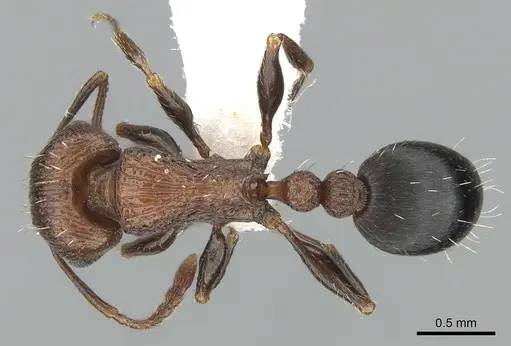
CASENT0906105
View on AntWeb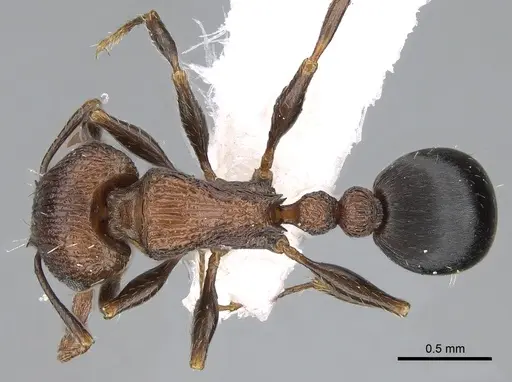
CASENT0917426
View on AntWeb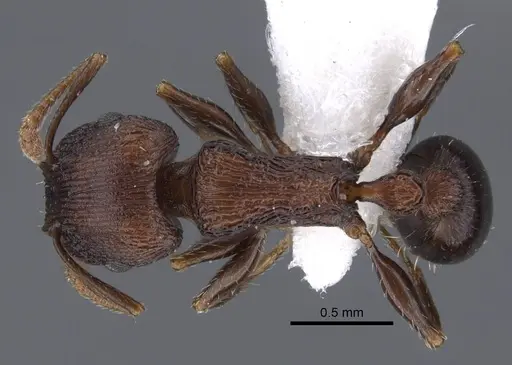
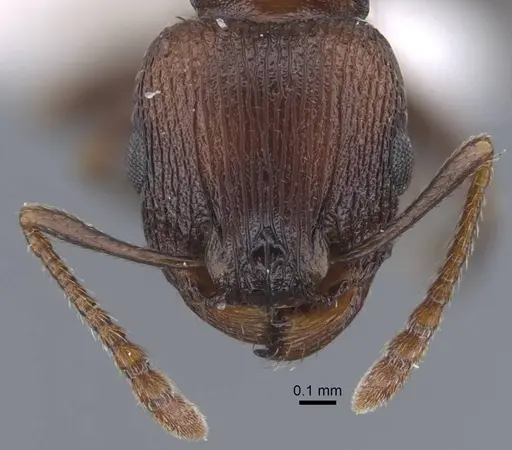
CASENT0919802
View on AntWeb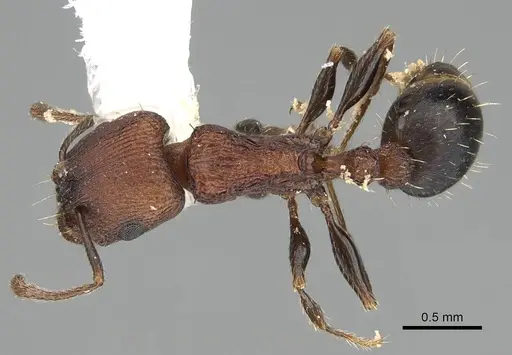
Literature
Loading distribution map...Loading products...