
Tetramorium sabatra
- Sci. Name
- Tetramorium sabatra
- Tribe
- Crematogastrini
- Subfamily
- Myrmicinae
- Author
- Hita Garcia & Fisher, 2012
- Distribution
- Found in 2 countries
Introduction
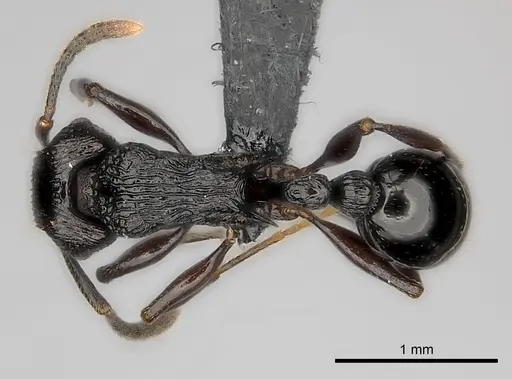
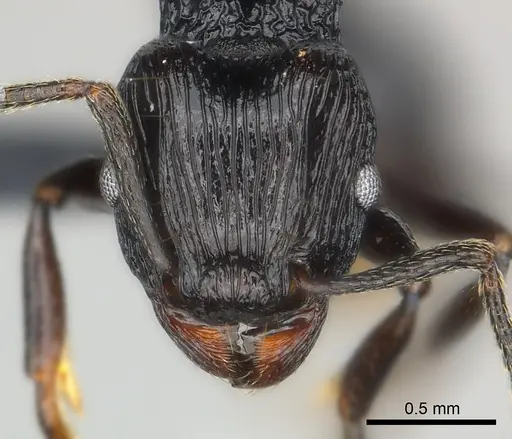
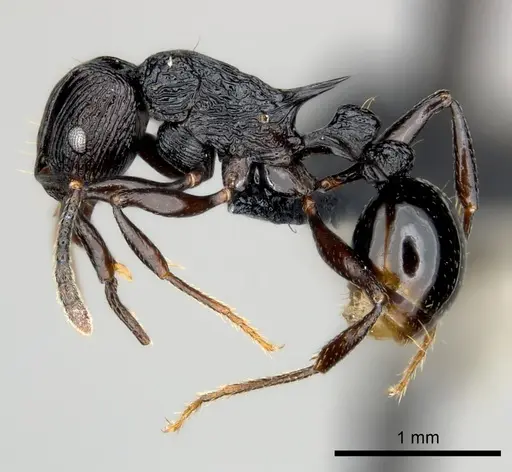
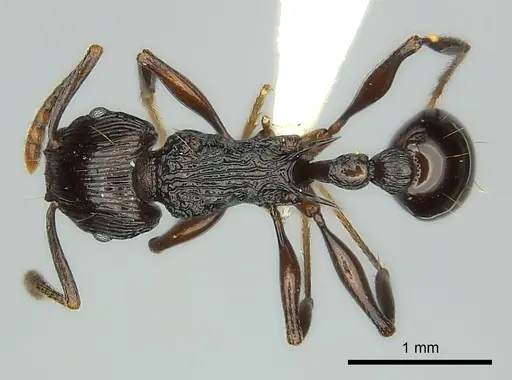
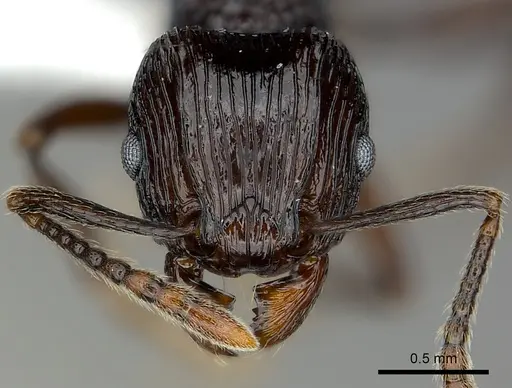
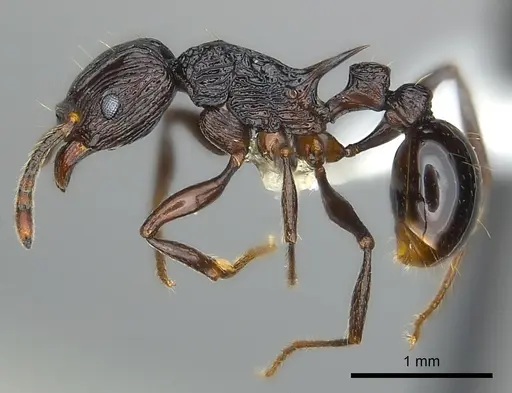
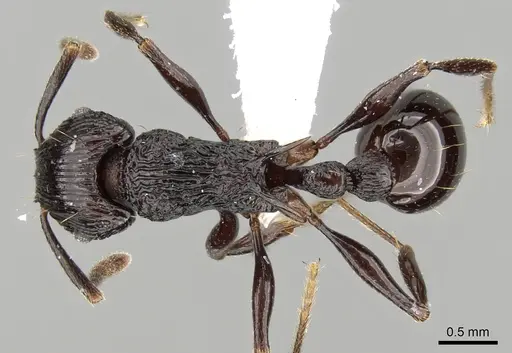
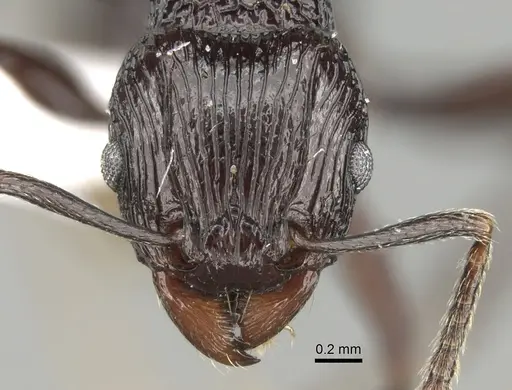
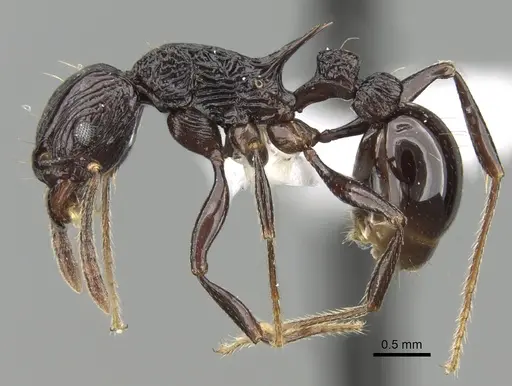
Tetramorium sabatra is a small, dark ant species native to Madagascar. Workers have a uniform very dark brown to black body and extremely long, massive propodeal spines that make them stand out . This species belongs to the *Tetramorium tortuosum* species group and is part of the *T. smaug* species complex . What makes *T. sabatra* interesting is that some specimens were collected from flowers of *Impatiens mandrakae*, suggesting they live in the vegetation rather than just on the forest floor . This could explain why they are rarely caught in ground samples despite being widely distributed across eastern Madagascar . Their long spines may help them move through dense vegetation and provide defense against predators.
Quick Summary
- Difficulty: Expert
- Origin & Habitat: Eastern Madagascar, from Andohahela in the south to Montagne d'Akirindro in the north. They live in rainforests and montane rainforests at elevations of 430-1300 meters [1].
- Colony Type: Unknown, colony structure has not been studied. Only 15 specimens have ever been collected, all workers.
- Size & Growth:
- Queen: Unknown, queens have never been documented [1]
- Worker: Size data unavailable, total body length is not reported. Head length is 1.00-1.12 mm, but that does not represent full body size [1]
- Colony: Unknown, no colony size data exists [1]
- Growth: Unknown, no colony development data exists for this species
- Development: Unknown, based on typical Tetramorium development in tropical conditions, roughly 6-10 weeks is estimated (No direct development data exists. This is a rough estimate based on genus patterns.)
- Antkeeping:
- Temperature: Temperature requirements are unknown. Since these are tropical rainforest ants from moderate elevations, keep them at room temperature (around 20-25°C) and observe. Avoid extremes below 18°C or above 30°C [1]
- Humidity: High humidity is essential, think damp rainforest conditions. Keep the nest substrate consistently moist but not waterlogged. Mist occasionally and provide a water tube. Specific numbers are unknown [1]
- Diapause: Likely unknown, these ants live in tropical Madagascar where temperatures stay warm year-round. No formal research exists on their seasonal behavior. Minimal or no diapause is expected
- Nesting: Based on their flower‑visiting behavior, they may prefer elevated or arboreal nesting sites. A Y‑tong (AAC) or plaster nest works well. They might do better with moss or small plants in the outworld, but no confirmed preferences exist [1]
- Behavior: These are small, active ants with long defensive spines. Belonging to the subfamily Myrmicinae and tribe Crematogastrini, their primary defense is smearing venom using a modified stinger. Their small size (very tiny workers) means escape prevention is critical, they can squeeze through tiny gaps. Their flower‑visiting behavior suggests they forage in vegetation and may collect nectar, but specific diet is unknown.
- Common Issues: very small size means escapes are likely without fine mesh barriers, no captive breeding data exists, establishing a colony will be challenging, humidity must be maintained consistently, drying out can kill colonies, wild-caught colonies may have parasites given their rarity, limited availability makes this species difficult to acquire, due to lack of research, most care advice is estimated from genus patterns
Housing and Nest Setup
Since T. sabatra appears to live in vegetation based on flower‑visiting records [1], they may prefer more naturalistic setups. A Y‑tong (AAC) nest works well for small Tetramorium species, the narrow chambers help them feel secure. Plaster nests also hold humidity well. Given their tiny size, ensure all connections and gaps are sealed tightly, these ants can escape through remarkably small openings. Use fluon on the rim of the outworld and fine mesh on ventilation holes. A small outworld is fine since colony size is unknown but likely moderate. Include some moss or live plants if possible to mimic their natural vegetation habitat. Use a water tube connected to the nest to help maintain humidity.
Feeding and Diet
Based on their flower‑visiting behavior [1], T. sabatra may accept nectar and honeydew. Offer sugar water or honey regularly as a carbohydrate source. For protein, provide small live prey like fruit flies, pinhead crickets, or mealworm pieces. Being very small ants, prey should be appropriately sized, nothing larger than their head. Feed small amounts every 2-3 days and remove uneaten prey after 24 hours to prevent mold. Since they come from a tropical rainforest, they may benefit from more frequent feeding than temperate species, but this is an estimate.
Temperature and Humidity
Temperature needs are unknown. These ants live in Madagascar's rainforests at 430-1300 m elevation [1]. Keep them at room temperature (20-25°C) and avoid extremes below 18°C or above 30°C. A gentle heat mat on one side of the nest can create a gradient if your room is cool. Humidity must be high, keep the nest substrate consistently moist without being waterlogged. Use a water tube or mist the outworld regularly. Specific humidity percentages are not documented, but aim for damp conditions that match a tropical rainforest floor.
Behavior and Temperament
T. sabatra workers are small but active foragers. Their primary defense mechanism is smearing venom using a modified stinger, typical of the tribe Crematogastrini. The extremely long propodeal spines likely serve as additional defense and may help anchor or wedge when threatened. No specific aggression data exists, they are likely cautious and may retreat rather than attack. Their flower‑visiting behavior suggests they are comfortable climbing and foraging in vegetation, so include some climbing structures in the outworld. Colony size is unknown, but they likely establish small to moderate colonies. [1]
Colony Establishment
Since this species has rarely been collected and no captive breeding data exists, establishing a colony will be challenging. If you obtain a founding queen, treat her as claustral (queen seals herself in and raises first workers alone) based on typical Tetramorium patterns, but this is unconfirmed for this species. Provide a small test tube setup with a water reservoir and keep her warm and humid. Expect 6-10 weeks for first workers to emerge, based on genus patterns, but no direct data exists. Do not disturb the founding chamber until workers appear. After workers arrive, slowly transition to a proper nest. [1]
Frequently Asked Questions
How long does it take for Tetramorium sabatra to have first workers?
The exact timeline is unknown since this species hasn't been bred in captivity. Based on typical Tetramorium development in tropical conditions, expect 6-10 weeks from egg to first worker at 24-26°C. Nanitics (first workers) will be very small.
Can I keep Tetramorium sabatra in a test tube?
Yes, test tubes work well for founding colonies. Use a small test tube with a water reservoir at one end, separated by a cotton plug. Keep it warm and humid. Once the colony reaches about 10 workers, you can transition to a proper nest like a Y‑tong or plaster formicarium. This is an estimate from other Tetramorium species.
Do Tetramorium sabatra ants sting?
Tetramorium ants have a functional stinger, but their primary defense is smearing venom using a modified stinger, typical of the tribe Crematogastrini. Their small size means any sting would be very mild for humans, barely noticeable.
What do Tetramorium sabatra eat?
Based on their flower‑visiting behavior [1], they likely eat nectar and honeydew. Offer sugar water or honey as a constant carbohydrate source. For protein, provide small live prey like fruit flies, tiny crickets, or mealworm pieces. Feed small amounts every 2-3 days.
Are Tetramorium sabatra good for beginners?
No, this species is not suitable for beginners due to extreme rarity, lack of captive breeding data, and very small size. More common Tetramorium species like Tetramorium caespitum or T. bicarinatum are far better choices. If you obtain T. sabatra, be prepared for a challenge, most care advice is estimated.
Do Tetramorium sabatra need hibernation?
Likely no, these are tropical ants from Madagascar where temperatures stay warm year-round. No diapause or hibernation is recommended. Simply maintain normal room temperature (20-25°C) throughout the year. If your room temperature drops significantly in winter, consider using a gentle heat source.
How big do Tetramorium sabatra colonies get?
Unknown, no colony size data exists for this species. Only 15 specimens have ever been collected [1]. Based on similar Tetramorium species, they might reach a few hundred workers, but this is pure speculation.
Why are Tetramorium sabatra so rarely found?
Their rarity likely comes from two factors: they live in vegetation (not just on the ground), making them hard to sample, and they may naturally have small populations. The 15 known specimens were collected across a wide area over many years [1].
Can I keep multiple Tetramorium sabatra queens together?
This has not been studied. Colony structure is unknown, no data exists on queen number. Do not attempt to combine unrelated foundress queens as they will likely fight. Wait until you have an established colony before considering any merging.
What temperature is best for Tetramorium sabatra?
Keep them at 20-25°C, which is typical room temperature. This matches their natural habitat in Madagascar's rainforests at moderate elevations (430-1300 m) [1]. Avoid temperatures below 18°C or above 30°C. A gentle heat mat on one side of the nest can create a gradient if your room is cool.
Report an Issue
The current care sheet is based fully on literature. See inconsistencies, or something that's incorrect? Please , it will be resolved after review from an admin. Contributing to the blogs tab also helps providing information, to make us be able to further improve the caresheets. Thank you for your support!
References

This caresheet is licensed under CC BY-SA 4.0 .
Community Blogs
Literature
Loading distribution map...Loading products...