
Tetramorium rugigaster
- Sci. Name
- Tetramorium rugigaster
- Tribe
- Crematogastrini
- Subfamily
- Myrmicinae
- Author
- Bolton, 1977
- Distribution
- Found in 1 countries
Introduction
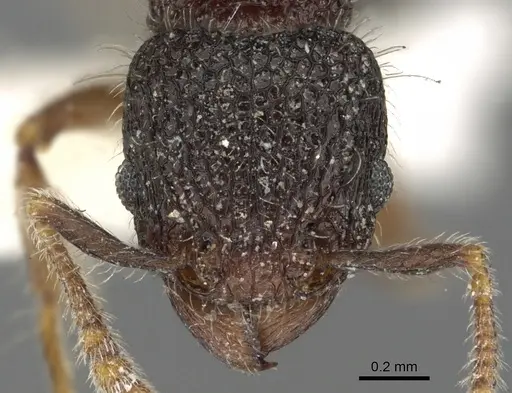
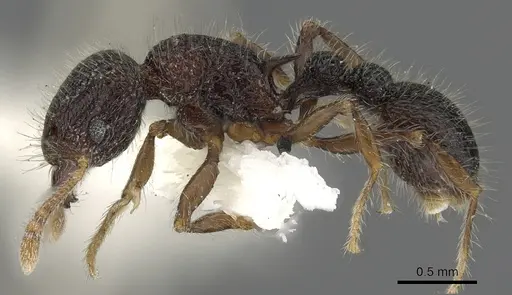
Tetramorium rugigaster is a small, robust ant endemic to the Western Ghats of India, specifically found in Karnataka and Kerala . Workers are 3.0-3.4mm in total length, with a uniform deep reddish-brown body and yellowish-brown appendages . They have abundant long fine hairs on the upper side, blocky massive petiole nodes, and moderately developed eyes with 10-11 ommatidia in the longest row . This species belongs to the Tetramorium mixtum species group and was first described by Bolton in 1977 . The type specimens were collected from evergreen forest litter and rotting wood at elevations between 650 and 1200 meters in the Western Ghats . They are closely related to Tetramorium transversarium but are larger and more strongly sculptured . Like other myrmicine ants, they have a functional stinger adapted for smearing venom rather than piercing.
Quick Summary
- Difficulty: Medium
- Origin & Habitat: Endemic to the Western Ghats mountain range in southern India, recorded from Karnataka and Kerala states [1]. They live in evergreen forest litter and rotting wood at elevations of 650-1200 meters [2]. The region has a tropical monsoon climate with high humidity year-round.
- Colony Type: Colony structure is unconfirmed. Based on typical Tetramorium patterns, likely monogyne (single queen) colonies, though this has not been directly documented.
- Size & Growth:
- Queen: Size data unavailable, queens have been described but no measurements were reported [2].
- Worker: 3.0-3.4mm [2]
- Colony: Unconfirmed, likely several hundred workers based on typical Tetramorium colony sizes.
- Growth: Moderate
- Development: Estimated 6-8 weeks based on typical Tetramorium development at tropical temperatures. (Development time is estimated from genus-level data since species-specific development has not been studied.)
- Antkeeping:
- Temperature: Keep at 24-28°C, they come from a warm tropical region and need consistent warmth. A heating cable on one side of the nest can create a gentle gradient. This is inferred from their natural habitat rather than direct study.
- Humidity: High humidity is essential, they come from moist evergreen forests. Keep the nest substrate consistently damp but not waterlogged. The forest floor environment they inhabit is consistently humid.
- Diapause: Unlikely, being a tropical species from the Western Ghats, they probably do not require a true diapause. However, a slight reduction in temperature during winter months may be beneficial.
- Nesting: They naturally nest in rotting wood and forest floor litter. In captivity, a naturalistic setup with moist substrate (soil/peat mix) or a plaster nest with good moisture retention works well. They prefer dark, enclosed spaces.
- Behavior: These are ground-nesting ants that forage in the leaf litter layer. They are likely moderate foragers rather than aggressive defenders. Their small size (3mm) means they can escape through tiny gaps, excellent escape prevention is essential. Workers have well-developed eyes suggesting they may use visual cues for navigation [3]. They are not known to be particularly aggressive but will defend their nest if threatened. Like other members of the subfamily Myrmicinae, they have a functional stinger used for smearing venom rather than piercing.
- Common Issues: escape prevention is critical due to their tiny 3mm size, they can squeeze through standard barrier gaps., high humidity requirements can lead to mold issues if ventilation is inadequate., tropical species may struggle in cooler room temperatures without supplemental heating., wild-caught colonies may harbor parasites from their native forest habitat., slow initial colony growth during founding phase may lead to beginner impatience.
Housing and Nest Setup
For Tetramorium rugigaster, replicate their natural forest floor environment. A naturalistic setup works best, use a mix of soil and peat or coco fiber as substrate, kept consistently moist but not waterlogged. Add pieces of rotting wood or cork bark for them to nest in, as this mimics their natural habitat in evergreen forest litter [2]. If using an artificial nest (plaster), ensure it has good moisture retention. These ants prefer dark, enclosed spaces and will readily occupy narrow chambers. The nest should have chambers scaled for their 3mm worker size, tight passages help them feel secure. Place the nest in a darkened area of your setup, as they naturally live in the dim understory of the forest. The outworld (foraging area) can be simple, a shallow container with a soil floor allows them to forage naturally. Use a water test tube as a humidity reservoir connected to the nest area. Because of their tiny size, apply fluon or another barrier to all edges and ensure connections between nest and outworld are secure.
Temperature and Heating
Being native to the Western Ghats tropical region of India, these ants need warm conditions. Maintain temperatures between 24-28°C for optimal colony activity and brood development. This is warmer than what most temperate ant species require, so you may need supplemental heating. A heating cable placed on one side of the nest creates a gentle thermal gradient that allows ants to regulate their temperature by moving between warmer and cooler areas. Place the heating element on top of the nest rather than underneath to avoid excessive drying of the substrate. Monitor temperatures with a digital thermometer inside the nest area. Avoid temperatures below 22°C for extended periods, as this species is adapted to consistent warmth. Room temperature alone is often insufficient, if your home runs cool, especially in winter, you'll need a small heat source. However, avoid overheating, temperatures above 32°C can be harmful. [2]
Humidity and Moisture
High humidity is essential for this species. In their natural evergreen forest habitat, the forest floor remains consistently moist year-round. Keep the nest substrate damp to the touch, it should feel like a wrung-out sponge, not dripping wet or completely dry. Monitor moisture levels regularly and rehydrate when the surface begins drying. A water test tube or reservoir connected to the nest helps maintain stable humidity through evaporation. You can lightly mist the substrate occasionally, but avoid creating standing water. Good ventilation is also important to prevent mold while maintaining humidity. Stagnant, overly wet conditions lead to mold that can kill a colony. Strike a balance, moist but with some airflow. If you see mold, reduce moisture slightly and improve ventilation. [2]
Feeding and Diet
Like most Tetramorium species, Tetramorium rugigaster is likely a generalist forager that collects both protein and carbohydrates. In nature, they probably forage for small insects and other arthropods in the leaf litter, as well as tending aphids for honeydew. For captive colonies, offer protein sources such as small crickets, fruit flies, mealworms, or other small insects. Feed protein 2-3 times per week, adjusting based on colony size. For carbohydrates, provide sugar water, honey, or diluted honey water. Change sugar sources every few days to prevent fermentation. Because of their small size, prey items should be appropriately sized, tiny insects or pre-killed and broken into small pieces. Remove any uneaten prey within 24-48 hours to prevent mold. A varied diet helps ensure colony health. [2]
Colony Development
Colony growth follows typical Tetramorium patterns, though specific development data for Tetramorium rugigaster is not documented. After a queen lays her first eggs, expect 6-8 weeks until the first workers (nanitics) emerge at optimal temperatures around 26°C. This timeline is estimated from genus-level data. The founding phase is critical, a claustral queen (one who seals herself in and lives off stored fat reserves) will not leave the nest to forage during this time. She needs complete darkness and quiet to successfully raise her first brood. Do not disturb a founding colony during this period. Once workers emerge, the colony grows gradually at first. Expect several months to reach 20-30 workers, then growth accelerates as the colony reaches several hundred workers. Mature colonies may contain several hundred workers based on typical Tetramorium sizes. [2]
Escape Prevention
With workers measuring only 3mm, escape prevention is absolutely critical. These tiny ants can squeeze through gaps that seem impossible. Apply fluon (polytetrafluoroethylene) to all rim edges of the outworld and nest connections. Check all seams and junctions for tiny gaps. Use test tube setups with tight-fitting cotton plugs during founding, and ensure any connections between tubes or between nest and outworld have multiple barriers. Even a small gap or loose lid can result in an escaped colony. Inspect your setup daily, especially during the first few weeks. When feeding, work quickly but carefully, have a barrier ready and close everything securely after each feeding. Consider using a moat or oil barrier on the outworld rim as an additional safeguard. [2]
Frequently Asked Questions
How long does it take for Tetramorium rugigaster to produce first workers?
Expect 6-8 weeks from egg to first worker at optimal temperatures (around 26°C). This is an estimate based on typical Tetramorium development patterns, as species-specific data is not available. The queen will remain sealed in her founding chamber until her first nanitic workers emerge.
What temperature do Tetramorium rugigaster ants need?
Keep them at 24-28°C. This tropical species from the Western Ghats of India requires consistent warmth. A small heating cable or heat mat on one side of the nest can help maintain these temperatures, especially in cooler homes.
Are Tetramorium rugigaster ants good for beginners?
This species is rated as medium difficulty. While not the hardest species, they do require specific conditions: high humidity, warm temperatures, and excellent escape prevention due to their tiny 3mm size. If you're comfortable maintaining these parameters, they can be a rewarding species to keep.
Do Tetramorium rugigaster ants need hibernation?
Probably not. Being a tropical species from the Western Ghats, they likely do not require a true diapause. However, a slight temperature reduction during winter months (down to around 20-22°C) may be appropriate if your colony is active year-round.
What do Tetramorium rugigaster ants eat?
They are generalists that likely accept both protein and sugar sources. Feed small insects (fruit flies, tiny crickets, mealworms) as protein 2-3 times weekly. For carbohydrates, offer sugar water, honey, or diluted honey. Remove uneaten food promptly to prevent mold.
How big do Tetramorium rugigaster colonies get?
Colony size is not documented specifically, but based on typical Tetramorium patterns, expect several hundred workers at maturity. Growth is moderate, several months to reach 20-30 workers, then gradually faster as the colony expands.
Can I keep multiple Tetramorium rugigaster queens together?
This has not been documented for this species. Based on typical Tetramorium behavior, they likely form single-queen colonies. Combining unrelated foundress queens is not recommended as it often leads to fighting.
Do Tetramorium rugigaster ants sting?
As members of the subfamily Myrmicinae, they have a functional stinger. However, being only 3mm in size, their sting is mild and rarely felt by humans. They are not considered dangerous to keep.
When should I move Tetramorium rugigaster to a formicarium?
Wait until the colony has at least 30-50 workers and is actively foraging before moving to a larger formicarium. For founding colonies, a simple test tube setup works well. Only transfer when the test tube becomes crowded or the cotton becomes moldy.
Why are my Tetramorium rugigaster ants escaping?
Their tiny 3mm size means they can escape through the smallest gaps. Apply fluon to all edges, check all seams and connections, and ensure lids fit tightly. Even a tiny crack is enough for them to squeeze through. Review your entire setup for any gaps.
Report an Issue
The current care sheet is based fully on literature. See inconsistencies, or something that's incorrect? Please , it will be resolved after review from an admin. Contributing to the blogs tab also helps providing information, to make us be able to further improve the caresheets. Thank you for your support!
References

This caresheet is licensed under CC BY-SA 4.0 .
Community Blogs
CASENT0901105
View on AntWeb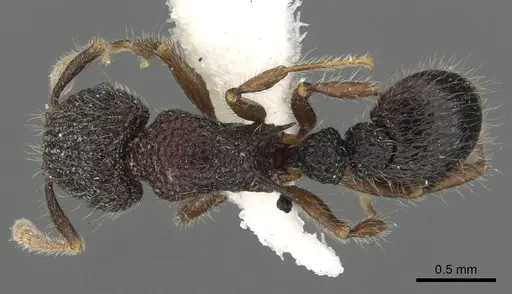
Literature
Loading distribution map...Loading products...