
Tetramorium robitika
- Sci. Name
- Tetramorium robitika
- Tribe
- Crematogastrini
- Subfamily
- Myrmicinae
- Author
- Hita Garcia & Fisher, 2012
- Distribution
- Found in 1 countries
Introduction
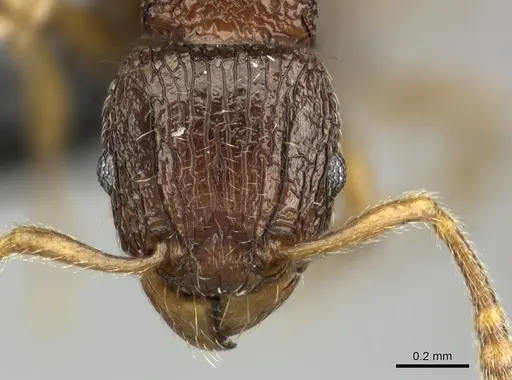
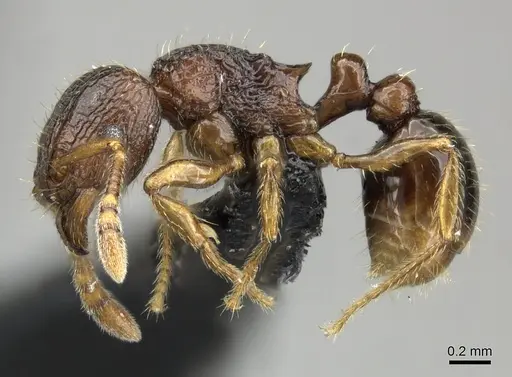
Tetramorium robitika is a small ant species known only from a montane rainforest in Manjakatompo, central Madagascar, at elevations of 1500-1600 meters . Workers have a head length of about 0.6-0.7mm, placing them among the smaller Tetramorium species . They belong to the T. dysalum group and are identified by their brown coloration, short propodeal spines, and a distinctive high nodiform petiolar node where the front and back tops sit at the same height . The species lives in leaf litter, which makes replicating that damp, shaded environment key for captive care.
Quick Summary
- Difficulty: Medium
- Origin & Habitat: Manjakatompo, central Madagascar, montane rainforest at 1500-1600m elevation, living in leaf litter [1][2]
- Colony Type: Unconfirmed, colony structure has not been studied for this species
- Size & Growth:
- Queen: No queen has been described, queen size is unknown
- Worker: Total length not recorded, head length is 0.62-0.72mm, indicating a very small ant [1]
- Colony: Unknown, no colony size data exists
- Growth: Unknown, growth rate has not been documented
- Development: Unconfirmed, based on related Tetramorium species, estimated 6-10 weeks at suitable temperature (Development time is speculative, no direct data for T. robitika)
- Antkeeping:
- Temperature: Keep around 20-24°C, based on their montane origin. Avoid temperatures above 28°C [1]
- Humidity: Keep the nest substrate consistently moist but not waterlogged, they come from damp leaf litter in montane rainforest [1][2]
- Diapause: Unconfirmed, no research on overwintering exists for this species
- Nesting: Naturalistic setups with moist soil and leaf litter, or a Y-tong nest with damp substrate. Keep the nest dark and humid.
- Behavior: These are tiny, docile ants that live quietly in leaf litter. They are not aggressive and rarely sting, their small size makes their sting negligible even if they use it. Workers are slow-moving and forage individually or in small groups. Escape prevention is critical due to their minute size, they can squeeze through surprisingly small gaps.
- Common Issues: escape prevention is critical, their tiny size means they can slip through standard barrier setups, high humidity requirements can lead to mold problems if ventilation is poor, this species has no captive breeding data, establishing a colony may require experimentation, temperature sensitivity is unknown, start with moderate temperatures and observe, wild-caught colonies may struggle with captivity if collected from a very specific microhabitat
Housing and Nest Setup
Because Tetramorium robitika naturally lives in leaf litter within montane rainforest, a naturalistic setup is your best option. A small terrarium or plastic container filled with a moist soil mixture (like a blend of soil and coco fiber) works well, this mimics the damp forest floor they call home [2]. Add leaf litter, small pieces of rotting wood, or moss on top to give foragers cover and hunting grounds. If you prefer a formicarium, Y-tong (AAC) nests with tight chambers work better than acrylic nests with large chambers, these tiny ants feel secure in snug spaces. Keep the nest substrate consistently moist but never waterlogged. A water reservoir connected to the nest helps maintain humidity without constant misting. Place the setup in a location away from direct sunlight and drafts.
Temperature and Humidity
This species comes from montane Madagascar at 1500-1600m elevation, which means they prefer cooler, more stable conditions than typical tropical ants [1]. Aim for temperatures in the 20-24°C range, avoid letting the setup get above 28°C, as prolonged heat stress can be fatal. Room temperature in most homes is often ideal. Humidity is more critical. These ants live in leaf litter in montane rainforest, so they need consistently high humidity [2]. The substrate should feel damp to the touch but not have standing water. A thin layer of condensation on the nest walls is a good sign. Use a hygrometer to monitor conditions, and mist occasionally if humidity drops. Good ventilation is still important to prevent mold, but avoid placing them in dry, airy locations.
Feeding and Diet
There is no research on the specific diet of Tetramorium robitika. In the absence of data, follow general Tetramorium feeding practices: offer small live prey like fruit flies, springtails, or tiny crickets, and provide sugar water or honey as an energy source. Place a small droplet on a piece of cotton or directly in the foraging area. Feed small amounts twice weekly, removing any uneaten prey after 24-48 hours to prevent mold. Because workers are so tiny, prey items should be appropriately sized, a fruit fly is a substantial meal for these ants. Adjust feeding based on colony size and activity levels.
Colony Establishment
Since this species has never been documented in the ant-keeping hobby, establishing a colony will require experimentation. If you acquire a founding queen, place her in a test tube setup with a small water reservoir and keep her in a dark, humid location at around 22°C. Founding behavior is unconfirmed, you may need to test whether she accepts food (semi-claustral) or seals herself in (claustral). Once workers emerge (estimated 6-10 weeks based on genus patterns), gradually introduce small food items. Wait several months before attempting to move the colony to a larger setup, these ants grow slowly and stress from relocation can be fatal during the founding stage. Be patient and resist the urge to check on them too frequently.
Behavior and Temperament
Tetramorium robitika is a calm, non-aggressive species. Workers are slow-moving and tend to forage individually or in small groups rather than forming large raiding parties. They are not defensive and rarely show aggression toward keepers. Their tiny size means they pose no real threat, even if they attempt to sting, it would be negligible to humans. However, this same small size creates a significant escape risk. Use fine mesh on any ventilation holes, apply fluon or barrier gel to container rims, and check for any gaps larger than 1mm. A single overlooked gap is all it takes for these escape artists. Behavior is inferred from morphological traits and habitat, no direct observations exist [1].
Frequently Asked Questions
How long does it take for Tetramorium robitika to have first workers?
The egg-to-worker timeline is unconfirmed for this species. Based on related Tetramorium species, estimate 6-10 weeks at suitable temperature. The queen may seal herself in, be patient and avoid disturbing her.
What temperature do Tetramorium robitika ants need?
Keep them around 20-24°C, based on their montane forest origin at 1500-1600m elevation. Avoid temperatures above 28°C. Room temperature is often suitable [1].
Are Tetramorium robitika ants good for beginners?
This species is not ideal for beginners. It has never been documented in the ant-keeping hobby, so care requirements are speculative. Their tiny size also makes housing and monitoring difficult. If you're new to antkeeping, consider a well-studied species like Tetramorium caespitum or Lasius niger.
Do Tetramorium robitika ants sting?
They belong to the subfamily Myrmicinae, which includes species with functional stingers. However, due to their extremely small size, any sting would be negligible to humans. These ants are docile and not defensive.
What do Tetramorium robitika ants eat?
No research exists on their natural diet. In captivity, offer small live prey like fruit flies or springtails, and provide sugar water or honey. Feed small amounts twice weekly and remove leftovers to prevent mold.
How big do Tetramorium robitika colonies get?
Colony size is unknown, no data exists for this species. Based on related Tetramorium species in the T. dysalum group, colonies likely reach at most several hundred workers, but this is speculative.
Can I keep multiple Tetramorium robitika queens together?
Colony structure is unconfirmed. Typical Tetramorium are single-queen, but some species tolerate multiple queens. Without specific research on T. robitika, combining queens is not recommended, the outcome is unpredictable.
Do Tetramorium robitika need hibernation?
Diapause requirements are unconfirmed. No research on this exists. Their montane origin suggests they may experience cooler seasonal conditions, but this is speculative. Monitor colony behavior and adjust if needed.
Why are my Tetramorium robitika escaping?
Their tiny size makes escape almost guaranteed without excellent barriers. Use fine mesh (0.5mm or smaller), apply fluon to rims, and check all connections for gaps. Even a 1mm gap is an escape route. Inspect daily and address any escapes immediately.
When should I move Tetramorium robitika to a formicarium?
Wait until the colony has grown substantially, at least 50-100 workers. Moving too early causes stress that can kill the colony. Use a small formicarium with appropriately sized chambers, and keep the new setup humid and dark for several days after the move. This advice is based on general antkeeping, not species-specific data.
Report an Issue
The current care sheet is based fully on literature. See inconsistencies, or something that's incorrect? Please , it will be resolved after review from an admin. Contributing to the blogs tab also helps providing information, to make us be able to further improve the caresheets. Thank you for your support!
References

This caresheet is licensed under CC BY-SA 4.0 .
Community Blogs
CASENT0056207
View on AntWeb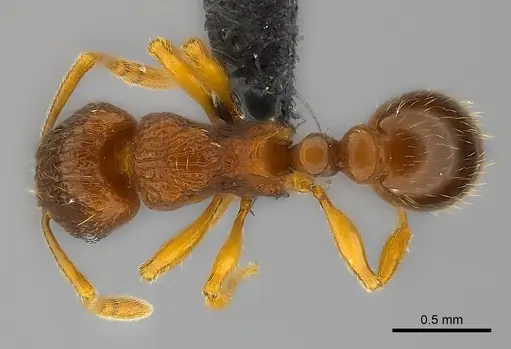
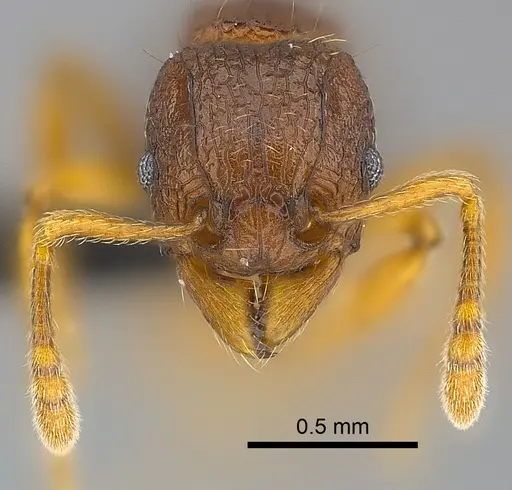
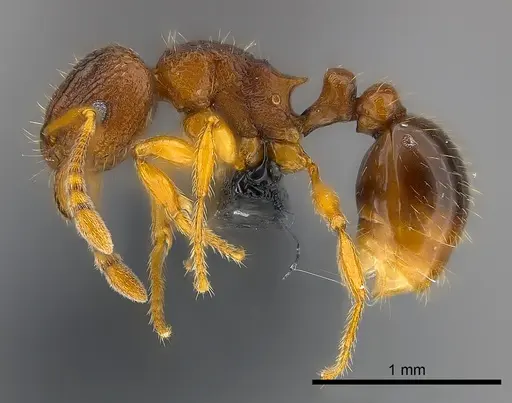
CASENT0056338
View on AntWeb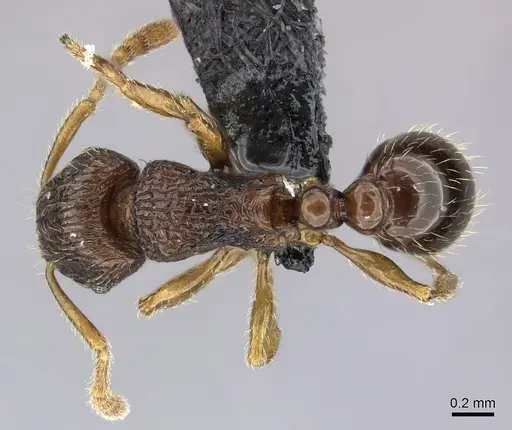
Literature
Loading distribution map...Loading products...