
Tetramorium rhodium
- Sci. Name
- Tetramorium rhodium
- Tribe
- Crematogastrini
- Subfamily
- Myrmicinae
- Author
- Emery, 1924
- Distribution
- Found in 1 countries
Introduction
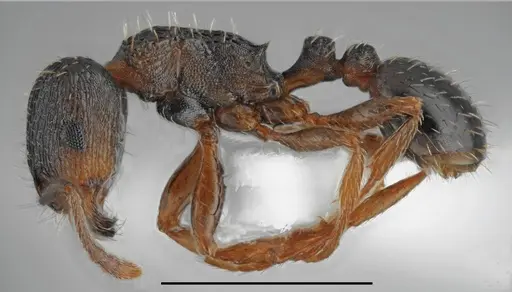
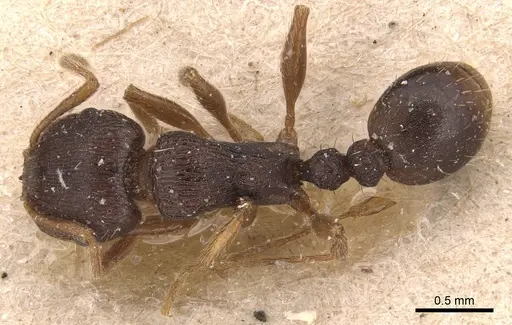
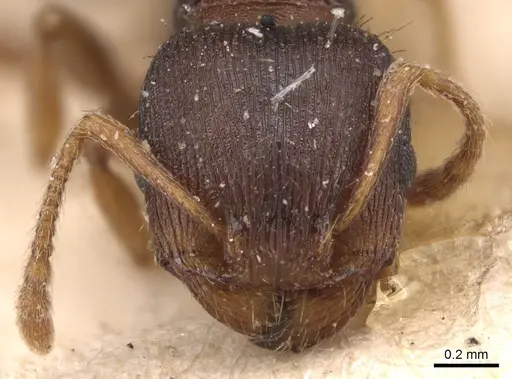
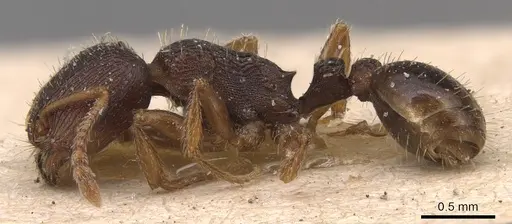
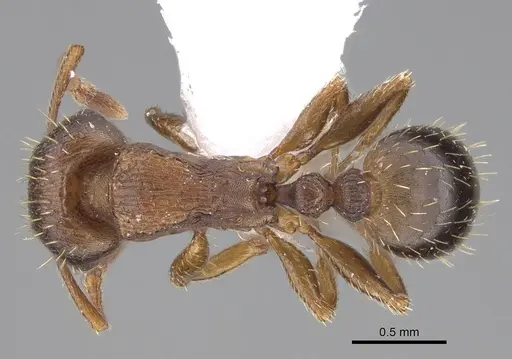
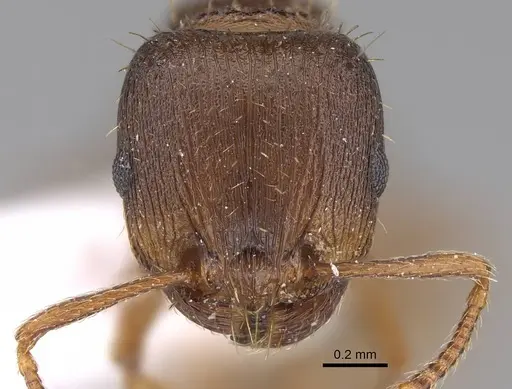
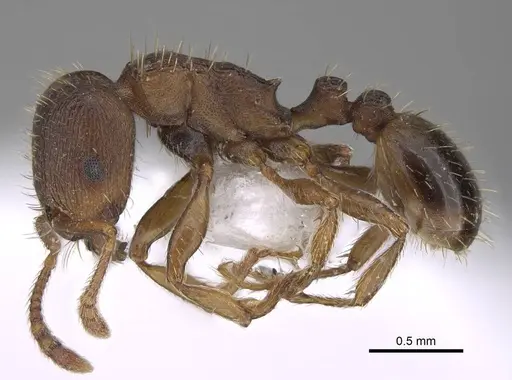
Tetramorium rhodium is a dark ant from the eastern Mediterranean. Workers are black all over, with a square head, small eyes, and a cubic petiolar node . They lack the psammophore (a basket of hairs for carrying sand) that some related species have, and have very short antenna scapes . The species was first described from Rhodes, Greece, and is also found in Cyprus and western Turkey . Nothing is known about its biology, including colony founding, queen and male castes, or natural behavior . It belongs to the Tetramorium chefketi complex, a group of closely related species that were only recently sorted out through taxonomic revision .
Quick Summary
- Difficulty: Medium
- Origin & Habitat: Eastern Mediterranean: Rhodes (Greece, Dodecanese), Cyprus, and western Turkey (Izmir, Denizli provinces) [2][3]. Also recorded from Lesbos (East Aegean Islands) and Greek Thrace [5][3]. Inhabits warm, dry Mediterranean habitats, likely ground-nesting.
- Colony Type: Unknown, only the worker caste has been documented. The gyne (queen) and males have never been described, so colony structure is unconfirmed [1][4].
- Size & Growth:
- Queen: Unknown, queens have not been described [1]
- Worker: Size data unavailable, only cephalic measurements (head size around 0.8 mm) are known from taxonomic studies [1]
- Colony: Unknown, no data on colony size for this species
- Growth: Moderate, estimated from related Tetramorium species
- Development: 6-10 weeks at optimal temperature (estimated from related Tetramorium, unconfirmed) (Development time is unconfirmed for Tetramorium rhodium. The estimate is based on genus-level patterns for similar Mediterranean species.)
- Antkeeping:
- Temperature: Likely needs warm temperatures typical of Mediterranean origin, aim for 22-26°C during active season, but this is inferred from genus patterns (no specific data). Provide a gradient so workers can choose.
- Humidity: Keep nest substrate moderately moist but well-draining. Allow top layer to dry slightly between waterings. Avoid waterlogging, these are dryland ants. Inferred from habitat.
- Diapause: Likely required, Mediterranean origin suggests winter rest. Reduce temperature to 10-15°C for 8-12 weeks during winter (estimated, unconfirmed for this species).
- Nesting: Ground-nesting species. In captivity, use Y-tong (AAC), plaster, or naturalistic setups with sandy-loam substrate. Provide at least 5-10 cm depth for tunneling. Inferred from typical Tetramorium nesting.
- Behavior: Workers are active foragers, forming trails when food is found. Based on the subfamily/tribe (Myrmicinae, Crematogastrini), they use a smear defense, they wipe venom onto enemies with a flattened stinger rather than stinging. Temperament is moderate, they may bite if disturbed. Their small size (under 5 mm) makes escape prevention critical, use fine mesh and barrier gel on all edges. Behavior is inferred from genus and subfamily patterns.
- Common Issues: no species-specific biology documented, all care is inferred from genus patterns., queen and male castes undescribed, colony structure and founding behavior unknown., small worker size requires reliable escape prevention (fine mesh, barrier gel)., winter diapause likely essential but unconfirmed, risky to skip., colony founding behavior unknown, queens may or may not be claustral.
Housing and Nest Setup
Tetramorium rhodium likely does well in standard ant setups. Y-tong (AAC) or plaster nests work well for ground-nesting species. You can also use a naturalistic setup with a deep container of sandy-loam soil (70% sand,30% soil) that allows tunneling. Provide at least 5-10 cm of substrate depth. Because workers are small (estimated under 5 mm) [1], make sure all connections and ventilation holes are sealed with fine mesh (0.5 mm or smaller). These ants probably need a drynesting setup, so keep the nest chamber mostly dry with just a small moist area for humidity regulation.
Feeding and Diet
Like most Tetramorium, Tetramorium rhodium likely accepts a standard ant diet. Offer small insects such as fruit flies, small mealworms, or pinhead crickets for protein 2-3 times per week. Remove uneaten prey after 24-48 hours. For carbohydrates, provide sugar water, honey, or commercial ant nectar. In the wild, they would collect honeydew from aphids, you can simulate this with sweet liquids. Watch what your colony prefers and adjust accordingly.
Temperature and Seasonal Care
Keep the nest at 22-26°C during the active season (spring through fall). Use a heating cable on one side to create a gradient. These ants come from Mediterranean climates, so they tolerate warmth but don't need extreme heat. Winter diapause is likely necessary, reduce temperature to 10-15°C for about 8-12 weeks (November to February). During hibernation, stop feeding and minimize disturbance. Return to warm temperatures gradually in spring.
Colony Founding
The founding behavior of Tetramorium rhodium has not been documented. It is unknown whether the queen is claustral (seals herself in) or semi-claustral (needs to forage). If you catch a queen, house her in a test tube setup with a water reservoir, keep her in darkness, and avoid disturbances. Expect a potentially long founding period, but success is uncertain because natural founding behavior is unstudied. Patience is essential.
Behavior and Temperament
Workers are active foragers that form trails when they find food. Their defense mechanism is venom smearing, they wipe venom onto enemies with a flattened stinger rather than stinging (based on subfamily/tribe). They are not particularly aggressive but will defend their nest if disturbed. The main concern is their small size, even workers under 5 mm can slip through tiny gaps. Apply fluon or barrier gel to outworld edges and use fine mesh on all ventilation. Check connections regularly. [1]
Frequently Asked Questions
How long does it take for Tetramorium rhodium to raise first workers?
This is unconfirmed for Tetramorium rhodium. Based on related Tetramorium species, expect 6-10 weeks from egg to first worker at warm temperatures (around 24-26°C), but this is an estimate. The founding queen may take 2-4 weeks to lay her first eggs.
Do Tetramorium rhodium ants sting?
They belong to the Myrmicinae subfamily, which includes species with functional stingers. However, their defense mechanism is venom smearing, not stinging, they wipe venom onto enemies with a flattened stinger (based on tribe Crematogastrini). The venom is mild and not medically significant.
What temperature do Tetramorium rhodium ants need?
Specific temperature data is unavailable. Based on Mediterranean origin, keep the nest at 22-26°C during the active season. Provide a gradient with a heating cable so workers can choose their preferred temperature.
How big do Tetramorium rhodium colonies get?
Colony size is unknown, no data exists for this species. Related Tetramorium can have several hundred to over a thousand workers, but this is speculation. Expect moderate growth.
Do Tetramorium rhodium ants need hibernation?
Likely yes. Their Mediterranean origin suggests a winter rest period. Reduce temperature to 10-15°C for 8-12 weeks during winter (estimated). This is recommended for long-term health, though unconfirmed for this species.
Can I keep multiple Tetramorium rhodium queens together?
This has not been documented. The queen caste is unknown, and colony structure is unconfirmed. Combining multiple queens is not recommended without evidence that they can coexist.
What do Tetramorium rhodium ants eat?
They likely accept standard ant foods: small insects (fruit flies, small mealworms, pinhead crickets) for protein, and sugar water or honey for carbohydrates. Feed protein 2-3 times a week and provide a constant sugar source.
Is Tetramorium rhodium good for beginners?
Difficulty is moderate. The main challenges are lack of species-specific care data (you must rely on genus-level inference), unknown colony founding behavior, and small size requiring good escape prevention. Suitable for intermediate keepers who are comfortable adapting care from related species.
When should I move my Tetramorium rhodium colony to a formicarium?
Wait until the colony has at least a few dozen workers and is actively foraging. This is based on general Tetramorium advice, moving too early stresses the colony. Because founding behavior is unconfirmed, watch for signs of established foraging before transferring.
Why are my Tetramorium rhodium ants dying?
Common causes include: stress from premature transfer, humidity extremes (too wet or too dry), temperature outside their preferred range, lack of winter diapause, or escape losses due to small size. Check each parameter. Wild-caught colonies may carry parasites. Since little is known about this species, troubleshooting requires careful observation.
Report an Issue
The current care sheet is based fully on literature. See inconsistencies, or something that's incorrect? Please , it will be resolved after review from an admin. Contributing to the blogs tab also helps providing information, to make us be able to further improve the caresheets. Thank you for your support!
References

This caresheet is licensed under CC BY-SA 4.0 .
Community Blogs
Literature
Loading distribution map...Loading products...