
Tetramorium regulare
- Sci. Name
- Tetramorium regulare
- Tribe
- Crematogastrini
- Subfamily
- Myrmicinae
- Author
- Bolton, 1980
- Distribution
- Found in 1 countries
Introduction
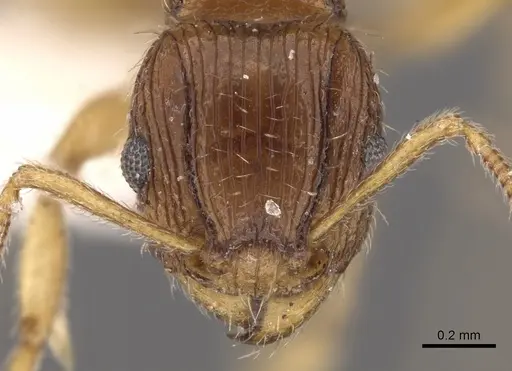
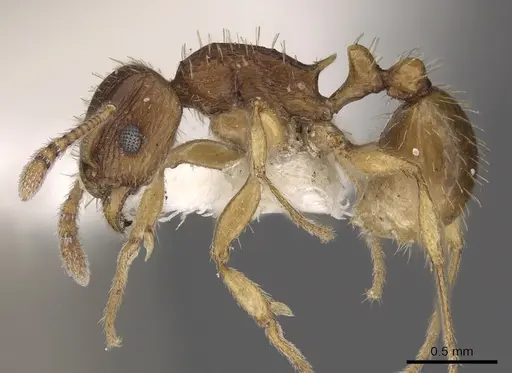
Tetramorium regulare is a small, yellowish-brown ant native to South Africa's fynbos ecosystem. Workers are compact, measuring 3.0-3.6 mm in total length, and belong to the widespread Tetramorium genus . They are closely related to Tetramorium grassii but have stout, blunt body hairs rather than long, pointed ones. Their head sculpture is sharply defined and very regular, which gives the species its name . These ants live in fynbos and pine-native scrubland, nesting under rocks in the ground. Most collections come from pitfall traps or litter samples, showing they are ground-nesting and prefer shaded, protected spots . They have also been recorded in Western Cape vineyards . While not common in captivity, their small size and peaceful nature make them an interesting species for keepers wanting something different from more typical Tetramorium.
Quick Summary
- Difficulty: Medium
- Origin & Habitat: South Africa (Cape Province, Grahamstown area). Inhabits fynbos vegetation and pine‑native scrub, typically nesting under rocks in ground nests [1]. Also recorded in Western Cape vineyards [2].
- Colony Type: Colony structure is unconfirmed. Based on typical Tetramorium patterns, likely single‑queen (monogyne) colonies, though this has not been directly documented for this species.
- Size & Growth:
- Queen: Size data unavailable, no queen measurements are documented for this species.
- Worker: 3.0-3.6 mm [1]
- Colony: Unknown, no colony size data available for this species.
- Growth: Moderate, estimated based on genus patterns
- Development: Estimated 6-8 weeks based on typical Tetramorium development at warm temperatures. No specific data available for this species. (Development time is estimated from genus‑level data since species‑specific research is lacking.)
- Antkeeping:
- Temperature: Keep at typical indoor temperatures, around 20-25 °C. Their native fynbos habitat has moderate temperatures, so avoid extremes. A gentle temperature gradient can help ants regulate themselves [1].
- Humidity: Keep the nest substrate slightly moist but not waterlogged. They nest under rocks in the ground, where soil moisture is moderate. Aim for a moisture gradient so ants can choose their preferred zone [1].
- Diapause: Likely required. South Africa experiences seasonal temperature changes. Reduce to 10-15 °C for 2-3 months during Southern Hemisphere winter (roughly June-August). Observe colony activity, exact duration is not confirmed.
- Nesting: Y‑tong (AAC) nests with narrow chambers work well for their small size. Test‑tube setups mimic the dark, humid conditions under rocks. A naturalistic setup with a flat stone on top of soil also replicates their natural habitat [1].
- Behavior: Generally docile and non‑aggressive. Workers are active foragers but pose no sting danger to keepers [1]. They use a defence mechanism typical of Crematogastrini: a modified, flattened stinger that wipes venom onto enemies rather than piercing flesh. Because of their small size (3-4 mm), escape prevention is critical, use fine mesh (at least 0.5 mm) and seal all connections.
- Common Issues: small size makes escape prevention critical, they can squeeze through tiny gaps, humidity management is important, too wet causes mold, too dry causes desiccation, winter diapause is likely required but timing differs from Northern Hemisphere species, limited species‑specific care information means keepers must adapt from related species
Housing and Nest Setup
For these small ants, a Y‑tong (AAC) nest with narrow chambers works excellently. The chambers should be scaled to their 3-4 mm worker size. You can also use test‑tube setups for founding colonies, which mimic the dark, humid conditions they prefer under rocks in the wild. A naturalistic setup with a flat stone on top of soil can work well too, this replicates their natural habitat of nesting under stones in fynbos [1]. Whatever nest type you choose, ensure it has a water reservoir to maintain humidity without flooding. The outworld should be simple with easy access for feeding. Because of their small size, use a test‑tube bridge or fluon barrier to prevent escapes.
Feeding and Diet
Tetramorium regulare is likely omnivorous, typical of the genus. Offer protein sources like small insects (fruit flies, pinhead crickets, mealworms) and sugar sources (honey water, sugar water). In the wild, they probably forage for small arthropods and tend aphids for honeydew. Feed protein 2-3 times per week and keep a constant sugar source available. Remove uneaten prey after 24 hours to prevent mold. Their small size means prey items should be appropriately sized, nothing larger than their head width.
Temperature and Seasonal Care
Maintain temperatures between 20-25 °C for optimal colony development. They come from South Africa’s temperate fynbos region, which has moderate year‑round temperatures. During the Southern Hemisphere winter (roughly June-August), reduce temperatures to 10-15 °C to provide a diapause period. This is important for colony health and likely triggers reproductive cycles. If your ants show reduced activity in winter, this is normal, do not try to force them to stay active. A heating cable on one side of the nest can create a temperature gradient, allowing ants to self‑regulate [1].
Behavior and Colony Dynamics
These ants are docile and not aggressive toward keepers. Workers are active foragers that will readily explore the outworld in search of food. They use a smear defence, a modified, flattened stinger that applies venom topically rather than stinging. Colonies likely grow gradually over several years, with the queen producing workers continuously after the founding stage. The small worker size (3.0-3.6 mm) means they can be easily overlooked but are fascinating to watch during foraging activities. They establish simple, functional colonies without complex defensive behaviours [1].
Frequently Asked Questions
How long does it take for Tetramorium regulare to produce first workers?
Estimated 6-8 weeks from egg to worker at optimal temperatures (20-25 °C). This is based on typical Tetramorium genus development patterns since species‑specific data is not available. The first workers (nanitics) will be smaller than mature workers.
Can I keep Tetramorium regulare in a test tube setup?
Yes, test tube setups work well for founding colonies. Keep the tube humid but not waterlogged, and ensure darkness during the founding stage. Once the colony reaches around 20 workers, consider moving to a proper nest setup like Y‑tong or a naturalistic setup.
Do Tetramorium regulare ants need hibernation?
Yes, they likely require a diapause period. Since they are from South Africa’s Southern Hemisphere climate, reduce temperatures to 10-15 °C for 2-3 months during winter (roughly June-August). This differs from Northern Hemisphere species that hibernate from October to March.
Are Tetramorium regulare ants aggressive or do they sting?
No, they are generally docile and not known to sting. They pose no danger to keepers. Their small size and non‑aggressive nature make them suitable for observation, but they are not commonly kept as pets [1].
What do Tetramorium regulare ants eat?
They are omnivorous. Offer small protein sources like fruit flies, small crickets, or mealworms 2-3 times per week, and provide a constant sugar source like honey water or sugar water. They likely also collect honeydew from aphids in the wild.
How big do Tetramorium regulare colonies get?
Colony size is not documented. Based on related species, they may reach several hundred to a few thousand workers over several years, but this is uncertain. Growth is moderate, expect gradual expansion rather than a rapid explosion.
Is Tetramorium regulare suitable for beginners?
This species is rated as Medium difficulty. While not difficult to keep, limited availability and species‑specific care information makes it better suited for keepers with some experience. Beginners may want to start with more common species like Tetramorium caespitum or Tetramorium bicarinatum.
Why are my Tetramorium regulare escaping?
Their small size (3.0-3.6 mm) means they can squeeze through tiny gaps. Use fine mesh (at least 0.5 mm), seal all connections with fluon, and ensure any gaps in the formicarium are smaller than the ants. Check connections between the nest and outworld especially carefully [1].
Can I keep multiple queens together?
Colony structure is unconfirmed for this species. Based on typical Tetramorium patterns, they likely form single‑queen colonies. Combining unrelated queens is not recommended as it has not been documented and could result in fighting.
What temperature range is best for Tetramorium regulare?
Keep them at 20-25 °C. This matches their native fynbos habitat in South Africa. A slight temperature gradient allows ants to regulate their own conditions. Avoid temperatures above 30 °C or below 18 °C for extended periods [1].
Report an Issue
The current care sheet is based fully on literature. See inconsistencies, or something that's incorrect? Please , it will be resolved after review from an admin. Contributing to the blogs tab also helps providing information, to make us be able to further improve the caresheets. Thank you for your support!
References

This caresheet is licensed under CC BY-SA 4.0 .
Community Blogs
CASENT0901187
View on AntWeb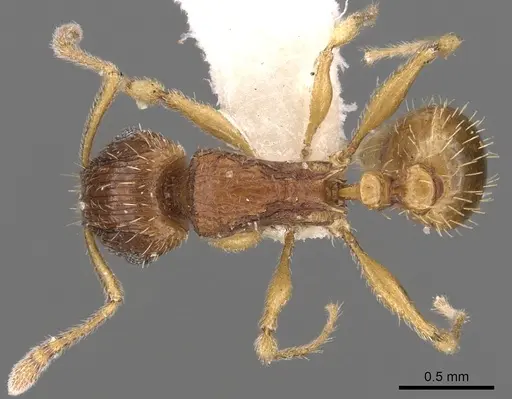
Literature
Loading distribution map...Loading products...