
Tetramorium pylacum
- Sci. Name
- Tetramorium pylacum
- Tribe
- Crematogastrini
- Subfamily
- Myrmicinae
- Author
- Bolton, 1980
- Distribution
- Found in 4 countries
Introduction
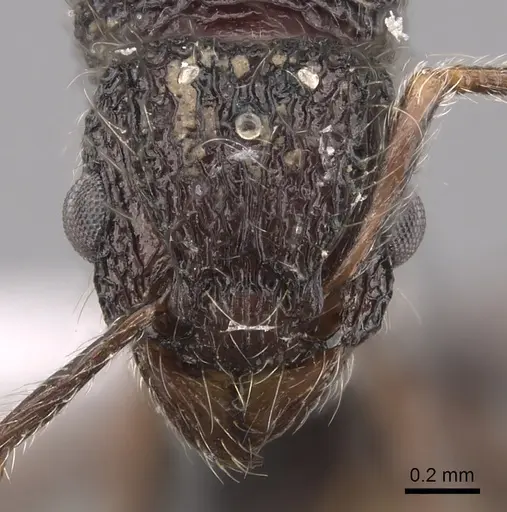
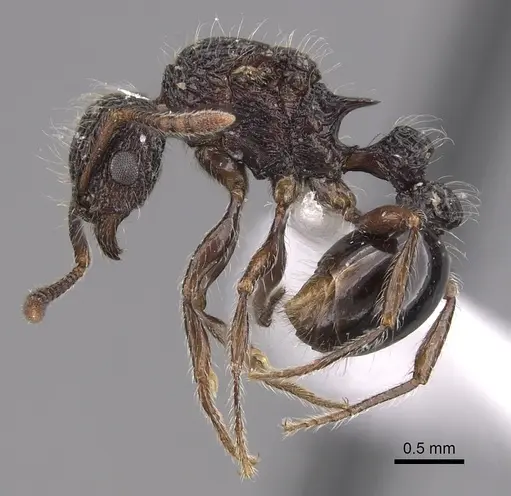
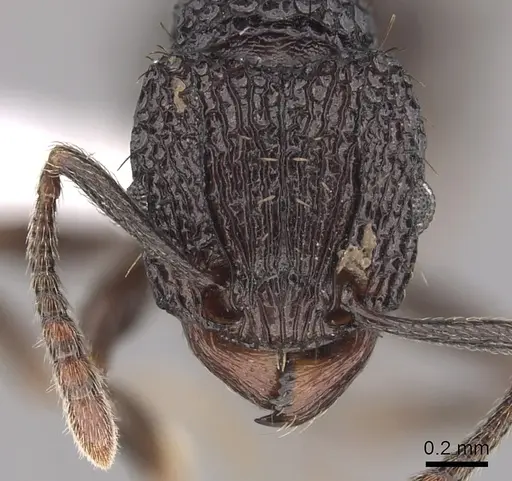
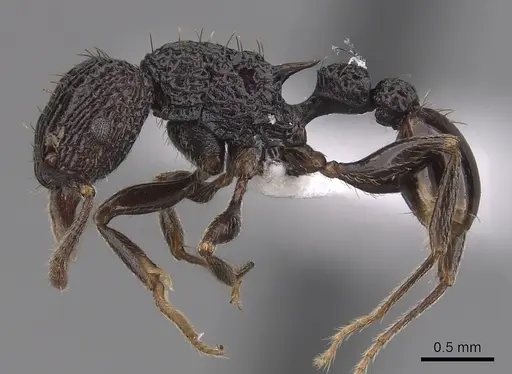
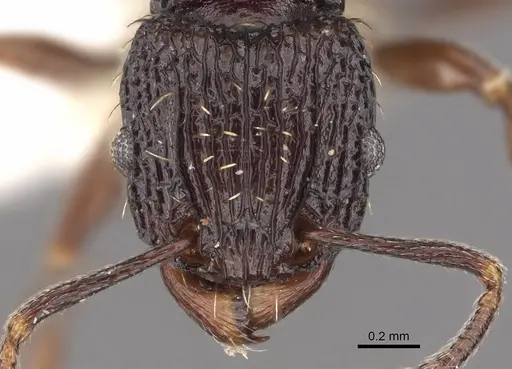
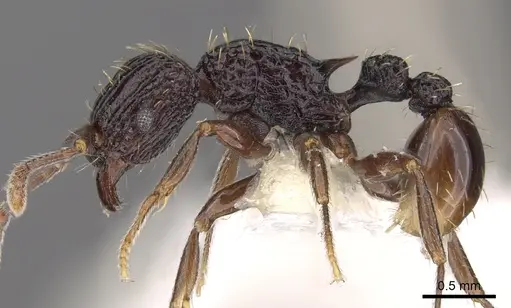
Tetramorium pylacum is a small rainforest ant, with workers measuring 3.3-3.7 mm . It is dark brown to black. The species is found across West Africa, including Ivory Coast, Cameroon, Central African Republic, and Ghana . It primarily inhabits leaf litter in tropical forests, but has also been collected as a ground forager and in urban green spaces . This species belongs to the flabellum-complex within the genus Tetramorium, characterized by relatively broad heads and shorter antennae compared to related species . Its primary defense mechanism is smearing venom, typical of the Crematogastrini tribe.
Quick Summary
- Difficulty: Hard
- Origin & Habitat: West African rainforest leaf litter. Found in Ivory Coast, Cameroon, Central African Republic, and Ghana. Also recorded in gardens and bathrooms in Cameroon [3] and in green spaces of Abidjan [2]. Collected via leaf litter sampling, pitfall traps, and hand collecting [1].
- Colony Type: Unknown, social structure has not been directly studied for this species.
- Size & Growth:
- Queen: Unknown, queen not described in available literature
- Worker: 3.3-3.7 mm [1]
- Colony: Unknown, no colony size data available
- Growth: Unknown, inferred moderate from tropical Tetramorium
- Development: 6-10 weeks (estimated from genus patterns) (Development time is unconfirmed, based on typical Tetramorium development at 24-28°C.)
- Antkeeping:
- Temperature: No species-specific data. Based on rainforest habitat, keep nest at 24-28°C. Avoid drops below 22°C. Use a heating cable on the top of the nest to create a gradient.
- Humidity: High, keep substrate consistently moist but not waterlogged. Provide a humidity gradient with a drier area in the outworld. Balance with ventilation to prevent mold.
- Diapause: No, tropical species, active year-round.
- Nesting: Leaf litter and soil in nature. In captivity, use a naturalistic setup with moist soil/leaf mix, or a Y-tong/plaster nest with small chambers. Ensure tight seals due to tiny worker size.
- Behavior: Generalist predators [4]. Workers are active ground foragers, likely using chemical trails. Escape risk is high due to small size, use fine mesh (
- Common Issues: escape prevention critical due to 3-4 mm workers, use fine mesh and tight-fitting lids, high humidity requirements may cause mold if ventilation is poor, balance with airflow, tropical species may struggle if temperatures drop below 22°C, monitor closely, very limited species-specific information, keepers must observe and adjust care based on colony behavior
Housing and Nest Setup
Since the species is poorly studied, base the setup on typical rainforest leaf‑litter ants. Use a naturalistic nest with a mix of soil, coconut fiber, and leaf litter. A Y‑tong (AAC) or plaster nest also works, as you can control moisture. The small worker size (3.3-3.7 mm) means chambers and passages should be narrow, use a test tube or small tank with fine‑grain substrate. All connections must be tight, apply fluon or a similar barrier to the rims. Good ventilation is important to prevent condensation and mold [1].
Feeding and Diet
Tetramorium pylacum is a generalist predator [4]. Offer small live prey such as fruit flies, pinhead crickets, or small mealworms 2-3 times per week. Provide a constant sugar source like honey water or sugar water. Remove uneaten protein after 24-48 hours to avoid mold. Young colonies may accept smaller prey items first.
Temperature and Humidity
Based on its rainforest habitat, maintain warm, stable temperatures (24-28°C) and high humidity. The substrate should feel damp but not waterlogged. Mist the nest when it starts to dry, but allow short drying periods to avoid stagnant humidity. Never place a heating pad under the nest, use a cable on top or side. Monitor for mold and adjust ventilation [1].
Colony Development
There is almost no published data on colony development. Founding behavior (claustral or semi‑claustral) is unknown. Based on genus patterns, a queen may seal herself in a chamber and raise the first workers on stored reserves. The first nanitics likely emerge after 6-10 weeks at 24-28°C, but this is unconfirmed. Colony growth rate and maximum size are not documented. Observe your colony closely and adjust care as needed. [1]
Behavior and Temperament
Workers are active ground foragers. They have been collected in leaf litter, as ground foragers, and in disturbed habitats such as gardens and green spaces [3][4][2]. As generalist predators, they hunt small arthropods. In captivity, they are not particularly aggressive but will defend the nest. Their small size means they can squeeze through tiny gaps, use fine mesh (
Frequently Asked Questions
How long does it take for Tetramorium pylacum to produce first workers?
There is no direct data. Based on typical Tetramorium development, the first workers probably appear 6-10 weeks after the queen starts laying, if kept at 24-28°C. This is an estimate.
What do Tetramorium pylacum ants eat?
They are generalist predators [4]. Offer small live prey (fruit flies, pinhead crickets, small mealworms) 2-3 times per week, plus honey water or sugar water constantly.
Do Tetramorium pylacum ants need hibernation?
No. As a tropical rainforest ant, it is active year-round. Keep temperatures stable and warm (24-28°C) without a cooling period.
Can I keep Tetramorium pylacum in a test tube setup?
Test tubes work well for a founding queen. Use a tube with a water reservoir (cotton ball) and a dark covering. Keep it at 24-28°C. Ensure the opening is sealed with fluon or similar, as the tiny workers can escape through small gaps.
Are Tetramorium pylacum ants aggressive or dangerous?
They are not dangerous to humans. Workers are small (3-4 mm) and do not have a painful sting. They may defend the nest if disturbed, but generally avoid conflict.
What temperature is best for Tetramorium pylacum?
Aim for 24-28°C based on its rainforest habitat. Avoid drops below 22°C. A heating cable on top of the nest helps maintain warmth.
How big do Tetramorium pylacum colonies get?
Maximum colony size is not documented. Based on genus patterns, established colonies might reach several hundred workers, but this is speculative.
Why are my Tetramorium pylacum ants escaping?
Their small size (3-4 mm) lets them squeeze through tiny gaps. Use fine mesh (
Do Tetramorium pylacum ants need high humidity?
Yes, as a rainforest leaf‑litter species, it needs high humidity. Keep the nest substrate consistently moist but not waterlogged. Ensure good airflow to prevent mold.
Is Tetramorium pylacum good for beginners?
No, this species is rated Hard. Very little is known about its specific requirements. Escape risk is high due to its tiny size, and maintaining proper tropical humidity and temperature can be challenging. Beginners should choose a more studied species.
Report an Issue
The current care sheet is based fully on literature. See inconsistencies, or something that's incorrect? Please , it will be resolved after review from an admin. Contributing to the blogs tab also helps providing information, to make us be able to further improve the caresheets. Thank you for your support!
References

This caresheet is licensed under CC BY-SA 4.0 .
Community Blogs
CASENT0418168
View on AntWeb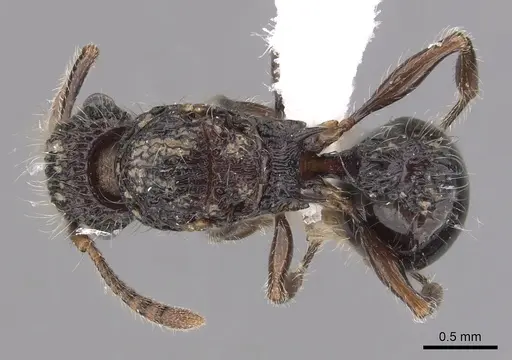
CASENT0425958
View on AntWeb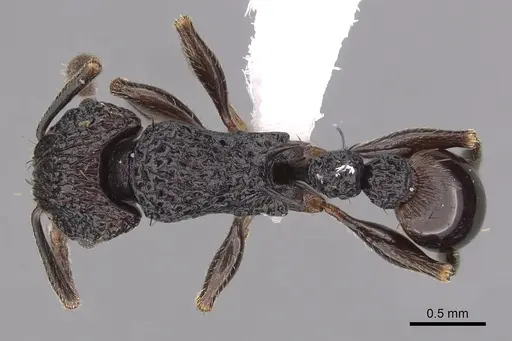
CASENT0845486
View on AntWeb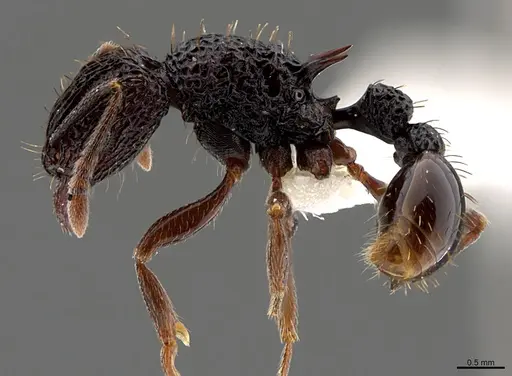
CASENT0901205
View on AntWeb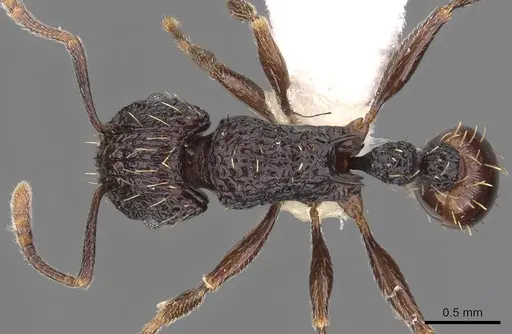
Literature
Loading distribution map...Loading products...