
Trifling Fierce Ant
Tetramorium pusillum
- Sci. Name
- Tetramorium pusillum
- Tribe
- Crematogastrini
- Subfamily
- Myrmicinae
- Author
- Emery, 1895
- Common Name
- Trifling Fierce Ant
- Distribution
- Found in 1 countries
Introduction
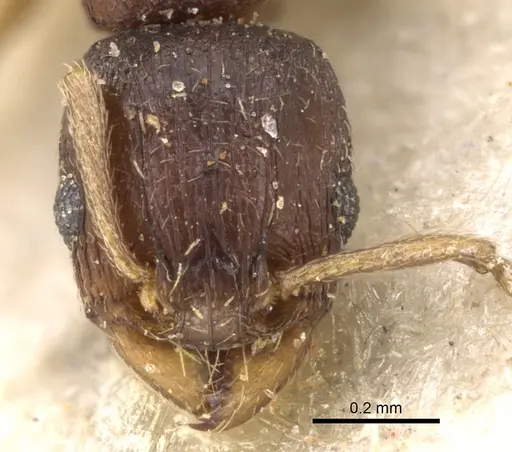
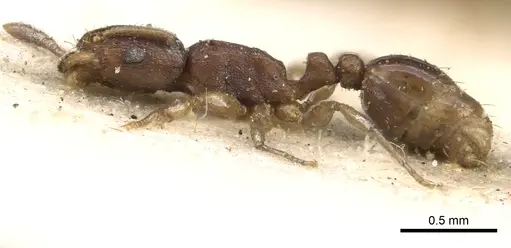
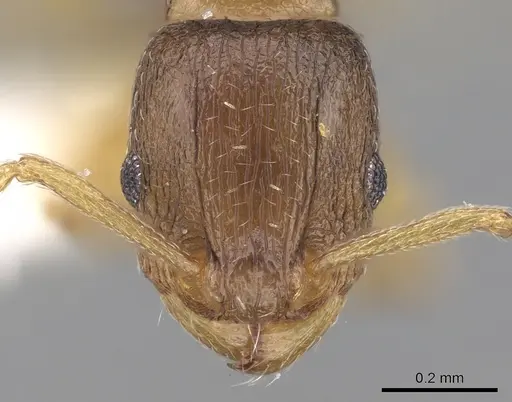
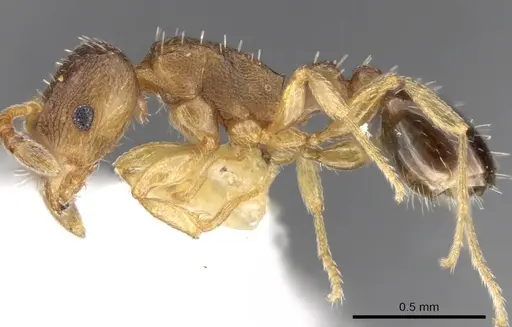
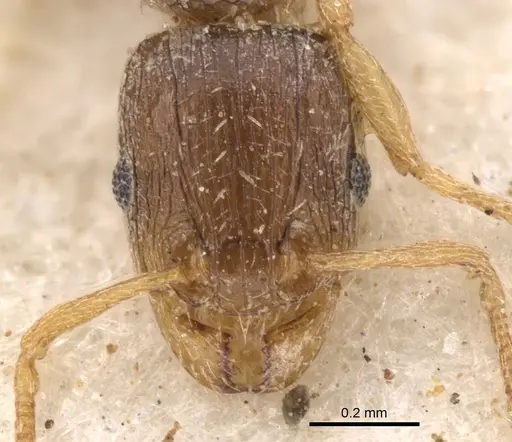
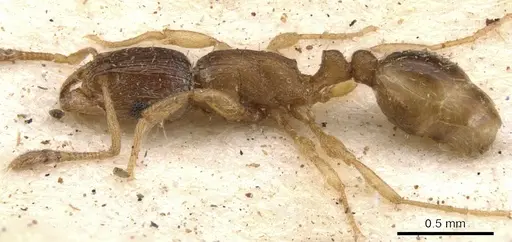
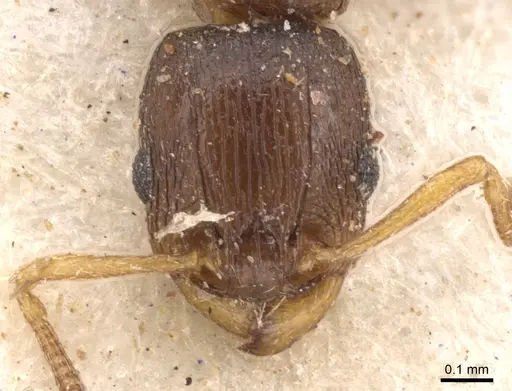
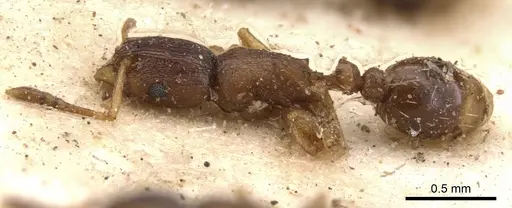
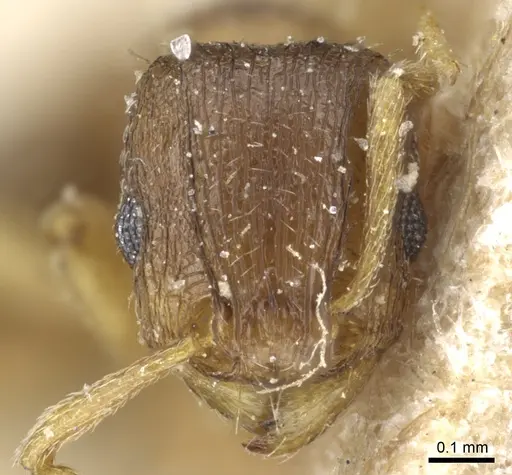
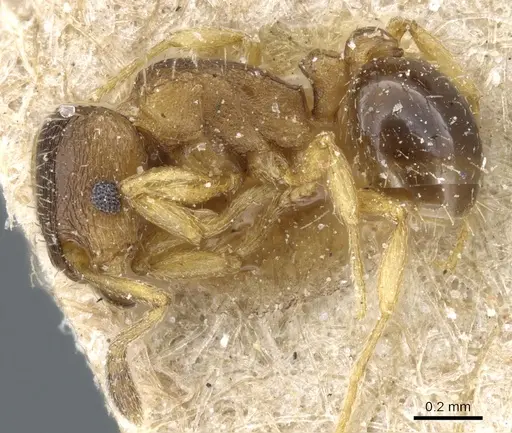
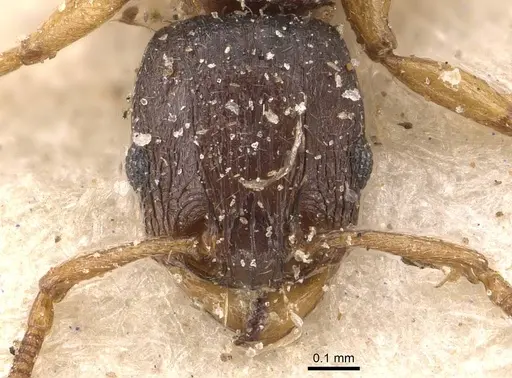
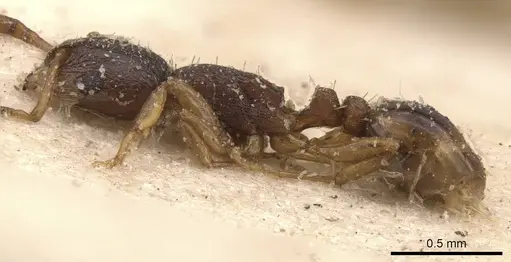
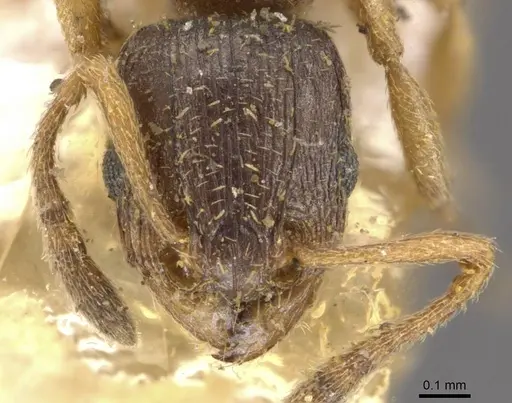
Tetramorium pusillum is a tiny dark brown to blackish ant native to South Africa's fynbos region. Workers measure just 2.1–2.3 mm, making them one of the smaller Tetramorium species . They have smooth, unsculptured mandibles and a pair of minute teeth on their propodeum. This species belongs to the Tetramorium simillimum species group and was originally described by Emery in 1895 . These ants are ground-nesters commonly found beneath rocks in fynbos vegetation. They construct simple nests with neat round entrances in the top 4 cm of soil, often near grass and sedges . Their colonies are opportunistic foragers that use a broad range of food sources rather than relying solely on honeydew . This adaptability makes them an interesting species for antkeepers, though their tiny size requires careful escape-proofing.
Quick Summary
- Difficulty: Easy
- Origin & Habitat: South Africa, specifically the Western Cape region and fynbos biome. These ants nest in soil under rocks in open areas with nearby grass and sedges [1].
- Colony Type: Unconfirmed – likely monogyne (single queen) based on typical Tetramorium patterns, but no specific data for this species.
- Size & Growth:
- Queen: Size data unavailable – no published measurements exist.
- Worker: 2.1–2.3 mm total length [1]
- Colony: Unknown – maximum colony size has not been documented.
- Growth: Moderate (inferred from related Tetramorium species, but unconfirmed)
- Development: Estimated 6–10 weeks at optimal temperature based on related Tetramorium species – no direct data for T. pusillum. (Development timeline is an estimate and has not been confirmed for this species.)
- Antkeeping:
- Temperature: Keep at room temperature (18–24°C). Western Cape has a Mediterranean climate with mild winters. They tolerate cooler temperatures but prefer warmth. A gentle gradient with a heating cable on one side of the nest works well.
- Humidity: Moderate humidity. As ground-nesting ants from fynbos, they prefer slightly moist but not waterlogged substrate. Allow the nest substrate to dry partially between waterings.
- Diapause: Partial dormancy likely. Activity decreases between June–September in their native range (Southern Hemisphere winter) [2]. Consider reducing temperature to 12–15°C for 2–3 months during winter to simulate this natural slowdown.
- Nesting: Ground-nesting species that does well in naturalistic setups with soil or in Y-tong/plaster nests. They nest in the top 4 cm of soil in the wild, so shallow chambers work best [1]. Provide a moisture reservoir or regular misting to maintain substrate moisture.
- Behavior: These ants are opportunistic foragers with a broad diet – they collect honeydew, small insects, and various food sources rather than specializing [2]. They are not aggressive and typically flee when disturbed. Workers are tiny (2.1–2.3 mm), so escape prevention is critical – use fine mesh (≤0.7 mm) and tight-fitting lids. They are less active during winter months (June–September in Southern Hemisphere) [2].
- Common Issues: small size means escapes are likely without fine mesh barriers, colony growth may be slow – patience is required, winter dormancy is often needed but timing differs from Northern Hemisphere species, limited information means some care parameters are estimates rather than confirmed, test tube setups may dry out quickly – monitor moisture levels
Housing and Nest Setup
Tetramorium pusillum is a ground-nesting species that does well in naturalistic setups with a soil layer or in Y-tong/plaster nests designed for small ants. In the wild, they nest in the top 4 cm of soil, so shallow nest chambers work best [1]. Provide a moisture reservoir or regular misting to maintain substrate moisture – the soil should feel damp but not waterlogged.
For a naturalistic setup, use a container with 2–3 cm of dry or slightly moist substrate (sand/soil mix works well). Place flat stones or pieces of bark on the surface for them to nest under. They will also accept test tube setups if the cotton is kept moist, though you may need to add a small soil chamber connected to the test tube for them to feel secure.
Because of their tiny size (workers are only 2.1–2.3 mm), escape prevention is critical. Use fine mesh (at least 0.7 mm) on any ventilation holes and ensure all connections are tight. These ants can easily squeeze through gaps that would hold larger species.
Feeding and Diet
These ants are opportunistic foragers with a broad diet – they use a wider range of food sources compared to some specialized ant species [2]. In captivity, they will readily accept sugar water, honey, or diluted honey as an energy source.
For protein, offer small insects such as fruit flies, small mealworms, or cricket pieces. Given their tiny size, prey items should be appropriately sized – small springtails or pinhead crickets work well. They are not strict predators and will scavenge on small pieces of protein.
Feed them small amounts of sugar source constantly (a drop of honey water or sugar water on a tiny piece of cotton works well) and offer protein prey 2–3 times per week. Remove any uneaten prey after 24–48 hours to prevent mold. Adjust feeding frequency based on colony size and consumption rates.
Temperature and Seasonal Care
Keep Tetramorium pusillum at room temperature, ideally between 18–24°C. They originate from South Africa's Western Cape region, which has a Mediterranean climate – mild winters and warm, dry summers. They can tolerate cooler temperatures but grow best when kept warm.
A heating cable on one side of the nest can create a temperature gradient, allowing the ants to choose their preferred zone. If using a heating cable, place it on top of the nest (not underneath) to avoid drying out the substrate too quickly.
These ants show reduced activity during winter months (June–September in their native range, which is Southern Hemisphere winter) [2]. During this period, consider lowering temperatures to around 12–15°C for 2–3 months to simulate their natural seasonal cycle. Reduce feeding during this period but ensure water is always available.
Behavior and Colony Dynamics
Tetramorium pusillum workers are small, dark brown to blackish ants measuring just 2.1–2.3 mm [1]. They are not aggressive and will typically flee when their nest is disturbed rather than attack. Workers have smooth, unsculptured mandibles and carry short, stout hairs on their dorsal surfaces.
Colony structure (number of queens) has not been studied for this species. The queen has not been described in the literature – her size and founding behavior are unknown. In the wild, these ants are classified as opportunists – they occur in stressed or disturbed environments and are not restricted to pristine habitats [2]. This adaptability suggests they can handle some variation in captive conditions, making them suitable for beginners.
As a member of the subfamily Myrmicinae (tribe Crematogastrini), they possess a modified spatulate stinger used to smear venom onto enemies rather than piercing. However, given their tiny size, any sting would be negligible to humans.
Frequently Asked Questions
How long does it take for Tetramorium pusillum to produce first workers?
The exact timeline is not documented. Based on typical Tetramorium development patterns, expect around 6–10 weeks from egg to first worker at optimal temperature (around 20–24°C). Growth rate is moderate – patience is required during the founding stage.
Can I keep Tetramorium pusillum in a test tube?
Yes, test tube setups work well for founding colonies. Keep the cotton moist and consider adding a small soil chamber or piece of soil connected to the tube for them to nest in. Monitor moisture levels closely as small test tubes can dry out quickly.
Do Tetramorium pusillum ants sting?
As Myrmicinae, they have a functional stinger, but they use it to smear venom (smear defense) rather than stab. Given their tiny size (2.1–2.3 mm), any sting would be minimal and unlikely to cause more than mild irritation. They are not aggressive and typically flee when disturbed.
Are Tetramorium pusillum good for beginners?
Yes, they are considered an easy species to keep. They are opportunistic feeders (not picky about diet), tolerate a range of temperatures, and are not aggressive. Their main requirements are good escape prevention due to their small size and appropriate winter rest.
Do Tetramorium pusillum need hibernation?
They benefit from a cooler period during winter corresponding to their native Southern Hemisphere cycle. Reduce temperatures to 12–15°C for 2–3 months during winter (June–September if mimicking Southern Hemisphere seasons). This rest period supports colony health [2].
How big do Tetramorium pusillum colonies get?
Exact colony size is not documented, so we don't know the maximum. Based on similar small Tetramorium species, colonies might reach several hundred to over a thousand workers, but this is a guess. Growth is moderate – expect several months to a year to reach significant numbers.
What do Tetramorium pusillum eat?
They are opportunistic feeders with a broad diet [2]. Offer sugar sources (honey water, sugar water) constantly and protein (small insects like fruit flies, tiny mealworms) 2–3 times per week. They will scavenge and are not strict predators.
When should I move Tetramorium pusillum to a formicarium?
Move them when the test tube becomes crowded or the colony reaches around 50–100 workers. For naturalistic setups, you can keep them in the setup from the start. Ensure any formicarium has appropriately sized chambers for their tiny workers.
Why are my Tetramorium pusillum escaping?
Their small size (2.1–2.3 mm) means they can squeeze through tiny gaps. Use fine mesh (0.7 mm or smaller) on all ventilation, ensure lid seals are tight, and apply barrier tape (fluon) around the edges of the outworld. Check all connections and seams.
Can I keep multiple Tetramorium pusillum queens together?
This has not been documented. Based on typical Tetramorium behavior, single-queen colonies are most likely, but polygyny cannot be ruled out. Combining unrelated queens is not recommended as they may fight.
Report an Issue
The current care sheet is based fully on literature. See inconsistencies, or something that's incorrect? Please , it will be resolved after review from an admin. Contributing to the blogs tab also helps providing information, to make us be able to further improve the caresheets. Thank you for your support!
References

This caresheet is licensed under CC BY-SA 4.0 .
Community Blogs
CASENT0280862
View on AntWeb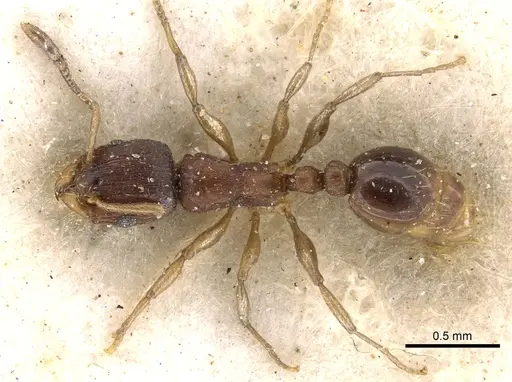
CASENT0280917
View on AntWeb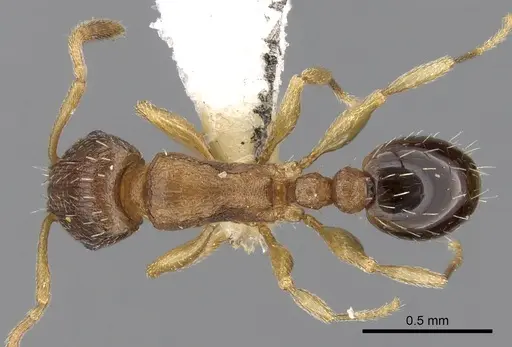
CASENT0901222
View on AntWeb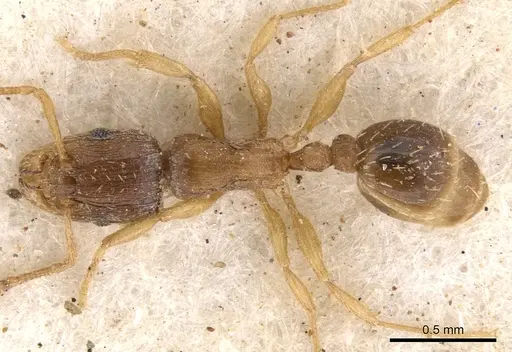
CASENT0901223
View on AntWeb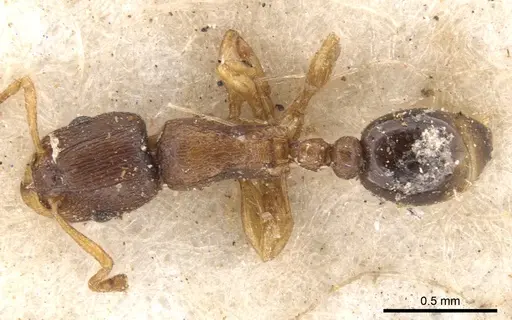
CASENT0904833
View on AntWeb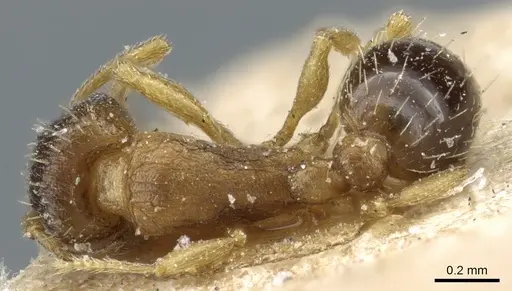
CASENT0909145
View on AntWeb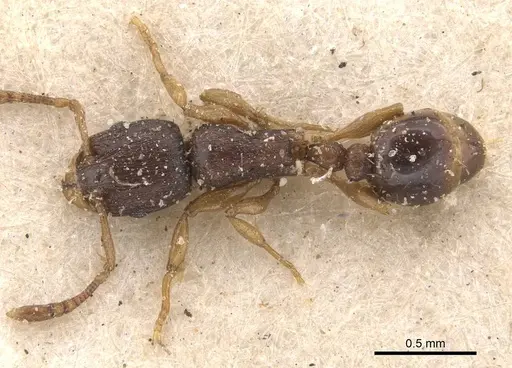
CASENT0909148
View on AntWeb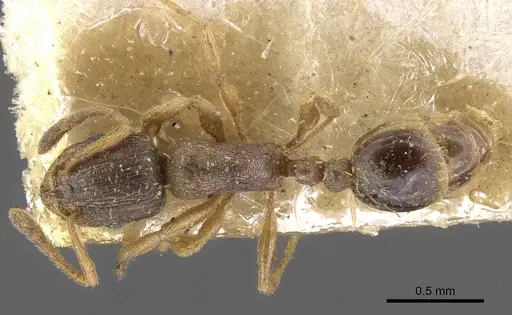
Literature
Loading distribution map...Loading products...