
Tetramorium pseudogladius
- Sci. Name
- Tetramorium pseudogladius
- Tribe
- Crematogastrini
- Subfamily
- Myrmicinae
- Author
- Hita Garcia & Fisher, 2014
- Distribution
- Found in 1 countries
Introduction
Tetramorium pseudogladius is a tiny, reddish-brown ant known only from a single worker collected in Madagascar's Parc National de Zahamena rainforest at 860m elevation . Its size is not well documented - no total body length has been reported, and only head and mesosoma measurements exist, which don't tell you how big the ant actually is. The species gets its name from its near-identical look to Tetramorium gladius - 'pseudogladius' means 'false gladius' in Greek . Unlike many related species, it lacks long standing hairs on its waist segments . This ant is currently known only from leaf litter samples in Madagascar's eastern rainforest, suggesting it forages on the forest floor . Because it was described in 2014 and only a single specimen has ever been found, there is no information about queens, colony size, or captive care. This makes it an expert-level species for experienced antkeepers who are comfortable working with poorly-documented species.
Quick Summary
- Difficulty: Expert
- Origin & Habitat: Parc National de Zahamena, Madagascar, lowland rainforest at 860m elevation [1][2]
- Colony Type: Unknown, only the worker caste has been described, colony structure unconfirmed
- Size & Growth:
- Queen: Unknown, queen has not been described [1]
- Worker: Size data unavailable, no total body length reported [1]
- Colony: Unknown, no colony data available
- Growth: Unknown, no development data available
- Development: Unknown, no direct measurements exist. Based on typical Tetramorium patterns in tropical rainforest species, estimate 4-8 weeks at optimal temperature (No species-specific development data exists. Related Tetramorium species in the schaufussii group typically complete development in 4-8 weeks under warm, humid conditions.)
- Antkeeping:
- Temperature: Estimated 22-26°C based on lowland rainforest origin, start in this range and observe colony activity
- Humidity: High humidity preferred, rainforest leaf litter environment suggests consistently moist substrate, not waterlogged
- Diapause: Unknown, tropical species from lowland rainforest may not require true diapause, but may slow during cooler periods
- Nesting: Likely prefers naturalistic setups with moist soil or leaf litter, test tube setups may work for founding colonies but provide humidity-retaining substrate
- Behavior: Behavior is unstudied. Based on genus-level patterns and tiny eyes, likely forages in leaf litter and upper soil layers. Escape prevention is critical due to tiny worker size, standard test tube setups require excellent barriers. For defense, this species probably uses a smearing venom (typical of Crematogastrini), though no specific data exists. Temperament is unknown but most Tetramorium are moderately aggressive when disturbed.
- Common Issues: tiny worker size means escapes are likely without fine mesh barriers, no published care information makes successful captive husbandry uncertain, only known from single specimen, wild colony structure unknown, queen biology completely unstudied, claustral vs semi-claustral founding unknown, tropical species may be sensitive to temperature fluctuations
Species Discovery and Identification
Tetramorium pseudogladius was described in 2014 by Hita Garcia and Fisher as part of a revision of Malagasy Tetramorium [1]. The holotype worker was collected in February 2009 during leaf litter sampling in Zahamena National Park [1]. The species name 'pseudogladius' combines Greek 'pseudes' (false) with 'gladius', referring to its near-identical appearance to Tetramorium gladius [1].
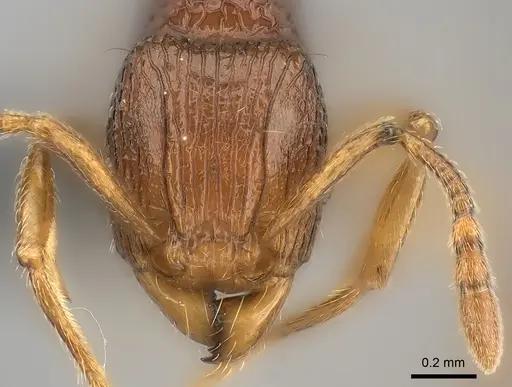
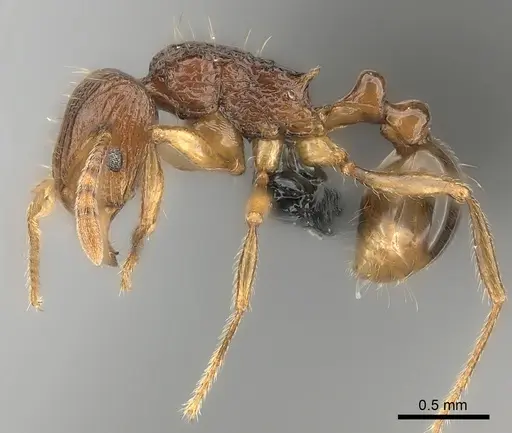
The most distinctive feature is its small eyes compared to other species in the T. schaufussii complex [1]. It also lacks long standing hairs on the waist segments and has relatively long antennal scapes [1]. These subtle differences require careful examination under a microscope to confirm identification.
Natural Habitat and Distribution
This species is known only from its type locality in Parc National de Zahamena, eastern Madagascar [1][2]. The single specimen was collected at 860m elevation in lowland rainforest, sifted from leaf litter (leaf mold and rotten wood) [1]. This places it in Madagascar's eastern rainforest belt, characterized by high humidity, stable warm temperatures, and dense vegetation.
The Zahamena region receives significant rainfall and maintains humid conditions year-round. As a leaf litter dweller, T. pseudogladius likely prefers microhabitats with consistent moisture, shade, and access to decaying organic matter [1].
Working with Poorly-Documented Species
Tetramorium pseudogladius presents unique challenges because only a single worker has ever been described. There is no published information on queens, males, colony size, founding behavior, or any aspect of its biology beyond worker morphology [1]. Keepers must rely on inference from related species and genus-level patterns.
For housing, start with a standard test tube setup with a water reservoir, but consider adding moist soil or leaf litter to provide humidity. Temperature should be warm (22-26°C) and stable. Because workers are tiny (under 1mm), escape prevention is critical, use fine mesh barriers. Feed small protein sources like fruit flies or springtails.
The biggest challenge is that no one has successfully kept this species in captivity yet, there is no established husbandry protocol. This makes it an expert-level species for experienced antkeepers comfortable with experimental documentation.
Related Species and Comparative Notes
Tetramorium pseudogladius belongs to the T. schaufussii species group and the T. schaufussii species complex [1]. This group contains numerous similar-looking species across Madagascar, many described in the 2014 revision [1].
The most similar species is Tetramorium gladius from the T. cognatum complex, the two are nearly identical in most measurements and would be easily confused except for T. pseudogladius having a few long standing hairs on its first gastral tergite and longer antennal scapes [1]. Other related species in the schaufussii complex all have larger eyes [1].
For keepers interested in similar but better-documented species, other Malagasy Tetramorium like T. schaufussii or T. severini might be more suitable starting points, as more collection data exists for them.
Frequently Asked Questions
How do I keep Tetramorium pseudogladius ants?
No established captive care protocol exists, this species has never been kept in captivity. Based on its rainforest leaf litter origin, provide high humidity (consistently moist substrate), warm stable temperatures (22-26°C), and a naturalistic setup with moist soil. Start with a test tube but be prepared to move to a naturalistic setup. Feed small live prey appropriate to their tiny size. This is an expert-level species requiring experimental care.
What do Tetramorium pseudogladius eat?
Diet is unstudied. Based on genus-level patterns, they likely forage for tiny arthropods and honeydew in leaf litter. Offer small live prey like fruit flies, springtails, or pinhead crickets. Acceptance of sugar sources is unknown, offer honey water occasionally. Their tiny worker size (under 1mm) means prey must be very small.
How big do Tetramorium pseudogladius colonies get?
Unknown, no colony data has been published. Only a single worker specimen exists. Related Tetramorium species in the schaufussii group typically form colonies of several hundred to a few thousand workers, but this is an estimate based on related species, not confirmed data.
Do Tetramorium pseudogladius ants sting?
Tetramorium belongs to the Myrmicinae subfamily, which includes species with functional stingers. This species likely uses a smearing venom (typical of Crematogastrini) rather than a piercing sting. Given their tiny size, any sting would be barely noticeable to humans. Handle with normal precautions but significant sting risk is unlikely.
Are Tetramorium pseudogladius good for beginners?
No, this species is not suitable for beginners. It is one of the least documented ant species with no established care protocols. Only the worker caste has been described, and there is no information on queen biology, colony founding, or captive requirements. This is an expert-level species.
Where is Tetramorium pseudogladius found?
This species is endemic to Madagascar, known only from Parc National de Zahamena at 860m elevation in lowland rainforest [1][2]. The eastern rainforest region of Madagascar is known for high biodiversity, and this species is one of many endemic Tetramorium found only on the island.
How do I identify Tetramorium pseudogladius?
Identification requires microscopic examination. The most distinctive feature is its small eyes compared to related species in the T. schaufussii complex [1]. It also lacks long standing hairs on waist segments and has relatively long antennal scapes [1]. Body color is uniformly reddish-orange with lighter yellowish legs and antennae [1].
Do Tetramorium pseudogladius need hibernation?
Unknown, likely not. As a tropical lowland rainforest species from eastern Madagascar, temperature fluctuations are minimal year-round, so true diapause is probably unnecessary. If keeping in captivity, maintain warm temperatures year-round rather than attempting hibernation.
Can I keep multiple Tetramorium pseudogladius queens together?
Unknown, queen biology has not been studied. No queen specimens have been described, so colony structure (monogyne vs polygyne) is completely unconfirmed. Do not attempt combining unrelated queens until more is known. This is another reason this species remains expert-level.
What is the egg to worker timeline for Tetramorium pseudogladius?
Unknown, no development data exists. Based on typical Tetramorium patterns for tropical rainforest species, estimate approximately 4-8 weeks from egg to worker at optimal temperature (around 24-26°C). This is a rough estimate only, actual development time may differ.
Report an Issue
The current care sheet is based fully on literature. See inconsistencies, or something that's incorrect? Please , it will be resolved after review from an admin. Contributing to the blogs tab also helps providing information, to make us be able to further improve the caresheets. Thank you for your support!
References

This caresheet is licensed under CC BY-SA 4.0 .
Community Blogs
CASENT0153605
View on AntWeb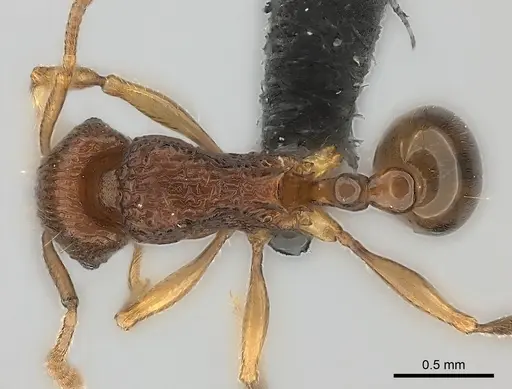
Literature
Loading distribution map...Loading products...