
Tetramorium proximum
- Sci. Name
- Tetramorium proximum
- Tribe
- Crematogastrini
- Subfamily
- Myrmicinae
- Author
- Bolton, 1979
- Distribution
- Found in 1 countries
Introduction
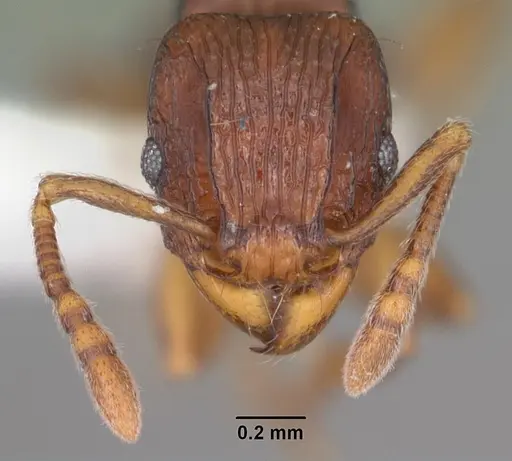
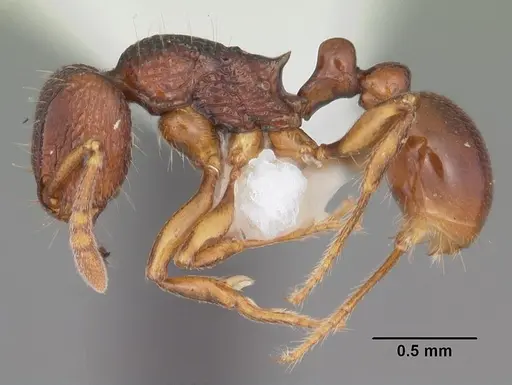
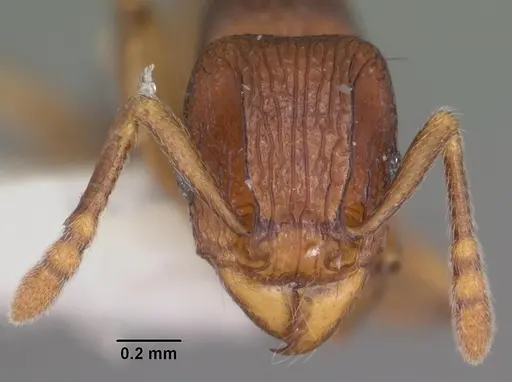
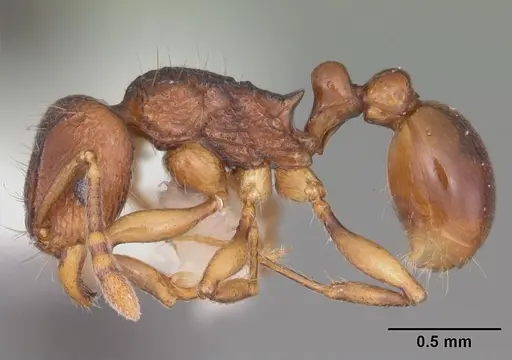
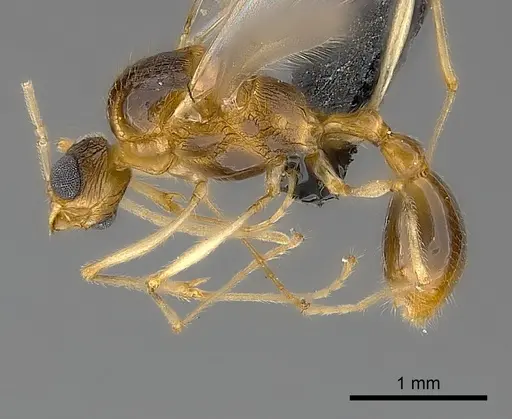
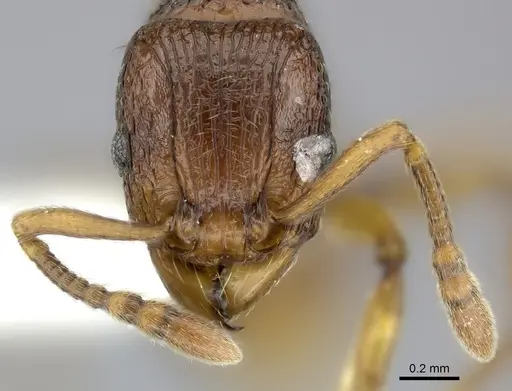
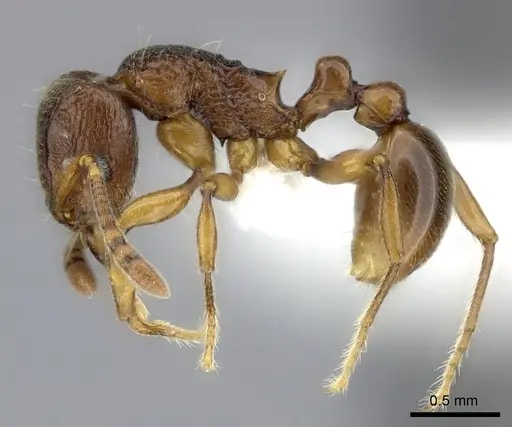
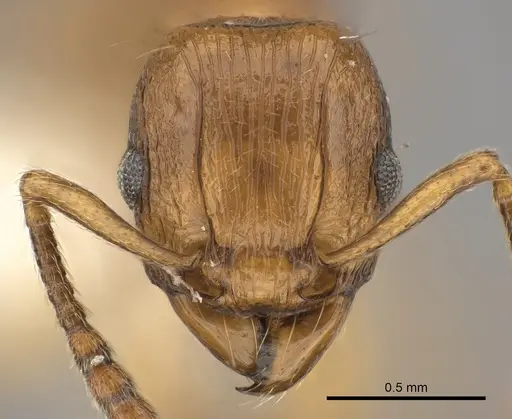
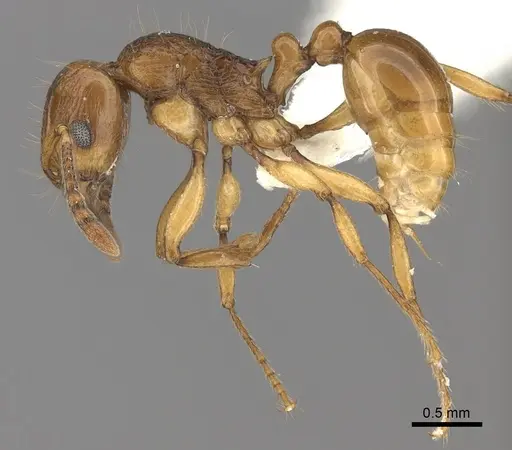
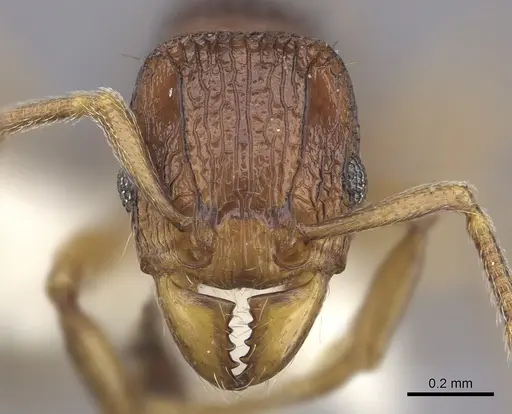
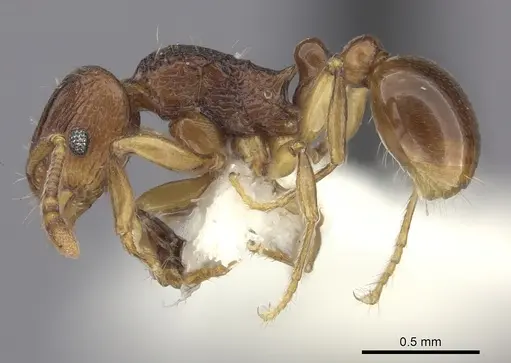
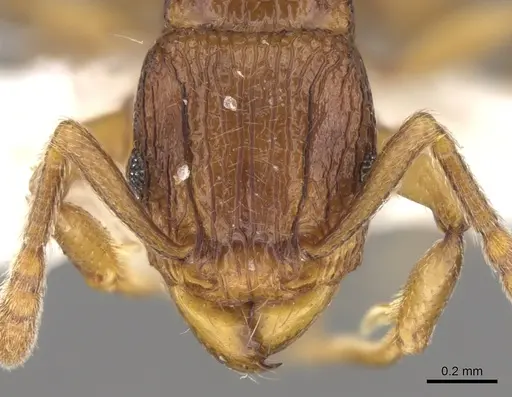
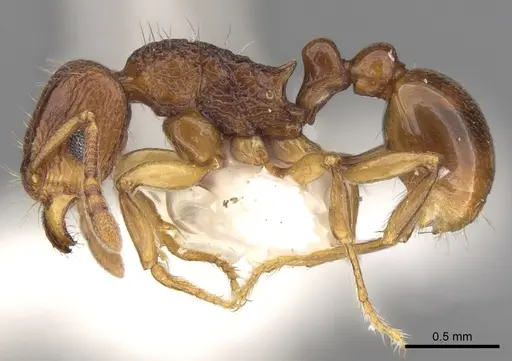
Tetramorium proximum is a small, ground-dwelling ant endemic to Madagascar. Workers have a head width of 0.65-0.81 mm and a mesosomal length of 0.92-1.07 mm . They have large eyes, strongly developed frontal carinae (raised ridges on the head), and a high, rounded petiolar node. The most distinguishing feature is the several pairs (usually five or six) of long, fine standing hairs on the top of the mesosoma, which separates them from look‑alikes like Tetramorium tenuinode (only two pairs) . Their color ranges from light brown to reddish brown. This species belongs to the Tetramorium cognatum species complex within the schaufussii group and is widely distributed across Madagascar's rainforests and montane rainforests from 25 to 1680 m elevation . These ants are part of Madagascar's hyper‑diverse Tetramorium fauna and show notable variation over their range. The main differences are in the length and density of the pubescence (fine, appressed hairs) on the first gastral tergite: populations in the southeast tend to have longer, denser pubescence, while those from the northeast, north, and western isolated forests have shorter, sparser hair. The petiolar node shape and the number of standing hairs can also vary .
Quick Summary
- Difficulty: Medium
- Origin & Habitat: Madagascar, found in rainforests and montane rainforests at elevations from 25 to 1680 m, including isolated humid forests in the west (Analavelona, Isalo, Ambohijanahary) [1].
- Colony Type: Unknown, no specific data on queen number. Typical Tetramorium species are monogyne (single queen), but this has not been confirmed for T. proximum.
- Size & Growth:
- Antkeeping:
- Temperature: Tropical species, keep warm year‑round, ideally 22-26°C. Avoid prolonged drops below 20°C [1]. Provide a temperature gradient in the nest.
- Humidity: High humidity required, keep the nest substrate consistently moist but not waterlogged. Misting and a water reservoir are recommended [1].
- Diapause: No, as a tropical species from Madagascar, it does not need hibernation. Maintain warm conditions throughout the year [1].
- Nesting: Naturalistic setups with moist substrate (soil/leaf litter mix) or a test‑tube with a cotton reservoir work well. They live in leaf litter and rotting wood in the wild. Y‑tong or plaster nests also provide good humidity control.
- Behavior: Workers actively forage on the forest floor in leaf litter. They are not particularly aggressive but will defend the nest. Due to their small size, escape risk is high, use Fluon or other barriers. They are ground‑nesting and do not climb extensively.
- Common Issues: mold growth requiring careful balance of ventilation and moisture, use a gradient to avoid stagnation., colony stagnation if temperatures drop too low, keep warm and stable., escape risk from small gaps, seal all openings thoroughly., humidity stress if substrate dries out, monitor moisture regularly., limited growth information, patience needed as development rates are unknown.
Housing and Nest Setup
T. proximum lives in rainforest leaf litter and rotting wood [1], so a naturalistic setup with a moist soil substrate works well. For the founding stage, a test tube with a water reservoir and cotton plug is ideal. As the colony grows, you can transfer them to a Y‑tong or plaster nest with narrow chambers that hold humidity well. Always provide a moisture gradient: keep one part of the nest moist and another drier. Cover the nest to keep it dark and secure. Escape prevention is critical, use Fluon on all openings and seal any small gaps.
Feeding and Diet
Generalist feeders, offer small protein sources (fruit flies, pinhead crickets, or tiny pieces of insect) twice a week, plus a constant sugar source like honey water or sugar water. Remove uneaten prey after 24-48 hours to prevent mold. Once the colony has more than 10 workers, maintain a steady supply of sugar water to support brood production.
Temperature and Seasonal Care
As a tropical species, T. proximum needs warm conditions year‑round. Keep the nest area at 22-26°C [1]. A heating cable on one side creates a temperature gradient. Do not cool them for hibernation, they are active all year. Avoid drafts and sudden temperature swings.
Colony Development and Growth
Specific colony development data for T. proximum is not published. Based on typical Tetramorium biology, the queen likely starts a colony alone and the first workers appear within a couple of months under good conditions. Growth rate is unconfirmed, but expect a moderate pace as the colony grows. Be patient during the vulnerable founding stage.
Handling and Observation
Workers are not aggressive and are easy to watch while foraging. Their small size means they can slip through tiny gaps, always use barriers. When the colony is small, avoid excessive disturbance. Once established, you can observe feeding without causing stress. They are most active in the evening.
Frequently Asked Questions
How long does it take for Tetramorium proximum to get first workers?
This has not been documented for T. proximum. From related Tetramorium species, the first workers may emerge in 6-10 weeks under favorable conditions, but this is only a guess.
Do Tetramorium proximum ants need hibernation?
No, as a tropical species from Madagascar, they do not require hibernation. Keep them warm year‑round [1].
What do Tetramorium proximum ants eat?
They accept small insects (fruit flies, etc.) and sugar water. Feed protein twice a week and keep sugar available constantly.
Are Tetramorium proximum good for beginners?
They are moderate difficulty. Their humidity and temperature requirements demand attention, so they are better suited to keepers with some experience.
How big do Tetramorium proximum colonies get?
The maximum colony size is not known. Similar Tetramorium species can reach several hundred workers under good conditions, but this is unconfirmed.
Can I keep multiple Tetramorium proximum queens together?
Since the colony structure is not confirmed, do not attempt to combine unrelated queens. They are assumed to be monogyne and would fight.
What size nest does Tetramorium proximum need?
Start with a test tube for the founding queen. Once the colony grows beyond 20 workers, move them to a small Y‑tong or plaster nest with appropriately sized chambers.
Do Tetramorium proximum ants sting?
As a member of Crematogastrini, they use a modified stinger to smear venom on attackers rather than injecting it. They can bite but are not dangerous to humans.
Why is my Tetramorium proximum colony not growing?
Check for: temperature below 22°C, insufficient protein/sugar, dry substrate, or excessive disturbance. Ensure the queen is still present and laying eggs.
What humidity level do Tetramorium proximum ants need?
High humidity, keep the substrate moist but not waterlogged. A water reservoir or regular misting helps achieve the moisture needed [1].
Report an Issue
The current care sheet is based fully on literature. See inconsistencies, or something that's incorrect? Please , it will be resolved after review from an admin. Contributing to the blogs tab also helps providing information, to make us be able to further improve the caresheets. Thank you for your support!
References

This caresheet is licensed under CC BY-SA 4.0 .
Community Blogs
CASENT0102341
View on AntWeb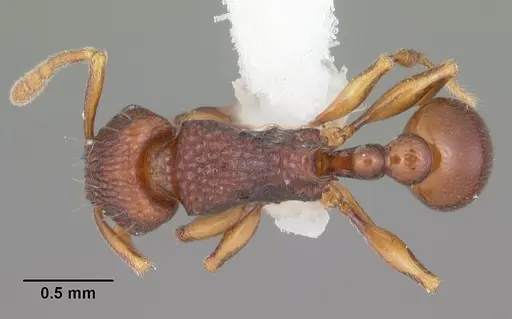
CASENT0102342
View on AntWeb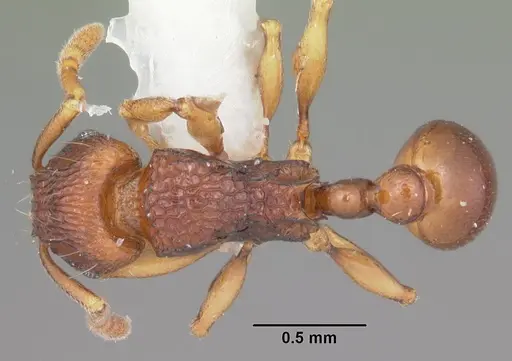
CASENT0151909
View on AntWeb
CASENT0189114
View on AntWeb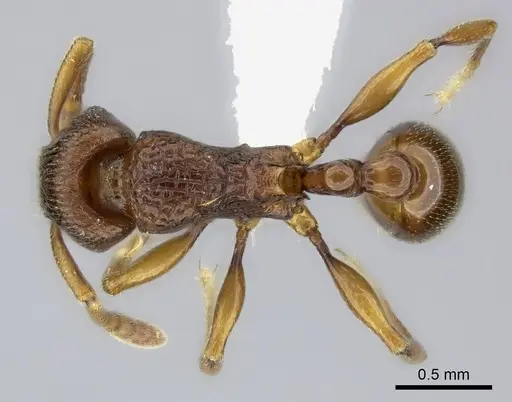
CASENT0189117
View on AntWeb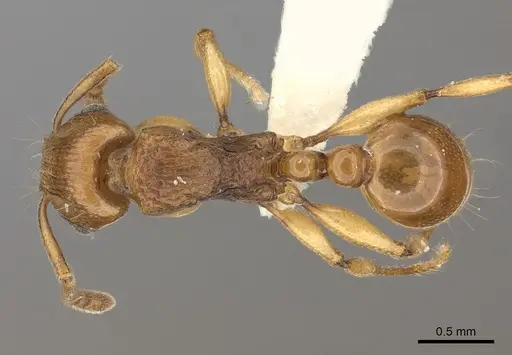
CASENT0235211
View on AntWeb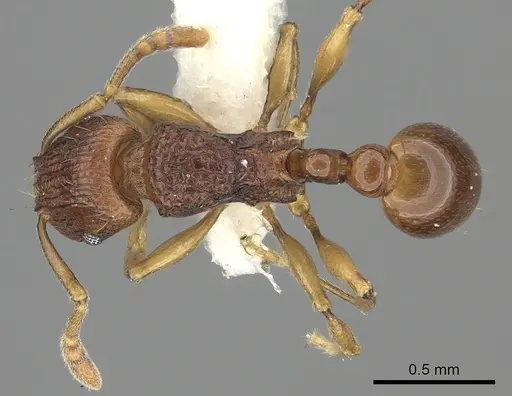
CASENT0906146
View on AntWeb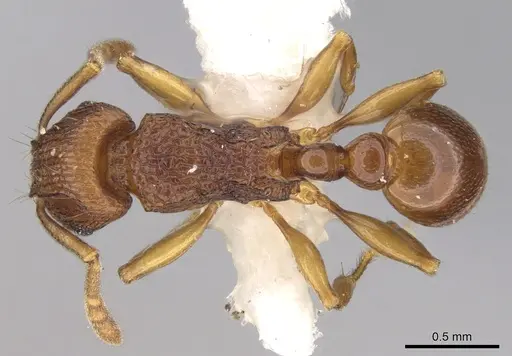
Literature
Loading distribution map...Loading products...