
Tetramorium popell
- Sci. Name
- Tetramorium popell
- Tribe
- Crematogastrini
- Subfamily
- Myrmicinae
- Author
- Hita Garcia & Fisher, 2012
- Distribution
- Found in 1 countries
Introduction
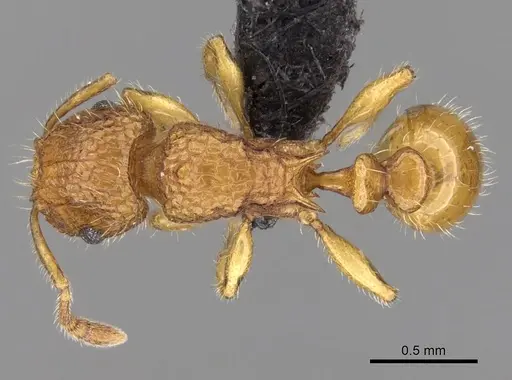
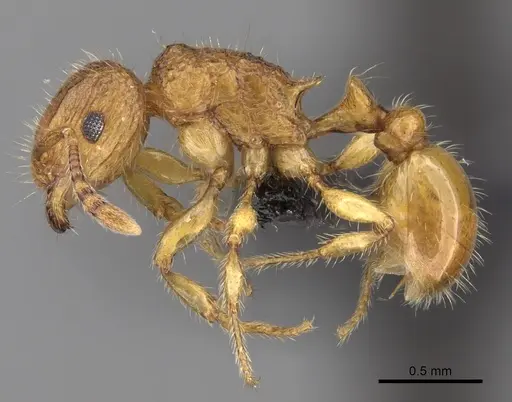
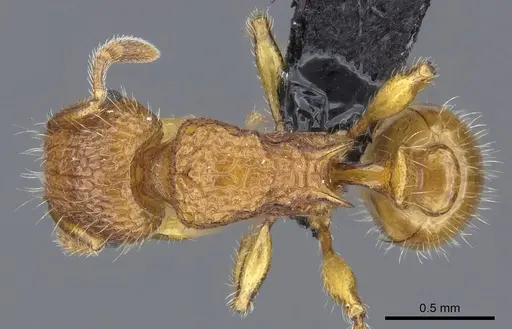
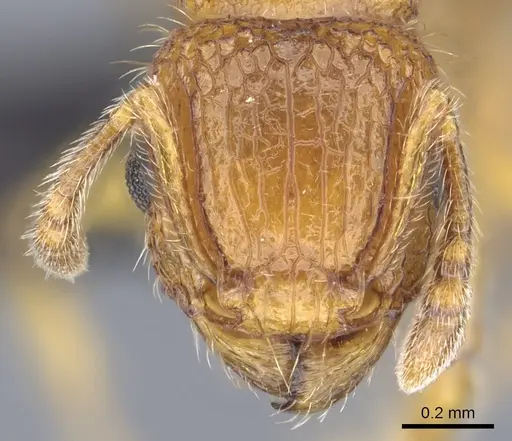
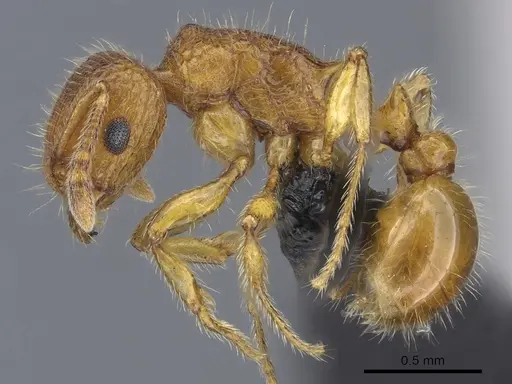
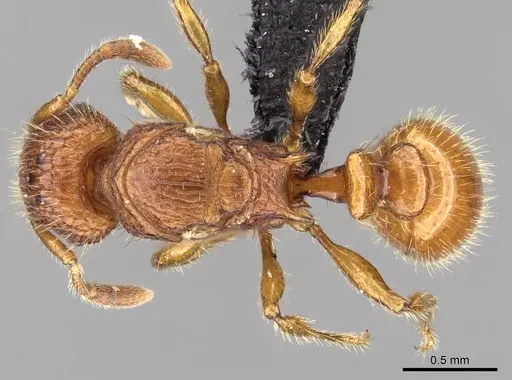
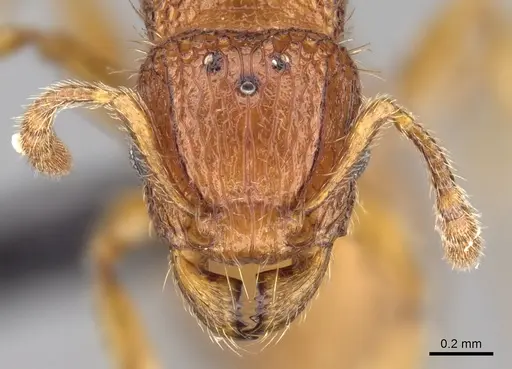
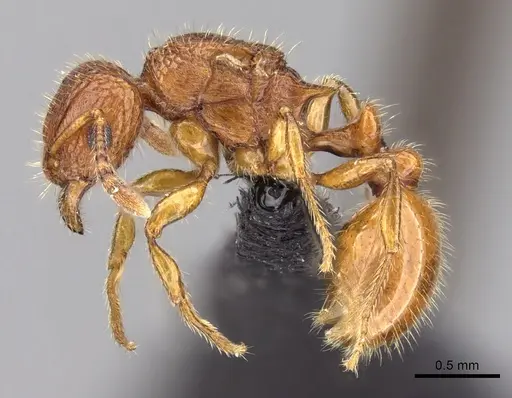
Tetramorium popell is a small ant species native to Madagascar. Workers are uniformly yellow to light brown and have a distinctive petiolar node that is highly compressed from front to back, appearing very thin when viewed from above . The species belongs to the Tetramorium bonibony species group and is recognized by its well-developed anterior face on the mesosoma and a distinct bump on the pronotum . This ant is widely distributed across southern Madagascar, particularly in the southeast, southwest, and southern Central Plateau regions, living in tropical dry forests, gallery forests, and spiny forests at elevations between 20-990 meters .
Quick Summary
- Difficulty: Medium
- Origin & Habitat: Southern Madagascar including southeast, southwest, and southern Central Plateau. Found in tropical dry forests, gallery forests, and spiny forests at 20-990 m elevation, in leaf litter, on the ground, and on low vegetation [1].
- Colony Type: Unknown, colony structure (single-queen or multi-queen) has not been documented in scientific literature
- Size & Growth:
- Queen: Not described in available literature, estimated based on Tetramorium genus, queens are likely 5-8 mm
- Worker: Total body length not recorded in literature. Workers are small, likely around 2-4 mm
- Colony: Unknown, no colony size data available
- Growth: Unknown, no development data available
- Development: Estimated 4-8 weeks at warm temperatures (around 26°C) based on typical Tetramorium patterns for tropical species (No specific development data exists for this species. Related Tetramorium species typically complete development in 4-8 weeks under warm conditions.)
- Antkeeping:
- Temperature: As a tropical species from Madagascar, keep at 24-28°C. Provide a gentle temperature gradient by heating one side of the nest. Avoid prolonged temperatures below 20°C
- Humidity: Moderate to dry. They inhabit dry forests and spiny forests, so allow the nest substrate to partially dry between waterings, with some damp areas available. Avoid constant saturation
- Diapause: Unlikely, as a tropical species from Madagascar, they probably do not require true hibernation. A slight cool period (around 18-20°C) during winter months may be beneficial but is not required
- Nesting: Ground-dwelling species collected from leaf litter and soil. Use a naturalistic setup with soil or a Y-tong/plaster nest with moderate moisture. They prefer dry to moderately humid conditions [1][2]
- Behavior: Workers are small and ground-dwelling, foraging in leaf litter and on the soil surface. As Myrmicinae (tribe Crematogastrini), they possess a modified spatulate stinger used to smear venom rather than inject it, this is a mild defense and they are not aggressive. Their tiny size makes escape prevention critical, use fine mesh barriers. They are likely generalist foragers, collecting small insects and honeydew like other Tetramorium species.
- Common Issues: tiny size makes escapes likely without fine mesh barriers, no available care information means you must observe colony behavior to guide care, humidity control is important, too wet can cause problems in their dry forest habitat, mild stinger present, handle with reasonable care though they are not aggressive, lack of colony data makes it difficult to predict growth rates or optimal conditions
Natural History and Distribution
Tetramorium popell is endemic to Madagascar, widely distributed across the southern regions. The species is especially common in the southeast, southwest, and southern parts of the Central Plateau [1]. It has been found less frequently in western Madagascar and only once in Central Madagascar. The species is completely absent from northern and eastern Madagascar, except for southeastern localities around the type locality at Andohahela [1]. This ant inhabits tropical dry forests, gallery forests, and spiny forests, with most specimens collected below 500 m elevation [1]. Workers have been sampled from leaf litter, the ground, and lower vegetation, confirming they are ground-dwelling ants that forage in these microhabitats [1].
Identification and Morphology
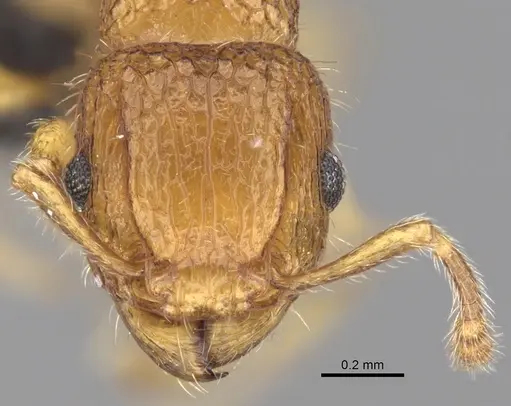
Workers of Tetramorium popell are small ants with a uniformly yellow to light brown body color, which helps distinguish them from other species in the Tetramorium bonibony group [1]. One of the most distinctive features is the highly compressed petiolar node, when viewed from above, the node appears very thin and transverse, being much wider than long [1]. The mesosoma has a well-developed anterior face with a distinct bump (anterodorsal protuberance) on the pronotum [1]. The antennal scapes are very short, not reaching the posterior head margin, and the eyes are comparatively large for the genus [1]. These morphological features are consistent across their entire range despite the species being widely distributed [1].
Housing and Nesting
Based on collection data (leaf litter, ground samples), Tetramorium popell is a ground-dwelling species that nests in soil and decaying organic material [1]. For captive care, use a naturalistic setup with a soil-based substrate, or a Y-tong (AAC) or plaster nest with appropriately sized chambers. The species is terricolous (ground-dwelling) and shows preference for dry to moderately humid conditions [2]. Keep the nest substrate with some damp areas but allow it to partially dry between waterings, avoid constant saturation. Because workers are tiny (under 1 mm body length), ensure your formicarium or test tube setup has no gaps that could allow escapes. A small outworld for foraging completes the setup.
Feeding and Diet
Like other Tetramorium species, these ants are likely generalist foragers that collect small insects, honeydew, and nectar. Offer small protein sources such as fruit flies, small mealworms, or other tiny arthropods. Sugar water or honey can be offered as an energy source, though acceptance may vary. Feed small amounts every few days and remove uneaten food to prevent mold. Since they are ground-dwelling foragers, place food on the substrate surface in the outworld rather than inside the nest.
Temperature and Seasonal Care
As a tropical species from Madagascar, Tetramorium popell prefers warm conditions. Maintain temperatures between 24-28°C in the nest area. Create a gentle temperature gradient by placing a heating cable on one side of the nest, allowing workers to move to warmer or cooler areas as needed. Since they come from a region with relatively stable year-round temperatures, avoid major fluctuations. A slight reduction during winter months (around 18-20°C) may be appropriate but is not required, these ants do not experience true hibernation in their tropical habitat. [1]
Frequently Asked Questions
How long does it take for Tetramorium popell to produce first workers?
The exact development timeline is unknown for this species as no research has been published on their colony development. Based on typical Tetramorium patterns for tropical species, expect approximately 4-8 weeks from egg to worker at warm temperatures (around 26°C). Monitor your colony and adjust conditions based on observed growth.
Can I keep Tetramorium popell in a test tube?
Yes, a test tube setup can work for founding colonies and small groups. Ensure the cotton is properly packed to prevent escapes, these are tiny ants that can squeeze through small gaps. Add a water reservoir but keep it moderate to avoid flooding. Once the colony grows beyond a small number of workers, consider moving to a small formicarium with a proper foraging area.
Do Tetramorium popell ants sting?
Yes, as a member of the subfamily Myrmicinae (tribe Crematogastrini), they possess a modified stinger that smears venom rather than injecting it. The sting is mild and they are not aggressive, only using it if directly threatened.
What temperature range is best for Tetramorium popell?
Keep them warm at 24-28°C. These are tropical ants from Madagascar and prefer consistent warmth. A slight gradient allowing workers to choose their preferred temperature is ideal. Avoid temperatures below 20°C for extended periods.
Are Tetramorium popell good for beginners?
This species is rated as medium difficulty. While not the most challenging, there is limited specific care information available since this species has not been widely kept. Expect to learn alongside your colony and adjust care based on their behavior. If you want a more documented species, consider more common Tetramorium species with established care guides.
How big do Tetramorium popell colonies get?
The maximum colony size is unknown, no scientific data exists on colony size for this species. Based on related Tetramorium species and their small worker size, colonies likely reach several hundred workers at most. Expect moderate growth.
Do they need hibernation or diapause?
Probably not, as a tropical species from Madagascar, they do not experience cold winters that would trigger true hibernation. A slight temperature reduction during winter months (around 18-20°C) may be appropriate but is not required. Avoid cool temperatures below 15°C.
What should I feed my Tetramorium popell colony?
Offer small protein sources like fruit flies, tiny mealworms, or small crickets. They likely accept sugar sources such as honey water or sugar water. Feed small amounts every few days and remove uneaten food promptly. As ground-dwelling ants, they forage on surfaces rather than in enclosed spaces.
Why are my Tetramorium popell escaping?
These are very small ants (under 1 mm) that can squeeze through tiny gaps. Check all connections, lid seals, and barrier edges. Apply fluon or similar barrier grease to edges. Ensure your formicarium has no cracks or gaps larger than a few hundredths of a millimeter. Fine mesh is essential for outworld barriers.
Can I keep multiple queens together?
The colony structure of this species is unknown, we don't know if they are single-queen (monogyne) or multi-queen (polygyne) in the wild. Without this information, combining unrelated queens is not recommended. If you obtain a founding queen, house her alone until workers emerge, then assess behavior.
Report an Issue
The current care sheet is based fully on literature. See inconsistencies, or something that's incorrect? Please , it will be resolved after review from an admin. Contributing to the blogs tab also helps providing information, to make us be able to further improve the caresheets. Thank you for your support!
References

This caresheet is licensed under CC BY-SA 4.0 .
Community Blogs
Literature
Loading distribution map...Loading products...