
Tetramorium plesiarum
- Sci. Name
- Tetramorium plesiarum
- Tribe
- Crematogastrini
- Subfamily
- Myrmicinae
- Author
- Bolton, 1979
- Distribution
- Found in 1 countries
Introduction
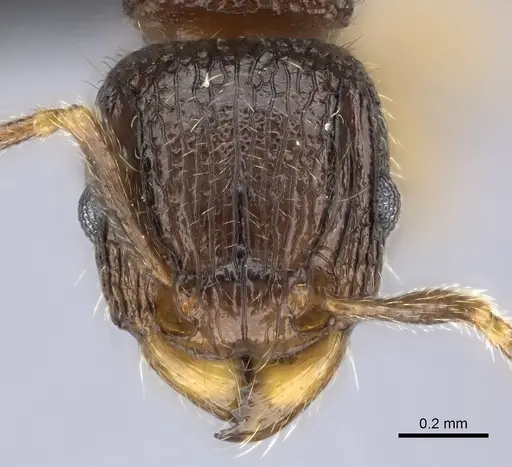
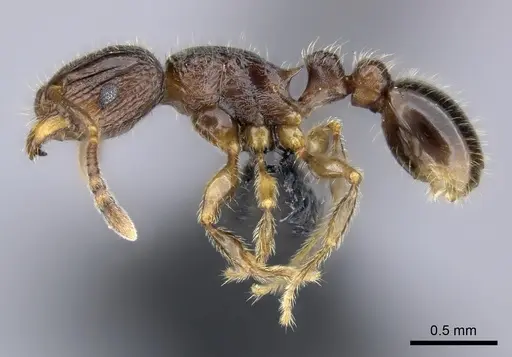
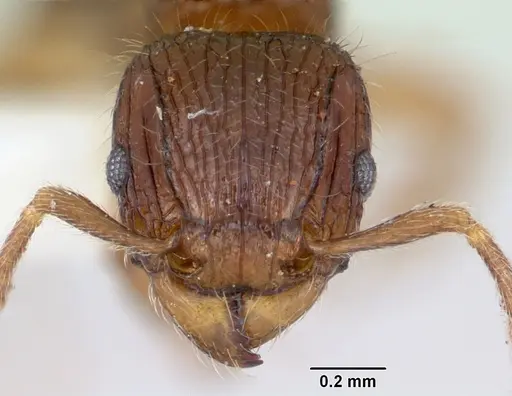
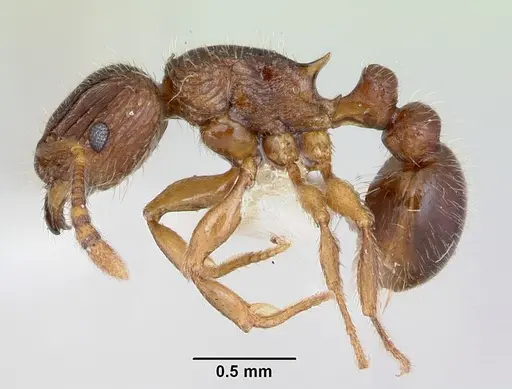
Tetramorium plesiarum is a small ant species endemic to Madagascar from the subfamily Myrmicinae. Worker size data is unavailable because no total length measurements have been published; only head width and mesosoma length are known . This species has a uniform brown body, moderately large eyes, and a high, nodiform petiolar node. It belongs to the T. plesiarum species group and is morphologically similar to Tetramorium bressleri, though it is smaller on average . This species is poorly known in the wild - fewer than 20 specimens have been recorded from all collections . It inhabits tropical dry forests, dry forests on tsingy (limestone), and gallery forests at elevations between 100 and 780 m in western and southeastern Madagascar . Being ground-active, it forages in leaf litter and forest floor debris. Its distribution is notably disjunctive, with scattered populations from Andohahela in the southeast through the Makay Mountains, Tsingy de Bemaraha, and Beanka to the Kelifely plateau and Namoroka in the west .
Quick Summary
- Difficulty: Medium
- Origin & Habitat: Endemic to Madagascar, specifically tropical dry forests, dry forests on tsingy (limestone), and gallery forests at elevations 100-780 m. Found in disjunctive populations from Andohahela in the southeast through the Makay Mountains, Tsingy de Bemaraha, Beanka, to the Kelifely plateau and Namoroka in western Madagascar [1].
- Colony Type: Unconfirmed, colony structure has not been documented. Most Tetramorium species are monogyne (single queen), but this has not been confirmed for Tetramorium plesiarum specifically.
- Size & Growth:
- Queen: size data unavailable [1]
- Worker: size data unavailable [1]
- Colony: Unknown, only known from fewer than 20 specimens total [1]
- Growth: Unknown, no development data available
- Development: Estimated 6-8 weeks based on typical Tetramorium genus patterns at 24-26°C (Development timeline is unconfirmed for this species. Estimates are based on related Tetramorium species.)
- Antkeeping:
- Temperature: Temperature requirements are unconfirmed. Based on its dry forest habitat, it likely prefers warm conditions (roughly 24-28°C). Provide a gentle heat gradient so workers can regulate their exposure. Avoid extreme heat.
- Humidity: Keep substrate lightly moist but allow some drying between waterings. This species comes from tropical dry forests, so it tolerates drier conditions than rainforest species. Avoid waterlogging.
- Diapause: Unknown, Madagascar species may have reduced activity periods rather than true hibernation. If the colony shows less activity during cooler months, a slight temperature reduction (5-8°C) might be tried, but this is speculative.
- Nesting: Y-tong (AAC) nests or plaster nests with narrow chambers work well due to the ants' small size. They naturally nest in leaf litter and forest humus, so a naturalistic setup with a substrate layer of soil or sand mixed with leaf litter also works.
- Behavior: Ground-active foragers that hunt through leaf litter and debris. Their small size requires excellent escape prevention, they can squeeze through very small gaps. Like other Crematogastrini, they have a modified stinger used to smear venom onto enemies rather than piercing flesh. This poses no threat to keepers.
- Common Issues: tiny size makes escape prevention critical, use fine mesh and seal all gaps, very limited wild specimens means captive husbandry is largely unproven, humidity management is tricky, too wet causes mold, too dry stresses colony, no documented colony founding behavior, founding may be challenging, limited availability in ant trade makes obtaining colonies difficult
Housing and Nest Setup
Because these ants are tiny, you need to pay extra attention to scale. Y-tong (AAC) nests with narrow chambers work well, as do plaster nests that help maintain humidity. Avoid oversized chambers, the ants may feel exposed in them. Connect a small outworld to the nest for foraging space. Since they are ground-active forest ants, you can also use a naturalistic setup with a layer of soil or sand mixed with leaf litter. This mimics their natural habitat of forest humus and litter [1]. Escape prevention is critical: use fluon on tube openings and make sure all connections are tight. Check for gaps regularly.
Feeding and Diet
Diet is unconfirmed for this species. Based on typical Tetramorium behavior, they are likely omnivorous. Offer small protein sources like fruit flies, pinhead crickets, or other tiny arthropods. Sugar water or honey should also be available, though acceptance may vary. Since the ants are very small, prey items must be appropriately sized, nothing larger than the ants themselves. Feed every 2-3 days and remove uneaten prey to prevent mold. Their ground-active foraging style suggests they search for scattered food rather than mass-recruiting to large food sources.
Temperature and Seasonal Care
Temperature requirements are unconfirmed. As a dry forest species from Madagascar, they likely prefer warm conditions (roughly 24-28°C), but this is an estimate. Provide a heating cable on one side of the nest to create a temperature gradient, allowing the colony to self-regulate. Place the heat source on top of the nest to avoid drying out the substrate too quickly. If your colony shows reduced activity during cooler months, you can lower the temperature slightly (5-8°C) for a period, but this species may not need true hibernation. Monitor colony behavior, if workers become sluggish, a slight increase may be needed.
Handling and Observation
These small ants have a modified stinger used for smearing venom, but they cannot pierce human skin and pose no threat. Observation is straightforward but requires good lighting and magnification due to their size. When cleaning nests or moving colonies, handle gently as their small bodies are fragile. Regular observation is key to catching problems early, watch for mold growth, escaped ants, and colony health indicators like brood development and worker activity levels.
Frequently Asked Questions
How long does it take for Tetramorium plesiarum to produce first workers?
The exact timeline is unconfirmed, but based on typical Tetramorium development, expect 6-10 weeks from egg to worker at optimal temperatures (24-26°C). This is an estimate since no specific development data exists for this species.
Can I keep Tetramorium plesiarum in a test tube setup?
Yes, test tubes can work for founding colonies. Use a small diameter tube with a water reservoir, and ensure the cotton is packed tightly to prevent escapes. The tiny size of these ants means you must check for gaps where they could squeeze through.
Do Tetramorium plesiarum ants sting?
They have a modified stinger, but it is used for smearing venom onto enemies rather than piercing flesh. It cannot hurt humans and is not a defensive threat to keepers.
What do Tetramorium plesiarum eat?
Based on genus behavior, they are likely omnivorous. Offer small live prey like fruit flies or pinhead crickets, and provide sugar water or honey. They probably forage for small insects and honeydew in the wild.
Are Tetramorium plesiarum good for beginners?
This species is not ideal for beginners due to its limited availability and lack of documented captive care. Their tiny size also requires excellent escape prevention. If you can find them, expect some trial and error in establishing husbandry protocols.
How big do Tetramorium plesiarum colonies get?
Colony size is unknown, this species is known from fewer than 20 specimens total [1]. Based on small worker size and related species, colonies likely reach a few hundred workers at most.
Do Tetramorium plesiarum need hibernation?
Hibernation requirements are unconfirmed. As a Madagascar species from tropical dry forests, they may not need true hibernation. A slight temperature reduction during winter months may be beneficial if the colony shows reduced activity.
Why are my Tetramorium plesiarum escaping?
Their tiny size means they can squeeze through remarkably small gaps. Use fluon on all tube connections, ensure lids fit tightly, and consider using fine mesh on any ventilation. Check all seams and connections regularly.
Can I keep multiple Tetramorium plesiarum queens together?
Colony structure is unconfirmed for this species. Most Tetramorium are monogyne (single queen), but polygyny (multiple queens) has not been documented or ruled out for Tetramorium plesiarum. Combining unrelated queens is not recommended without evidence that they will tolerate each other.
Where can I get Tetramorium plesiarum ants?
This species is very rarely available in the ant trade. It is endemic to Madagascar and known from fewer than 20 specimens in scientific collections [1]. You would likely need to source from specialized breeders or through specific collection efforts in Madagascar.
Report an Issue
The current care sheet is based fully on literature. See inconsistencies, or something that's incorrect? Please , it will be resolved after review from an admin. Contributing to the blogs tab also helps providing information, to make us be able to further improve the caresheets. Thank you for your support!
References

This caresheet is licensed under CC BY-SA 4.0 .
Community Blogs
CASENT0036474
View on AntWeb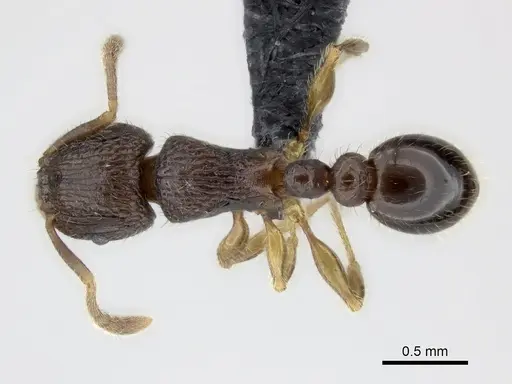
CASENT0172831
View on AntWeb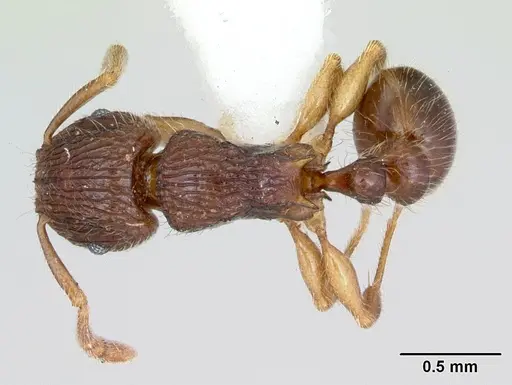
Literature
Loading distribution map...Loading products...