
Tetramorium pleganon
- Sci. Name
- Tetramorium pleganon
- Tribe
- Crematogastrini
- Subfamily
- Myrmicinae
- Author
- Bolton, 1979
- Distribution
- Found in 3 countries
Introduction
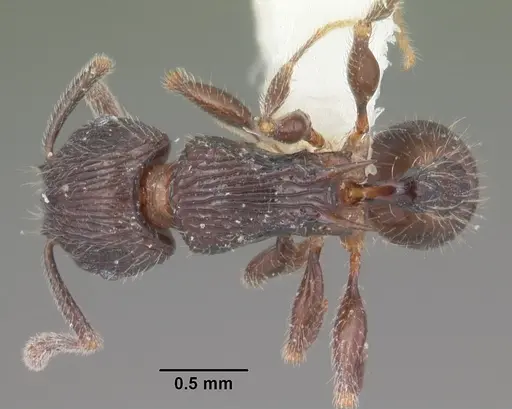
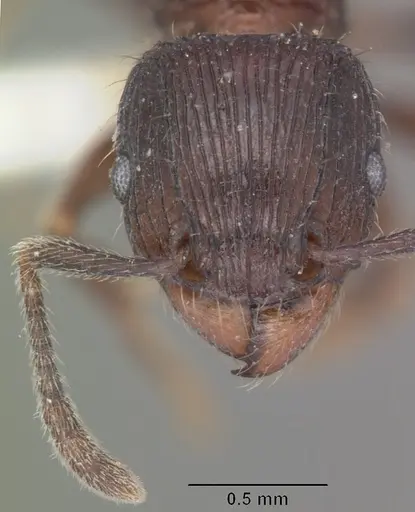
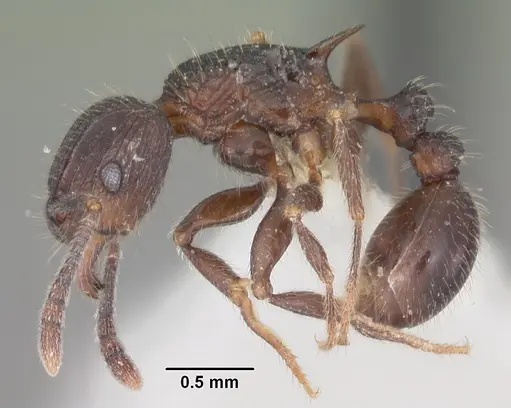
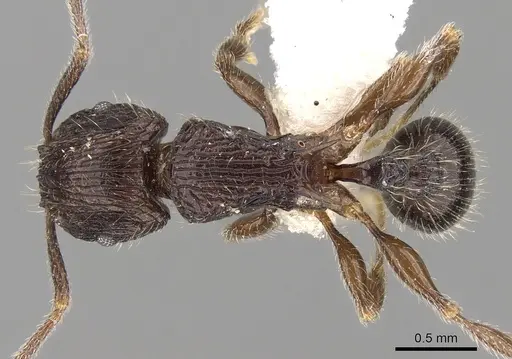
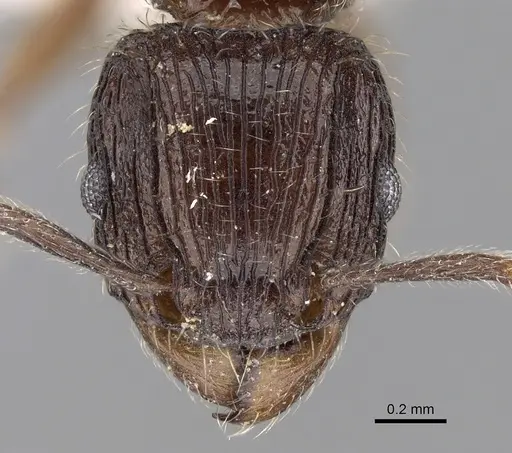
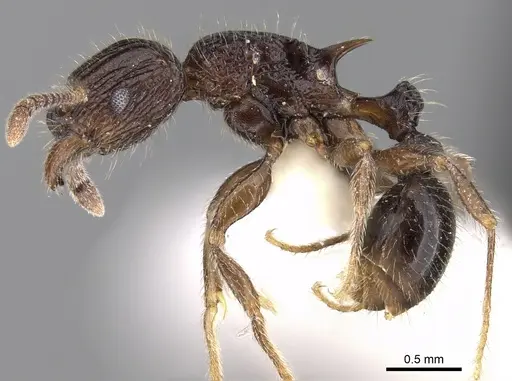
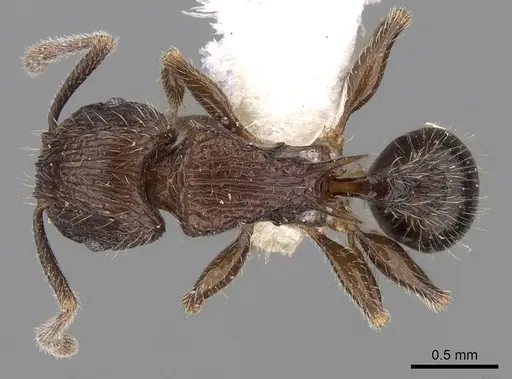
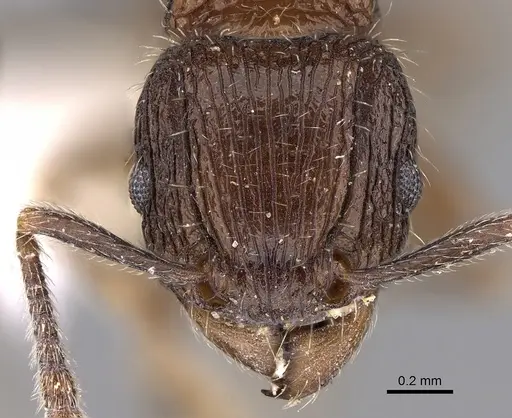
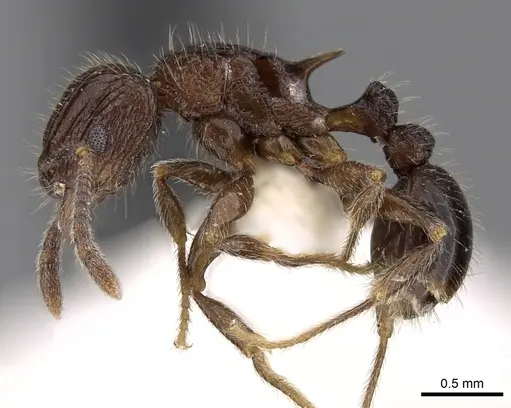
Tetramorium pleganon is a small, dark ant species native to Madagascar. Workers have a very dark brown to black body, noticeably long propodeal spines, and a petiolar node that is wider than long. The first gastral tergite has a fine, dense, reticulate-punctate sculpture that covers the basal part to more than half of the segment . This species is part of the Tetramorium tortuosum species group (T. jedi complex) and is easily recognized by the strongly rugose top of its petiolar node . It has a wide distribution across Madagascar, from Zombitse and Kalambatrita in the south to Ambato and Antsahabe in the north. What makes T. pleganon interesting is its habitat flexibility. While it can be found in rainforest, montane rainforest, and tropical dry forest, it is most abundant in disturbed and open habitats like Uapaca woodland, savannah grassland, and degraded forests . This suggests it is more tolerant of human-altered landscapes than many other Malagasy Tetramorium species.
Quick Summary
- Difficulty: Easy
- Origin & Habitat: Madagascar, widespread from south (Zombitse, Kalambatrita) to north (Ambato, Antsahabe). Recorded from a variety of habitats including rainforest, montane rainforest, tropical dry forest, Uapaca woodland, savannah grassland, and degraded forests. Most specimens came from open or disturbed areas [1].
- Colony Type: Single-queen colonies are suspected based on typical Tetramorium patterns, but unconfirmed in literature.
- Size & Growth:
- Queen: Queen not described in literature, estimated from related Tetramorium species at roughly 5-7mm.
- Worker: Total length not documented, estimated from similar Tetramorium species at approximately 3-4mm.
- Colony: Estimated several hundred workers based on genus-level patterns.
- Growth: Moderate (inferred from Tetramorium genus).
- Development: Estimated 6-8 weeks at optimal temperatures, based on genus-level patterns. (No specific data for this species, timeline is an estimate.)
- Antkeeping:
- Temperature: 22-26°C year-round. As a tropical species, it requires consistent warmth and does not hibernate. Provide a thermal gradient if possible.
- Humidity: Moderate. Provide a humidity gradient with a dry area and a slightly moist area, avoid waterlogging. This species tolerates drier conditions than typical rainforest ants, reflecting its presence in open habitats.
- Diapause: No. Tropical species, maintain constant warm temperatures.
- Nesting: Y-tong (AAC) or plaster nests with fine chambers work well. Test tube setups are fine for founding. Ensure excellent escape prevention due to small worker size.
- Behavior: Tetramorium pleganon is a calm, non-aggressive species. Workers are active foragers that form chemical trails to food. Their defense mechanism is of the ‘smear’ type (typical of Myrmicinae tribe Crematogastrini): they have a modified, spatulate stinger used to wipe venom onto enemies rather than piercing. The sting is mild to humans. Due to their small size (under 4mm), they are escape artists, use fine mesh barriers.
- Common Issues: small size means escapes are likely without fine mesh barriers, tropical species requires consistent warmth, cold temperatures can slow or stop brood development, limited documented care information requires keepers to adapt from genus-level knowledge, wild-caught colonies may carry parasites that can impact captive health
Housing and Nest Setup
For T. pleganon's tiny workers, Y-tong (AAC) nests with narrow chambers work excellently, they match natural foraging paths and help maintain humidity. Test tube setups are great for founding colonies: use a water reservoir connected by cotton. Plaster nests can work but monitor moisture, this species prefers drier conditions over waterlogged substrate. The key is escape prevention: their small size lets them slip through tiny gaps. Use fine mesh (≤0.5mm) on ventilation and check all connections. [1]
Feeding and Diet
T. pleganon is omnivorous. Offer small protein sources like fruit flies, tiny mealworms, or cricket pieces 2-3 times per week. Provide a constant supply of sugar water or diluted honey. They may also collect small seeds. Remove uneaten food after 24-48 hours to prevent mold. Cut prey into pieces small enough for workers to carry.
Temperature and Seasonal Care
As a Madagascar species, T. pleganon thrives in warmth. Maintain 22-26°C year-round, no hibernation needed. A heating cable on one side can create a gradient. Avoid prolonged temperatures below 20°C. Room temperature within this range usually suffices. Sluggish workers indicate it's too cold. [1]
Colony Development
Colonies likely start claustrally, the queen seals herself in and raises the first brood on stored reserves. This is typical for Tetramorium. Expect nanitics (first workers) after 6-8 weeks (estimated from related species). Initial growth is slow, then accelerates once workers emerge. Mature colonies likely reach several hundred workers within 1-2 years under good conditions.
Behavior and Temperament
T. pleganon shows typical Tetramorium behavior: calm, methodical foragers that leave chemical trails to food. They are not aggressive and are easy to manage. Their defense uses a modified stinger to smear venom rather than sting directly (a ‘smear’ mechanism common to their tribe). The sting is very mild. They adapt well to captive conditions. Healthy colonies show active, spread-out foraging. [1]
Frequently Asked Questions
How long does it take for Tetramorium pleganon to produce first workers?
Based on typical Tetramorium development, expect the first workers (nanitics) to emerge 6-8 weeks after the queen lays eggs at optimal temperatures (24-26°C). This is an estimate, no specific data for this species exists.
Can I keep Tetramorium pleganon in a test tube setup?
Yes, test tube setups are fine for founding and young colonies. Use a water reservoir with a cotton plug. Once the colony reaches 30-50 workers, consider moving to a Y-tong or plaster nest with more space.
Do Tetramorium pleganon ants sting?
They have a modified stinger used to smear venom onto enemies rather than piercing. This ‘smear’ defense is typical of their tribe, and the sting is very mild for humans, most keepers report it's barely noticeable.
What temperature do Tetramorium pleganon need?
Keep them at 22-26°C year-round. As a tropical species, they do not hibernate. Room temperature within this range often works. Avoid long periods below 20°C.
Are Tetramorium pleganon good for beginners?
They are a good candidate for beginners: small size, omnivorous diet, and tolerance of various conditions. The main challenges are escape prevention and maintaining consistent warmth.
How big do Tetramorium pleganon colonies get?
Based on similar Tetramorium species, colonies likely reach several hundred workers at maturity. Exact size is unconfirmed. Growth is moderate, taking 1-2 years under good care.
What do Tetramorium pleganon eat?
They are omnivorous. Feed small protein sources (fruit flies, tiny mealworms, cricket parts) 2-3 times weekly. Provide constant access to sugar water or diluted honey. They may collect small seeds. Remove leftovers after 1-2 days.
Do Tetramorium pleganon need hibernation?
No, they do not. As a tropical species from Madagascar, they require consistent warm temperatures year-round. No cooling period is needed.
Why are my Tetramorium pleganon escaping?
Their small size (under 4mm) makes them escape artists. Check all seals, seams, and vents. Use fine mesh (≤0.5mm) on openings. Ensure tubing connections are tight. Even tiny gaps can be an exit.
Can I keep multiple Tetramorium pleganon queens together?
It's not recommended, Tetramorium are usually monogyne (single queen). Forcing multiple queens together often leads to fighting. House them as a single-queen colony unless you have specific evidence of polygyny, which is unconfirmed for this species.
Report an Issue
The current care sheet is based fully on literature. See inconsistencies, or something that's incorrect? Please , it will be resolved after review from an admin. Contributing to the blogs tab also helps providing information, to make us be able to further improve the caresheets. Thank you for your support!
References

This caresheet is licensed under CC BY-SA 4.0 .
Community Blogs
Literature
Loading distribution map...Loading products...