
Tetramorium peringueyi
- Sci. Name
- Tetramorium peringueyi
- Tribe
- Crematogastrini
- Subfamily
- Myrmicinae
- Author
- Arnold, 1926
- Distribution
- Found in 2 countries
Introduction
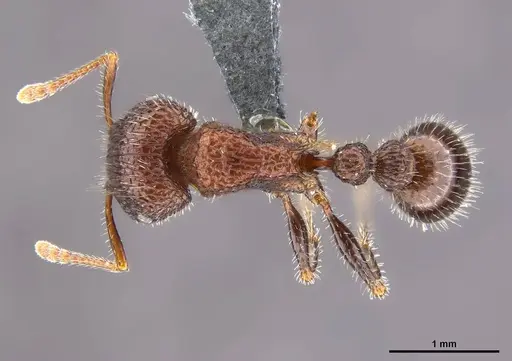
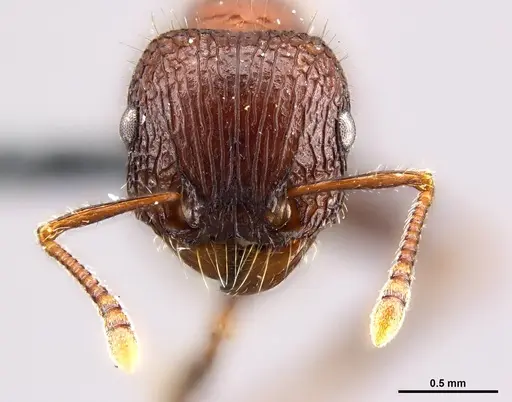
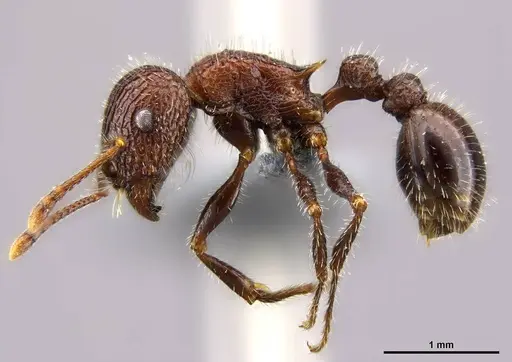
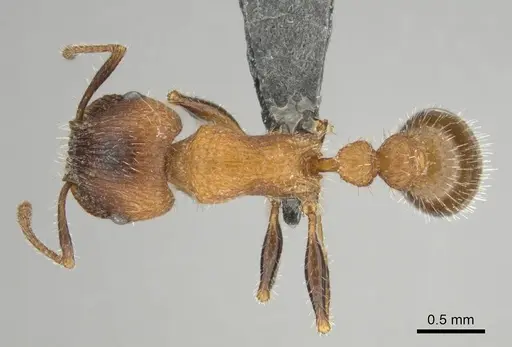
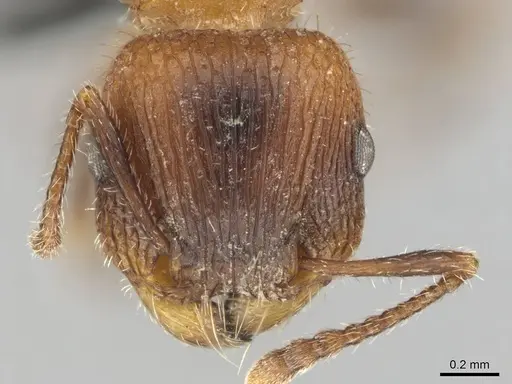
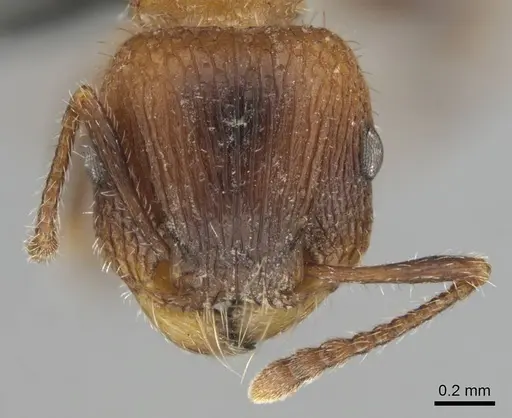
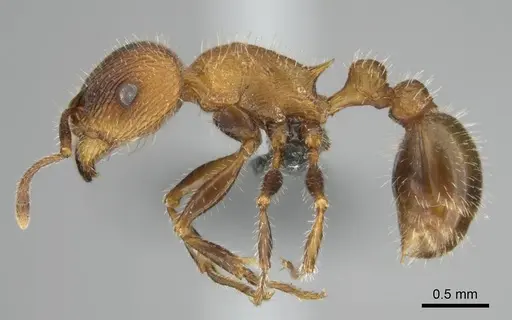
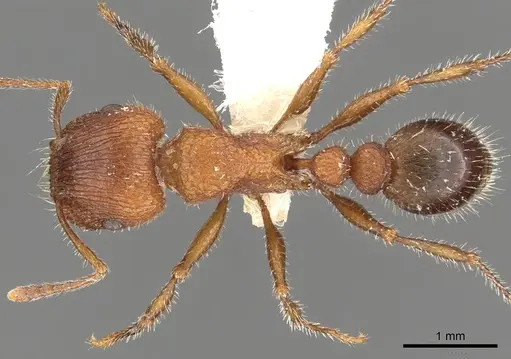
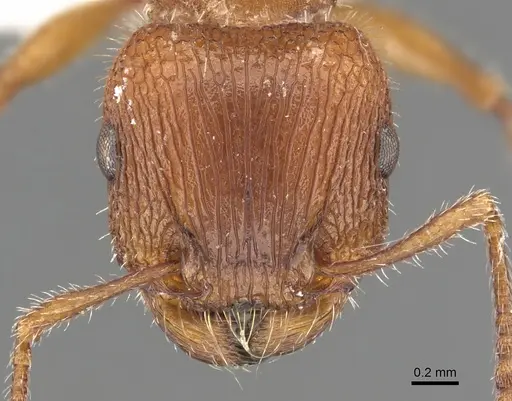
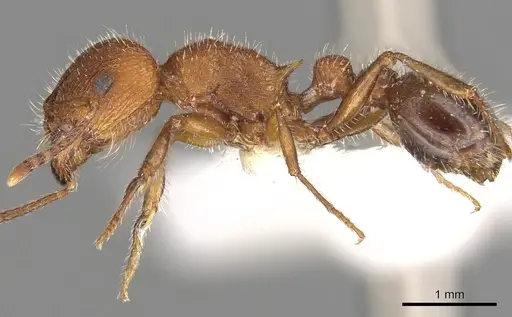
Tetramorium peringueyi is a small seed-harvesting ant native to southern Africa, ranging from South Africa's Western Cape, Northern Cape, and Eastern Cape into Namibia and Botswana . Workers measure 4.4-5.7 mm (TL) and are orange to reddish-brown with abundant short, stout erect hairs covering their entire body, including on the leading edges of their antennal scapes - a key identifying feature . They nest in sandy soils and deep dolerite reddish soils, typically creating multiple entrance holes at the base of plants, often with a characteristic crater of soil around the entrance . These ants are granivores that collect and store seeds inside the nest, with seed stores recorded within 8 cm of the soil surface . Larvae and alates have been found around 22 cm deep in the nest . Their head bears a well-developed psammophore, a brush of hairs used to move soil particles during nest digging .
Quick Summary
- Difficulty: Easy
- Origin & Habitat: Native to southern Africa (South Africa, Namibia, Botswana). Found in grasslands, open Karoo, highland savanna, Kimberley Thornveld, Gariep Rocky Desert, and Gariep Plain Desert [1][2]. Inhabits arid to semi-arid regions with sandy or reddish dolerite soils.
- Colony Type: Likely monogyne (single queen) based on typical Tetramorium patterns, but colony structure has not been confirmed in published research.
- Size & Growth:
- Queen: Unknown, no measurements recorded for queens.
- Worker: 4.4-5.7 mm (TL) [3]. Other measurements (head, scape, etc.) are not body length and should be ignored.
- Colony: Unknown, no colony size data available in published research.
- Growth: Unknown, no specific growth rate data for this species.
- Development: Unknown, no development data for this species. Based on related Tetramorium species, an estimate of 6-10 weeks at 22-26°C is possible, but unconfirmed. (All development timelines are speculative until studied specifically for Tetramorium peringueyi.)
- Antkeeping:
- Temperature: Keep at 22-26°C. They originate from warm, arid southern African regions. A gentle heat gradient allows thermoregulation. Avoid sustained temperatures above 30°C.
- Humidity: Low to moderate. They inhabit dry to semi-arid areas. Keep nest substrate mostly dry (sandy soil mix) and provide a small water dish in the outworld. Avoid misting the nest.
- Diapause: Unknown, their native range has seasonal temperature variation, but no specific diapause requirement has been documented. A cool period (15-18°C) for 2-3 months may be beneficial but is unconfirmed.
- Nesting: Naturally nest in sandy soils with multiple entrances. In captivity, use a naturalistic setup with sandy substrate or a Y-tong (AAC) nest with dry conditions. Provide dark, enclosed chambers for brood.
- Behavior: Calm, non‑aggressive foragers, primarily collecting seeds. They rarely bite and have a modified stinger used to smear venom (typical of the tribe Crematogastrini) rather than inject it, this is not dangerous to humans. Escape risk is moderate for a 4-5 mm ant, standard barriers (fluon, talcum) are sufficient.
- Common Issues: seed storage, if they ignore fresh seeds, their cache is likely full, wait a few days before offering more., overwatering or high humidity can cause fungal growth and colony decline, keep substrate dry., mold on stored seeds, remove uneaten seeds regularly to prevent health issues., slow founding phase, the queen is believed to found alone, but actual founding behavior is unconfirmed, patience is needed., wild-caught colonies may carry parasites or pathogens, quarantine new colonies and monitor health.
Housing and Nest Setup
Tetramorium peringueyi does well in naturalistic setups that mimic their natural sandy soil habitat. Use a mix of sand and soil as substrate, keeping it relatively dry, these are arid-region ants that don't tolerate damp conditions. A 2-3 cm layer is sufficient, though deeper is fine if you want to let them create tunnel systems. Since they naturally dig multiple entrances, consider connecting 2-3 chambers with tubes to give them options [1][2]. Y-tong (AAC) nests also work well if you prefer a contained setup, but ensure chambers aren't too humid. A small water dish should always be available, don't mist the nest. Standard escape barriers (fluon, talcum) are adequate for this medium-sized ant.
Feeding and Diet
As seed harvesters, Tetramorium peringueyi's primary diet is seeds. Offer a variety of small seeds, sesame, millet, flax, and similar small seeds work well. They will collect and store seeds in the nest, so don't worry if they gather them instead of eating immediately. They also readily accept sugar water, honey, or diluted maple syrup as an energy source. While primarily granivorous, they may occasionally accept small protein sources like crushed insects or mealworm pieces, but protein is not essential. Remove any uneaten seeds that show signs of molding to prevent colony health issues. If they consistently ignore new seed offerings, their cache is likely full, wait a few days before offering more. [1][2]
Temperature and Seasonal Care
Keep your colony at 22-26°C for optimal activity and brood development. These ants come from warm southern African regions and can tolerate higher temperatures, but avoid sustained heat above 30°C. A heating cable on one side of the nest can create a beneficial temperature gradient, allowing workers to choose their preferred warmth. Place heating on top of the nest, not underneath, to avoid drying out the substrate too quickly. Regarding hibernation: while not definitively documented, their native range experiences cooler winters, so providing a cool period (15-18°C) for 2-3 months during winter may be beneficial for established colonies. Reduce feeding during this period. [1]
Colony Development and Growth
The founding method is unconfirmed for this species. Based on other Tetramorium, queens likely seal themselves in and raise the first workers using stored reserves, but this has not been documented. The first workers (nanitics) will be smaller than mature workers, this is normal. Growth rate is unknown, expect several months to reach 20-30 workers and a year or more to reach 100+ workers, but these are estimates. The deep nesting behavior observed in the wild (larvae and alates at 22 cm depth) [1] suggests they prefer secure, enclosed spaces for brood chambers, provide dark, undisturbed areas.
Behavior and Observation
These ants are active, diurnal foragers that will readily search for and collect seeds. Workers are medium-sized (4-5 mm) and relatively easy to observe. They are not aggressive and rarely bite. Their modified stinger is used to smear venom onto threats (typical of the tribe Crematogastrini) rather than inject it, this is not a concern for humans. Their most interesting behavior is seed-harvesting and storage, watching them bring seeds back and organize their cache is engaging. In captivity with deeper substrate, you may observe them creating crater mounds around nest entrances, similar to their wild behavior. Standard escape barriers are sufficient. [1][2]
Frequently Asked Questions
Can I keep Tetramorium peringueyi in a test tube?
Test tubes work for founding but aren't ideal long-term because they need space to store seeds and prefer multiple chambers. A naturalistic setup with sandy substrate or a Y-tong nest is better for established colonies. For the first few months, a test tube with a cotton water reservoir is fine.
What do Tetramorium peringueyi ants eat?
They are primarily seed-eaters, offer small seeds like sesame, millet, or flax. They also accept sugar water, honey, or diluted syrup. They may take small insects occasionally, but protein is not required. Remove uneaten seeds before they mold [1][2].
How long does it take for Tetramorium peringueyi to produce first workers?
This is not documented for this species. Based on related Tetramorium, expect 6-10 weeks at 24-26°C if the queen founds claustrally, but the actual founding method is unconfirmed. Patience is essential during the initial phase.
Do Tetramorium peringueyi ants sting?
They have a modified stinger used for smearing venom, not for injecting it like a typical stinger. This is typical of the tribe Crematogastrini. They rarely use it against humans and it is not painful. They are safe to handle but may bite if provoked.
Are Tetramorium peringueyi good for beginners?
Yes, they are easy to keep. They tolerate minor care mistakes, are not aggressive, and don't require live prey. Their main requirements are warm temperatures, dry conditions, and a seed-based diet. The main challenge is the unknown founding behavior, patience needed.
Do Tetramorium peringueyi need hibernation?
Unknown, no specific data. Their native range has seasonal variation, so a cool period (15-18°C) for 2-3 months may be beneficial but is not proven. Avoid temperatures below 10°C.
How big do Tetramorium peringueyi colonies get?
Colony size is not documented in published research. Typical Tetramorium colonies reach several hundred workers, but this is speculative for this species.
When should I move Tetramorium peringueyi to a formicarium?
Keep them in a test tube or small container for the first 6-12 months. Once the colony reaches at least 30-50 workers and you see seed storage behavior, consider moving to a larger naturalistic setup or Y-tong nest.
Why are my Tetramorium peringueyi dying?
Common causes include: too much humidity (keep nest dry), temperatures too cold (maintain 22-26°C), mold from uneaten seeds (remove uneaten food), or stress from disturbance during founding. Ensure dry conditions and minimal disturbance.
Can I keep multiple Tetramorium peringueyi queens together?
Not recommended. This species is likely monogyne (single queen) based on genus patterns, but this is unconfirmed. Combining unrelated queens would likely result in fighting. Only keep one queen per colony.
What temperature is best for Tetramorium peringueyi?
22-26°C is ideal for activity and brood development. They come from warm southern African regions. A slight gradient allowing cooler areas is beneficial.
Do Tetramorium peringueyi need a special substrate?
Yes, they prefer sandy, well-draining substrate similar to their natural soil. A mix of sand and soil works well. Keep it relatively dry, these are arid-region ants. Avoid peat moss or moisture‑retaining materials [1][2].
Report an Issue
The current care sheet is based fully on literature. See inconsistencies, or something that's incorrect? Please , it will be resolved after review from an admin. Contributing to the blogs tab also helps providing information, to make us be able to further improve the caresheets. Thank you for your support!
References

This caresheet is licensed under CC BY-SA 4.0 .
Community Blogs
Literature
Loading distribution map...Loading products...