
Tetramorium pauper
- Sci. Name
- Tetramorium pauper
- Tribe
- Crematogastrini
- Subfamily
- Myrmicinae
- Author
- Forel, 1907
- Distribution
- Found in 3 countries
Introduction
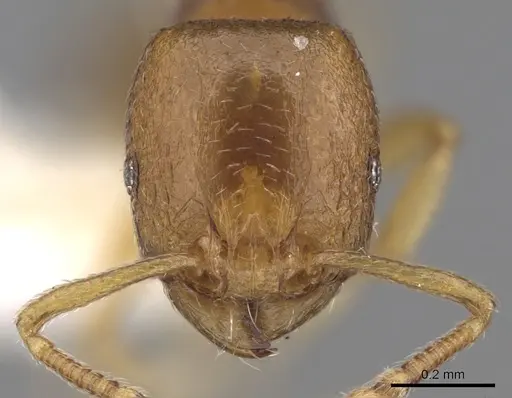
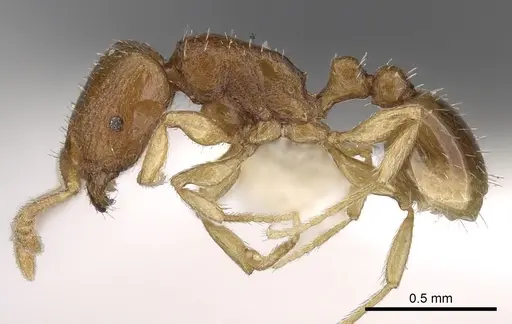
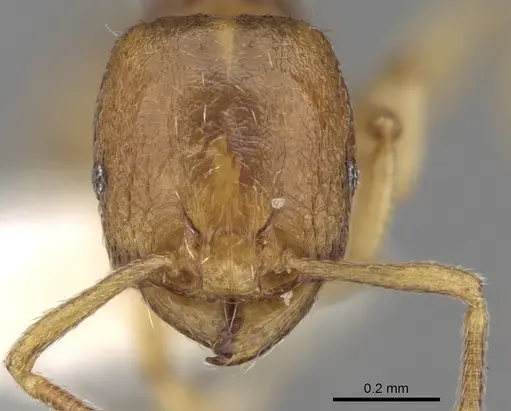
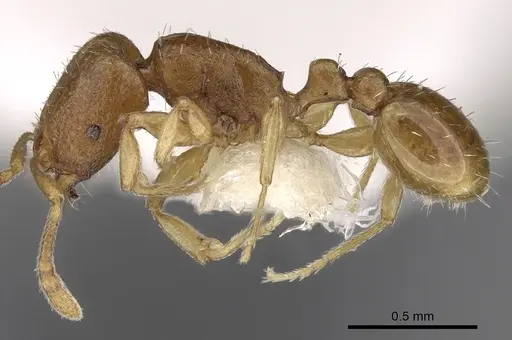
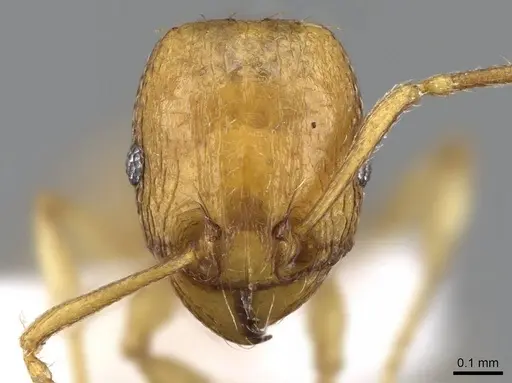
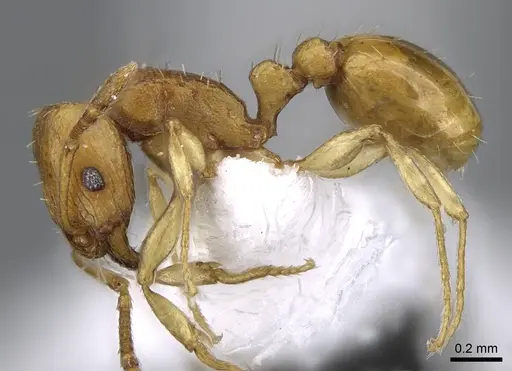
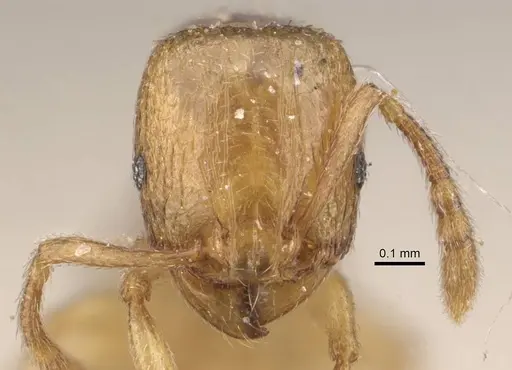
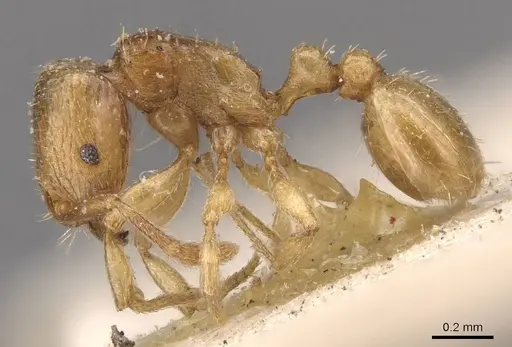
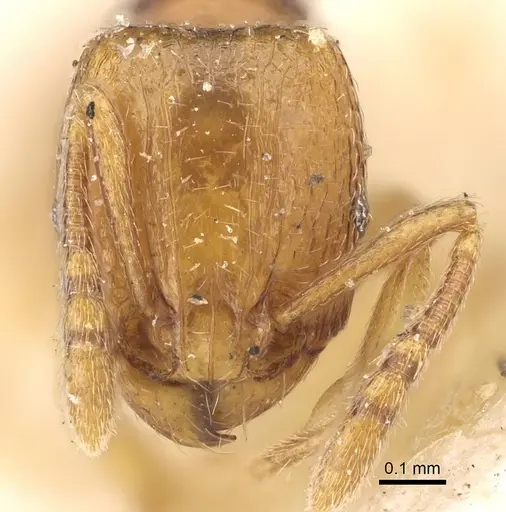
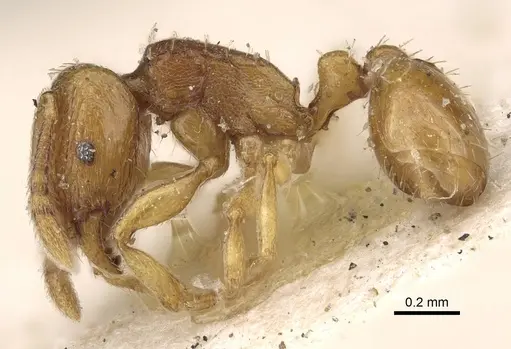
Tetramorium pauper is a tiny ant with workers measuring 2.0–2.2 mm total length (roughly 2 mm ). Workers are a uniform yellowish brown or pale brown . This species belongs to the Tetramorium simillimum group and has the smallest eyes in that group – just four ommatidia in the longest row . It also lacks frontal carinae and antennal scrobes, making it easy to identify . The ant is found across the Afrotropical region: Kenya, Socotra Archipelago, South Africa, Tanzania, and Zimbabwe . Its natural habitat is open to semi‑open areas like grassland, savanna, and woodland . The most striking feature of Tetramorium pauper is its reduced eyes and simple body sculpture, which set it apart from all other members of the poweri‑complex . It nests underground in small cells, often under rocks, in decayed twigs, or in moist soil . Colonies are small and inconspicuous, with widely spaced cells at depths from 6 cm down to 30 cm .
Quick Summary
- Difficulty: Easy
- Origin & Habitat: Afrotropical region: Kenya, Socotra Archipelago, South Africa, Tanzania, Zimbabwe. Open to semi‑open habitats: grassland, savanna, woodland. Ground‑nesting, often found in moist soil under rocks or in decayed twigs [3][1].
- Colony Type: Probably monogyne (single queen) based on typical Tetramorium patterns, but social structure has not been studied. Wild nests consist of widely spaced underground cells [1].
- Size & Growth:
- Antkeeping:
- Temperature: Aim for 22–26°C, typical for tropical Myrmicinae. Avoid extremes. No confirmed optimal range – observe colony activity and adjust if needed.
- Humidity: Keep the nest substrate consistently moist but not waterlogged. This species naturally nests in moist soil [3][1].
- Diapause: Not required. Being tropical, colonies likely remain active year‑round. A brief cool period (15–18°C for a few weeks) is optional and untested.
- Nesting: Ground‑nesting species that creates underground cells. In captivity, use Y‑tong (AAC) or plaster nests with tight, small chambers. A test tube setup works for founding colonies. Mimic a soil environment with a moisture gradient [1].
- Behavior: Peaceful and non‑aggressive. Workers have a modified stinger used for smearing venom (typical of the tribe Crematogastrini) but are not dangerous to humans. Because of their 2 mm size, escape prevention is critical – any gap larger than 0.5 mm is a potential exit. Workers are active foragers and may use tandem‑running to recruit nestmates.
- Common Issues: escape prevention is critical due to their tiny 2 mm size – use fine mesh (, slow colony growth requires patience, avoid overfeeding which leads to mold., moisture management is important – small nests dry out quickly, monitor substrate regularly., wild‑caught colonies may carry parasites, quarantine new colonies., very small workers can be lost during maintenance – handle gently and use soft tools.
Housing and Nest Setup
Tetramorium pauper is a ground‑nesting ant that digs small, widely spaced cells in soil. In the wild, cells have been found under rocks, in decayed twigs, and at depths from 6 cm to 30 cm [1][3]. For captivity, a Y‑tong (AAC) or plaster nest works well – both provide tight chambers that mimic the natural cell structure. Test tubes can be used for founding colonies, wrap them in foil to keep them dark. Because the ants are only 2 mm, any opening in the nest must be sealed with fine mesh (0.5 mm or smaller). The nest should have a moisture gradient – keep one part slightly moist and another drier, allowing the ants to choose [1].
Feeding and Diet
No dietary studies exist for Tetramorium pauper. Based on the genus, it is probably omnivorous. Offer small prey such as fruit flies, pinhead crickets, or pieces of mealworm, along with sugar water or honey. Feed protein once or twice a week and remove leftovers within 24 hours to prevent mold. Prey must be smaller than the workers’ 2 mm body size.
Temperature and Seasonal Care
No precise temperature requirements have been published for this species. Maintain a stable range of 22–26°C, typical for many tropical Myrmicinae. Avoid prolonged temperatures below 18°C. Since the species comes from warm African habitats, it does not need a diapause – colonies can stay active year‑round. If you choose to provide a cooler rest period, reduce feeding during that time.
Colony Development
Published data on colony development is lacking. Workers are 2.0–2.2 mm [1], but queens have not been described. Founding behavior is unconfirmed. Expect slow growth over many months. The small worker size suggests that colonies cannot support huge populations, but no maximum colony size has been recorded.
Behavior and Temperament
Tetramorium pauper is a peaceful species that does not pose a threat to keepers. Workers have a modified, spatulate stinger used for smearing venom (typical of Crematogastrini), but they rarely attempt to sting humans. Their tiny size makes them excellent escape artists – any gap larger than 0.5 mm is a potential exit. They are active foragers and may recruit nestmates using chemical trails. Morphologically, they are notable for their very small eyes (four ommatidia in the longest row) and short, blunt body hairs [3][1].
Frequently Asked Questions
How long does it take for Tetramorium pauper to get their first workers?
Unknown – no published data. Development has not been studied for this species.
Can I keep Tetramorium pauper in a test tube?
Yes, test tubes can work for founding colonies. Make a small water reservoir and wrap the tube in foil to keep it dark. Because the ants need moisture, ensure the cotton plug stays damp but not soaked. This setup is inferred from the species’ natural habit of nesting in small soil cavities.
Do Tetramorium pauper ants sting?
They have a reduced stinger modified for smearing venom (typical of the tribe Crematogastrini), but they are not known to sting humans. They are completely safe to handle.
How big do Tetramorium pauper colonies get?
No maximum colony size has been recorded. Wild nests contain only a handful of workers. Estimates are speculative – likely under a few hundred workers at most.
What temperature do Tetramorium pauper ants need?
No specific data. A stable temperature of 22–26°C is a good starting point, similar to conditions in their native African grasslands. Avoid extreme heat or cold.
Are Tetramorium pauper ants good for beginners?
Yes, they are easy to keep provided you prevent escapes. They have simple care requirements and a peaceful temperament. The main challenges are their tiny size (easy to lose) and the need for stable moisture.
Do Tetramorium pauper ants need hibernation?
No – they come from tropical regions and do not require winter diapause. They can be kept active all year. A brief cooler period is optional and untested.
Why are my Tetramorium pauper ants escaping?
Their tiny 2 mm size allows them to slip through any gap larger than 0.5 mm. Check all seals, use fine mesh over air holes, and apply fluon or similar barriers on smooth surfaces. Even a tiny crack is an escape route.
What do Tetramorium pauper ants eat?
No specific studies exist. Like most Tetramorium, they are probably omnivorous. Offer sugar water or honey for carbs and small live prey (fruit flies, pinhead crickets) for protein. Remove leftovers to avoid mold.
When should I move Tetramorium pauper to a formicarium?
No rule exists. Because colonies grow slowly, you can keep them in a test tube for many months. Wait until the queen stops laying or the tube becomes crowded before moving to a Y‑tong or plaster nest. Always provide an escape‑proof connection.
Report an Issue
The current care sheet is based fully on literature. See inconsistencies, or something that's incorrect? Please , it will be resolved after review from an admin. Contributing to the blogs tab also helps providing information, to make us be able to further improve the caresheets. Thank you for your support!
References

This caresheet is licensed under CC BY-SA 4.0 .
Community Blogs
CASENT0280855
View on AntWeb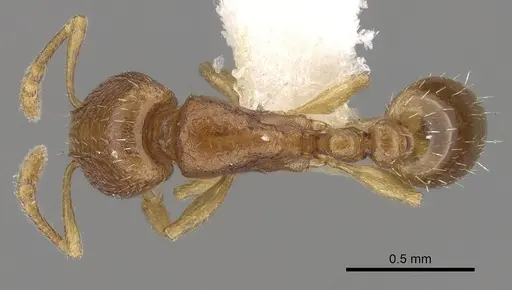
CASENT0280916
View on AntWeb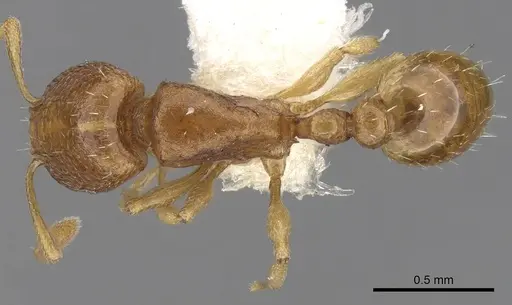
CASENT0746628
View on AntWeb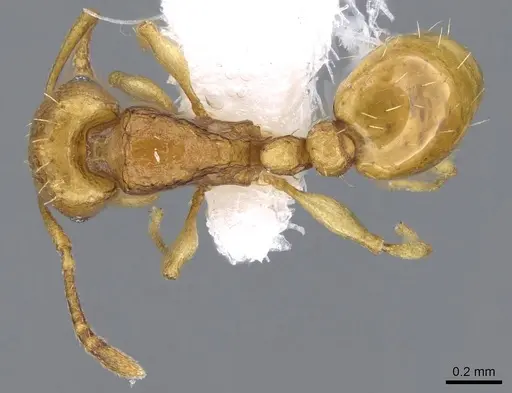
CASENT0909143
View on AntWeb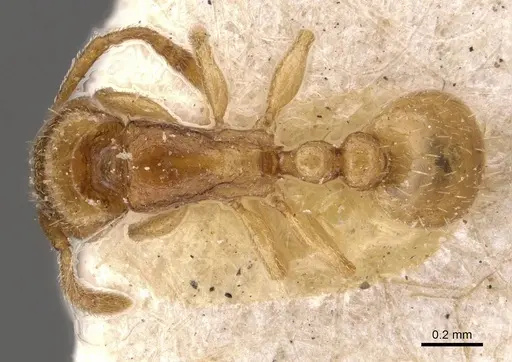
CASENT0915998
View on AntWeb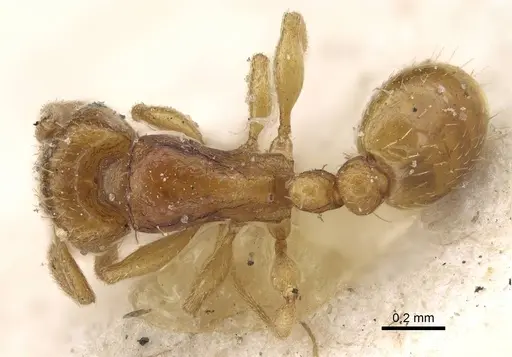
Literature
Loading distribution map...Loading products...