
Tetramorium parvispinum
- Sci. Name
- Tetramorium parvispinum
- Tribe
- Crematogastrini
- Subfamily
- Myrmicinae
- Author
- Emery, 1893
- Distribution
- Found in 1 countries
Introduction
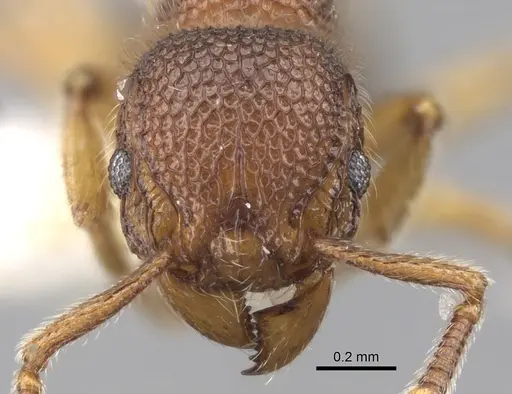
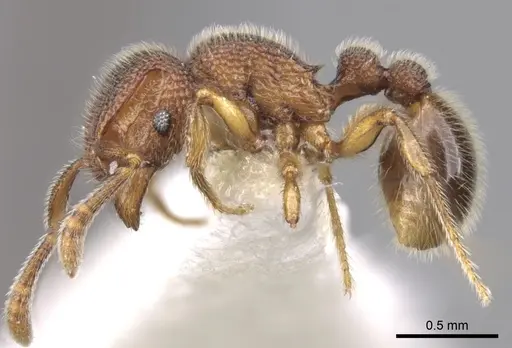
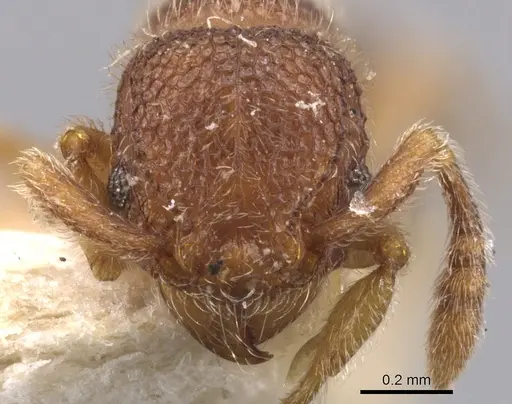
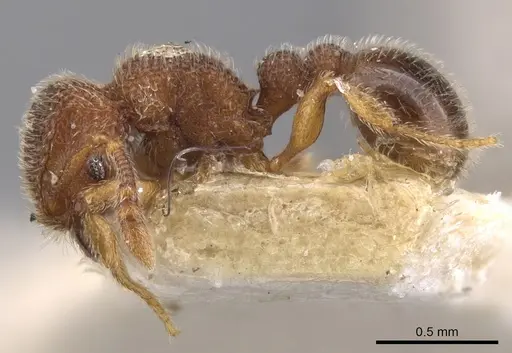
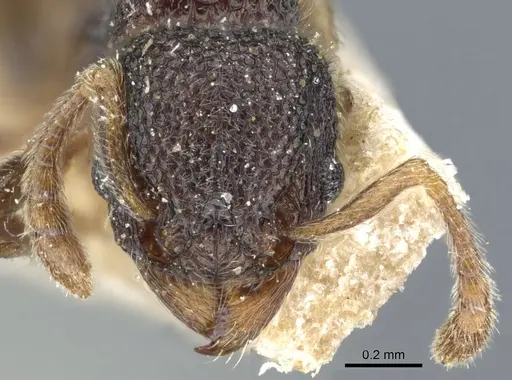
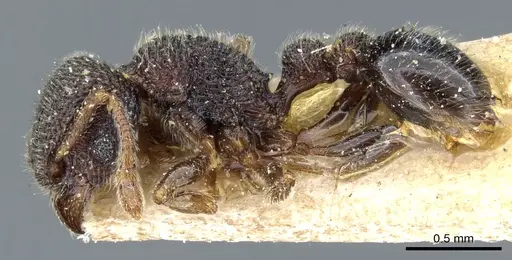
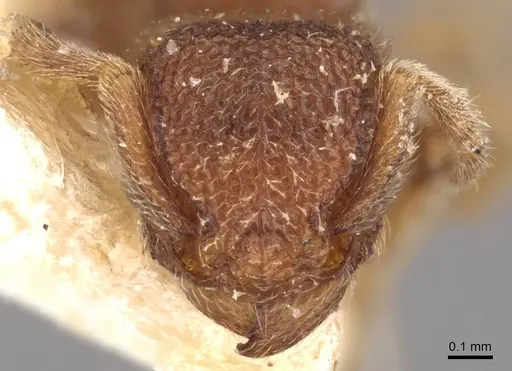
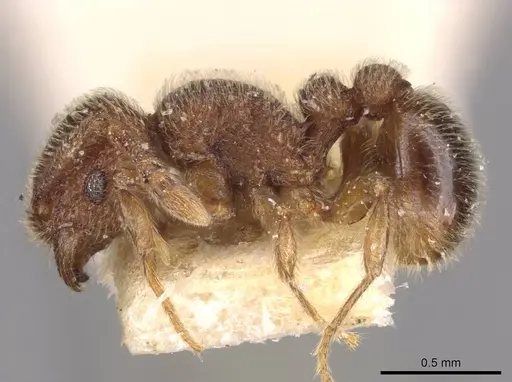
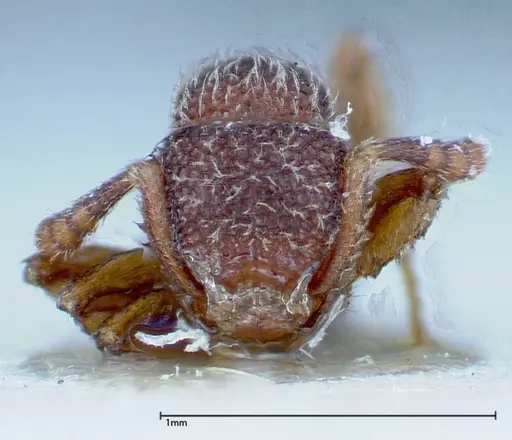
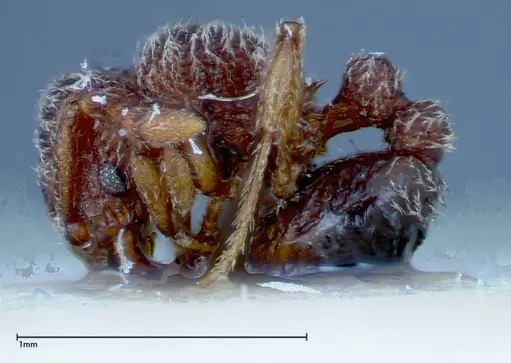
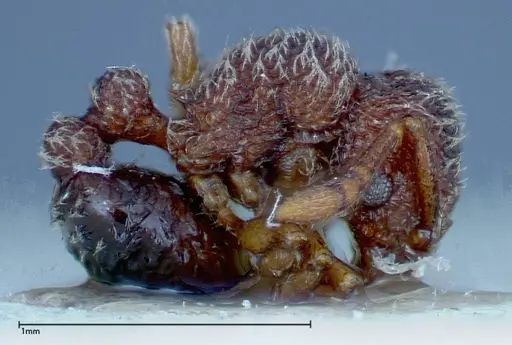
Tetramorium parvispinum is a tiny Myrmicinae ant with workers measuring just 2.0-2.3 mm . Workers have a distinct look: dense, coarse punctate-reticulate sculpturing over the whole body, covered in abundant branched woolly hairs . The head is square-shaped, slightly longer than broad, with frontal carinae that diverge strongly and form a complete scrobe for the antenna . The thorax is shorter and more strongly arched than related species, and the epinotum has two pointed teeth . Color ranges from rust-red to rust-brown-red, with a dark brown-black abdomen . This species belongs to the Tetramorium walshi group . What makes this ant interesting is its adaptability. It's found across the Indo-Malayan region in many habitats, primary rainforests, secondary forests, limestone forests, rubber plantations, and even urban areas like Macau . Workers live in leaf litter at elevations of 550-650 m in southern China and Thailand . For keepers interested in Southeast Asian litter ants, T. parvispinum offers a chance to observe a widespread, resilient species.
Quick Summary
- Difficulty: Medium
- Origin & Habitat: Native to the Indo-Malayan region, recorded from Borneo, Indonesia, Malaysia, the Philippines, Taiwan, Thailand, and southern China (Yunnan, Hainan, Macau) [6][2][7][4]. Inhabits leaf litter in secondary forests, limestone forests, and rubber plantations at 550-650 m elevation [2]. Also found in urban parks and reservoirs, first recorded in Macau in 2017 [3][4].
- Colony Type: Colony structure is not documented in the available literature. Based on typical Tetramorium patterns, colonies are likely monogyne (single queen), but this is unconfirmed.
- Size & Growth:
- Queen: Size data unavailable.
- Worker: 2.0-2.3 mm [1]
- Colony: Unknown, not documented in literature, but likely up to several hundred workers based on genus patterns.
- Growth: Moderate (inferred from related Tetramorium species)
- Development: 6-8 weeks at optimal temperature (estimated, based on genus patterns) (Specific development data for T. parvispinum is not available.)
- Antkeeping:
- Temperature: Keep at 24-28 °C. These are tropical ants from warm, humid environments [2]. A heat cable on one side creates a useful gradient.
- Humidity: High humidity is essential. Keep the nest substrate consistently damp but not waterlogged. A water reservoir connected to the nest helps maintain stable moisture.
- Diapause: Unlikely, as a tropical species from low latitudes, true hibernation is not needed. A slight temperature drop to around 20-22 °C during winter can be offered but is not required.
- Nesting: Natural nesting is in leaf litter and soil [2]. In captivity, a naturalistic setup with moist substrate (soil/coco fiber mix) works well. Y-tong or plaster nests with good moisture retention are also suitable.
- Behavior: Workers are active foragers that search leaf litter and substrate for food. They are generalist feeders, accepting both protein and sugar sources. Their tiny size (2.0-2.3 mm) makes escape prevention critical, use fine mesh (≤0.5 mm) and tight seals. They are generally calm but will defend the nest if provoked. As a member of the Crematogastrini tribe, they have a modified stinger that smears venom rather than injecting it (smear defense mechanism).
- Common Issues: escape prevention is critical due to their tiny 2 mm size, use fine mesh barriers and tight-fitting lids., high humidity needs can lead to mold if ventilation is poor, balance moisture with airflow., wild-caught colonies may harbor parasites that can quickly wipe out a captive colony., colony establishment may be slow because the queen must raise the first brood without foraging (if claustral).
Housing and Nest Setup
Tetramorium parvispinum is a litter-dwelling ant. In the wild, it lives in the moist layer of decomposing leaves and soil on the forest floor [2]. In captivity, you need a setup that holds humidity while offering plenty of small spaces. A naturalistic terrarium-style formicarium works best, fill it with a moist substrate mixture (like a blend of soil and coco fiber) that stays damp but not waterlogged. Alternatively, a Y-tong (AAC) nest or plaster nest with good moisture retention can work, as long as you keep the humidity high [2]. The key is creating a humid environment with tight chambers sized for their tiny 2 mm bodies, they don't like large, open spaces. A water reservoir connected to the nest chamber helps maintain stable humidity without constant misting.
Feeding and Diet
Like most Tetramorium species, T. parvispinum is likely a generalist forager that accepts both protein and carbohydrates. In their leaf litter habitat, they probably scavenge for small insects, honeydew from aphids, and other organic matter. For captive colonies, offer small protein sources like fruit flies, pinhead crickets, or crushed mealworms. For sugar, provide honey water or sugar water on a cotton ball or in a small dish. Feed every 2-3 days, removing any leftovers after 24 hours to prevent mold. Because workers are only 2 mm, prey should be appropriately sized, very small insects or crushed prey work well for establishing colonies.
Temperature and Seasonal Care
As a species from the Indo-Malayan region (tropical Southeast Asia), T. parvispinum needs warm temperatures between 24-28 °C [2]. They naturally occur at elevations of 550-650 m in southern China and Thailand, suggesting they prefer warm but not extreme conditions [2]. Room temperature (20-24 °C) may be a bit cool, consider using a heating cable or mat on one side of the nest to create a warm zone around 26-28 °C. Since they come from a region without harsh winters, true hibernation is probably not needed. A slight temperature drop during winter (to around 20-22 °C) is optional. Avoid prolonged exposure below 18 °C.
Humidity and Water Management
Keeping high humidity is one of the most important parts of caring for T. parvispinum. In their natural leaf litter habitat, they are constantly in moist conditions [2]. The substrate should feel consistently damp but never waterlogged, when you squeeze a handful, it should hold together but not drip freely. Let only the top layer dry before rehydrating. A water reservoir connected to the nest helps maintain steady humidity. If you use a test tube setup, make sure the water chamber is appropriately sized: too much water can flood the colony, too little will dry it out. Condensation on the nest walls is a good sign that humidity is adequate.
Colony Establishment and Growth
Starting a colony of T. parvispinum can be challenging due to their small size and leaf litter habits. If you catch a founding queen in the wild, she will likely seal herself in a small chamber and raise her first workers without foraging (claustral founding is typical for the genus). The first nanitic workers emerge after about 4-6 weeks at warm temperatures, and the colony grows slowly at first. After that, growth becomes more steady. Expect moderate growth, full maturity (several hundred workers) may take 1-2 years under good conditions. Patience is key with this species, as the small worker size means slower colony growth compared to larger ants.
Behavior and Temperament
Tetramorium parvispinum workers are active foragers that roam through leaf litter and substrate looking for food. They are not particularly aggressive and will usually flee when disturbed. However, they defend the nest if threatened directly. Their tiny size (2.0-2.3 mm) makes them excellent at navigating through complex substrate but also skilled escape artists. You must have excellent escape prevention: use fine mesh (≤0.5 mm), tight lids, and consider applying fluon or similar barriers around the outworld rim. Workers are likely more active at night, though some daytime activity occurs. As part of the Crematogastrini tribe, they have a modified stinger that smears venom onto enemies rather than injecting it, a 'smear' defense. [1]
Frequently Asked Questions
How long does it take for Tetramorium parvispinum to have first workers?
Based on typical Tetramorium development, expect nanitic workers to emerge around 6-8 weeks after the queen lays eggs at optimal temperatures of 26-28 °C. This is an estimate, specific data for T. parvispinum is not available.
What do Tetramorium parvispinum ants eat?
They accept both protein and sugar. Offer small insects like fruit flies, pinhead crickets, or crushed mealworms for protein. For sugar, provide honey water or sugar water. Feed small amounts every 2-3 days, removing uneaten food promptly.
Are Tetramorium parvispinum ants good for beginners?
This species is rated Medium difficulty. While not the hardest to keep, their tiny size, high humidity needs, and slow colony establishment make them better for keepers with some experience. Beginners may struggle with escape prevention and humidity management.
Do Tetramorium parvispinum ants need hibernation?
As a tropical species from the Indo-Malayan region, they probably don't require true hibernation. A slight temperature reduction during winter (to 20-22 °C) is optional. Avoid prolonged cold below 18 °C.
What size colony do Tetramorium parvispinum colonies reach?
Colony size is not well documented, but based on typical Tetramorium species, colonies likely reach up to several hundred workers over 1-2 years under good conditions.
Can I keep Tetramorium parvispinum in a test tube?
Test tubes work for founding colonies, but due to their leaf litter nature, they may do better in a naturalistic setup with moist substrate. If using test tubes, ensure high humidity and consider connecting multiple tubes with tubing to allow the colony to expand.
Do Tetramorium parvispinum ants sting?
As a member of the Myrmicinae subfamily, they have a functional stinger. However, T. parvispinum is tiny and not considered aggressive. Any sting would likely be mild. Their defense mechanism is to smear venom rather than inject it (common in the Crematogastrini tribe).
What temperature is best for Tetramorium parvispinum?
Keep them at 24-28 °C. A heating cable on one side of the nest creating a gradient of 26-30 °C in the warm zone works well. Avoid temperatures below 18 °C for extended periods.
Why are my Tetramorium parvispinum escaping?
Their tiny 2 mm size makes them excellent escape artists. Use fine mesh (≤0.5 mm), ensure all lids fit tightly, and apply fluon or similar barriers to escape-prone areas. Check all connections and seams regularly.
Where is Tetramorium parvispinum found in the wild?
They inhabit leaf litter in tropical and subtropical forests across Southeast Asia, including Borneo, Thailand, Malaysia, Indonesia, the Philippines, Taiwan, and southern China. They've also adapted to urban areas, with recent records in Macau [2][3][4].
How big are Tetramorium parvispinum workers?
Workers measure 2.0-2.3 mm in length [1]. This makes them one of the smaller ant species commonly kept, requiring appropriately sized prey and careful attention to escape prevention.
When should I move Tetramorium parvispinum to a formicarium?
Wait until the colony has at least 20-30 workers before moving to a larger formicarium. For founding colonies, keep them in a simple test tube setup until they outgrow it. A naturalistic terrarium-style setup with moist substrate works best for this litter-dwelling species.
Report an Issue
The current care sheet is based fully on literature. See inconsistencies, or something that's incorrect? Please , it will be resolved after review from an admin. Contributing to the blogs tab also helps providing information, to make us be able to further improve the caresheets. Thank you for your support!
References

This caresheet is licensed under CC BY-SA 4.0 .
Community Blogs
CASENT0280934
View on AntWeb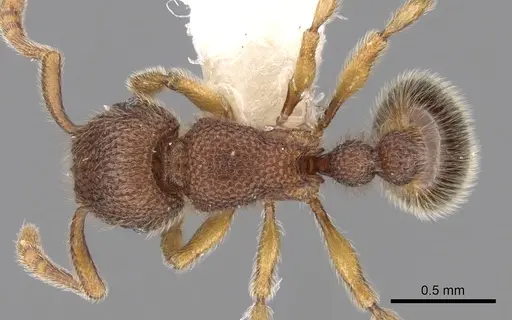
CASENT0901060
View on AntWeb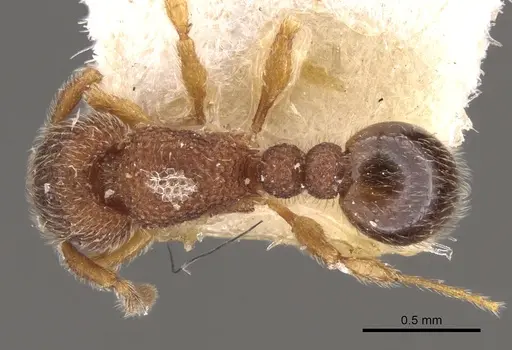
CASENT0904797
View on AntWeb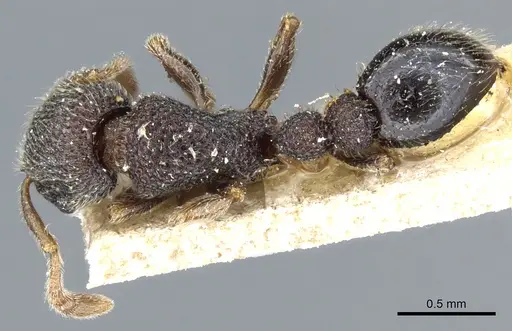
CASENT0909093
View on AntWeb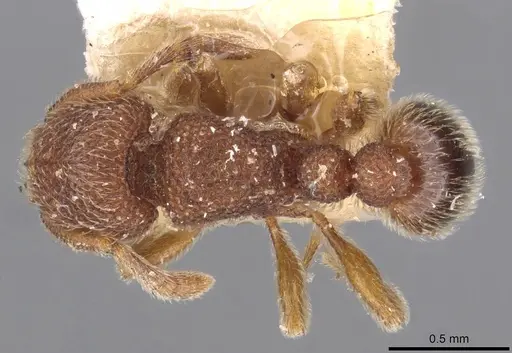
FOCOL0191
View on AntWeb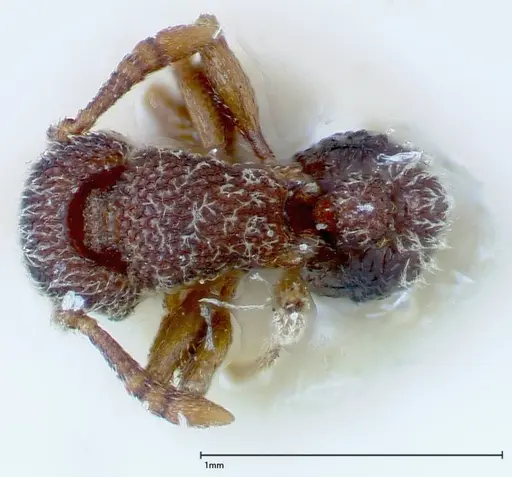
Literature
Loading distribution map...Loading products...