
Tetramorium olana
- Sci. Name
- Tetramorium olana
- Tribe
- Crematogastrini
- Subfamily
- Myrmicinae
- Author
- Hita Garcia & Fisher, 2012
- Distribution
- Found in 1 countries
Introduction
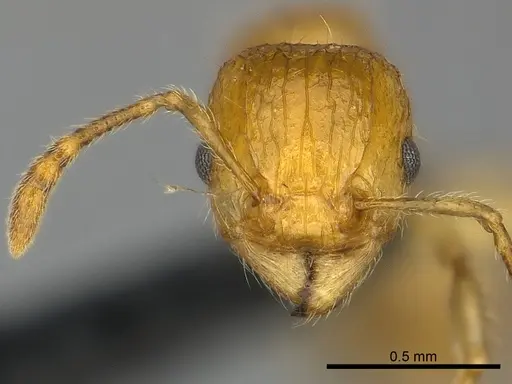
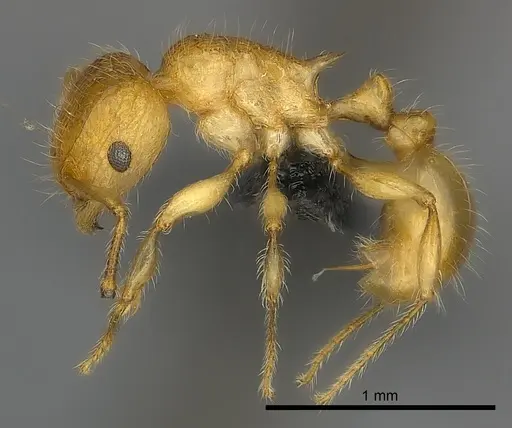
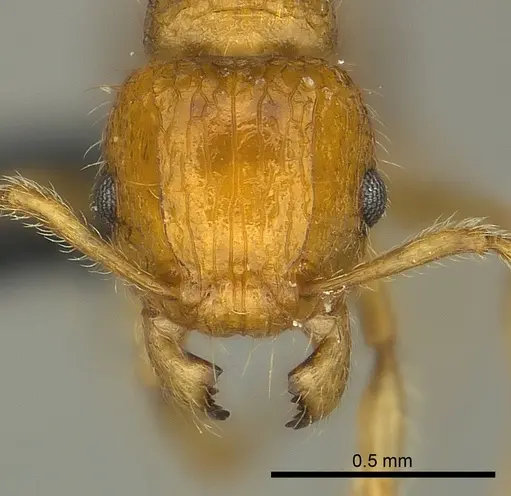
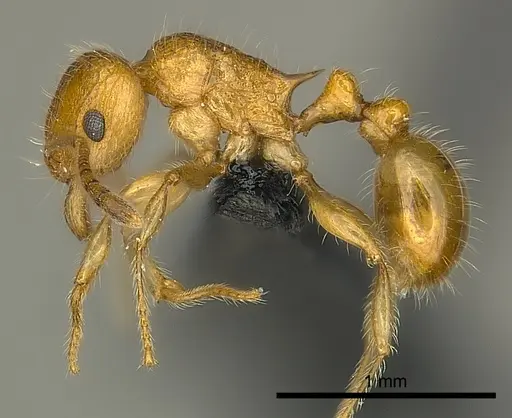
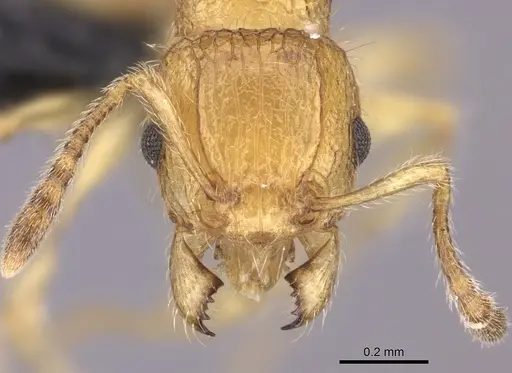
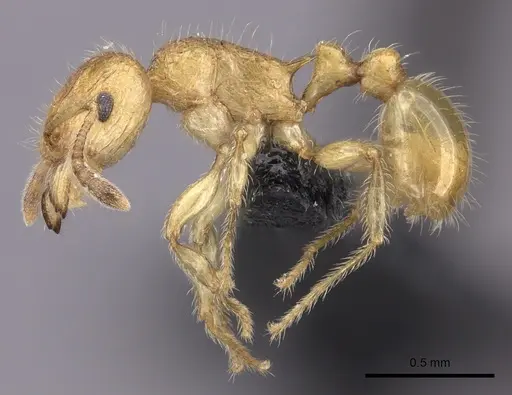
Tetramorium olana is a tiny yellow to light brown ant species from northern Madagascar . Workers are very small (body length not documented, but head measurements indicate a small ant) and have a uniform yellow-brown color with no markings . Their name comes from the Malagasy word for 'problem, ' because the species was tricky to tell apart from relatives . These ants live in rainforests at 400-600 m elevation, where they forage in leaf litter and lower vegetation . Because they're known from just three places in Madagascar, they're rare in the antkeeping hobby .
Quick Summary
- Difficulty: Medium
- Origin & Habitat: Northern Madagascar rainforests at 400-600 m elevation. Only recorded from Manongarivo, Ampasindava, and Andavakoera. Forages in leaf litter and lower vegetation [1].
- Colony Type: Colony structure is unconfirmed. Based on typical Tetramorium patterns, likely single-queen (monogyne) colonies.
- Size & Growth:
- Queen: Unknown, queen not yet described.
- Worker: Size data unavailable, only head measurements recorded, body length not documented [1].
- Colony: Unknown, not documented in wild or captivity.
- Growth: Moderate, estimated from related Tetramorium species.
- Development: Estimated 6-10 weeks at optimal temperature (22-26 °C), based on similar Tetramorium species, direct data unavailable. (Development speed likely depends on stable warm conditions. No specific breeding data for this species.)
- Antkeeping:
- Temperature: Keep at 22-26 °C. Avoid drops below 20 °C or spikes above 30 °C. Stable conditions are more important than precise numbers [1].
- Humidity: High humidity, aim for 70-85%. Nest substrate should be damp but not waterlogged. Use a water reservoir or light misting. Balance with ventilation to prevent mold [1].
- Diapause: No, as a tropical Madagascar species, it likely does not need a winter diapause. Maintain consistent warmth year-round [1].
- Nesting: Y-tong (AAC) or plaster nests work well. They like tight chambers and plenty of hiding spots. A shallow foraging area with leaf litter mimics their natural habitat.
- Behavior: Peaceful and non-aggressive. Workers are small and slow-moving, foraging in leaf litter. They have a modified stinger that smears venom instead of piercing, but they rarely use it. Escape prevention is critical due to their tiny size, they can fit through standard openings. Use fine mesh (0.5 mm or smaller) and fluon barriers.
- Common Issues: escape prevention is critical, they can fit through tiny gaps, use fine mesh and tight seals, high humidity needs can lead to mold if ventilation is poor, wild-caught colonies may carry mites or parasites, no captive breeding data available, expect a learning curve, overfeeding can cause food spoilage and mold due to small colony size
Natural History and Distribution
Tetramorium olana is only known from three rainforest sites in northern Madagascar: Manongarivo, Ampasindava, and Andavakoera, all at 400-600 m elevation [1]. It was first described in 2012 [1]. These ants forage in leaf litter and lower vegetation, which means their microhabitat is moist, shaded, and full of organic matter [1]. Their uniform yellow-brown color helps them blend into the forest floor debris [1]. For captive care, the key is to recreate a humid, forest-floor environment with plenty of leaf litter and hiding spots.
Housing and Nest Setup
Because workers are so small (body size unknown but head measurements indicate a very small ant), escape prevention is vital [1]. Use a nest with tight chambers, Y-tong (AAC) or plaster are good choices, and seal all seams. A test tube setup works for founding, but pack the cotton plug tightly and consider a fluon barrier around the opening. The outworld should have a shallow layer of leaf litter, soil, or debris to mimic their natural foraging environment. Keep the nest substrate consistently moist but not waterlogged, a water reservoir connected to the nest helps maintain stable humidity. Ensure good ventilation to prevent mold growth.
Feeding and Diet
Tetramorium olana are omnivorous, likely feeding on small arthropods, insect carcasses, and honeydew in the wild [1]. In captivity, offer tiny protein sources like fruit flies, pinhead crickets, or small mealworms. Because the ants are tiny, prey items should be no larger than a fruit fly. Sugar sources such as honey water or sugar water can be offered on a small piece of cotton to prevent drowning. Scatter small food pieces across the outworld to mimic leaf litter foraging. Remove uneaten food after 24 hours to avoid mold and pests.
Temperature and Humidity
As a lowland rainforest species, Tetramorium olana needs warm, stable conditions: 22-26 °C is ideal [1]. Avoid temperatures below 20 °C or above 30 °C. Humidity should be kept high (70-85%), the nest substrate should feel damp, and you should see occasional condensation on nest walls. A water reservoir or regular light misting helps, but balance with ventilation. Avoid placing the colony near vents, heaters, or direct sunlight, gradual changes are tolerated better than sudden swings [1].
Colony Development
Colony structure is not documented in the wild. Based on typical Tetramorium patterns, they likely form single-queen (monogyne) colonies [1]. The queen has not been described, so identifying a founding queen is challenging. Development from egg to worker is estimated at 6-10 weeks at optimal temperature, based on related small Tetramorium species. The first workers (nanitics) will be very small. Growth is moderate, expect months before the colony reaches dozens of workers. Because this species was only described in 2012,there is no captive breeding experience to draw on, be ready to adapt and record your observations.
Frequently Asked Questions
How long does it take for Tetramorium olana to produce first workers?
Direct data is unavailable. Based on related Tetramorium species, expect 6-10 weeks from egg to worker at 22-26 °C [1].
What size colony does Tetramorium olana reach?
Colony size is not documented. Based on typical Tetramorium patterns, they might reach a few hundred to perhaps a thousand workers, but this is an estimate [1].
Do Tetramorium olana ants sting?
They have a modified stinger that smears venom rather than piercing, like many Myrmicinae. They are not aggressive and rarely sting unless handled. The sting is not painful to humans due to their tiny size.
Can I keep multiple Tetramorium olana queens together?
Colony structure is unconfirmed. Based on typical Tetramorium behavior, they are likely monogyne. Do not try to combine unrelated queens without evidence of polygyny [1].
What do Tetramorium olana eat?
They are omnivorous. Offer small live prey like fruit flies, pinhead crickets, and very small mealworms, along with sugar water or honey water. Due to their tiny size, prey must be appropriately small [1].
Are Tetramorium olana good for beginners?
No, rated medium difficulty. Their tiny size, high humidity needs, and lack of captive breeding data make them more challenging than common beginner species like Lasius niger or Camponotus. Some experience is recommended [1].
Do Tetramorium olana need hibernation?
No, as a tropical species from Madagascar, they likely do not require a winter diapause. Keep temperatures consistent year-round and avoid cooling below 20 °C [1].
Why are my Tetramorium olana escaping?
Their tiny size means they can squeeze through small gaps. Use fine mesh (0.5 mm or smaller), apply fluon to barriers, and check all seams in the nest and outworld. Even tiny cracks will be exploited [1].
When should I move Tetramorium olana to a formicarium?
Wait until the colony has at least 50-100 workers. They do well in test tubes for long periods as long as humidity is maintained. Move only when the test tube becomes too crowded or the water is depleted [1].
Report an Issue
The current care sheet is based fully on literature. See inconsistencies, or something that's incorrect? Please , it will be resolved after review from an admin. Contributing to the blogs tab also helps providing information, to make us be able to further improve the caresheets. Thank you for your support!
References

This caresheet is licensed under CC BY-SA 4.0 .
Community Blogs
CASENT0044365
View on AntWeb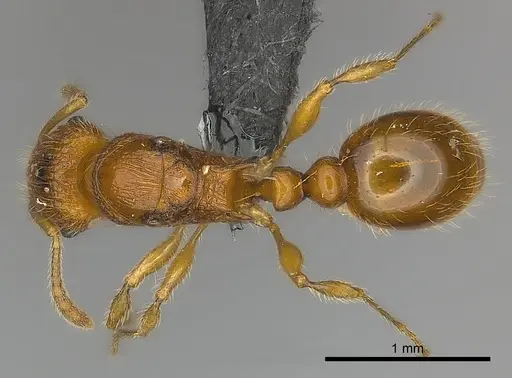
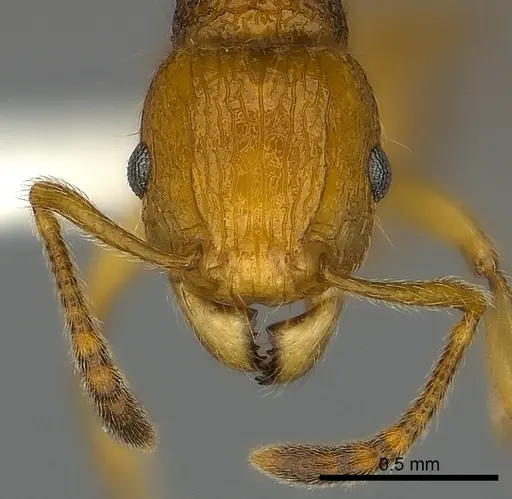
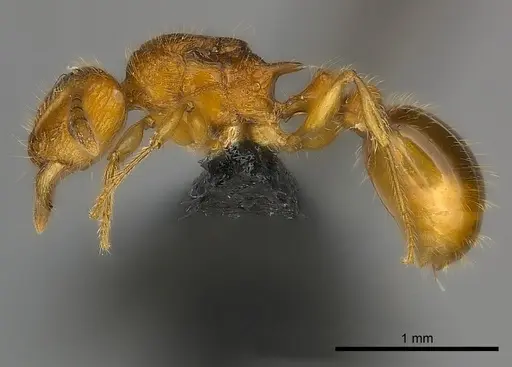
CASENT0044402
View on AntWeb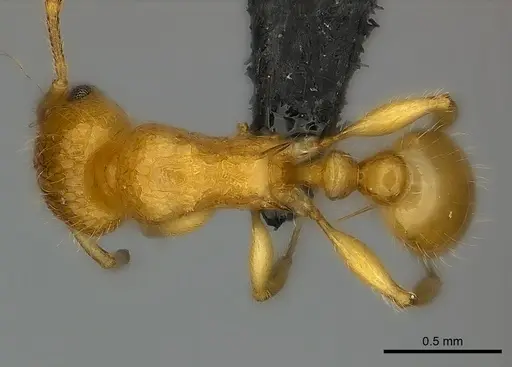
CASENT0044484
View on AntWeb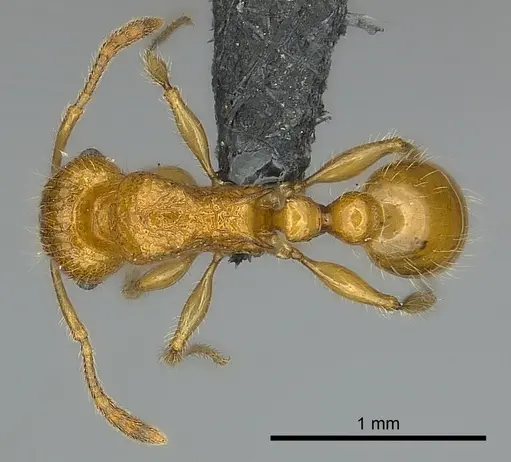
CASENT0044485
View on AntWeb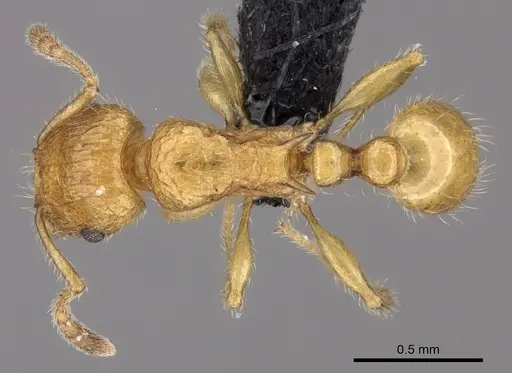
Literature
Loading distribution map...Loading products...