
Tetramorium occidentale
- Sci. Name
- Tetramorium occidentale
- Tribe
- Crematogastrini
- Subfamily
- Myrmicinae
- Author
- Santschi, 1916
- Distribution
- Found in 6 countries
Introduction
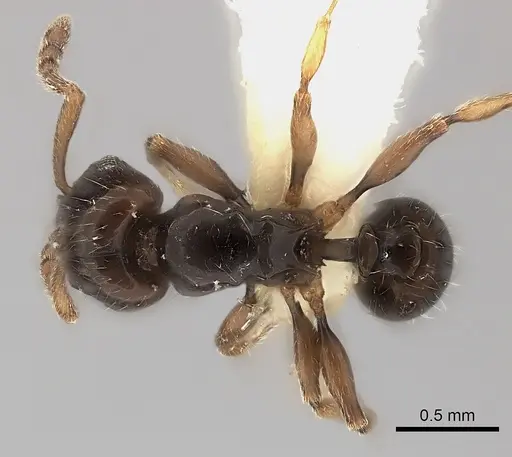
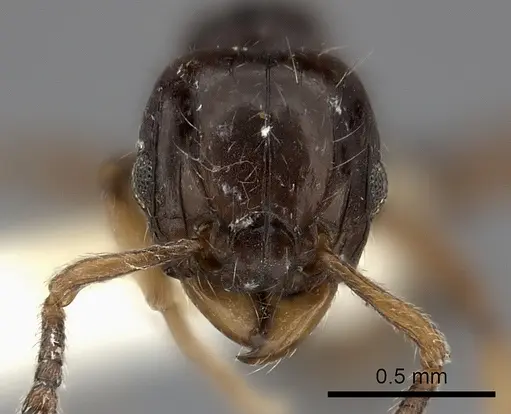
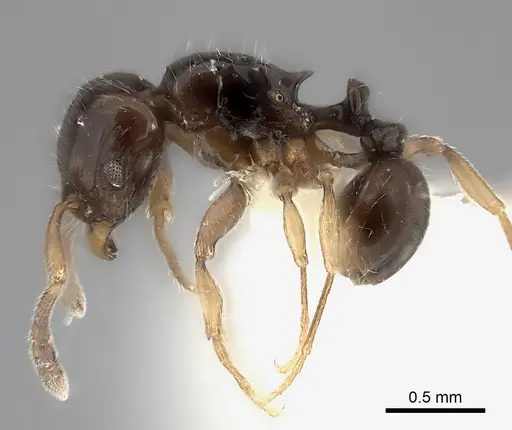
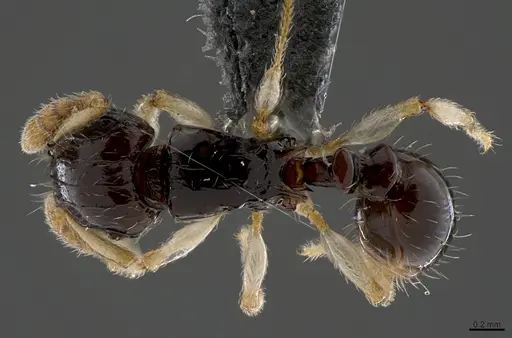
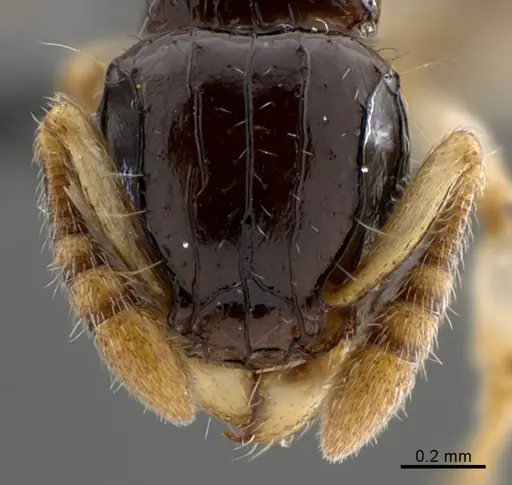
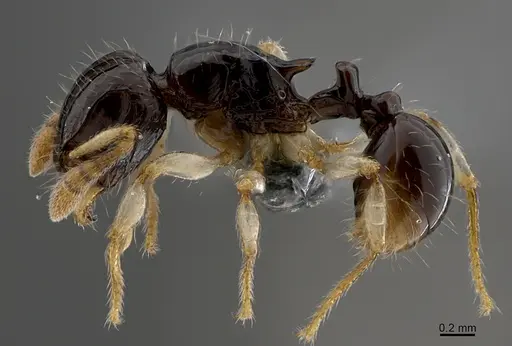
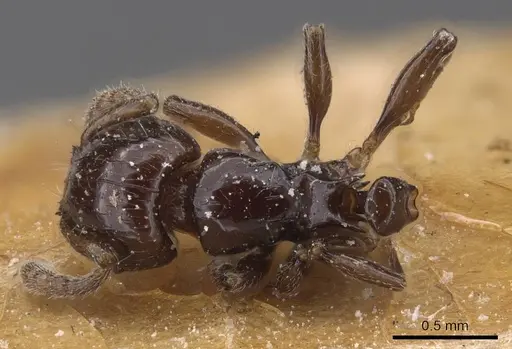
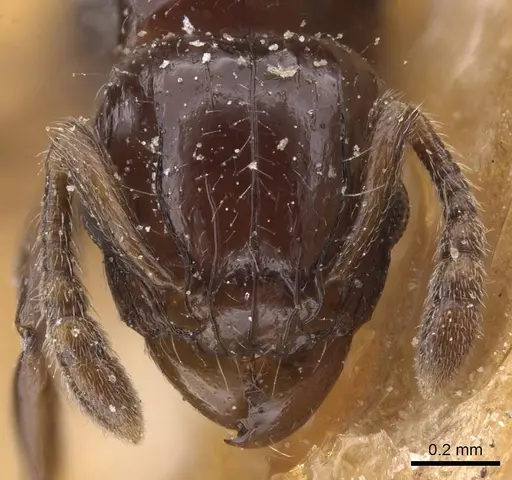
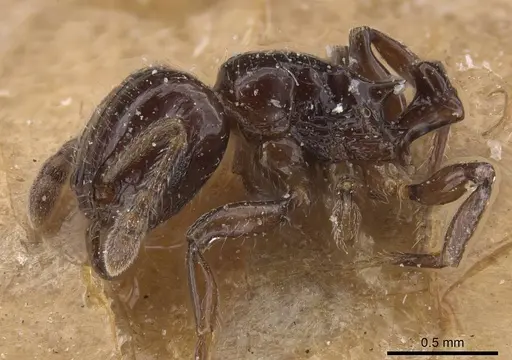
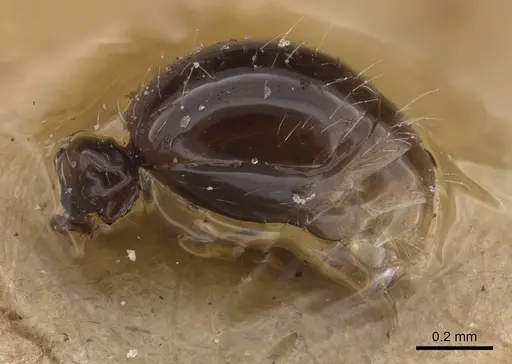
Tetramorium occidentale is a small, dark ant from the rainforests of West and Central Africa. Workers measure 2.3-3.3 mm in total length and are uniformly very dark brown to black with lighter brown legs and antennae . They have smooth, shiny bodies, short antennal scapes, and propodeal spines that vary a lot in length and shape even within the same population . This species belongs to the Tetramorium weitzeckeri group, specifically the muralti complex . Despite being widespread across countries like Cameroon, Ghana, Democratic Republic of Congo, and Uganda, it is rarely collected and seems to live a cryptic lifestyle, possibly in lower vegetation or leaf litter .
Quick Summary
- Difficulty: Medium
- Origin & Habitat: West and Central African rainforests, including Benin, Cameroon, Central African Republic, Democratic Republic of Congo, Ghana, Ivory Coast, Kenya, Togo, and Principe Island [2]. They nest in rotten stumps and logs and forage in leaf litter on the forest floor [1].
- Colony Type: Colony structure is not well documented. Based on typical Tetramorium patterns, they are likely monogyne (single-queen). They appear to live in small, cryptic colonies.
- Size & Growth:
- Queen: Unconfirmed, no documented queen measurements exist for this species.
- Worker: 2.3-3.3 mm total length [1]
- Colony: Unknown, likely small to moderate based on the cryptic lifestyle and rare collection numbers [2]
- Growth: Moderate (inferred from typical Tetramorium development)
- Development: Estimated 6-8 weeks at tropical temperatures (24-28°C) based on related Tetramorium species (Direct development data is not available for this species.)
- Antkeeping:
- Temperature: Keep at 24-28°C. As a tropical rainforest species, it needs warm, stable conditions and should not drop below 22°C.
- Humidity: Keep the nest substrate consistently moist but not waterlogged. This matches the damp leaf-litter and rotting wood where they naturally live.
- Diapause: No, this is a tropical species that does not require hibernation. Keep warm year-round.
- Nesting: Provide a nest that mimics rotting wood or leaf litter. Y-tong (AAC), plaster, or a naturalistic setup with damp substrate and small pieces of rotting wood all work well [1].
- Behavior: Tetramorium occidentale is a calm, non‑aggressive species. Workers are small and prefer to hide rather than fight. They have a modified spatulate stinger used to smear venom, but they rarely use it against keepers. Their small size (under 3.5 mm) means they can squeeze through tiny gaps, secure all connections with fine mesh. They forage cryptically and may not investigate food placed in the open [4].
- Common Issues: small size makes escape prevention critical, use fine mesh and tight-fitting lids., high humidity requirements can lead to mold if ventilation is poor, balance moisture with airflow., cryptic behavior means the colony may stay hidden and rarely come to visible food baits., limited availability in the hobby, wild‑caught colonies may need careful acclimation.
Housing and Nest Setup
Tetramorium occidentale does well in Y‑tong (AAC) or plaster nests that hold moisture. Since they naturally nest in rotting wood and leaf litter, a naturalistic setup with damp substrate and small bits of rotting wood is also a good choice [1]. The key is keeping humidity high while also providing enough ventilation to stop mold. A water reservoir connected to the nest helps maintain steady moisture. Because workers are only 2.3-3.3 mm, you need to seal every gap, these ants can get through cracks that look closed [1].
Feeding and Diet
In the wild, Tetramorium species usually hunt small insects and collect honeydew. Offer a varied diet: small live prey like fruit flies, pinhead crickets, or springtails, plus sugar water or honey water. Note that this species may not rush to food left in the open, in field tests they showed no interest in bait stations [4]. Feed small amounts every 2-3 days and remove uneaten food promptly to avoid mold in the humid setup.
Temperature and Humidity Control
As a tropical rainforest ant, Tetramorium occidentale needs warmth: aim for 24-28 °C. Avoid letting the nest drop below 22 °C for long periods. Humidity should be kept high, the nest substrate should feel damp but not dripping. A hygrometer can help, but watching the condensation on the nest walls is also a good guide. Because they come from rainforest leaf litter, steady warmth and moisture year‑round are important [2][1].
Colony Establishment
When you get a queen, expect a slow start. She will seal herself in a chamber and raise the first workers (nanitics) using her stored fat reserves, this is typical of claustral founding. The founding period can take 6-8 weeks at 24-28 °C, and the queen may stay hidden the whole time. Once the first workers appear, the colony will slowly become more active. Be patient, this species is naturally shy and may not show much activity until the colony is well‑established. [2]
Handling and Temperament
This ant is very easy to work with, it is calm and rarely tries to defend itself. Workers have a modified spatulate stinger that they use to smear venom, but they almost never use it on keepers. Their bites are negligible. The main risk is escapes due to their small size. When you open the nest, do it over a large tray and avoid sudden movements that could send workers scattering.
Frequently Asked Questions
How long does it take for Tetramorium occidentale to raise first workers?
Based on related Tetramorium species, expect 6-8 weeks from egg to first worker at 24-28 °C. The queen stays sealed in her founding chamber during most of this time.
Can I keep Tetramorium occidentale in a test tube setup?
Yes, test tubes work fine for founding colonies. Keep the cotton plug moist but not flooded, and keep the tube around 26 °C. When the colony reaches about 15-25 workers, move them to a Y‑tong or plaster nest that holds moisture better.
Do Tetramorium occidentale ants sting?
They have a modified, flattened stinger that they use to smear venom onto enemies rather than piercing. It is not dangerous to humans, the effect is mild and rarely used against keepers.
Are Tetramorium occidentale good for beginners?
This species is medium difficulty. They are not aggressive, but their small size (escape risk) and high humidity needs can be challenging for beginners. Also, their cryptic behavior makes them harder to observe than more active ants.
What do Tetramorium occidentale eat?
They accept small live prey (fruit flies, springtails, pinhead crickets) and sugar sources (honey water, sugar water). Because they may ignore food in open bait stations [4], try offering food in sheltered spots within the outworld.
Do I need to hibernate Tetramorium occidentale?
No, this is a tropical African species that does not need hibernation. Keep temperatures warm (24-28 °C) year‑round. Extended periods below 22 °C can stress the colony.
How big do Tetramorium occidentale colonies get?
Colony size has not been studied. Based on the cryptic lifestyle and how rarely they are collected, colonies are probably small to moderate, likely under 500 workers. There is no evidence of large supercolonies.
Why is my Tetramorium occidentale colony not visible at food baits?
This species is known to avoid open bait stations, field studies recorded “no observations at baits” for them [4]. They are cryptic foragers that prefer to stay hidden. Try offering food in covered or dark spots within the outworld.
When should I move my colony to a formicarium?
Move them to a larger Y‑tong or plaster nest when the test tube starts to get crowded (roughly 15-25 workers) or when moisture control becomes difficult. This species benefits from a nest that can maintain high humidity.
Can I keep multiple queens together?
Colony structure is not well documented for this species. Based on typical Tetramorium patterns, single‑queen colonies are the norm. Combining unrelated queens has not been studied and could lead to fighting, so it is not recommended.
Report an Issue
The current care sheet is based fully on literature. See inconsistencies, or something that's incorrect? Please , it will be resolved after review from an admin. Contributing to the blogs tab also helps providing information, to make us be able to further improve the caresheets. Thank you for your support!
References

This caresheet is licensed under CC BY-SA 4.0 .
Community Blogs
Literature
Loading distribution map...Loading products...