
Tetramorium nazgul
- Sci. Name
- Tetramorium nazgul
- Tribe
- Crematogastrini
- Subfamily
- Myrmicinae
- Author
- Hita Garcia & Fisher, 2012
- Distribution
- Found in 2 countries
Introduction
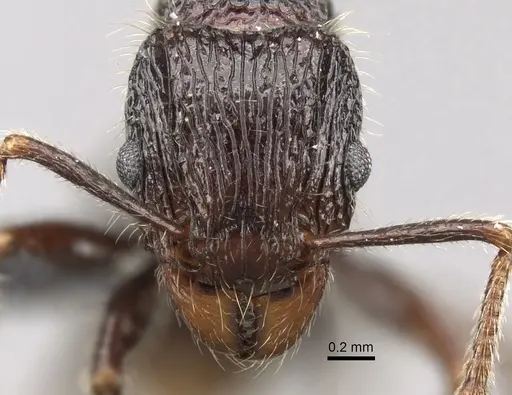
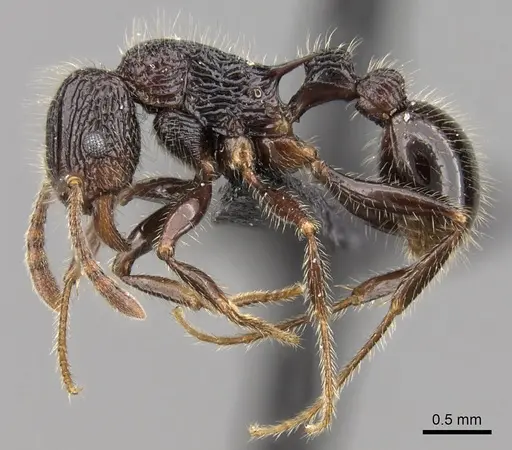
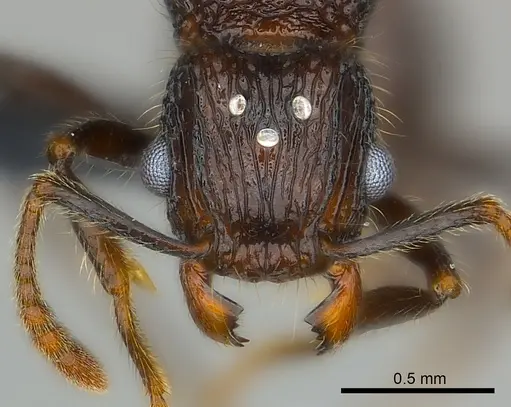
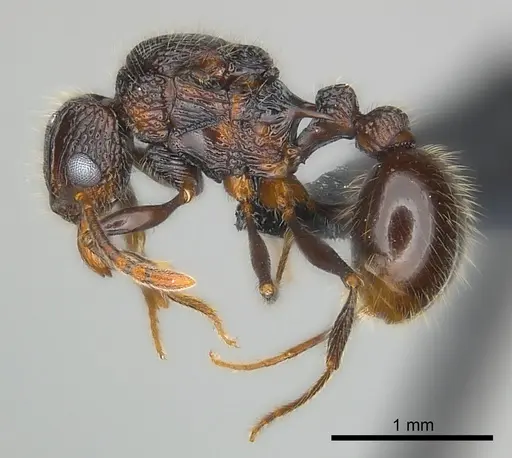
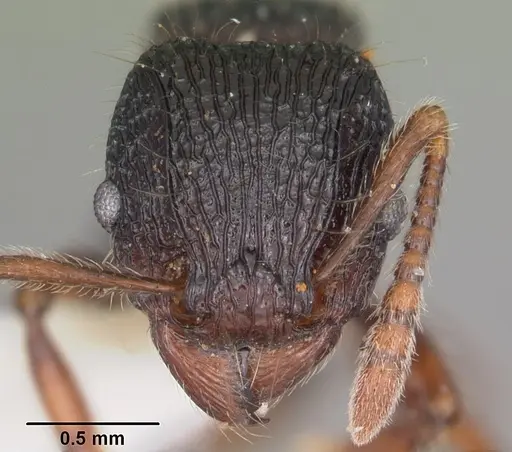
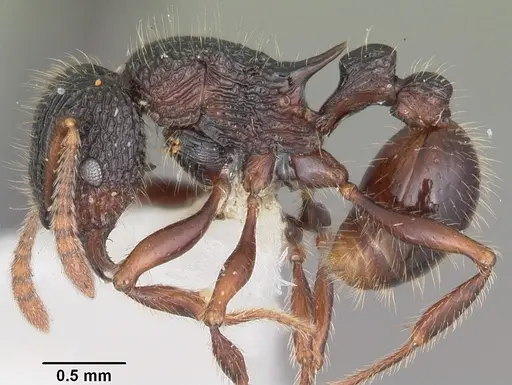
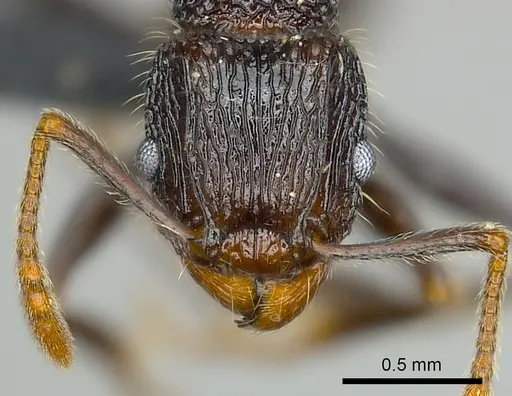
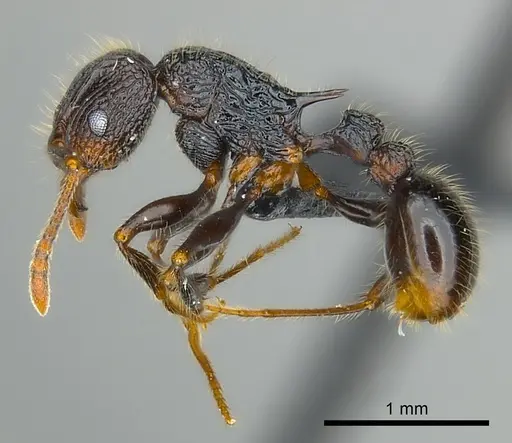
Tetramorium nazgul is a dark, leaf-litter ant native to Madagascar, first described in 2012 . Its body is uniform dark brown to black, and it has very long propodeal spines and comparatively long antennal scapes for its species group . Workers are tiny: head length is 0.95-1.06 mm (head only; total body length is not documented) . This species belongs to the Tetramorium tortuosum species group and the T. smaug species complex, a lineage of specialized leaf-litter ants found only in Madagascar . The species name 'nazgul' comes from J.R.R. Tolkien's Lord of the Rings, referring to the Ringwraiths . T. nazgul inhabits the leaf litter layer of tropical dry forests and montane rainforests at elevations between 700 and 1100 m . It is known from only three sites: Analalava, Zombitse, and Ambohijanahary . Because this species was only described recently, much of its biology is unknown, and captive care must be inferred from related Tetramorium species and its natural habitat preferences.
Quick Summary
- Difficulty: Medium
- Origin & Habitat: Native to Madagascar, found in tropical dry forests and montane rainforests at 700-1100 m elevation [1]. It lives in the leaf litter layer, presumably in the humid microhabitat beneath the forest floor [1].
- Colony Type: Unconfirmed. Based on typical Tetramorium patterns, likely single-queen (monogyne) colonies. No data on queen morphology or social structure are available for this species.
- Size & Growth:
- Queen: Unknown, queen not documented in available literature [1].
- Worker: Worker total body length not documented, head length is 0.95-1.06 mm (head only) [1]. These are very small ants, comparable to other Tetramorium leaf-litter species.
- Colony: Unknown, not documented. Inferred from similar Tetramorium species to reach several hundred workers.
- Growth: Unknown, no data. Estimated as moderate based on genus patterns.
- Development: Unconfirmed, no species-specific data. Based on related Tetramorium, expect 6-10 weeks at 22-26°C (estimate). (Development timeline is inferred from genus-level data, not species-specific research.)
- Antkeeping:
- Temperature: Based on Madagascar's montane rainforest habitat, aim for 22-26°C. Provide a gentle gradient. Avoid temperatures below 18°C or above 30°C.
- Humidity: High humidity is essential, these are leaf-litter ants from humid forests. Keep nest substrate consistently moist but not waterlogged. Target 70-85% relative humidity in the nest area. Provide a water source and occasional misting of the outworld.
- Diapause: No, Madagascar species do not experience true winter. Maintain consistent temperatures year-round. They may show reduced activity during cooler periods but do not require hibernation.
- Nesting: These ants prefer humid, enclosed spaces. Test tubes work well for founding. For established colonies, use Y-tong (AAC) or plaster nests with good moisture retention. Chambers should be scaled to their small size. Always provide an outworld for foraging.
- Behavior: T. nazgul is a small, ground-dwelling ant. Workers are dark and active foragers within the leaf litter. Like other members of the tribe Crematogastrini, they have a modified spatulate stinger used to smear venom onto enemies rather than piercing. Their tiny size (head under 1 mm) makes escape prevention critical, they can squeeze through very small gaps. Use fine mesh and tight-fitting lids. They are not aggressive toward keepers but will defend their nest.
- Common Issues: extremely small workers require impeccable escape prevention, use fine mesh and seal all gaps., high humidity needs can cause mold if ventilation is poor, balance moisture with airflow., limited species-specific information means care is experimental, monitor colony response closely., as a recently described species, wild-caught colonies may carry unknown parasites or diseases.
Housing and Nest Setup
Replicate the natural leaf-litter habitat of T. nazgul [1]. Test tubes are ideal for founding colonies, use a standard setup with a water reservoir sealed by cotton. Keep the tube humid but not flooded. For established colonies, Y-tong (AAC) nests or plaster nests provide good humidity control [1]. Chambers should be small and tight to make the ants feel secure. Escape prevention is critical: their tiny size (head length about 1 mm) means they can pass through gaps you might not notice. Cover ventilation holes with fine mesh (at least 0.3 mm openings). Provide an outworld with a shallow water dish and feeding area.
Feeding and Diet
Based on typical Tetramorium behavior, T. nazgul is a generalist forager. Offer a varied diet: protein from small insects (fruit flies, pinhead crickets, mealworms) and carbohydrates from diluted honey or sugar water. Like many leaf-litter ants, they likely scavenge small arthropods and may tend aphids for honeydew in nature. Feed small amounts every 2-3 days and remove uneaten food promptly to prevent mold. Always provide fresh water. Start with prey items appropriate to their tiny size and adjust based on acceptance. [2]
Temperature and Humidity
Maintain temperatures around 22-26°C to mirror their Madagascar montane rainforest and dry forest origins [1]. A slight gradient allows self-regulation. Room temperature works well. Humidity is more critical, these leaf-litter ants need high moisture (70-85% relative humidity) in the nest. Keep the substrate consistently moist but not waterlogged. A water reservoir in the test tube helps. Monitor for condensation: too much signals poor ventilation, too little means the nest is drying out. Avoid placing the nest near drafts or heat sources.
Colony Development
Colony development for T. nazgul is not documented. Based on related Tetramorium, founding is likely claustral, the queen seals herself in a chamber and raises the first workers on stored fat reserves. First workers (nanitics) are smaller than later workers. Growth is estimated as moderate, expect several months to reach 50+ workers. The colony may eventually grow to several hundred workers, though the maximum is unknown. Be patient during founding, frequent disturbance can harm the colony. [1]
Behavior and Temperament
T. nazgul is a small, leaf-litter ant. Workers are dark and active foragers within the nest and outworld. Like other Myrmicinae of the tribe Crematogastrini, they have a modified spatulate stinger used to smear venom onto enemies rather than inject it. Their sting is not dangerous to humans due to their tiny size. The key behavioral challenge is their escape ability: with a head length about 1 mm, they can exploit tiny gaps. Excellent escape prevention is non‑negotiable. [1]
Frequently Asked Questions
How long does it take for Tetramorium nazgul to raise first workers?
The exact timeline is unconfirmed. Based on related Tetramorium species, expect roughly 6-10 weeks from egg to first worker at 22-26°C. Founding colonies can be slow, be patient and minimize disturbance.
Can I keep Tetramorium nazgul in a test tube?
Yes, test tubes are suitable for founding colonies. Use a standard setup with a water reservoir at one end, sealed with cotton. Keep the tube humid but not flooded. When the colony reaches 30-50 workers, consider moving to a larger formicarium like a Y‑tong nest.
Do Tetramorium nazgul ants sting?
T. nazgul belongs to the tribe Crematogastrini, which have a modified spatulate stinger designed to smear venom rather than pierce. Because the workers are very small, their sting is unlikely to penetrate human skin and is not considered dangerous.
What do Tetramorium nazgul eat?
Based on typical Tetramorium feeding habits, they are generalist foragers. Offer small insects (fruit flies, pinhead crickets, mealworms) for protein, and diluted honey or sugar water for carbohydrates. Feed small amounts every 2-3 days and remove leftovers.
Are Tetramorium nazgul good for beginners?
This species is rated Medium difficulty. While not the most challenging, limited species-specific captive breeding information exists. Beginners should be prepared for a learning curve and may prefer more established species.
How big do Tetramorium nazgul colonies get?
Colony size is not documented. Based on similar Tetramorium species, colonies likely reach several hundred workers over time. Growth is probably moderate, so plan for an expanding nest.
Do Tetramorium nazgul need hibernation?
No, as a Madagascar species, they do not experience true winter. Maintain consistent temperatures year-round (22-26°C). They may show slightly reduced activity during cooler periods, but no diapause is required.
Why are my Tetramorium nazgul escaping?
Their tiny size (head length about 1 mm) allows them to squeeze through very small gaps. Review your setup: use fine mesh (at least 0.3 mm openings), ensure all seals are tight, and check tubing connections. Even small gaps are major openings to these ants.
Can I keep multiple Tetramorium nazgul queens together?
Colony structure is unconfirmed. Based on typical Tetramorium patterns, they are likely monogyne (single queen). Combining unrelated queens is not recommended without species-specific research. Keep multiple queens together only if they come from an established polygyne colony.
What temperature is best for Tetramorium nazgul?
Aim for 22-26°C, matching their Madagascar montane forest habitat. Room temperature usually works. A heating cable on one side can provide a gradient. Avoid temperatures below 18°C or above 30°C.
Report an Issue
The current care sheet is based fully on literature. See inconsistencies, or something that's incorrect? Please , it will be resolved after review from an admin. Contributing to the blogs tab also helps providing information, to make us be able to further improve the caresheets. Thank you for your support!
References

This caresheet is licensed under CC BY-SA 4.0 .
Community Blogs
CASENT0028556
View on AntWeb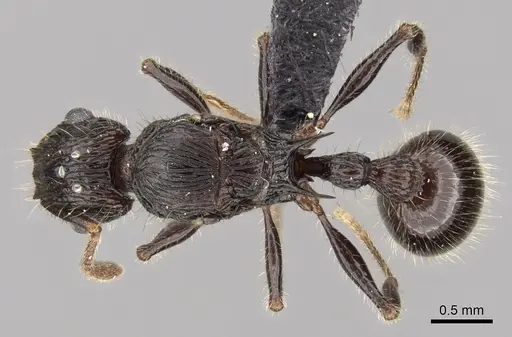
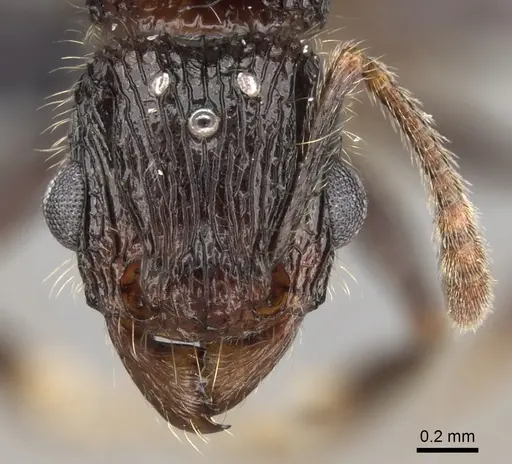
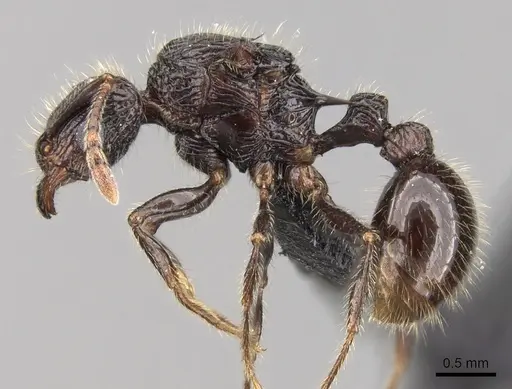
CASENT0028625
View on AntWeb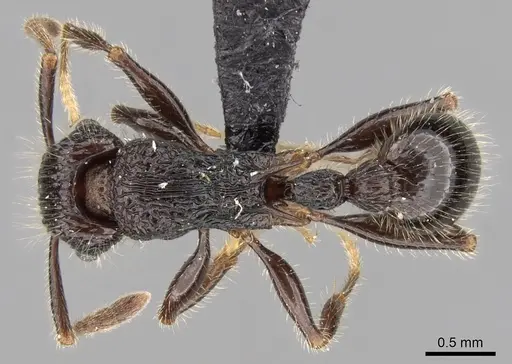
CASENT0030059
View on AntWeb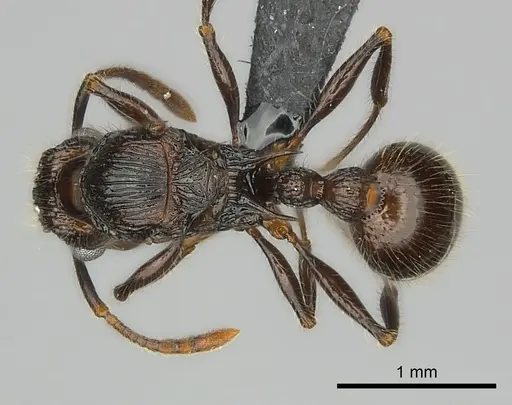
CASENT0102983
View on AntWeb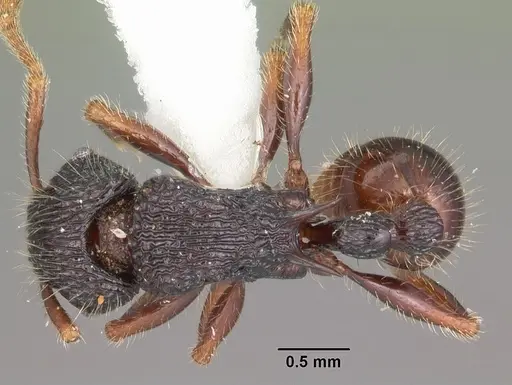
CASENT0496733
View on AntWeb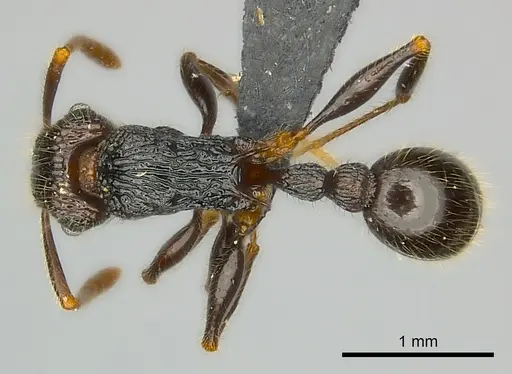
Literature
Loading distribution map...Loading products...