
Tetramorium mutatum
- Sci. Name
- Tetramorium mutatum
- Tribe
- Crematogastrini
- Subfamily
- Myrmicinae
- Author
- Bolton, 1985
- Distribution
- Found in 0 countries
Introduction
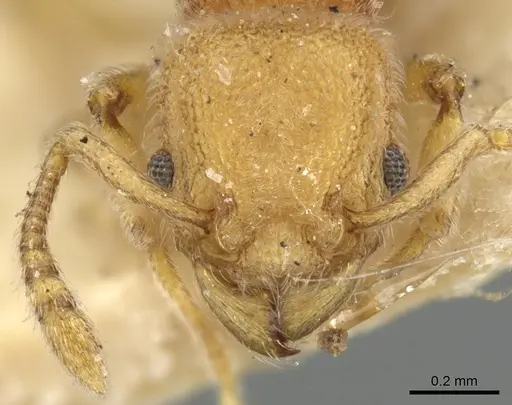
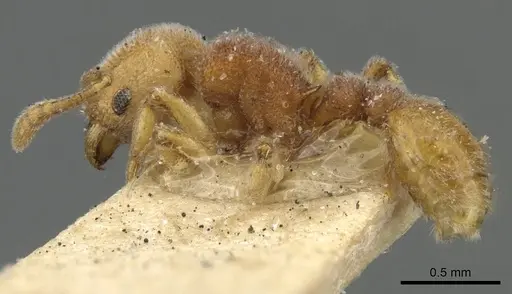
Tetramorium mutatum is a small ant species native to the Solomon Islands, recorded only from Makira and Guadalcanal . Workers are typical of the genus: small, dark-colored, with a compact body and a two-segmented petiole. The species was first described as Triglyphothrix pulchella by Mann in 1919,but that name was already taken, so Bolton renamed it Tetramorium mutatum in 1985 . These ants live in tropical forest environments on the Solomon Islands, a warm and humid archipelago.
Quick Summary
- Difficulty: Medium
- Origin & Habitat: Solomon Islands (Makira, Guadalcanal), tropical island environments with humid forest conditions [1]
- Colony Type: Colony structure is unconfirmed. Based on typical Tetramorium patterns, likely single-queen (monogyne) colonies, though this has not been documented for this species.
- Size & Growth:
- Queen: Estimated 6-8 mm based on genus patterns, no direct measurements are available.
- Worker: Estimated 3-4 mm based on genus patterns, no direct measurements are available.
- Colony: Unknown for this species. Based on related Tetramorium, colonies likely reach several hundred workers.
- Growth: Moderate, based on typical Tetramorium development.
- Development: Estimated 6-8 weeks at tropical temperatures (24-28°C) based on genus data for similar species. (Specific data for T. mutatum is unavailable, timeline is inferred from related Tetramorium.)
- Antkeeping:
- Temperature: Keep at 24-28°C. These are tropical ants from the Solomon Islands and need warmth year-round [2].
- Humidity: High humidity, simulate the moist tropical forest floor. Keep the nest substrate consistently damp but not waterlogged.
- Diapause: No, tropical ants without cold winters, so no hibernation is needed.
- Nesting: Based on typical Tetramorium behavior, they likely nest in soil or under stones. In captivity, a test tube works for founding, then a Y-tong (AAC), plaster, or 3D-printed nest works well. They prefer tight, snug chambers.
- Behavior: Based on genus-level observations, these ants are generally non-aggressive and moderate in activity. Workers are small, forage for small insects, and likely collect honeydew. They have a modified spatulate stinger used for smearing venom rather than piercing, a defense shared by many Crematogastrini. Due to their small size, escape prevention is important.
- Common Issues: tropical temperature requirements, colonies may struggle if kept in cool rooms., high humidity needs can lead to mold if ventilation is poor., small initial colony size, founding colonies are fragile and easily stressed., no species-specific care data, care is based on Tetramorium patterns, so individual colonies may vary., wild-caught colonies may carry parasites or diseases unfamiliar to captive setups.
Origin and Natural History
Tetramorium mutatum is known only from the Solomon Islands, an archipelago in the southwestern Pacific. It was first collected by William M. Mann in 1919 and described as Tetramorium pulchellum. That name was already in use, so Barry Bolton gave it the replacement name Tetramorium mutatum in 1985 [1]. Records come from Makira and Guadalcanal, two of the larger islands [1]. They live in tropical humid forests, with warm temperatures and frequent rain year-round.
Housing and Nest Setup
For founding colonies, a standard test tube setup works well. Fill the tube about one-third with water and plug the wet end with cotton to provide constant humidity. Place the tube in a dark, undisturbed spot. Once the colony reaches 20-30 workers, you can move them to a more permanent nest. Y-tong (autoclaved aerated concrete), plaster, or 3D-printed nests are good choices because they allow high humidity and visibility. These ants prefer tight, snug chambers. Use escape barriers like fluon or PTFE on the edges of the outworld, as their small size lets them squeeze through tiny gaps.
Feeding and Diet
Like most Tetramorium, T. mutatum is omnivorous. Offer small insects for protein: fruit flies, pinhead crickets, or mealworm pieces. Also provide sugar sources like honey water or sugar water. In the wild they likely scavenge small arthropods and collect honeydew. Feed appropriate prey sizes, tiny items for small colonies, larger prey once many workers are present. Remove uneaten protein after 24-48 hours to prevent mold. Offer sugar water every few days and protein once or twice a week, depending on colony size and activity.
Temperature and Humidity Requirements
As tropical ants, they need warm, humid conditions. Keep the nest at 24-28°C (75-82°F) year-round. A heating cable on one side of the nest creates a temperature gradient, letting ants pick their preferred spot. Avoid long periods below 22°C, which can weaken or kill the colony. Humidity should be high, achieved by keeping the test tube cotton wet, or by using a nest with water reservoirs. Mist the outworld if it dries out, but make sure there's enough ventilation to prevent stagnant air and mold.
Colony Development and Growth
Based on typical Tetramorium behavior, the founding queen is claustral, she seals herself in a chamber and raises the first workers using stored fat reserves. First workers (nanitics) are smaller than mature workers. At optimal tropical temperatures (24-28°C), the first workers may appear in about 6-8 weeks, but this is an estimate from related species. After that, colony growth is moderate. With good feeding and steady warmth, the colony should reach a few dozen workers in the first few months. Avoid disturbing the founding queen to prevent stress, which can cause her to eat eggs or abandon the nest.
Frequently Asked Questions
How long does it take for Tetramorium mutatum to get first workers?
Based on typical Tetramorium development, expect first workers in about 6-8 weeks at 24-28°C. This is an estimate, no specific data exists for this species.
Do Tetramorium mutatum ants sting?
They belong to the subfamily Myrmicinae and tribe Crematogastrini, which have a modified spatulate stinger used for smearing venom rather than piercing. They are generally not aggressive and are unlikely to sting in defense.
What temperature do Tetramorium mutatum ants need?
Keep them warm at 24-28°C (75-82°F) year-round. Avoid prolonged exposure below 22°C.
Can I keep multiple Tetramorium mutatum queens together?
This is not documented for this species. Based on typical Tetramorium patterns they likely have single-queen colonies. Combining unrelated queens is not recommended.
How big do Tetramorium mutatum colonies get?
Colony size is unknown for this species. Related Tetramorium species can reach several hundred workers, so it may be similar.
Do Tetramorium mutatum need hibernation?
No, they are tropical ants from a region without cold winters and do not require diapause. Keep them warm year-round.
What do Tetramorium mutatum ants eat?
They are omnivorous. Offer small insects (fruit flies, small crickets) for protein and honey water or sugar water for carbohydrates.
Is Tetramorium mutatum good for beginners?
It is rated Medium difficulty. The lack of species-specific data means you'll need to adjust care based on colony behavior. The tropical temperature and humidity requirements are the main challenges.
When should I move Tetramorium mutatum to a formicarium?
Move them when the colony has 20-30 workers. Before that, a test tube provides ideal humidity and security. Connect the test tube to the formicarium and let the ants explore before moving brood and queen.
Why is my Tetramorium mutatum colony dying?
Common causes: temperatures below 22°C (tropical ants are sensitive), low humidity causing desiccation, mold from poor ventilation, or stress from disturbance during founding. Check temperature and humidity first.
Report an Issue
The current care sheet is based fully on literature. See inconsistencies, or something that's incorrect? Please , it will be resolved after review from an admin. Contributing to the blogs tab also helps providing information, to make us be able to further improve the caresheets. Thank you for your support!
References

This caresheet is licensed under CC BY-SA 4.0 .
Community Blogs
CASENT0901067
View on AntWeb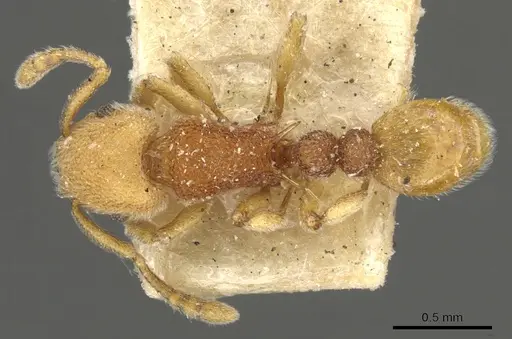
Literature
Loading distribution map...Loading products...