
Tetramorium muscorum
- Sci. Name
- Tetramorium muscorum
- Tribe
- Crematogastrini
- Subfamily
- Myrmicinae
- Author
- Arnold, 1926
- Distribution
- Found in 6 countries
Introduction
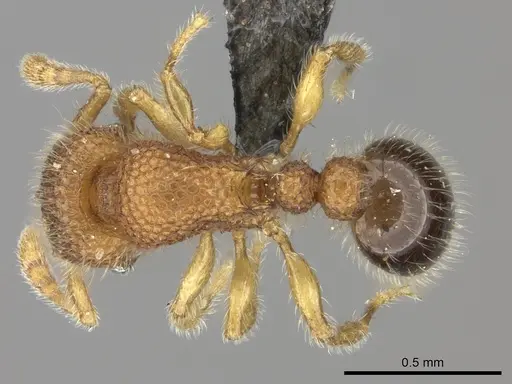
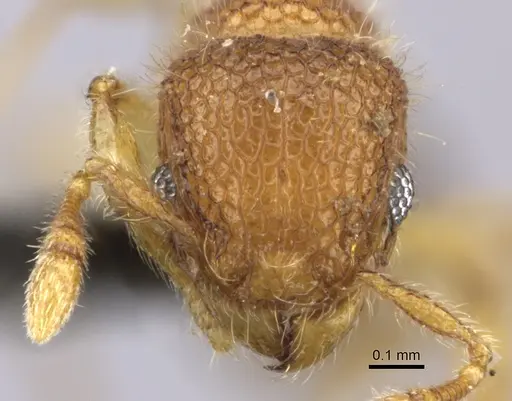
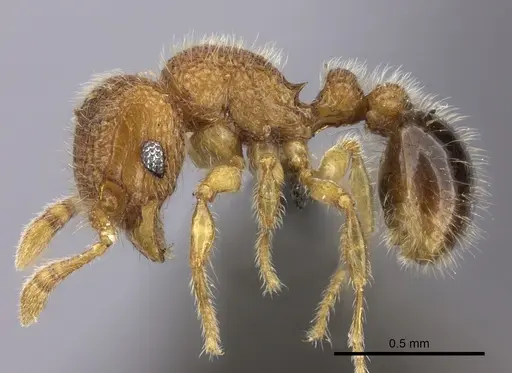
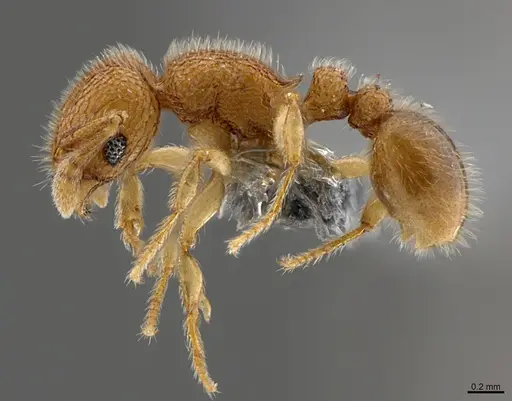
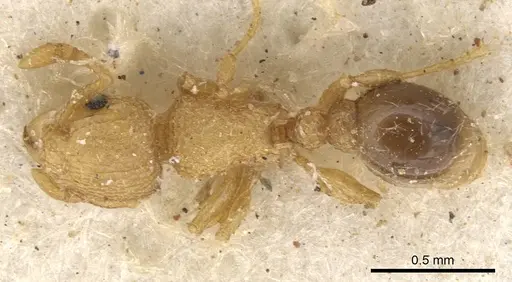
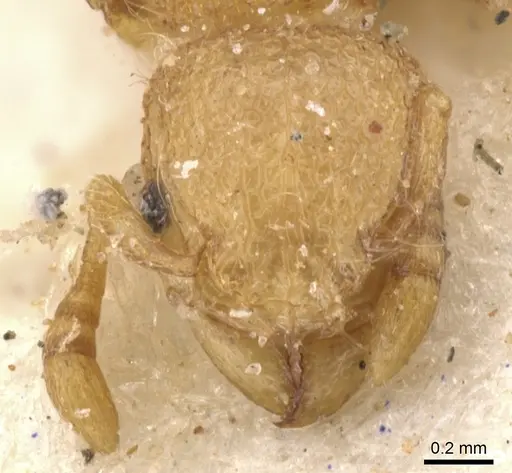
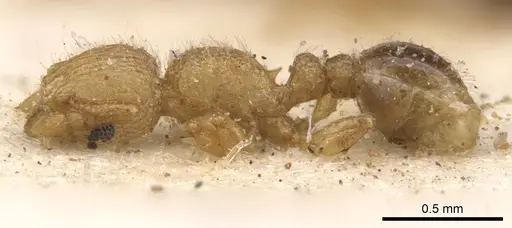
Tetramorium muscorum is a small ant species native to the Afrotropical region, found in scattered locations across central and eastern Africa including Benin, Democratic Republic of Congo, Ivory Coast, Mozambique, Uganda, Tanzania, and Rwanda . Workers are typical of the genus - small, dark-bodied ants with a two-segmented petiole and 12-segmented antennae. This species nests in the ground and has been recorded in both natural forests and agricultural areas, such as mango orchards in Benin . Originally described as *Triglyphothrix muscorum*, it was reclassified into the genus *Tetramorium* in 1985 .
Quick Summary
- Difficulty: Medium
- Origin & Habitat: Afrotropical region, found in Benin, DRC, Ivory Coast, Mozambique, Uganda, Tanzania, and Rwanda at elevations up to 1800 m [1][2]. Ground-nesting species occupying forest habitats and agricultural areas like mango orchards [3].
- Colony Type: Unknown, colony structure has not been documented for this species. Based on typical *Tetramorium* patterns, it is likely monogyne (single queen), but this is unconfirmed.
- Size & Growth:
- Queen: Size data unavailable, inferred from *Tetramorium* genus (~6-8 mm)
- Worker: Size data unavailable, inferred from *Tetramorium* genus (~2-4 mm)
- Colony: Likely several hundred workers, estimated from related species, maximum not documented
- Growth: Moderate
- Development: Estimated 6-8 weeks at optimal temperature, based on genus patterns, not confirmed for this species (Actual development timeline unconfirmed. Estimated from *Tetramorium* patterns.)
- Antkeeping:
- Temperature: Maintain 22-26 °C, these are tropical ants adapted to warm conditions. A temperature gradient (e.g., heating cable on one side) is beneficial. Avoid prolonged temperatures below 18 °C [3].
- Humidity: Moderate, keep the nest substrate slightly moist but not waterlogged. Provide a dry area and a moist area so the ants can self-regulate. Given the ground-nesting habit, a layer of soil or sand that remains damp at the bottom works well [3].
- Diapause: Not required, being an Afrotropical species, they do not experience cold winters and can be kept active year-round.
- Nesting: Ground-nesting species. In captivity, a Y-tong (AAC) nest, plaster nest, or a test tube with a dirt chamber works well. Provide a layer of moist soil or sand as substrate. Ensure small, secure chambers that match the ants' small size [3].
- Behavior: Generally peaceful and non-aggressive. Their primary defense is a modified stinger used to smear venom onto attackers (smear defense), not a piercing sting. Workers are active foragers, diurnal, and likely scavenge for small insects and tend aphids for honeydew. Their small size makes them excellent escape artists, use fine mesh (≤0.5 mm) and seal all gaps. They are safe to handle but can deliver a mild skin irritant if the venom contacts sensitive areas.
- Common Issues: escape prevention is critical due to their tiny size, they can squeeze through gaps that seem impossible., colonies grow slowly in the early stages, avoid disturbing founding queens., overfeeding leads to mold problems, remove uneaten food within 24 hours., wild-caught colonies may carry parasites, quarantine new colonies.
Housing and Nest Setup
Tetramorium muscorum does well in standard ant-keeping setups. For founding colonies, a test tube with a dirt chamber works well, the queen will seal herself in a small space and raise her first workers. Once the colony has around 20 workers, you can move them to a Y-tong (AAC) nest or a plaster formicarium with a layer of moist soil or sand. Keep chambers small so the ants feel secure. Because they are ground-nesters, they appreciate a substrate that holds some moisture without flooding. Escape prevention is essential, use fine mesh (≤0.5 mm), apply fluon to barrier edges, and check all seals regularly [3].
Feeding and Diet
Like most Tetramorium, these ants are generalist omnivores. Offer a varied diet: protein sources like small insects (fruit flies, pinhead crickets, mealworms) 2-3 times per week, and sugar sources (honey water, sugar water) always available. They will also scavenge on seeds and organic debris. In the wild they likely tend aphids for honeydew, you can replicate this by offering occasional sweet liquids. Remove uneaten protein within 24 hours to prevent mold [3].
Temperature and Seasonal Care
Keep your colony at 22-26 °C for optimal development. These Afrotropical ants are adapted to warm conditions. A heating cable on one side of the nest creates a temperature gradient, allowing the ants to self-regulate. Avoid temperatures below 18 °C for long periods. Since they are from equatorial Africa, they do not require hibernation, you can keep them active year-round. Monitor activity: if workers cluster near heat, the nest may be too cold, if they avoid heated areas, reduce temperature slightly [3].
Colony Development
The founding behavior of this species is unconfirmed, but based on typical Tetramorium patterns, the queen likely founds claustrally, she seals herself in a chamber and raises the first brood on stored reserves. The first workers (nanitics) are expected to appear after about 6-8 weeks at optimal temperature. After that, the workers take over all colony tasks. Colony growth is initially slow but accelerates once the workforce exceeds 50-100 ants. A mature colony may reach several hundred workers within 1-2 years under good conditions [3].
Behavior and Temperament
Tetramorium muscorum is peaceful and non-aggressive. Their main defense is a modified stinger used to smear venom onto enemies (smear defense, typical of the tribe Crematogastrini). This venom can be a mild skin irritant but is not dangerous. Workers are active diurnal foragers, often seen exploring the enclosure and forming trails. They are excellent climbers, so escape-proofing is non-negotiable. They are safe for keepers of all experience levels, but you should avoid handling them roughly. In the wild they forage on the ground and tend aphids for honeydew [3].
Frequently Asked Questions
How long does it take for Tetramorium muscorum to produce first workers?
Based on typical Tetramorium development, expect 6-8 weeks from egg to first worker at 22-26 °C. This has not been confirmed for this species, so cooler temperatures may slow things down [3].
Can I keep multiple Tetramorium muscorum queens together?
Not recommended. Colony structure is undocumented, but most Tetramorium are monogyne (single queen). Combining unrelated queens usually leads to fighting. House each queen separately [3].
Do Tetramorium muscorum ants sting?
No, they do not have a piercing sting. Instead, they have a modified stinger that smears venom onto threats, this can cause mild skin irritation in some people, but it is not dangerous. Their main defense is escaping or fighting.
What do I feed Tetramorium muscorum?
Offer a varied diet: protein sources (fruit flies, pinhead crickets, mealworms) 2-3 times per week, and sugar sources (honey water, sugar water) always available. Remove uneaten protein after 24 hours to prevent mold [3].
Are Tetramorium muscorum good for beginners?
They are relatively easy but not perfect for absolute beginners because of their tiny size (escape risk) and unknown founding behavior. If you have experience with small ants and can secure the enclosure, they are a good choice. They do not require hibernation, which simplifies care [3].
Do Tetramorium muscorum need hibernation?
No. They are Afrotropical ants adapted to warm conditions year-round. Maintain 22-26 °C consistently and they will remain active all year [3].
When should I move my colony to a formicarium?
Move them from a test tube to a larger nest once the colony has about 20 workers. Use a Y-tong (AAC) or plaster nest with a soil layer. Connect the test tube to the new enclosure and let the ants explore before closing off the old setup [3].
Why are my Tetramorium muscorum escaping?
Their small size lets them squeeze through gaps you might not see. Use fine mesh (≤0.5 mm), apply fluon to barrier edges, and ensure lid seals are tight. Check tubing connections and any cracks [3].
How big do Tetramorium muscorum colonies get?
Maximum colony size is not documented. Based on related Tetramorium, colonies likely reach several hundred workers. Expect a mature colony within 1-2 years with good care [3].
What temperature is best for Tetramorium muscorum?
Keep the nest at 22-26 °C. Use a heating cable on one side to create a gradient. Avoid below 18 °C or above 30 °C for long periods [3].
Report an Issue
The current care sheet is based fully on literature. See inconsistencies, or something that's incorrect? Please , it will be resolved after review from an admin. Contributing to the blogs tab also helps providing information, to make us be able to further improve the caresheets. Thank you for your support!
References

This caresheet is licensed under CC BY-SA 4.0 .
Community Blogs
Literature
Loading distribution map...Loading products...