
Tetramorium minusculum
- Sci. Name
- Tetramorium minusculum
- Tribe
- Crematogastrini
- Subfamily
- Myrmicinae
- Author
- Santschi, 1914
- Distribution
- Found in 1 countries
Introduction
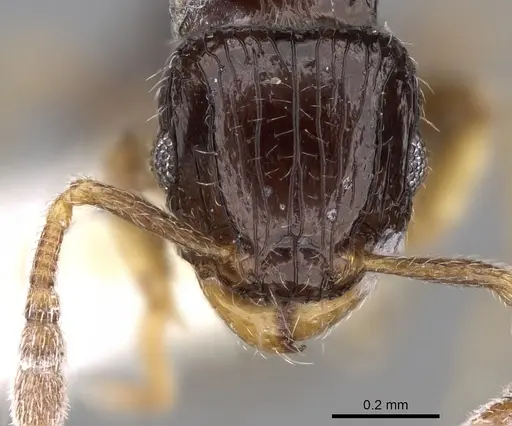
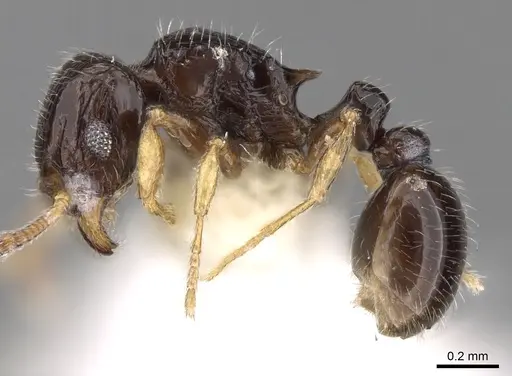
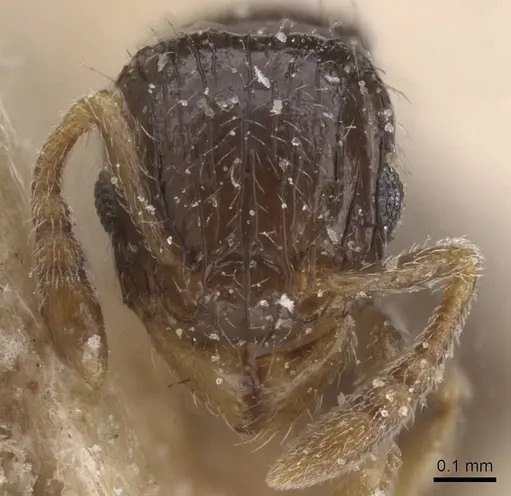
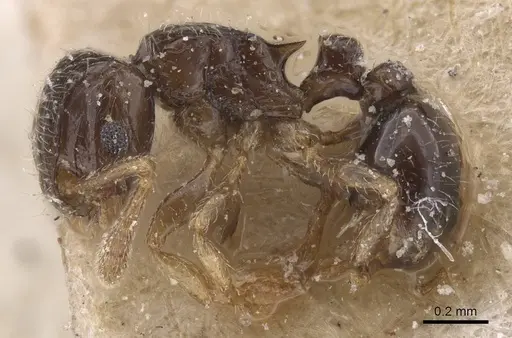
Tetramorium minusculum is a tiny ant species native to West Africa, with workers measuring just 2.1-2.3 mm in total length . Workers are uniformly dark brown to black, with a smooth, shiny appearance due to very reduced sculpture - one of the smallest and most lightly sculptured species in the angulinode group . They have a nodiform petiole, sharply angular pronotal corners, short stout propodeal spines, and well-developed antennal scrobes . These ants have been collected as ground foragers in diverse habitats: primary forest, ruderal areas, Guinean savanna, and urban green spaces in Cameroon, Ghana, Ivory Coast, and Sudan . This species is a generalist predator, actively hunting small prey on the ground . Its presence in both pristine forests and disturbed urban areas suggests adaptability, though it prefers natural ground-level foraging environments . As a member of the tribe Crematogastrini, its defense likely involves a modified stinger used to smear venom rather than pierce, though this behavior is not confirmed for this species.
Quick Summary
- Difficulty: Medium
- Origin & Habitat: West African species found in Cameroon, Ghana, Ivory Coast, and Sudan. Collections show it inhabits primary forest, ruderal areas, Guinean savanna, and urban green spaces, demonstrating flexibility across different land-use types [2][3][4].
- Colony Type: Colony structure is unconfirmed for this species. Based on typical Tetramorium patterns, likely monogyne (single queen) colonies. Founding behavior is unconfirmed.
- Size & Growth:
- Queen: Unconfirmed, no documented queen measurements available
- Worker: 2.1-2.3 mm total length [1]
- Colony: Unknown, likely small to moderate given worker size
- Growth: Unknown, based on typical Tetramorium patterns, likely moderate
- Development: Estimated 6-8 weeks at optimal temperature based on genus-level Tetramorium data (Development time is inferred from related Tetramorium species, specific data for T. minusculum is not available)
- Antkeeping:
- Temperature: Keep warm, around 24-28°C, these are tropical West African ants. Provide a gentle gradient so workers can self-regulate. Avoid temperatures below 22°C or above 32°C.
- Humidity: Keep the nest substrate consistently moist but not waterlogged. These ground foragers need damp soil with good ventilation to prevent mold. Monitor condensation and adjust watering based on substrate feel, not a fixed percentage.
- Diapause: No diapause required, as a tropical species, they do not need hibernation. Maintain warm temperatures year-round.
- Nesting: Use naturalistic setups with moist substrate. Y-tong (AAC) or plaster nests with a connected foraging area work well. Because workers are only 2 mm, the nest chambers should have small entrances to suit their size.
- Behavior: Workers are active ground foragers, systematically hunting small prey [3]. They are small but agile, and due to their tiny size, escape prevention is critical, they can slip through remarkably small gaps. Generally non-aggressive toward keepers but will defend the nest if threatened. As generalist predators, they readily accept protein foods.
- Common Issues: escape prevention is critical due to tiny 2 mm size, use fine mesh (≤0.5 mm) and tight-fitting lids, colonies may be slow to establish initially, patience is needed during founding phase, overfeeding can lead to mold in naturalistic setups, remove uneaten prey after 24 hours, humidity control is important, too wet causes fungal problems, too dry stresses the colony, availability is limited due to the species' restricted West African range
Housing and Nest Setup
For Tetramorium minusculum, a naturalistic setup with a foraging area connected to a nest chamber works best. These are ground-nesting ants that actively forage on the substrate surface, so they need space to hunt and explore. Use a Y-tong (AAC) nest or plaster nest with chambers scaled to their tiny size, connected to an outworld where they can search for food. Because workers are only about 2 mm long, the foraging area should have fine substrate and minimal gaps [1]. Start with a test tube setup for the founding colony, then transition to a formicarium once the colony reaches about 20-30 workers. Ensure all connections are tight, these tiny ants can escape through remarkably small openings. As a member of tribe Crematogastrini, their defense involves a modified stinger that smears venom rather than pierces, but this is unconfirmed for the species.
Feeding and Diet
Based on their classification as generalist predators, Tetramorium minusculum workers actively hunt small prey on the ground [3]. In captivity, offer small live prey such as fruit flies, pinhead crickets, and small mealworms. They will also likely accept sugar sources like honey water or sugar water, though protein should form the primary diet. Feed small amounts 2-3 times per week, removing uneaten prey after 24 hours to prevent mold. For founding colonies, a small drop of honey water can supplement their diet. Observe your colony’s preferences, some accept more varied foods than others.
Temperature and Humidity
As a tropical West African species, Tetramorium minusculum requires warm temperatures. Aim for 24-28°C. Use a heating cable or mat on one side of the nest to create a gentle temperature gradient, allowing workers to move between warmer and cooler areas. Avoid temperatures below 22°C or above 32°C. For humidity, keep the nest substrate consistently moist but not waterlogged, these ground foragers need damp conditions but require ventilation to prevent mold. A water tube connected to the nest helps maintain humidity. Monitor condensation levels and adjust watering frequency based on substrate moisture rather than a fixed schedule. Specific humidity data is unavailable, so practical observation is key.
Colony Development
Little specific data exists on Tetramorium minusculum colony development. Based on typical Tetramorium patterns, founding queens likely seal themselves in a chamber and raise the first workers (nanitics) alone using stored fat reserves. Expect the first workers to appear approximately 6-8 weeks after founding at optimal temperature, though this is an estimate based on related species. Initial colony growth is slow, the queen may lay only a small number of eggs initially. Once the first workers emerge, the colony typically grows more steadily as workers assist with brood care and foraging. Be patient during the founding phase and avoid disturbing the nest.
Behavior and Temperament
Tetramorium minusculum workers are active ground foragers, systematically searching the substrate for prey [3]. They are not particularly aggressive and will typically flee rather than engage when disturbed. However, they will defend their nest vigorously if threatened. Their small size makes them quick and agile hunters. In the wild, they occupy diverse habitats from forest floors to urban green spaces, indicating good adaptability [4]. In captivity, they are interesting to watch as they patrol their foraging area searching for prey. Their tiny size is best observed with good lighting and a magnifying glass or close-up observation. As a member of the tribe Crematogastrini, their defense likely involves smearing venom, though this behavior is unconfirmed for the species.
Frequently Asked Questions
How long does it take for Tetramorium minusculum to have first workers?
Based on typical Tetramorium development, expect first workers (nanitics) approximately 6-8 weeks after founding at optimal temperature (24-28°C). This is an estimate since specific development data for T. minusculum is not available.
What do Tetramorium minusculum ants eat?
They are generalist predators that hunt small prey. In captivity, offer small live prey like fruit flies, pinhead crickets, and small mealworms. They will also likely accept sugar sources like honey water. Feed protein-rich foods 2-3 times per week.
Do Tetramorium minusculum ants need hibernation?
No, they do not require hibernation. As a tropical West African species, they need warm temperatures year-round (24-28°C). Do not expose them to cold temperatures or simulate winter conditions.
How big do Tetramorium minusculum colonies get?
Colony size data is not available for this species. Based on their tiny 2 mm worker size, colonies are likely small to moderate, probably under 500 workers at maturity. Growth is relatively slow initially but accelerates after the first workers emerge.
Are Tetramorium minusculum ants good for beginners?
This species is rated as Medium difficulty. While adaptable to different habitats, their tiny size requires excellent escape prevention. They also need warm, humid conditions typical of tropical species. Some experience with antkeeping is helpful, but they are not among the most difficult species.
Can I keep Tetramorium minusculum in a test tube setup?
Yes, test tubes work well for founding colonies. Use a small test tube with a cotton ball providing water access. Once the colony reaches about 20-30 workers, consider transitioning to a small formicarium with a connected foraging area. Ensure the test tube has a tight-fitting stopper, these tiny ants can escape through very small gaps.
Do Tetramorium minusculum ants sting?
Tetramorium ants have functional stingers as part of the Myrmicinae subfamily. However, given their tiny 2 mm size, any sting would be very mild. They are not considered dangerous to humans and typically flee when disturbed rather than engage.
What temperature is best for Tetramorium minusculum?
Keep them at 24-28°C. This tropical species prefers warm conditions. Use a heating cable on one side of the nest to create a gentle gradient, allowing workers to self-regulate by moving between warmer and cooler areas.
Why are my Tetramorium minusculum escaping?
Their tiny 2 mm size means they can slip through remarkably small gaps. Use fine mesh (0.5 mm or smaller), tight-fitting lids, and check all connections and barriers regularly. Apply fluon or similar barrier products to smooth surfaces. Escape prevention is critical for this species.
Where is Tetramorium minusculum found in the wild?
This species is native to West Africa, specifically Cameroon, Ghana, Ivory Coast, and Sudan. They have been collected in primary forest, ruderal areas, Guinean savanna, and urban green spaces, showing adaptability to various habitats [2][4].
Report an Issue
The current care sheet is based fully on literature. See inconsistencies, or something that's incorrect? Please , it will be resolved after review from an admin. Contributing to the blogs tab also helps providing information, to make us be able to further improve the caresheets. Thank you for your support!
References

This caresheet is licensed under CC BY-SA 4.0 .
Community Blogs
CASENT0280901
View on AntWeb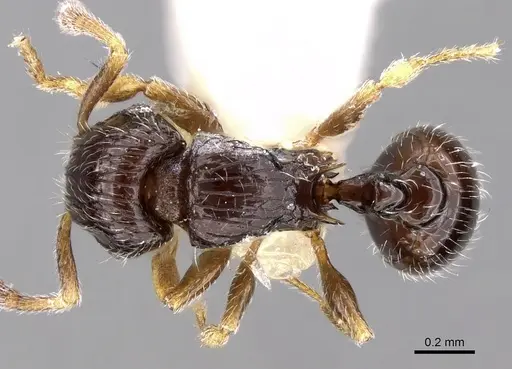
CASENT0915034
View on AntWeb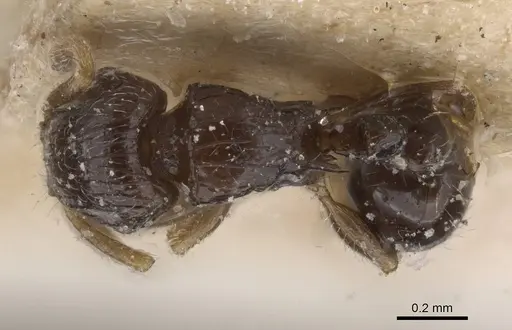
Literature
Loading distribution map...Loading products...