
Tetramorium melanogyna
- Sci. Name
- Tetramorium melanogyna
- Tribe
- Crematogastrini
- Subfamily
- Myrmicinae
- Author
- Mann, 1919
- Distribution
- Found in 1 countries
Introduction
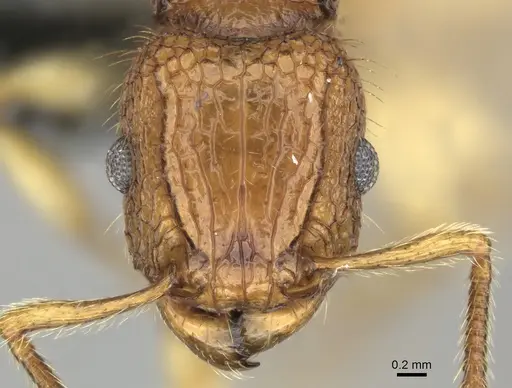
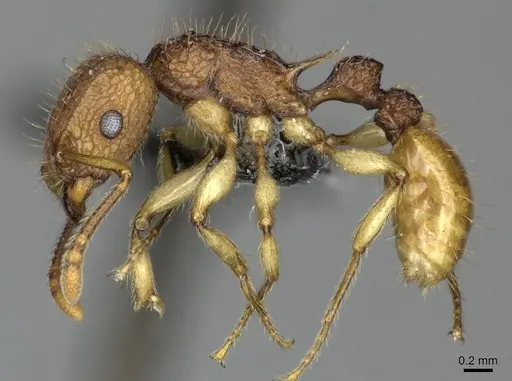
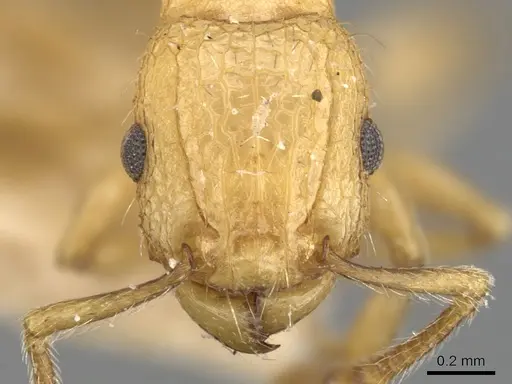
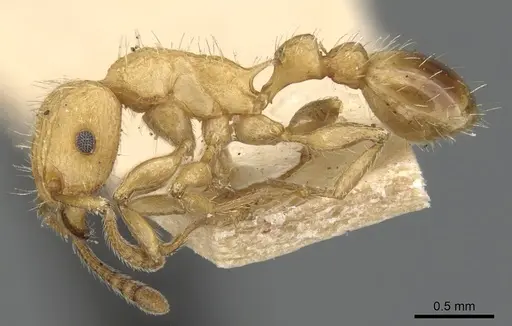
Tetramorium melanogyna is a small ant from the Solomon Islands, first described in 1919 by William Mann . Exact size measurements are not available. They have the typical Tetramorium look: a compact body with two narrow waist segments and a rough surface. Their color is dark brown to black, with the abdomen often a bit shiny. This species has a messy taxonomic past: it was first named, then considered the same as Tetramorium insolens in 1977,and finally recognized as its own species again in 1979 . What makes this species special is how little we know about it. It's only been found on a few islands in the Solomon Islands (Makira, Guadalcanal, Ugi) . Since no one has studied its biology in depth, most care tips come from what we know about other Tetramorium ants. If you keep this species, you'll need to experiment and pay close attention to what works.
Quick Summary
- Difficulty: Hard
- Origin & Habitat: Solomon Islands (Makira, Guadalcanal, Ugi), tropical island environment with warm, humid conditions year-round [2][1]
- Colony Type: Unknown. Most Tetramorium species have a single queen (monogyne), but this hasn't been confirmed for T. melanogyna. Expect single-queen colonies based on genus patterns.
- Size & Growth:
- Queen: size data unavailable
- Worker: size data unavailable
- Colony: Unknown, no data for this species
- Growth: Moderate (inferred from genus patterns)
- Development: Unknown, no data available (Temperate Tetramorium take about 6-10 weeks at optimal temperatures, but this tropical species may differ. No specific data exists.)
- Antkeeping:
- Temperature: Keep around 24-28°C, matching warm tropical conditions. Avoid long periods below 22°C. Use a heat mat on one side for a gradient. Inferred from habitat.
- Humidity: High humidity (70-85%) is likely needed. Keep nesting substrate consistently damp but not soaking. Provide a water source in the outworld. Inferred from habitat.
- Diapause: No, tropical species, so no true hibernation needed. Activity may slow during cooler periods but don't force diapause.
- Nesting: Most Tetramorium nest in soil or under stones. A test tube works for founding, then move to a soil or plaster formicarium. Keep chambers tight and humid. [3]
- Behavior: Tetramorium ants are generally not aggressive to keepers, but may defend their nest if disturbed. Workers forage actively on the ground and sometimes climb. Their small size means they can slip through tiny gaps, so use fine mesh barriers. They likely form foraging trails. Based on genus patterns.
- Common Issues: tropical species may struggle if temperatures drop below 22°C for long periods, high humidity needs can cause mold if ventilation is poor, very limited availability and unknown care requirements make this a species for experienced keepers, wild-caught colonies may carry parasites or diseases from their native range
Origin and Distribution
Tetramorium melanogyna is only known from the Solomon Islands. It's been recorded on three islands: Makira (formerly San Cristobal), Guadalcanal, and Ugi [2][1]. The species was first collected in 1919 by William Mann during a survey of the British Solomon Islands [1].
The Solomon Islands have a tropical climate: hot (25-30°C year-round), very humid, and lots of rain. The islands are covered in dense forest. This tells us T. melanogyna is adapted to warm, wet conditions. Since it's only found on a few islands, it's a rare ant in the hobby, and most specimens come from wild-caught colonies.
Temperature and Care
Because this ant comes from a tropical island, it needs warmth. Aim for 24-28°C in the nest area. You can use a heating cable or mat on one side to create a warm zone and a cooler zone, letting the ants choose. Avoid letting the nest drop below 22°C for long periods, this can slow brood development and stress the colony.
Your room temperature might work if it stays in the low-to-mid 20s°C. Watch the ants: if they cluster together or become sluggish, it's too cold. In air-conditioned rooms or winter, add gentle heat. No specific data exists for this species, so adjust based on your colony's behavior.
Humidity and Nesting
High humidity is key. The Solomon Islands are very humid year-round, so keep the nest between 70-85% humidity. The nesting substrate should feel damp to the touch, but not have standing water. You can use a water reservoir in the outworld to boost humidity through evaporation.
For nesting, most Tetramorium like to nest in soil or under stones. You can start a new colony in a test tube. Once they have workers, move them to a formicarium with soil or plaster chambers. Keep the connections tight to prevent escapes, these ants are small and can squeeze through tiny gaps. Make sure there's good airflow so you don't get mold, but don't let the nest dry out.
Feeding and Diet
Tetramorium ants are generalist omnivores. They eat small insects (crickets, mealworms, fruit flies) for protein, and sugar (honey water, sugar water) for energy. They probably also eat honeydew from aphids in the wild.
In captivity, offer protein twice a week. Remove any leftover food after 24-48 hours to prevent mold. Keep sugar water available all the time, especially for larger colonies. Since we don't know the exact preferences of this species, try different foods and see what they take. Watch for active foraging and healthy brood, that means the diet is working.
Colony Development
We don't have specific information about how T. melanogyna founds a colony or how fast it grows. Most Tetramorium species are claustral (the queen seals herself in and uses her stored fat to raise the first brood) and monogyne (single queen). But this is not confirmed for T. melanogyna.
Colony growth is probably moderate. Expect the first small workers (nanitics) to appear sometime after the queen starts laying, but the exact timeline is unknown. Maximum colony size is also unknown, other Tetramorium can have several hundred to a few thousand workers, but this species may differ. Keep notes on your own colony to help build knowledge.
Frequently Asked Questions
How long does it take for Tetramorium melanogyna to produce first workers?
That's unknown for this species. Other Tetramorium take about 6-10 weeks at optimal temperatures, but T. melanogyna may be different. There's no specific research data.
What temperature do Tetramorium melanogyna ants need?
Based on their tropical Solomon Islands home, keep them at 24-28°C. Use a heat gradient. Avoid temperatures below 22°C for long periods. There's no detailed study, so watch your colony and adjust.
Are Tetramorium melanogyna ants good for beginners?
No, this species is rated Hard. There's almost no care information available, it's rare in the hobby, and you'll need to experiment. The high humidity and temperature needs also require attention. Only keep this if you have experience with tropical ants.
How big do Tetramorium melanogyna colonies get?
No one knows for sure. Other Tetramorium species can reach hundreds or thousands of workers, but T. melanogyna may be different. There's no data.
Do Tetramorium melanogyna ants need hibernation?
No, they don't need hibernation. As a tropical species, they expect warm conditions year-round. They might slow down a bit if it gets cooler, but don't cool them down on purpose.
What do Tetramorium melanogyna ants eat?
They're generalist omnivores. Offer small insects like fruit flies or small crickets for protein, and sugar water or honey for carbohydrates. Try different foods since we don't know their exact preferences. Remove uneaten food after 24 hours.
Can I keep multiple Tetramorium melanogyna queens together?
Probably not, most Tetramorium are monogyne (one queen). There's no data on this species, so it's safest to keep only one queen per colony. Combining unrelated queens could lead to fighting.
Do Tetramorium melanogyna ants sting?
They belong to a subfamily that includes ants with stingers, but Tetramorium are not known to sting aggressively. They might bite if handled roughly. Their small size makes them low-risk. The defense mechanism is 'smearing' venom with a modified stinger, not piercing.
When should I move Tetramorium melanogyna to a formicarium?
Start them in a test tube setup. Once you see 20-30 workers and they are actively foraging in the outworld, you can move them to a larger nest. Make sure the new nest has high humidity and small chambers. There's no specific rule, so watch the colony.
Why are my Tetramorium melanogyna ants dying?
Common causes for tropical ants: too cold (below 22°C), too dry (low humidity), mold from poor ventilation, or stress from disturbance. Check temperature and humidity first. Also make sure food isn't rotting in the nest. Since we don't know the exact needs, keep a log to find patterns.
Report an Issue
The current care sheet is based fully on literature. See inconsistencies, or something that's incorrect? Please , it will be resolved after review from an admin. Contributing to the blogs tab also helps providing information, to make us be able to further improve the caresheets. Thank you for your support!
References

This caresheet is licensed under CC BY-SA 4.0 .
Community Blogs
CASENT0199931
View on AntWeb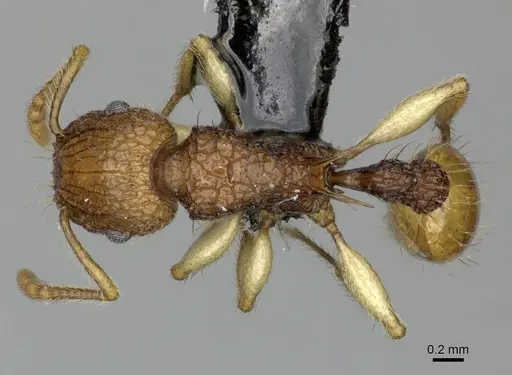
CASENT0901079
View on AntWeb
Literature
Loading distribution map...Loading products...