
Tetramorium maurum
- Sci. Name
- Tetramorium maurum
- Tribe
- Crematogastrini
- Subfamily
- Myrmicinae
- Author
- Santschi, 1918
- Distribution
- Found in 2 countries
Introduction
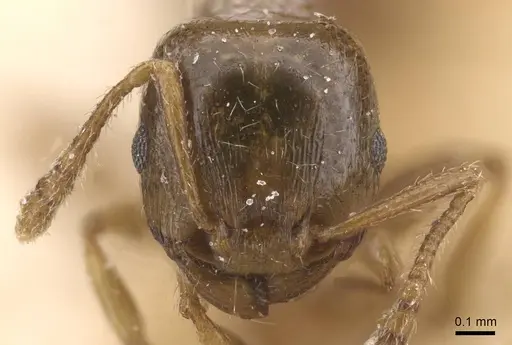
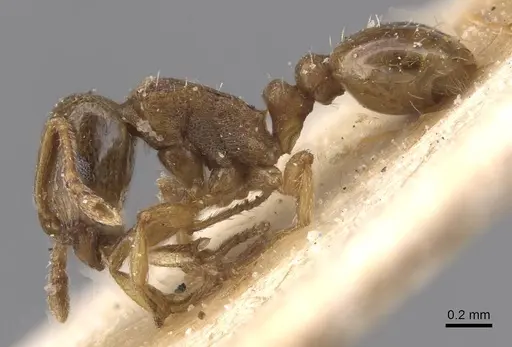
Tetramorium maurum is a small Myrmicinae ant originally described from Tunisia in the Maghreb region of North Africa . It was first described as a subspecies of Tetramorium caespitum in 1918 before being raised to full species status by Santschi in 1929 . However, a recent revision has relegated it to synonymy with Tetramorium forte, though the taxonomy remains unsettled . The worker and queen were described morphologically, but reliable size measurements are not available in published literature . The species is morphologically similar to Tetramorium forte, with workers being clearly distinct but gynes closely resembling those of T. forte . Distribution is restricted to the Palaearctic region, with confirmed records only from Tunisia, particularly from northern areas . There is no evidence of its occurrence in Morocco . The natural history (nesting, diet, colony structure) has not been studied in detail, so most care information must be inferred from related Tetramorium species or treated as unknown.
Quick Summary
- Difficulty: Expert
- Origin & Habitat: Confirmed only in Tunisia (Palaearctic region) [1][2]. Type locality is northern Tunisia [2]. No published data on specific habitat preferences.
- Colony Type: Unconfirmed. Based on typical Tetramorium patterns, likely monogyne (single queen) colonies, but this has not been directly studied. The taxonomy is further complicated by synonymy with Tetramorium forte.
- Size & Growth:
- Queen: Size data unavailable. No reliable total length measurements found in reviewed literature.
- Worker: Size data unavailable. No reliable total length measurements found in reviewed literature.
- Colony: Unknown. No published colony size estimates for either Tetramorium maurum or its synonym Tetramorium forte.
- Growth: Unknown
- Development: No data available for this species. Inferred from Tetramorium genus: approximately 5-8 weeks at warm temperatures, but unconfirmed. (Development time is unknown, values are speculative based on related species.)
- Antkeeping:
- Temperature: No specific data. Based on Mediterranean origin (Tunisia), likely prefer warm conditions around 20-25°C. Provide a temperature gradient to allow self-regulation.
- Humidity: No specific data. Mediterranean habitat suggests moderate, dry-to-moist conditions. Provide a moisture gradient in the nest, avoid waterlogging.
- Diapause: Unknown. Mediterranean origin suggests possible winter rest period, but unconfirmed. If attempting, cool gradually to 10-15°C for 2-3 months.
- Nesting: No specific data. Typical Tetramorium are ground-nesting. Use test tube for founding, for colonies, Y-tong (AAC) or plaster nest with moderate moisture.
- Behavior: No published behavioral observations. As a Myrmicinae in tribe Crematogastrini, it likely uses a smear defense mechanism (flattened stinger to apply venom). Generally expected to be docile, but unconfirmed. Caution advised.
- Common Issues: taxonomic uncertainty: this species is currently a junior synonym of Tetramorium forte, so care data may mislead, consult T. forte literature., lack of reliable care data: most husbandry recommendations are speculative, only attempt this species if you are experienced and willing to experiment., very small workers (typical Tetramorium size) increase escape risk, use fine mesh or fluon., overheating or overhydration may be fatal given unknown natural preferences, monitor closely.
Taxonomy and Identification
Tetramorium maurum was described by Santschi in 1918 as a subspecies of Tetramorium caespitum based on workers and queens from Tunisia [1]. It was raised to species status in 1929 [2]. However, a recent taxonomic revision (2006) reduced it to junior synonymy with Tetramorium forte, meaning the name T. maurum is no longer considered valid by some authors [3]. The morphological data show that workers of T. maurum are clearly distinct from T. forte, but queen gynes are virtually indistinguishable, leading to taxonomic uncertainty [2]. The type series is heterogeneous and may contain material from multiple Maghreb countries [2]. For antkeepers, this means that any ant labeled as T. maurum may actually be T. forte or a closely related form, identification should be verified by a specialist.
Distribution and Natural Habitat
The only confirmed records are from Tunisia, within the Palaearctic biogeographic zone [1][2]. There is no evidence that this species occurs in Morocco [2]. The natural habitat is not described in available literature, it likely includes Mediterranean dry shrubland or open ground, typical of many Tetramorium species. No nest site descriptions or dietary observations are published for T. maurum.
Defense Mechanism
As a member of Myrmicinae tribe Crematogastrini, Tetramorium maurum likely possesses a modified, flattened stinger used to wipe or smear venom onto enemies rather than piercing skin. This 'smear' defense is typical of the tribe. No species-specific studies confirm this for T. maurum, so it is inferred from subfamily/tribe knowledge.
Care Considerations
Because virtually no biological or captive care data exists for Tetramorium maurum (or its synonym T. forte), all husbandry recommendations are speculative and based on general Tetramorium patterns. Do not rely on this caresheet as a definitive guide. If you acquire a colony labeled T. maurum, treat it as a typical Mediterranean Tetramorium: provide moderate warmth (20-25°C), a moisture gradient, and a varied diet of small insects and sugar water. Monitor the colony closely and adjust conditions based on observed behavior. The species is not recommended for beginners due to lack of reliable information.
Frequently Asked Questions
Is Tetramorium maurum a valid species?
Taxonomically, T. maurum was reduced to a junior synonym of Tetramorium forte in 2006 [3]. However, some sources still list it as a species due to morphological differences in workers. The status is unsettled [2].
Where is Tetramorium maurum found?
Confirmed only in Tunisia (Palaearctic region) [1][2]. Not recorded from Morocco [2].
How should I care for Tetramorium maurum?
No specific care data exists. General Tetramorium guidelines apply: test tube founding, warm temperature (20-25°C), moderate moisture, varied diet. Be prepared to adapt and experiment. This species is only for experienced keepers.
Does Tetramorium maurum require hibernation?
Unknown. Mediterranean climate suggests possible winter rest, but unconfirmed. If attempting, cool gradually to 10-15°C for 2-3 months and observe.
How big do Tetramorium maurum colonies get?
Unknown. No published colony size data. Typical Tetramorium colonies can reach several hundred to a few thousand workers, but this is speculative.
Report an Issue
The current care sheet is based fully on literature. See inconsistencies, or something that's incorrect? Please , it will be resolved after review from an admin. Contributing to the blogs tab also helps providing information, to make us be able to further improve the caresheets. Thank you for your support!
References

This caresheet is licensed under CC BY-SA 4.0 .
Community Blogs
CASENT0915028
View on AntWeb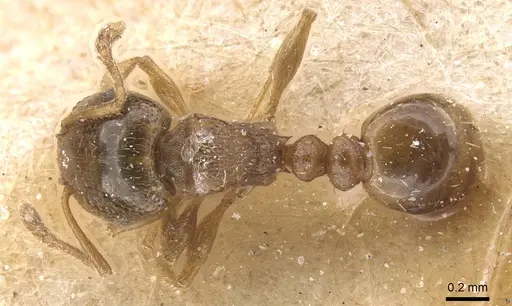
Literature
Loading distribution map...Loading products...