
Tetramorium marginatum
- Sci. Name
- Tetramorium marginatum
- Tribe
- Crematogastrini
- Subfamily
- Myrmicinae
- Author
- Forel, 1895
- Distribution
- Found in 1 countries
Introduction
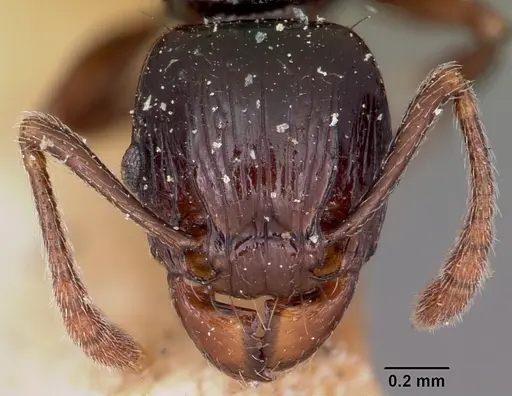
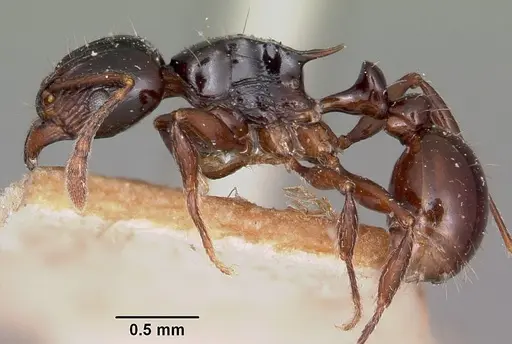
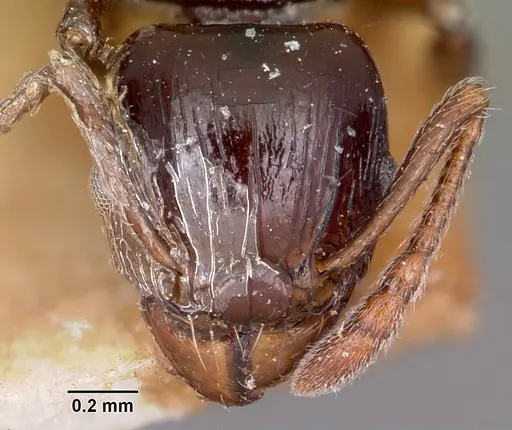
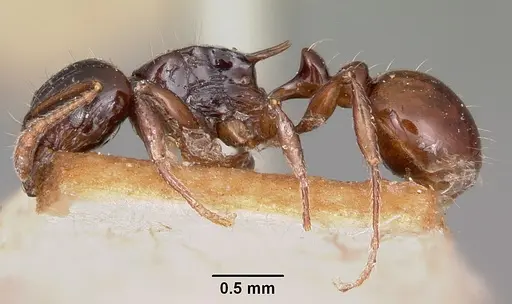
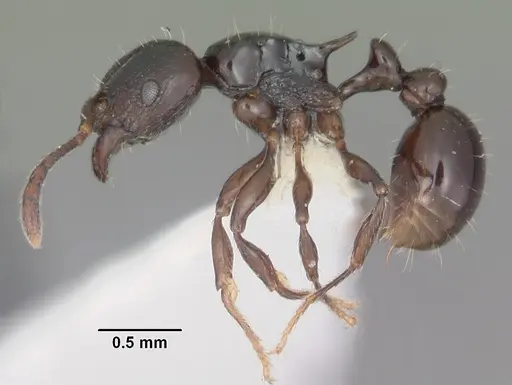
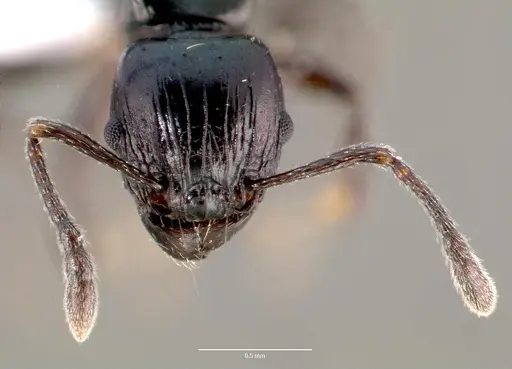
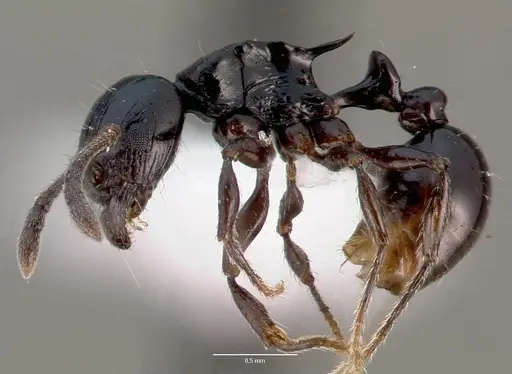
Tetramorium marginatum is a small, dark brown to black ant endemic to Madagascar. Workers are about 2.5-3mm long (inferred from related Tetramorium species) and feature very long propodeal spines and a distinctive triangular, compressed petiolar node. The head is slightly longer than wide, and the mesosoma is compact and stout with sparse long hairs along the dorsolateral margins. This species belongs to the Tetramorium marginatum species group and is found exclusively in eastern and northern Madagascar, where it inhabits leaf litter in montane and lowland rainforests between 30-1300m elevation . The species has a disjunct distribution, being common in the central-eastern region (from Manombo through Ranomafana to Andasibe) and also appearing at Montagne d'Ambre in the far north . What makes Tetramorium marginatum interesting is its adaptation to Madagascar's unique rainforest environments. As a leaf litter specialist, it forages in the humid microclimates of the forest floor where temperatures remain stable and moisture is consistently high. The very long propodeal spines may serve a defensive function against predators in this densely populated microhabitat, though this is speculation. While not commonly kept in captivity, this endemic species offers an opportunity to observe a rare ant that has never established outside its native range.
Quick Summary
- Difficulty: Medium
- Origin & Habitat: Eastern and northern Madagascar, montane and lowland rainforests at 30-1300m elevation, inhabits leaf litter [1][2]
- Colony Type: Unconfirmed, likely monogyne (single queen) based on typical Tetramorium patterns. Colony structure has not been studied in this species.
- Size & Growth:
- Queen: Unconfirmed, estimated 5-7mm based on Tetramorium genus patterns
- Worker: ~2.5-3mm, inferred from Tetramorium genus (total length not measured in literature) [1]
- Colony: Unknown in literature, estimated up to several hundred workers based on similar Tetramorium species
- Growth: Moderate, inferred from typical Myrmicinae development
- Development: 6-10 weeks (estimated based on related Tetramorium species and tropical temperature conditions) (Development time is an estimate, actual timing may vary with temperature. No direct data for this species.)
- Antkeeping:
- Temperature: Based on its tropical rainforest habitat, keep temperatures between 22-26°C. Avoid drops below 20°C. Provide a gentle gradient for self-regulation [1][3][4].
- Humidity: High humidity is essential, keep nest substrate consistently moist but not waterlogged. Target damp conditions mimicking Madagascar leaf litter. Humidity requirements are inferred from its rainforest habitat [1].
- Diapause: No diapause required, as a tropical species, maintain consistent conditions year-round [1].
- Nesting: Y-tong (AAC) or plaster nests work well, as they hold humidity. Use small, tight chambers scaled to the ants' size. A moisture reservoir helps maintain humidity. Avoid dry setups.
- Behavior: This species is likely calm and non-aggressive, based on typical Tetramorium behavior. Workers forage individually through leaf litter and are not prone to forming visible trails. Despite their small size, they are less escape-prone than some tiny ants, but standard prevention (tight lids, fine mesh) is still recommended. Activity is moderate. In captivity they may be shy at first. As a member of the Crematogastrini tribe, they probably use a smear defense mechanism (modified stinger to wipe venom) if threatened, though this is not confirmed for this species.
- Common Issues: maintaining high humidity is critical, colony decline if substrate dries out, tropical species may struggle if temperatures drop below 20°C, slow colony growth requires patience, especially during founding, limited availability in the antkeeping hobby makes obtaining this species difficult
Housing and Nest Setup
For Tetramorium marginatum, use a Y-tong (AAC) or plaster formicarium to maintain the high humidity this rainforest species needs. Chambers should be small and tight-fitting, these are tiny ants and large spaces stress them. Include a water reservoir or moisture chamber to keep the nest damp. The outworld should be simple with easy access to food. For founding, use a test tube with a cotton plug providing water, placed in a humid container. Move the colony to a proper nest once they have about 20-30 workers. Use standard escape prevention (tight lids, fluon on edges), though this species is less prone to escape than some other small ants. [1]
Feeding and Diet
Tetramorium marginatum is likely a generalist omnivore, like most Tetramorium species. In captivity, provide protein sources such as fruit flies, pinhead crickets, or small mealworms 2-3 times per week. Offer sugar water, honey, or diluted syrup as a constant carbohydrate source. Remove uneaten food after 24-48 hours to prevent mold. Since they naturally forage in leaf litter, live prey may be more stimulating than pre-killed food. Scale prey to their small size (~2.5-3mm workers). [1]
Temperature and Seasonal Care
As a tropical species from Madagascar, keep temperatures between 22-26°C year-round. Do not allow temperatures to drop below 20°C for extended periods, as this can slow development and weaken the colony. Use a heating cable on one side of the nest to create a temperature gradient so workers can choose their preferred warmth. Room temperature (20-24°C) is usually acceptable but monitor activity. Avoid drafts from air conditioning or windows. No seasonal changes needed, this species does not require diapause. [1][3][4]
Colony Development
Founding behavior is unconfirmed, but based on typical Tetramorium patterns, the queen likely seals herself in a small chamber and raises the first workers (nanitics) using stored fat reserves. However, this has not been studied for Tetramorium marginatum. The first workers will be smaller than mature workers, this is normal. Estimated development time from egg to first worker is 6-10 weeks at optimal temperatures (24-26°C). After that, growth continues steadily but slowly. Colony size likely reaches several hundred workers at maturity (estimated). The key to successful founding is high humidity (substrate consistently damp) in the founding chamber and leaving the queen completely undisturbed for at least 3-4 weeks. Once workers appear, gradually introduce small food items. Patience is essential. [1]
Behavior and Temperament
Tetramorium marginatum is likely a calm, non-aggressive species, as is common in the genus. Workers are small but sturdy with a distinctive dark coloration and long propodeal spines. They are not aggressive toward keepers and rarely bite. Foraging activity is moderate, they send out individual workers to collect food rather than forming large trails. They are curious explorers and will investigate new items in the outworld. Their small size (about 2.5-3mm) means they can squeeze through very small gaps, so check your setup for any cracks or gaps. Overall, they are pleasant to watch but may remain somewhat shy compared to more bold ant species. As a member of the Crematogastrini tribe, they likely possess a smear defense mechanism, using a modified stinger to wipe venom onto threats rather than piercing. This has not been specifically observed in this species. [1]
Frequently Asked Questions
How long does it take for Tetramorium marginatum to get their first workers?
Estimated 6-10 weeks from egg to first worker at optimal temperature (24-26°C). This is based on related Tetramorium species, as direct data for T. marginatum is unavailable. The first workers (nanitics) will be smaller than fully grown workers. Disturb the queen as little as possible during founding.
Do Tetramorium marginatum ants need hibernation?
No. As a tropical species from Madagascar, they do not require diapause or hibernation. Keep temperatures consistent year-round between 22-26°C. They are adapted to year-round warm, humid conditions in rainforest habitats [1].
What do Tetramorium marginatum ants eat?
Likely generalist omnivores. Feed small insects (fruit flies, pinhead crickets, small mealworms) 2-3 times per week for protein. Provide a constant sugar source like sugar water, honey, or diluted syrup. Remove uneaten food after 24-48 hours to prevent mold [1].
Are Tetramorium marginatum ants good for beginners?
They are moderate difficulty. Main challenges are maintaining high humidity and providing appropriate small food. They are docile and not escape-prone, which helps. However, they are rarely available in the hobby and require patience due to slow growth. If you can maintain warm, humid conditions consistently, they may be manageable for beginners with some experience. Direct observations in captivity are scarce.
How big do Tetramorium marginatum colonies get?
The maximum colony size is unknown from literature. Based on similar Tetramorium species, colonies likely reach several hundred workers at maturity. They are not among the largest Tetramorium species but can form substantial colonies over time.
Can I keep multiple Tetramorium marginatum queens together?
Not recommended. Colony structure is unconfirmed, but combining unrelated foundresses has not been documented. Tetramorium species typically establish single-queen colonies. House any multiple founding queens separately.
What temperature range is ideal for Tetramorium marginatum?
Based on its tropical rainforest habitat, keep temperatures between 22-26°C. Avoid drops below 20°C. Provide a gentle temperature gradient for self-regulation. Room temperature in most homes is usually acceptable, but monitor colony activity [1][3][4].
Do Tetramorium marginatum ants sting?
As members of the Myrmicinae subfamily and Crematogastrini tribe, they have a modified stinger used for smearing venom onto enemies (smear defense). They are docile and rarely sting in defense. The venom is mild and not medically significant for humans.
Why is my Tetramorium marginatum colony declining?
The most common issues are: low humidity (substrate too dry), temperatures below 20°C, mold from overfeeding, or disturbance during founding. Check humidity first, this species needs consistently damp conditions. Also ensure food is being consumed and removed before molding. Other stressors could include improper diet or lack of protein.
When should I move Tetramorium marginatum from a test tube to a formicarium?
Move them once the colony has at least 20-30 workers and the test tube shows signs of crowding or mold. Use a formicarium that can maintain high humidity, such as Y-tong or plaster. Allow the colony to walk into the new nest voluntarily rather than shaking them out.
Report an Issue
The current care sheet is based fully on literature. See inconsistencies, or something that's incorrect? Please , it will be resolved after review from an admin. Contributing to the blogs tab also helps providing information, to make us be able to further improve the caresheets. Thank you for your support!
References

This caresheet is licensed under CC BY-SA 4.0 .
Community Blogs
CASENT0101287
View on AntWeb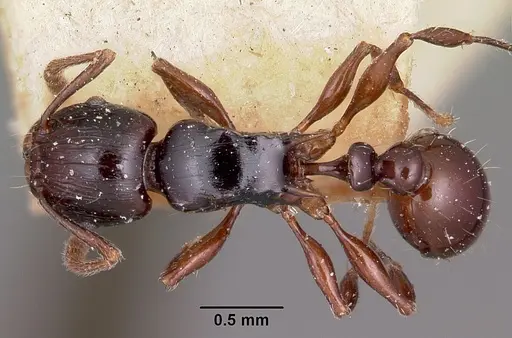
CASENT0101288
View on AntWeb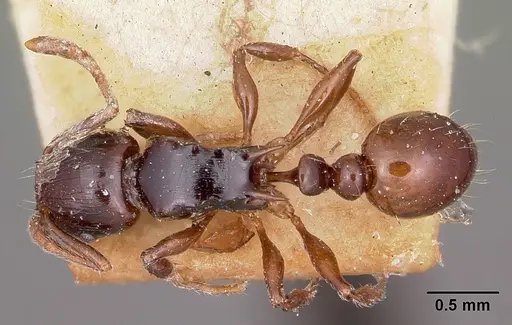
CASENT0102398
View on AntWeb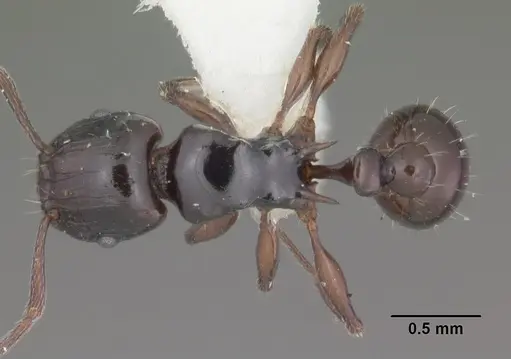
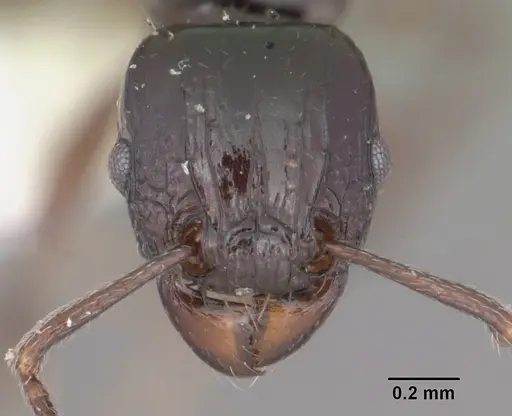
CASENT0414946
View on AntWeb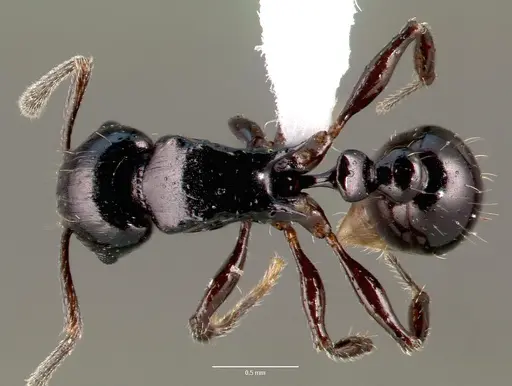
Literature
Loading distribution map...Loading products...