
Tetramorium mallenseana
- Sci. Name
- Tetramorium mallenseana
- Tribe
- Crematogastrini
- Subfamily
- Myrmicinae
- Author
- Hita Garcia & Fisher, 2012
- Distribution
- Found in 1 countries
Introduction
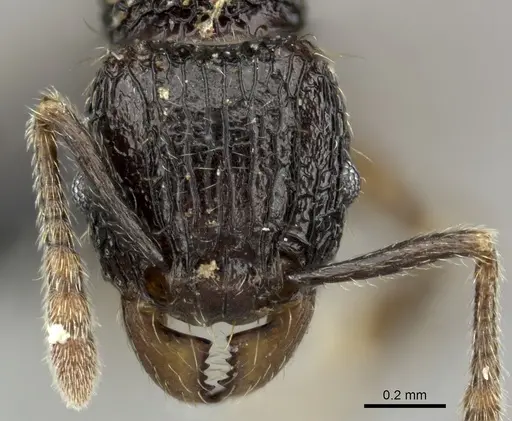
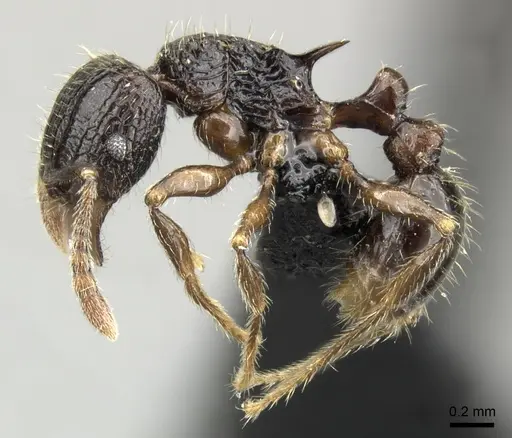
Tetramorium mallenseana is a tiny ant known only from the Parc National de Ranomafana in Madagascar, a montane rainforest at 1000-1100 m elevation . Workers have a head width of about 0.7 mm ; total body length has not been directly documented. They are dark brown with lighter legs and antennae, and have distinctive long, curved propodeal spines and a rounded, high petiolar node . This species belongs to the *Tetramorium dysalum* species group and is only recorded from a very small area in Madagascar's highland rainforests . These ants live in the leaf litter and soil of montane rainforest, where they forage for small prey. Their tiny size makes them well suited to navigating the forest floor, but also means they can easily slip through small gaps, so escape prevention is essential.
Quick Summary
- Difficulty: Medium
- Origin & Habitat: Parc National de Ranomafana, Madagascar, montane rainforest at 1000-1100 m elevation [1][2]
- Colony Type: Unconfirmed, colony structure has not been documented for this species.
- Size & Growth:
- Queen: Undescribed, size unknown.
- Worker: Body length not directly recorded, head width ~0.7 mm [2]. Total length inferred from similar *Tetramorium* at roughly 2.5-3 mm.
- Colony: Unknown, not documented in research. Based on typical litter-dwelling *Tetramorium*, probably a few hundred workers at most.
- Growth: Unknown, no specific data available.
- Development: Unknown, not studied for this species. Inferred from related *Tetramorium* at 6-10 weeks, but unconfirmed. (Development time is speculative, no direct observations exist.)
- Antkeeping:
- Temperature: No precise data, but the natural habitat is a montane rainforest at 1000-1100 m, which is cool year‑round. Aim for 18-22 °C and avoid overheating [2].
- Humidity: High, the montane rainforest origin suggests constant moisture. Keep the nest substrate consistently moist but not waterlogged, provide a humidity gradient [2].
- Diapause: Unknown, as a montane species it may benefit from a seasonal cool period, but this has not been confirmed. No data available.
- Nesting: Prefers a compact, humid nest that mimics leaf litter or soil. Y‑tong (AAC) or plaster nests with a water reservoir work well. Avoid large, open chambers.
- Behavior: Generally peaceful and non‑aggressive. They forage actively in leaf litter and hunt small prey. Their primary defense is smearing venom using a modified, flattened stinger rather than piercing. Escape risk is high due to their tiny size, use fine mesh and tight seals.
- Common Issues: escape prevention is critical because of their tiny size, use fine mesh and tight‑fitting barriers, high humidity requirements can lead to mold if ventilation is poor, overheating is a serious risk, they prefer cool conditions and may die if kept above 25 °C for long, slow colony growth is possible, be patient as no growth data is available, wild‑caught colonies may carry parasites specific to their limited range
Housing and Nest Setup
Because they are so small and come from a humid montane forest, these ants need a compact, moist nest. Y‑tong (AAC) or plaster nests hold moisture well and provide appropriately scaled chambers. Test tubes can work for founding colonies if you wrap the cotton in filter paper to increase humidity retention.
The key is maintaining high humidity without letting the nest become moldy. Use a water reservoir or a moisture gradient so the ants can choose their preferred spot. The nest area should stay consistently moist but not waterlogged. Avoid large, open spaces, these tiny ants do best in tight, chambered nests that mimic the compressed leaf‑litter layer where they naturally live.
For the outworld, a small plastic container with a secure lid is fine. Escape prevention is critical, even tiny gaps will allow them to squeeze through. Use fine mesh on ventilation holes and check lid seals regularly. [2]
Temperature and Heating
These are montane ants from 1000-1100 m elevation in Madagascar, so they prefer cooler temperatures than most tropical species. Keep the nest at 18-22 °C, with a slight gradient if possible. Room temperature often works, but avoid placing the nest near heat sources or in direct sunlight.
If your room runs cool, use a gentle heating method, a heating cable on the side of the nest (not underneath, which increases evaporation) can raise the temperature a few degrees. The goal is stable, cool conditions, not warmth. Overheating is a bigger risk than being too cold.
No data exists on seasonal cooling requirements. If you want to try a winter rest, reduce temperature gradually to 15-18 °C for 2-3 months, but this is entirely experimental. [2]
Feeding and Diet
Like many Tetramorium, these ants are generalist foragers. In the wild they likely eat small insects, seeds, and honeydew. In captivity, offer a varied diet. Protein sources should be small live prey like fruit flies, springtails, or pin‑head crickets, anything larger than themselves will be ignored.
Sugar sources are also accepted. Offer diluted honey, sugar water, or homemade ant nectar. Change these every few days to prevent mold. Seeds can be offered occasionally, though litter‑dwelling Tetramorium often prefer animal protein.
Feed every 2-3 days, removing uneaten prey after 24 hours. Adjust feeding frequency based on colony appetite, a growing colony will accept more food. [2]
Colony Development and Growth
Colony development for this species has not been documented. No information is available on how the queen founds a new colony, how long eggs take to become workers, or how fast the colony grows. Many Tetramorium are claustral, but that is not confirmed for T. mallenseana.
Expect slow, uncertain progress if you start from a queen. A well‑fed colony might grow slowly, but without any data, you should be patient and avoid disturbing the founding chamber. The queen is undescribed in the research, so her size and appearance are unknown.
Maximum colony size is also unknown. Based on the tiny worker size and litter‑dwelling habits, it is unlikely to be huge, perhaps a few hundred workers at most, but that is pure speculation. [2]
Seasonal Care and Overwintering
As a montane species from Madagascar’s highlands, this ant may experience seasonal temperature changes in the wild, but no specific research exists on its annual cycle. The Parc National de Ranomafana has a cooler, wetter season roughly from May to October, but indoor conditions are usually stable.
If you want to mimic natural seasonality, you could try a 2-3 month cool period at 15-18 °C, reducing feeding during that time. However, this is not confirmed to be necessary. Keep a small water source available at all times, and return to normal temperatures gradually in spring. Skipping the cool period might not harm the colony, since many tropical montane species do not require diapause. [2]
Handling and Observation
These tiny ants are best observed through magnification, a good hand lens or macro lens will help you see their distinctive long propodeal spines and rounded petiolar node.
They are not aggressive and rarely bite. Even if they do, their tiny mandibles cannot harm human skin. They will flee rather than fight. This makes them safe to observe, but unnecessary disturbance of the nest should be avoided.
For viewing, a clear nest (Y‑tong or plaster) works well. Keep the nest area quiet and free of vibrations. Their small size also means they are sensitive to vibrations, approach slowly for the best experience. [2]
Frequently Asked Questions
How long does it take for Tetramorium mallenseana to produce first workers?
Unknown, this species has not been studied in captivity. Related Tetramorium may take 6-10 weeks under ideal conditions, but that is just a guess.
What temperature do Tetramorium mallenseana ants need?
Keep them at 18-22 °C based on their montane rainforest habitat. Avoid temperatures above 25 °C. No exact data exists, but cool and stable is best.
How big do Tetramorium mallenseana colonies get?
Colony size is unknown, not recorded in any research. Based on the tiny worker size and litter‑dwelling habits, colonies likely do not exceed a few hundred workers.
Do Tetramorium mallenseana ants sting?
They have a modified stinger used to smear venom, not to sting. It is harmless to humans. They are not aggressive and prefer to flee.
What do Tetramorium mallenseana eat?
Generalists, accept small live prey (fruit flies, springtails), protein, and sugar water or honey. Provide food in small sizes.
Are Tetramorium mallenseana good for beginners?
No, they are rated Medium difficulty. Their high humidity needs and tiny size require careful escape prevention and nest conditions. Not recommended for first‑time keepers.
Do Tetramorium mallenseana need hibernation?
Unknown, there is no data on whether they need a cool period. If you try it, reduce to 15-18 °C for 2-3 months, but this is experimental.
How do I prevent Tetramorium mallenseana from escaping?
Use fine mesh on all ventilation holes, check lid seals, and apply fluon or PTFE to container rims. Any gap larger than 0.5 mm may allow escape.
What size nest should I use for Tetramorium mallenseana?
A compact nest with small chambers, Y‑tong or plaster works well. The chambers should be no larger than a few cm across to suit their tiny size.
Where is Tetramorium mallenseana found in the wild?
Only known from Parc National de Ranomafana, Madagascar, at 1000-1100 m elevation in montane rainforest [1][2].
Report an Issue
The current care sheet is based fully on literature. See inconsistencies, or something that's incorrect? Please , it will be resolved after review from an admin. Contributing to the blogs tab also helps providing information, to make us be able to further improve the caresheets. Thank you for your support!
References

This caresheet is licensed under CC BY-SA 4.0 .
Community Blogs
CASENT0039659
View on AntWeb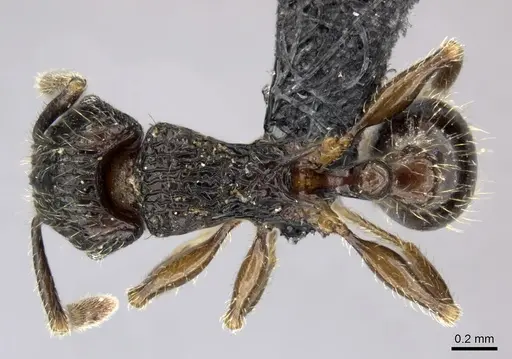
Literature
Loading distribution map...Loading products...