
Tetramorium malagasy
- Sci. Name
- Tetramorium malagasy
- Tribe
- Crematogastrini
- Subfamily
- Myrmicinae
- Author
- Hita Garcia & Fisher, 2012
- Distribution
- Found in 1 countries
Introduction
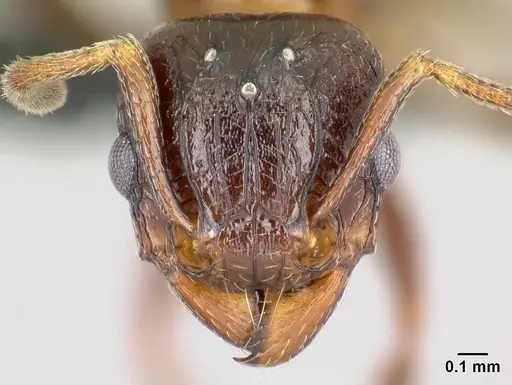
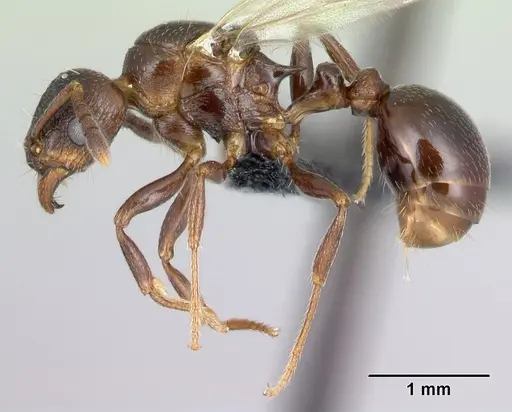
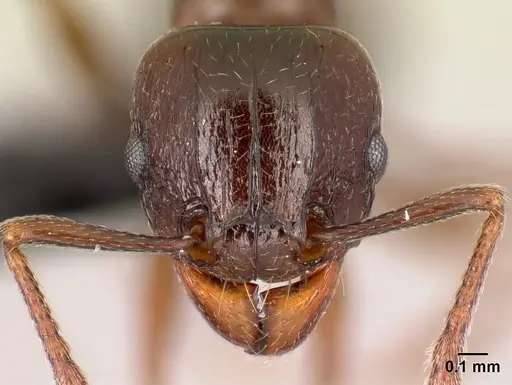
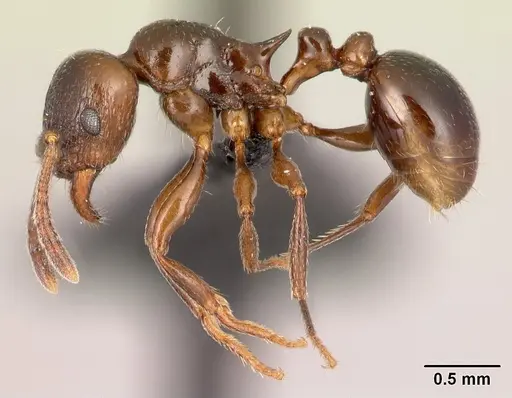
Tetramorium malagasy is a small, ground-dwelling ant species endemic to Madagascar. Workers have a uniform brownish coloration with distinctive features: short antennal scapes, long propodeal spines, and a high nodiform petiolar node . They lack standing hairs on the waist segments and first gastral tergite, giving a relatively smooth appearance . The species is widely distributed across western, southern, and eastern Madagascar, primarily in deciduous forests like tropical dry forest, gallery forest, spiny forest, and thicket . It becomes much rarer in humid forests . Described in 2012,it belongs to the Tetramorium bessonii species group . This ant prefers dry, dark microhabitats typical of spiny and dry deciduous forests . It has been collected from forest floor samples and rotting logs, suggesting it nests in soil or decaying wood and forages at ground level . These traits make it an interesting choice for keepers seeking a less common species from Madagascar.
Quick Summary
- Difficulty: Medium
- Origin & Habitat: Endemic to Madagascar, widely distributed across western, southern, and eastern regions. Lives in deciduous forests like tropical dry forest, gallery forest, spiny forest, and thicket. Much rarer in humid forests [1][2].
- Colony Type: Colony structure is unconfirmed, no published data on queen number or colony size in the wild. Based on typical Tetramorium patterns, likely single-queen colonies.
- Size & Growth:
- Queen: Undescribed in original description, based on genus patterns, likely 5-7mm
- Worker: Body size not directly given, head length 0.76-0.85mm indicates small ant, likely around 3-4mm, inferred from Tetramorium genus [1]
- Colony: Unknown, no colony size data published. Typical Tetramorium colonies reach several hundred workers
- Growth: Moderate, development timeline unconfirmed for this species
- Development: 6-10 weeks estimated based on related Tetramorium species at optimal temperature (Direct development data unavailable for this species. Estimates based on typical Tetramorium genus development patterns.)
- Antkeeping:
- Temperature: Keep at 22-26°C, these are tropical forest ants from Madagascar that prefer warm, stable conditions. Avoid temperatures below 20°C or above 30°C
- Humidity: Moderate humidity around 50-70%. Provide a moisture gradient with a damp section for the nest and drier areas in the outworld. These ants prefer drier conditions (dry=1 in their habitat profile) but still need access to water [3].
- Diapause: Unlikely, as a tropical species from Madagascar, they probably do not require a true diapause. However, a slight reduction in temperature during winter months (reducing to around 20°C) may be beneficial.
- Nesting: Ground-nesting species that naturally nests in soil and rotting logs. In captivity, a Y-tong (AAC) nest, plaster nest, or naturalistic setup with soil substrate works well. Provide soil or sand as nesting material. They prefer dark nesting areas (dark=1 in habitat profile) [3].
- Behavior: Generally calm and non-aggressive foragers. Workers are small but active, searching for food on the ground. They are terricolous (ground-dwelling) and likely forage individually or in small groups. Their primary defense is smearing: they use a flattened spatulate stinger to wipe venom onto enemies instead of piercing. They are not known to sting effectively and are considered docile. Escape prevention should be considered given their small size, use fine mesh barriers and secure lids.
- Common Issues: small size means escapes are possible through tiny gaps, use fine mesh barriers, humidity control is important, too wet can cause fungal issues, too dry can kill brood, limited availability in the antkeeping hobby as a recently described species, wild-caught colonies may harbor parasites, quarantine and observe new colonies, temperature sensitivity, sudden drops below 20°C can stress colonies
Housing and Nest Setup
Tetramorium malagasy is a ground-nesting species that naturally nests in soil and rotting logs in Madagascar's deciduous forests [1]. For captive care, a Y-tong (AAC) nest or plaster nest works well, with chambers scaled to their small worker size (around 3-4mm). A naturalistic setup with a soil-filled container allows natural tunneling behavior and suits their terricolous nature. The nest area should be kept dark, these ants show a preference for dark microhabitats (dark=1 in habitat profile) [3]. Provide a water tube or moisture source for hydration, and ensure the outworld has space for foraging. Because of their small size, use secure lids and consider fine mesh on ventilation holes to prevent escapes.
Feeding and Diet
Like most Tetramorium species, Tetramorium malagasy is likely an omnivorous forager that collects nectar, honeydew, and small insects. In captivity, offer a varied diet including sugar water or honey as an energy source, and protein sources such as small insects (fruit flies, pinhead crickets, mealworms). They are small ants, so prey items should be appropriately sized. Based on their forest floor foraging behavior, they likely scavenge and hunt small arthropods. Feed protein 2-3 times per week and provide constant access to sugar sources. Remove uneaten food promptly to prevent mold.
Temperature and Seasonal Care
As a tropical species from Madagascar, Tetramorium malagasy prefers warm conditions in the range of 22-26°C. Their distribution across western, southern, and eastern Madagascar in deciduous forest habitats indicates they are adapted to warm, often seasonal environments [1]. Maintain stable temperatures avoiding sudden fluctuations. A slight temperature reduction during winter months (dropping to around 20°C) may simulate natural seasonal changes, but a true diapause is unlikely given their tropical origin. Avoid temperatures below 18°C or above 30°C. Use a heating cable or mat on one side of the nest to create a gentle gradient if room temperature is insufficient.
Humidity Requirements
Tetramorium malagasy shows a preference for dry habitats (dry=1,humid=0 in its functional trait profile) [3]. However, as a ground-nesting ant, it still requires some moisture access. Maintain moderate humidity around 50-70% in the nest area, with a moisture gradient, a slightly damp section for brood-rearing and drier areas for foraging. The substrate should be moist but not waterlogged. In naturalistic setups, allow the soil to partially dry between waterings. In Y-tong or plaster nests, provide a water tube and monitor for condensation. Good ventilation helps prevent mold while maintaining appropriate humidity.
Colony Development
Specific colony development data is not published for this recently described species [1]. Based on typical Tetramorium genus patterns, the queen likely founds the colony claustrally (sealing herself in a chamber and raising the first brood alone on stored fat reserves). The first workers (nanitics) are typically smaller than mature workers. Expect 6-10 weeks from egg to first worker at optimal temperature (around 24-26°C). Colony growth is likely moderate, with typical Tetramorium colonies reaching several hundred workers. The species has been found in unburned grassland and forest sites, suggesting adaptability to different ground-level microhabitats [2].
Behavior and Temperament
Tetramorium malagasy workers are small, active foragers that search for food on the forest floor. They are not known to be aggressive. As a member of the Myrmicinae subfamily and Crematogastrini tribe, their primary defense is smearing, they have a flattened, spatulate stinger used to wipe or smear venom onto enemies instead of piercing. This means they cannot sting effectively and are considered docile. Workers likely communicate through chemical signals and may use tandem-running to recruit nestmates to food sources, as is common in the genus. Their small size and ground-nesting habits make them relatively calm colony residents. They are terricolous and prefer dark nesting areas. Provide enrichment in the outworld such as leaf litter or small structures to explore. [1][3]
Frequently Asked Questions
How long does it take for Tetramorium malagasy to produce first workers?
The exact timeline is unconfirmed for this species, but based on typical Tetramorium genus development, expect 6-10 weeks from egg to first worker at optimal temperature (around 24-26°C). This is an estimate as specific development data has not been published.
What do Tetramorium malagasy ants eat?
Like most Tetramorium species, they are omnivorous. Offer sugar water or honey for energy, and small protein sources such as fruit flies, pinhead crickets, or small mealworms. Feed protein 2-3 times per week with constant access to sugar sources.
Can I keep Tetramorium malagasy in a test tube setup?
Yes, a test tube setup can work for founding colonies. Ensure the tube has a water reservoir and cotton plug, then transition to a proper nest (Y-tong, plaster, or naturalistic) as the colony grows. Their small size means tight-fitting plugs and secondary barriers are needed.
Do Tetramorium malagasy ants sting?
They are not known to be aggressive or sting effectively. As Myrmicinae of the tribe Crematogastrini, they use a smearing defense: they flatten their stinger to wipe venom onto enemies rather than piercing. This makes them docile and safe for observation.
What temperature do Tetramorium malagasy ants need?
Keep them warm at 22-26°C. As tropical forest ants from Madagascar, they prefer stable warm conditions. Avoid temperatures below 18°C or above 30°C. A heating cable on one side of the nest can create a suitable gradient.
How big do Tetramorium malagasy colonies get?
Colony size data is not published for this species. Based on typical Tetramorium genus patterns, colonies likely reach several hundred workers. They are moderate growers over several years.
Do Tetramorium malagasy ants need hibernation?
Unlikely, as a tropical species from Madagascar, they probably do not require a true diapause. A slight temperature reduction in winter (to around 20°C) may be beneficial but is not required.
Are Tetramorium malagasy ants good for beginners?
They are rated as medium difficulty. They are docile and relatively easy to care for, but their specific care requirements are less documented than common species. Their small size and humidity needs require attention. Availability may be limited as this is a recently described species.
What type of nest is best for Tetramorium malagasy?
A Y-tong (AAC) nest, plaster nest, or naturalistic setup with soil substrate works well. They are ground-nesting ants that prefer dark nesting areas. Choose appropriately sized chambers for their 3-4mm workers.
Why is my Tetramorium malagasy colony declining?
Common causes include: temperature stress (too cold below 18°C or too hot above 30°C), improper humidity (too wet causing mold, or too dry causing desiccation), inadequate protein in diet, or parasites from wild-caught colonies. Review temperature, humidity, and feeding schedules. Ensure the colony is not being overfed, as mold from decaying food is a common killer.
Report an Issue
The current care sheet is based fully on literature. See inconsistencies, or something that's incorrect? Please , it will be resolved after review from an admin. Contributing to the blogs tab also helps providing information, to make us be able to further improve the caresheets. Thank you for your support!
References

This caresheet is licensed under CC BY-SA 4.0 .
Community Blogs
CASENT0053490
View on AntWeb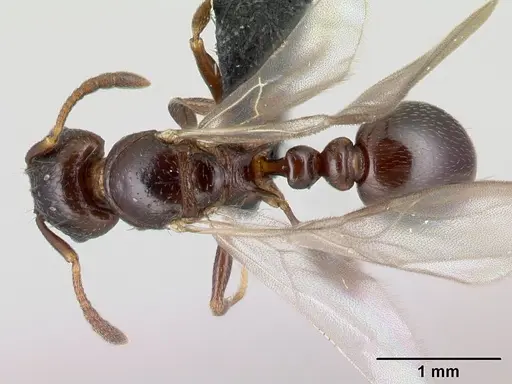
CASENT0449550
View on AntWeb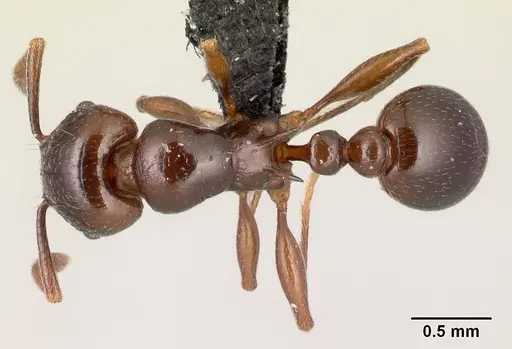
Literature
Loading distribution map...Loading products...