
Tetramorium magnificum
- Sci. Name
- Tetramorium magnificum
- Tribe
- Crematogastrini
- Subfamily
- Myrmicinae
- Author
- Bolton, 1980
- Distribution
- Found in 1 countries
Introduction
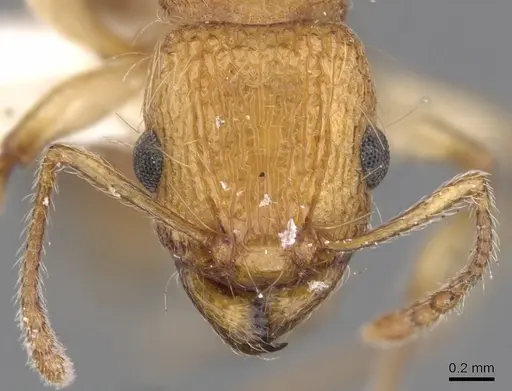
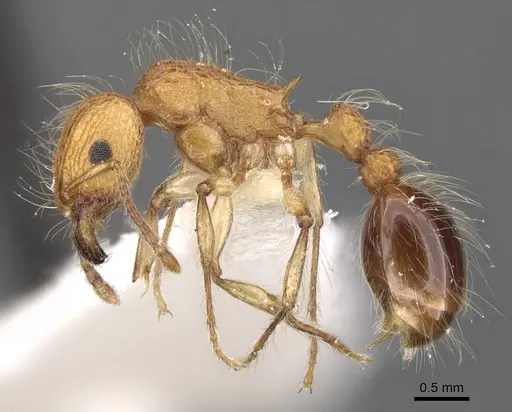
Tetramorium magnificum is a large and striking ant species native to West Africa, found in Cameroon and Ivory Coast . Workers measure 4.8-5.4mm and are easily recognized by their exceptionally long, fine hairs covering the head and body, and the long projecting hairs on their middle and hind tibiae . The species has a yellowish-brown coloration with a darker gaster, and its petiole node shape is unique among African Tetramorium species . This species is one of the most poorly documented ants in existence. Literally nothing is known about its biology, colony structure, or captive care requirements . The type specimens were collected in 1968 from Lamto, Ivory Coast, and no further ecological or behavioral studies have been published since its original description . Everything we know comes almost entirely from the original 1980 species description by Bolton, so any captive care recommendations are educated guesses based on general Tetramorium genus patterns.
Quick Summary
- Difficulty: Expert
- Origin & Habitat: West Africa, Cameroon and Ivory Coast. Found in the Lamto region of Ivory Coast. A single specimen from Cameroon was collected inside a house in Yaoundé, suggesting it may adapt to human-modified environments [2][1].
- Colony Type: Unknown, colony structure has never been documented. Most Tetramorium species are monogyne (single queen), but this is unconfirmed for Tetramorium magnificum.
- Size & Growth:
- Queen: Unconfirmed, no queens have been described in scientific literature [1]
- Worker: 4.8-5.4mm [1]
- Colony: Unknown, no colony size data exists [1]
- Growth: Unknown
- Development: Unknown, likely 6-10 weeks based on typical Tetramorium patterns at warm temperatures, but this is entirely estimated [1] (No development data exists for this species. Estimates are based on genus-level patterns for similar-sized Myrmicinae.)
- Antkeeping:
- Temperature: Likely 22-26°C based on West African origin, provide a warm area around 24°C with a gradient. Adjust based on colony activity [1].
- Humidity: Moderate to high, the West African forest-savanna mosaic environment suggests they prefer damp conditions. Keep the nest substrate moist but not waterlogged [1].
- Diapause: Unlikely, species from tropical West Africa probably does not require hibernation. Maintain warm temperatures year-round [1].
- Nesting: Likely soil-nesting or under stones based on typical Tetramorium behavior. A naturalistic setup with soil substrate or a Y-tong/plaster nest would be good starting points [1].
- Behavior: Behavior is completely unstudied. Based on genus patterns, they are likely active foragers that hunt small invertebrates and collect honeydew [1]. Their large eyes and long hairs may indicate enhanced visual or sensory capabilities. As a Myrmicinae in tribe Crematogastrini, they likely employ a smear defense mechanism: they wipe venom onto enemies rather than stinging, though this has not been confirmed for this species. Escape prevention should be moderate, workers at 5mm are not tiny but can still squeeze through small gaps. Do not expect aggressive defense behavior.
- Common Issues: no biological data exists, everything about this species care is speculative, colony may fail because we cannot replicate unknown natural conditions, no confirmed diet acceptance, you will need to experiment with various protein and sugar sources, founding behavior is completely unknown, queen behavior unstudied, risk of keeping conditions wrong due to complete lack of natural history data
Species Identification and History
Tetramorium magnificum was described by Bolton in 1980 from specimens collected in Lamto, Ivory Coast in March 1968 [1]. The species name "magnificum" refers to its spectacular appearance, particularly the exceptionally long pilosity (hairs) that makes it stand out [1]. Despite its distinctive features, Bolton noted it appears related (distantly) to other African species like Tetramorium unicum, Tetramorium quadridentatum, and Tetramorium viticola based on overall body form and sculpture [1]. The type series consists of only 4 workers total, and no subsequent research has been published on this species' biology [1]. This makes Tetramorium magnificum one of the least known ant species in the world from a husbandry perspective.
Known Distribution
This species has been confirmed from only two countries in West Africa: Ivory Coast (the type locality at Lamto/Toumodi) and Cameroon (Yaoundé) [1]. The Cameroon record is interesting because it came from a household survey, a single specimen found in a bedroom in Yaoundé [2]. This suggests the species may occasionally enter human dwellings, though whether this represents established indoor populations or accidental intruders is unknown. The Lamto region in Ivory Coast features a forest-savanna mosaic environment, suggesting the species can tolerate some variation in habitat conditions [1].
Housing and Nesting
Since nothing is known about this species' natural nesting behavior, you must make educated guesses. Most Tetramorium species nest in soil or under stones, so a naturalistic setup with a deep soil layer would be a logical starting point [1]. A Y-tong (AAC) or plaster nest could also work, but watch to see if the ants accept it. Given the West African origin, expect higher humidity needs than temperate species. The workers are a manageable 4.8-5.4mm size, so standard escape prevention measures should suffice. Start with a test tube setup for founding and move to a formicarium once the colony reaches 20-30 workers.
Feeding and Diet
Diet preferences are completely unstudied for this species. As a Tetramorium, it likely accepts small invertebrates (fruit flies, pinhead crickets, mealworms) and sugar sources (honey water, sugar water) like other members of the genus [1]. However, without any documented feeding observations, you are essentially experimenting. Give them protein sources 2-3 times per week and keep sugar water available at all times. Watch what gets consumed and adjust. The large eyes suggest they may be more visually oriented foragers than some blind Myrmicinae, which could indicate active hunting behavior.
Temperature and Seasonal Care
Being from West Africa (Ivory Coast, Cameroon), this species almost certainly requires warm temperatures year-round. Aim for 24-26°C as a baseline, with a slight gradient if possible. Do not cool them for winter, they likely do not enter diapause [1]. Room temperature in most homes (20-24°C) may be acceptable, but watch colony activity. If workers become sluggish, increase temperature slightly. The lack of any cold tolerance data confirms this is a tropical species that should be kept warm continuously.
Expert Keeper Warning
This is not a species for beginners. The complete lack of biological data means you are essentially pioneering captive husbandry for this ant with no guidance whatsoever. Expect high failure rates. Document everything you try, feeding preferences, temperature preferences, nesting site choices, colony development timelines, and consider sharing findings with the antkeeping community. There are no care guides, no established protocols, and no experienced keepers to consult. You are building knowledge from scratch. Only experienced antkeepers willing to accept high risk of colony loss should attempt this species. [1]
Frequently Asked Questions
How do I keep Tetramorium magnificum ants?
No established care protocol exists. This is one of the least-studied ant species in the world with zero documented biology. You will need to experiment with nesting materials, temperatures around 24-26°C, and various food items. Expect high failure rates. Only expert antkeepers should attempt this species.
What do Tetramorium magnificum eat?
Diet is completely unconfirmed. Based on genus patterns, they likely accept small insects and sugar sources, but no feeding observations have ever been documented. Experiment with protein (fruit flies, small crickets) and sugar (honey water) and see what gets consumed.
How big do Tetramorium magnificum colonies get?
Unknown, no colony size data exists. The largest known collection is just 4 type specimens. Related Tetramorium species may reach several hundred workers, but this is pure speculation for Tetramorium magnificum.
Do Tetramorium magnificum queens need hibernation?
No, being from tropical West Africa, they almost certainly do not require diapause. Keep them warm year-round at 24-26°C. There is no overwintering data because no one has ever kept this species in captivity.
Can beginners keep Tetramorium magnificum?
Absolutely not recommended. This species has no captive care history, no documented biology, and no established protocols. Every aspect of keeping them requires experimentation. Only antkeeping experts willing to accept total uncertainty should consider this species.
How long does it take for Tetramorium magnificum to develop from egg to worker?
Unknown, no development data exists. Based on typical Tetramorium genus patterns at warm temperatures (24-26°C), estimate 6-10 weeks, but this is entirely speculative. There are no documented cases of this species being raised from queen to colony.
What is the queen size of Tetramorium magnificum?
Unconfirmed, no queens have ever been described in scientific literature. Only worker measurements (4.8-5.4mm) exist from the original 1980 description. You would be pioneering this knowledge as well.
Where is Tetramorium magnificum found?
West Africa, specifically confirmed from Ivory Coast (Lamto/Toumodi region) and Cameroon (Yaoundé). The Cameroon specimen was found inside a house, suggesting possible adaptation to human environments, though this is a single data point.
Are Tetramorium magnificum ants aggressive?
Unknown, behavior has never been documented. Most Tetramorium are not particularly aggressive and rely on numbers rather than individual defensiveness. Expect similar temperament, but this is inferred from genus patterns, not observed.
When do Tetramorium magnificum nuptial flights occur?
Unknown, nuptial flight timing has never been documented. West African tropical species may have extended flight seasons or year-round activity. No mating swarms have ever been observed or recorded.
What makes Tetramorium magnificum different from other Tetramorium?
Their exceptionally long hairs covering the head, body, and tibiae make them one of the most distinctive Tetramorium species in Africa. The petiole node shape is unique compared to related species. Otherwise, biology is completely unknown.
Can I keep multiple Tetramorium magnificum queens together?
Unknown, colony structure has never been documented. Most Tetramorium are monogyne (single queen), but we do not know if this applies to Tetramorium magnificum. Do not attempt combining unrelated queens without data, the risk of fatal aggression is unknown.
Report an Issue
The current care sheet is based fully on literature. See inconsistencies, or something that's incorrect? Please , it will be resolved after review from an admin. Contributing to the blogs tab also helps providing information, to make us be able to further improve the caresheets. Thank you for your support!
References

This caresheet is licensed under CC BY-SA 4.0 .
Community Blogs
CASENT0901227
View on AntWeb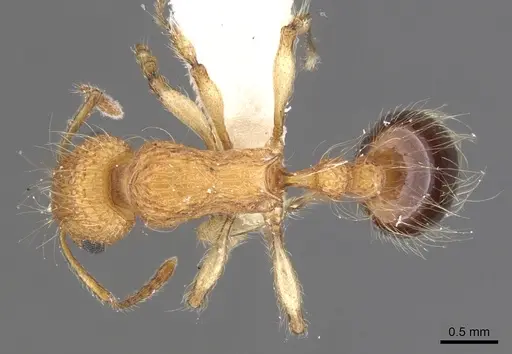
Literature
Loading distribution map...Loading products...